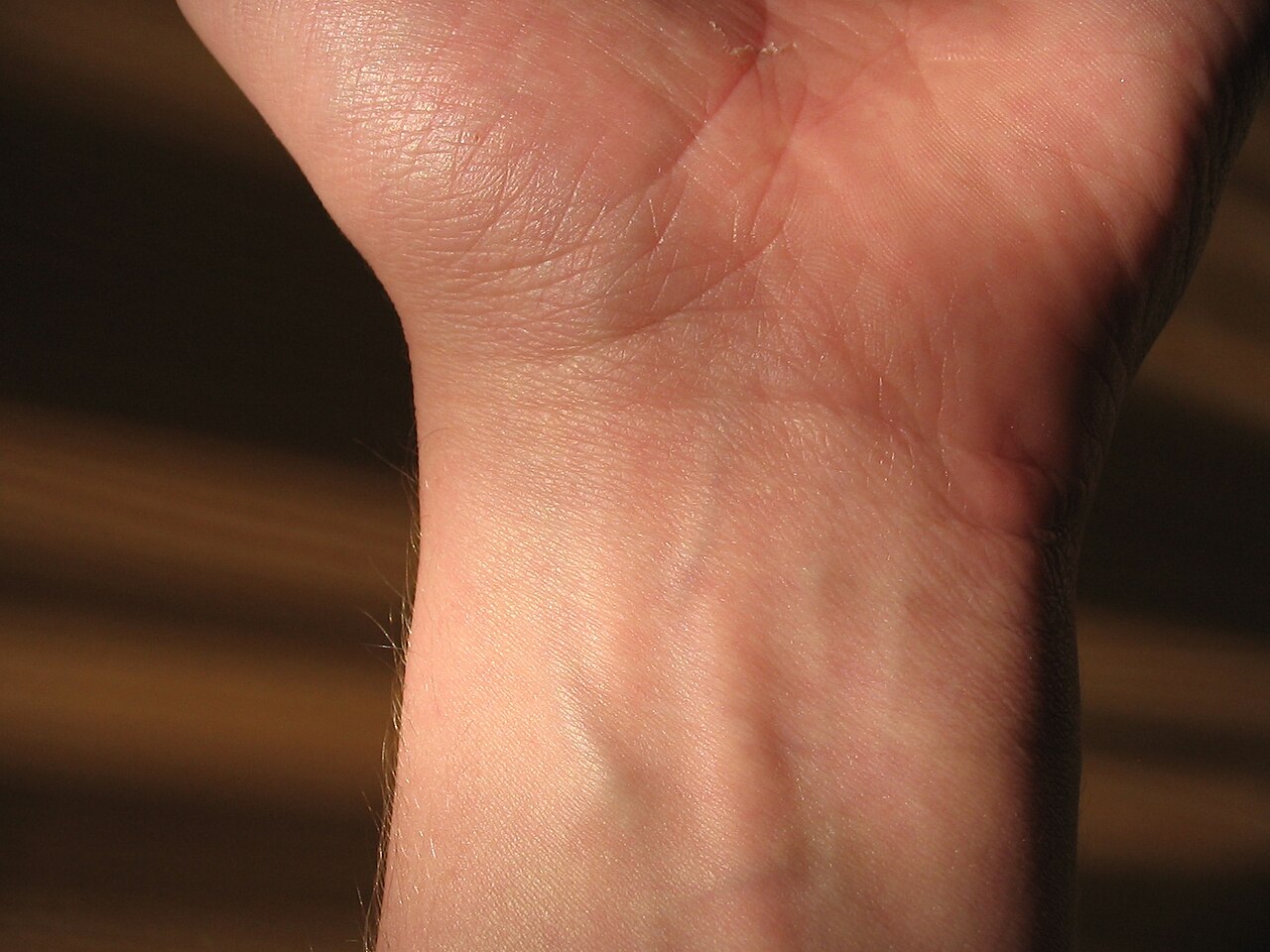
The wrist and hand pack more small joints, tendons, and nerves into a small space than almost any other body region, enabling fine motor control at the cost of frequent overuse injury.
Also called: Carpal Region · Hand and Wrist Complex
Repetitive gripping, typing, or nerve compressionCommon cause
4–8 weeks for tendon overuseTypical recovery
Flexor tendons, median nerve, carpal tunnelKey structures
Progressive weakness or muscle wastingRed-flag signs
The wrist and hand together form one of the body's most mechanically complex regions, combining eight small carpal bones, dozens of joints, and a dense network of tendons and nerves that pass through narrow anatomical tunnels on their way to the fingers.
This density of structure in a small space makes the region especially prone to overuse conditions such as tendon irritation and nerve compression, particularly with repetitive gripping, typing, or fine motor tasks. Carpal tunnel syndrome, affecting the median nerve, is among the most common nerve entrapment conditions in the body.
Because the hand is essential for so many daily tasks, even relatively minor wrist and hand conditions can be disproportionately disruptive, which is part of why early recognition and management are often emphasized. This page reviews the region's anatomy, common conditions, assessment methods, and general exercise and recovery patterns.
The profile
Pain frequency55
Recovery length30
Exercise load30
Clinician need45
Self-care fit65
Recurrence risk50
Clinician need
The wrist and hand pack more small joints, tendons, and nerves into a small space than almost any other body region, enabling fine motor control at the cost of frequent overuse injury.
The wrist and hand together form one of the body's most mechanically complex regions, combining eight small carpal bones, dozens of joints, and a dense network of tendons and nerves that pass through narrow anatomical tunnels on their way to the fingers.
When should I stop and seek care for Wrist & Hand?
Deformity or inability to move after trauma — A visible deformity or an inability to move the wrist or fingers following a fall or direct injury raises concern for fracture and warrants urgent evaluation.
What is a starter exercise for Wrist & Hand?
Median nerve glide — 2 × 5–10 slow repetitions — Move the wrist and fingers through a sequence of positions that gently glides the median nerve, stopping short of any tingling.
How does Wrist & Hand load progression usually start?
Irritation management — 0–2 weeks — Splinting, activity modification, and gentle nerve or tendon gliding aim to reduce irritation without full immobilization.
What should I avoid with Wrist & Hand?
Sustained wrist flexion during sleep — Sleeping with the wrist bent is commonly linked to worsening nighttime symptoms in carpal tunnel syndrome and is generally addressed with a neutral-position splint.
What is carpal tunnel syndrome?
Carpal tunnel syndrome is compression of the median nerve as it passes through a narrow tunnel on the palm side of the wrist, producing numbness, tingling, and sometimes weakness in the thumb, index, and middle fingers.
What is De Quervain's tenosynovitis?
De Quervain's tenosynovitis is irritation of the tendons on the thumb side of the wrist, often associated with repetitive gripping or thumb use, and is a common cause of pain near the base of the thumb.
Does typing cause carpal tunnel syndrome?
Research on keyboard use as an isolated cause of carpal tunnel syndrome is mixed; wrist position, overall repetitive hand use, and individual anatomical factors are all thought to contribute.
Neighbouring regions
Neighbouring topics share region literacy — not a severity ranking.