- 1 Start
- 2 Mid
- 3 End
Quad set
●○○○○3 × 10, held 5s
Sitting with the leg straight, gently tighten the thigh muscle to press the back of the knee down, without moving the leg.
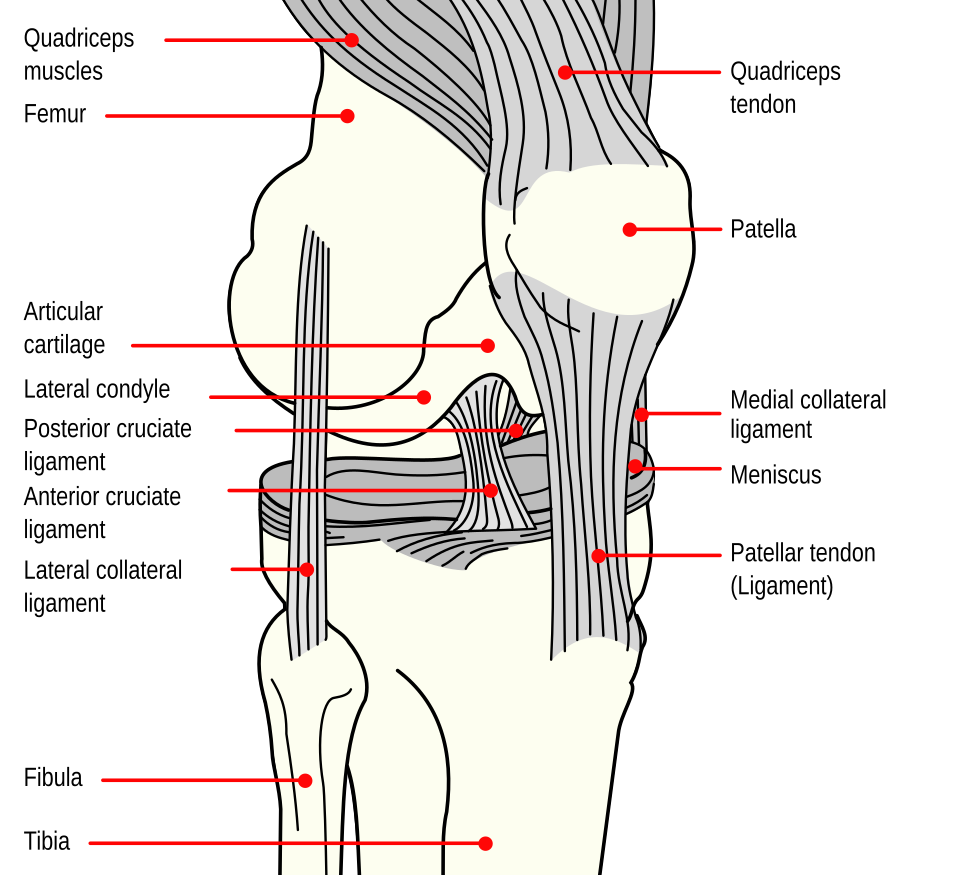
ACL · The anterior cruciate ligament stabilizes the knee against pivoting and forward-sliding forces, and its rupture is one of the most studied and rehabilitation-intensive sports injuries.
Darker cells mean a higher score for this topic on that metric.
LessMore
Last reviewed Sources & creditsMedia creditsMethodology
Not necessarily — some individuals, particularly those with lower activity demands or good dynamic knee stability, can do well with structured non-surgical rehabilitation, while others, especially those returning to pivoting sports, are more often advised toward reconstruction.
Most rehabilitation protocols and return-to-sport guidelines describe a recovery period of roughly nine to twelve months before a full return to pivoting sport, reflecting the time needed for graft maturation and functional readiness.
Common graft choices include the patient's own patellar tendon, hamstring tendon, or quadriceps tendon, or occasionally donor tissue, each with different considerations regarding strength, donor-site symptoms, and recovery.
The reconstructed graft undergoes a biological remodeling process that takes many months to reach adequate strength, and rehabilitation must also rebuild strength, neuromuscular control, and confidence before a safe return to demanding sport.
Research suggests the risk of a second ACL injury, either to the same or the opposite knee, is meaningfully elevated compared with individuals without a prior tear, which is part of why structured return-to-sport testing is emphasized.
Multiple studies report a higher incidence of ACL injury in female athletes in comparable pivoting sports, with proposed contributing factors including anatomical, hormonal, and neuromuscular differences, though the exact causes remain an active area of research.
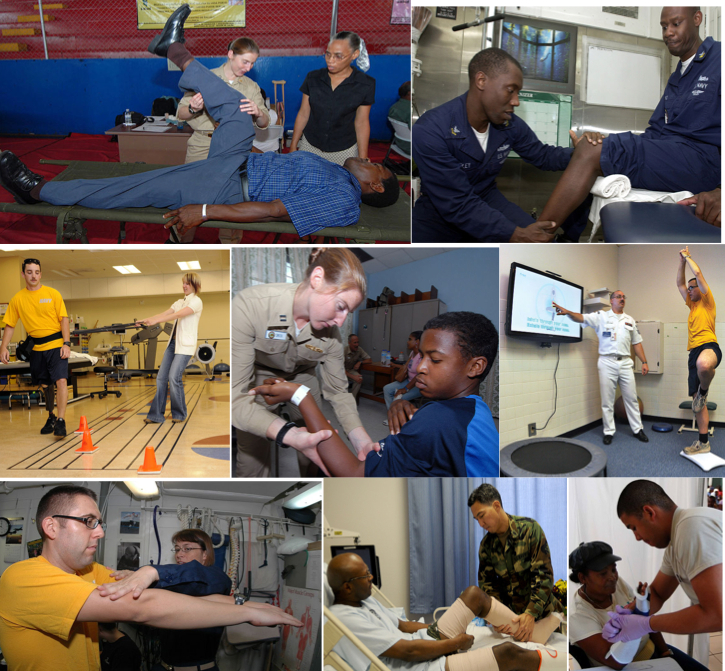
ACL rehabilitation, whether following reconstruction or managed non-surgically, follows one of the most extensively studied and structured exercise progressions in sports medicine, moving from basic strength restoration to advanced neuromuscular control.
Programs typically emphasize quadriceps and hamstring strength, single-leg control, and landing mechanics, since deficits in these areas are strongly associated with both slower recovery and elevated re-injury risk.
Simple picture of a move already published on this page — not a prescription or medical advice.
3 × 10, held 5s
Sitting with the leg straight, gently tighten the thigh muscle to press the back of the knee down, without moving the leg.
2 × 10
Lying on the back, slide the heel toward the buttock to bend the knee, then slide it back out, working within a comfortable range.
3 × 12
Lying on the back with one knee bent, lift the straight leg to hip height with control, then lower slowly.
3 × 12
Lower the hips a short distance while keeping the knees tracking over the feet, then return to standing.
3 × 20–30s each side
Balance on the involved leg with a slight knee bend, keeping the pelvis level and the knee aligned over the foot.
3 × 10 each side
Standing on a low step, slowly lower the other foot toward the ground with control, keeping the knee aligned over the foot.
3 × 8 each direction
Hop a short distance and land softly on the same leg, absorbing the landing with a controlled knee bend.
3 × 6 each direction
Run at a moderate pace and decelerate to change direction with a controlled, athletic knee-bent position.
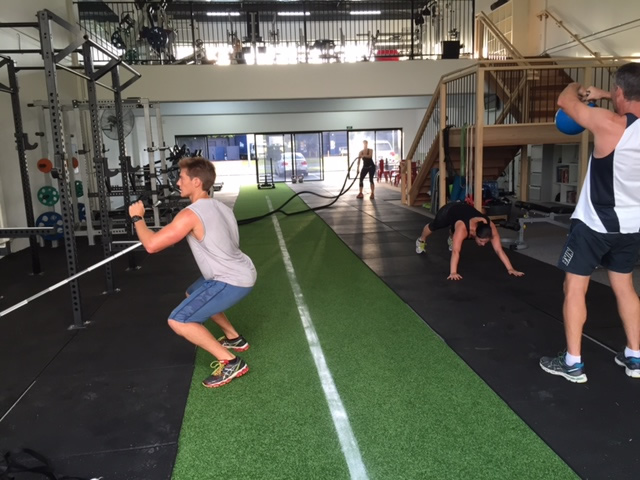
As rehabilitation advances, exercises progressively add speed, unpredictability, and sport-specific demands, since these qualities better reflect the situations in which re-injury is most likely to occur.
Neighbouring topics share region literacy — not a severity ranking.
The hip is a deep, stable ball-and-socket joint that bears several times body weight during walking and running, making it a common site of both overuse pain and degenerative change.
Pain frequency 55 Same body regionThe knee is the body's largest joint and one of its most frequently injured, relying on ligaments and surrounding muscles rather than bony shape for stability.
Pain frequency 65 Same body regionThe ankle and foot absorb and redirect the full force of body weight with every step, making sprains and overuse injuries among the most common in sport and daily life.
Pain frequency 70 Same body region