13 min read
Encounter route pick
Pick one encounter or route already written on this topic and reopen it next time.
Classroom literacy — not a lab result, diagnosis or outbreak alert.
Route on this page
Quick facts
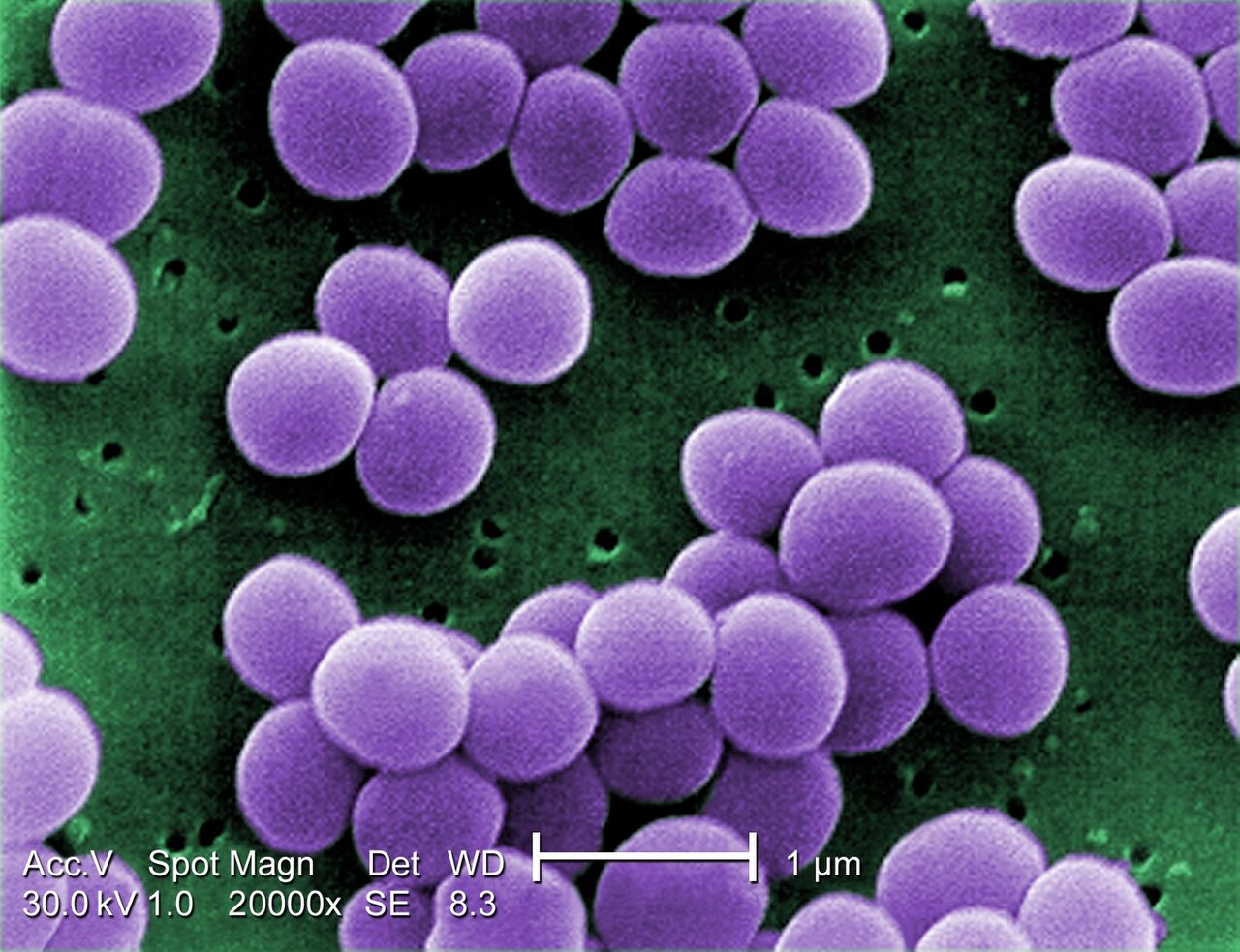
Surgeon Alexander Ogston named Staphylococcus from grape-like clusters in pus in the early 1880s.Ogston 1880s
Aureus means golden. Many strains make a carotenoid pigment that helped the species name stick.Golden colonies
About 30 percent of people carry S. aureus in the nose at least intermittently, often without illness.Nose carriage
Methicillin-resistant S. aureus was reported in 1961, soon after methicillin entered clinics.MRSA 1961
In the 1990s–2000s, clones such as USA300 showed MRSA could spread outside hospitals among otherwise healthy people.Community MRSA
Some strains make enterotoxins in protein food left warm. Reheating may kill cells but not the toxin already made.Preformed toxin food
Staphylococcus aureus is a frequent skin and nose neighbor. Most encounters end as nothing; some end as a boil, and a few as a bloodstream emergency.
MRSA is the resistance chapter, not a second species invented to frighten readers. It is why stewardship and hospital hygiene exist.
This page is not scare porn and not a culture manual.
78FamiliarityEditorial 0–100 browsing aid within this atlas.
80Medical weightEditorial 0–100 browsing aid within this atlas.
20BenefitEditorial 0–100 browsing aid within this atlas.
76RiskEditorial 0–100 browsing aid within this atlas.
Staphylococcus aureus — concrete atlas depth on Tool-Lifes.
Best-of microbe rankings
Staphylococcus aureus — concrete atlas depth on Tool-Lifes.
Local lensA skin regular
English hospital drama taught MRSA. Ordinary English still needs staph as a common skin and nose resident that can also cause trouble.
MRSA
An acronym that ate the genus in headlines.
Boils and food
Public names for different encounters — still not a treatment plan.
Public-health desks
Hygiene pages mention staph because skin is the reservoir. Soap, not a protocol from this site.
Read the local lens — English-speaking public health
The profile
- Familiarity78
- Medical weight80
- Benefit20
- Risk76
- Research82
- Live debate40
Risk
A common skin neighbor and a resistance story called MRSA — not scare porn.
Seven ways into this topic
01
Identity
A grape-cluster coccus, often a commensal, sometimes a pathogen, sometimes MRSA.
Read
02
How they live
Carriage, barrier break, local infection, rare invasion.
Read
03
Body & health
Skin, wards, locker rooms, and buffets.
Read
04
History
Ogston, penicillin, MRSA, USA300.
Read
05
Everyday life
Hands, dressings, food clocks — not bleach-the-life.
Read
06
Frontiers
Vaccines, decolonization, and less scare language.
Read
07
Myths
Not every staph is MRSA; not every carrier is a threat.
Read
Related on the scale
Slide across the log scale — teaching sizes, not lab measurements.
See size scale →
Frequently asked questions
Where should I start with Staphylococcus aureus?
Read Identity → How they live → Body & health, then use compare rails.
Is this page advice for Staphylococcus aureus?
Public-health education — not a care plan, prescription, or outbreak briefing.
What does the local lens add?
It names everyday desks for Encounters before English norms look universal.
Are the scores a ranking of Staphylococcus aureus?
No — editorial 0–100 browsing aids inside this atlas only.
How do I compare Staphylococcus aureus to neighbours?
Use related cards and best-of / quiz rails after the first three chapters.
Which chapter is densest?
How they live and Body & health carry mechanisms; skim Identity first.
Can I cite these scores externally?
Treat them as atlas orientation, not certificates or forecasts.
What should I check before acting?
Primary desks for Encounters: public-health desks and lab teaching frames.