Grape clusters
Division in planes yields the bunches Ogston saw in pus.
Staphylococcus aureus — A common skin neighbor and a resistance story called MRSA — not scare porn.
Darker cells mean a higher score for this topic on that metric.
LessMore
Last reviewed Sources & creditsMedia creditsMethodology
Read Identity → How they live → Body & health, then use compare rails.
Public-health education — not a care plan, prescription, or outbreak briefing.
It names everyday desks for Encounters before English norms look universal.
No — editorial 0–100 browsing aids inside this atlas only.
Use related cards and best-of / quiz rails after the first three chapters.
How they live and Body & health carry mechanisms; skim Identity first.
Identity is Gram-positive clusters, golden colonies in the teaching lab, and a talent for toxins and resistance.
Carriage without disease is part of the identity, not a footnote.
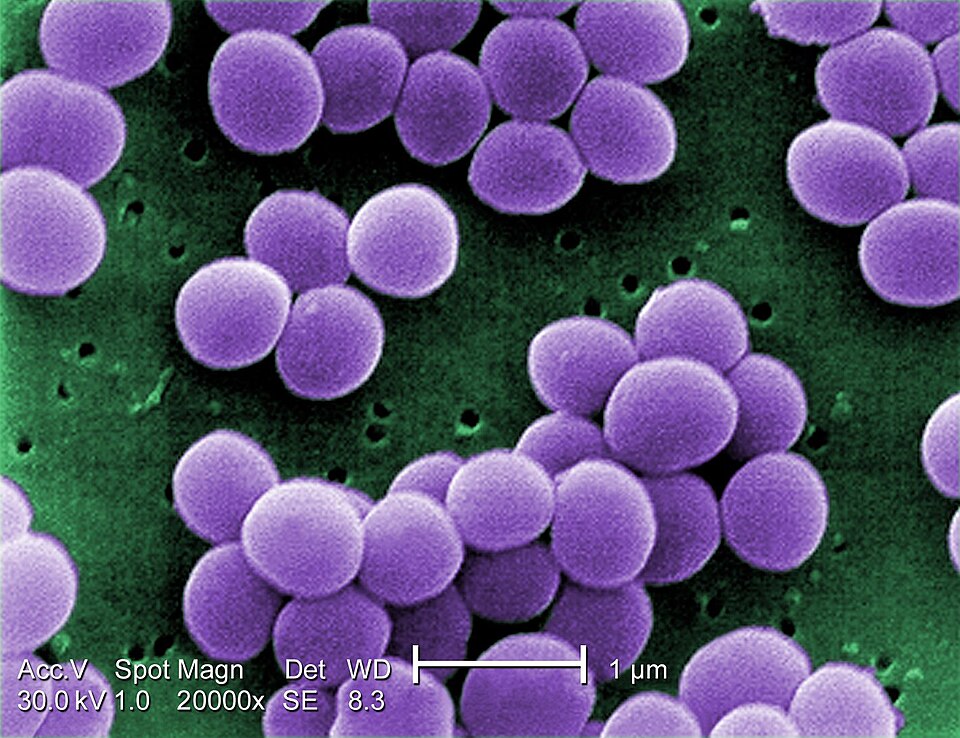
Division in planes yields the bunches Ogston saw in pus.
A classic test that helped separate S. aureus from many milder staphylococci.
Salt-tolerant and at home on skin and in the nose.
Enterotoxins, TSST-1 and others explain some food and shock syndromes — conceptually.
mecA and related genes change how beta-lactams work. That is a stewardship story.
Most carriers are well. Headlines should not turn a neighbor into a villain costume.
MRSA is a resistance label inside the same species.
A winter respiratory virus of drift and rare shift — surveillance and vaccines, not a cartoon villain.
Familiarity 93An airborne bacillus of latency and long care — programmes and air, not a drug recipe.
Familiarity 70Usually a gut resident; a minority of STEC pathotypes drive foodborne headlines.
Familiarity 82A very-low-dose gut virus of schools and ships — soap and bleach surfaces, not alcohol-gel faith.
Familiarity 80A gastric spiral that rewrote the ulcer textbook — Nobel 2005, Korea's high historic prevalence, no recipes.
Familiarity 68