Pick one encounter or route already written on this topic and reopen it next time.
Classroom literacy — not a lab result, diagnosis or outbreak alert.
Route on this page
Influenza encounter answers
Is influenza a virus or a bacterium?
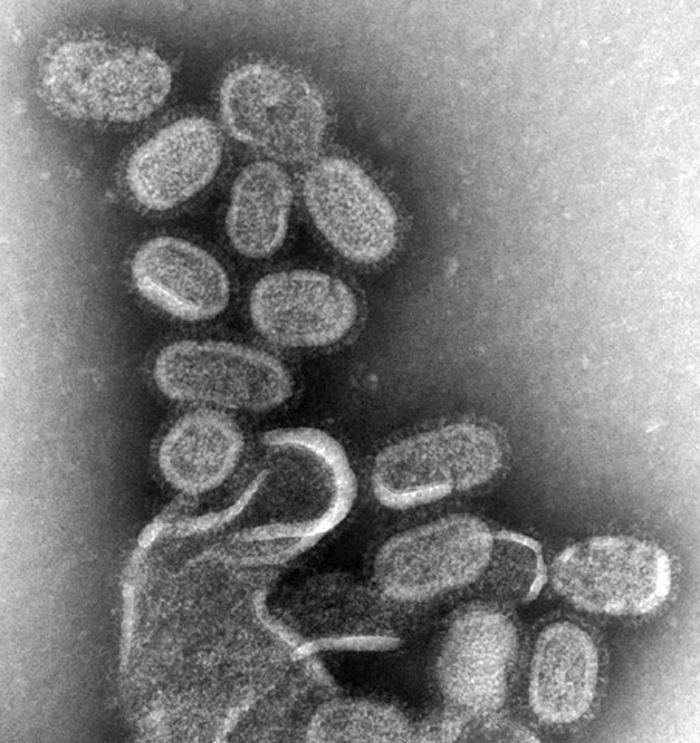
Influenza viruses are Orthomyxoviridae. Types A and B drive most human seasonal disease; A also has animal reservoirs. This page is an encounter atlas — not a lab result or a diagnosis.
How soon after exposure do flu symptoms start?
Symptoms often start about 1–4 days after exposure. People can shed virus before they feel ill. Teaching fact only — not a personal care plan.
Which encounter routes are already listed on this influenza page?
Six public-health encounters already written here: seasonal wave (community), hospital pneumonia (risk), workplace spread (everyday), vaccine offer (prevention), travel mixing (ecology), and antiviral stewardship (clinic). Pick one to reopen later. Classroom literacy — not an outbreak alert.
Which influenza A subtypes have circulated in people in recent decades?
Seasonal A viruses in people have been mainly H1N1 and H3N2, plus influenza B lineages. WHO-linked meetings pick Northern Hemisphere vaccine strains in February and Southern ones in September.
Why can influenza A create new subtype combinations?
Influenza A has eight RNA segments, which is why reassortment can create new HA/NA subtype combinations. History here is public-health memory, not a recipe.
Walk influenza scale and encounter once
A teaching pass on Influenza using the first published encounter route and one quick fact — not a lab result.
Name the encounter route — In the encounter-route picker, read the first listed route: Seasonal wave. It is a public-health interface already on this page — pick it to reopen later.
Read one quick fact as scale literacy — From quick facts, treat Orthomyxovirus: Influenza viruses are Orthomyxoviridae. Types A and B drive most human seasonal disease; A also has animal reservoirs. as classroom context. It teaches scale and history, not your personal test result.
Use the log-scale slider as teaching — The nm slider on this atlas compares sizes in powers of ten. It is a teaching device on published marks, not a measurement of you.
This is not a diagnosis — Nothing on Influenza issues a care plan, prescription, or outbreak alert. Seek a clinician for personal medical advice.
On Influenza, Seasonal wave plus one fact (Orthomyxovirus: Influenza viruses are Orthomyxoviridae. Types A and B drive most human seasonal disease; A also has animal reservoirs.) is the smallest honest encounter walk this page offers.
Public-health teaching only. Not medical diagnosis or treatment advice.
Second scale card: another encounter route
After route Seasonal wave and fact Orthomyxovirus: Influenza viruses are Orthomyxoviridae. Types A and B drive most human seasonal disease; A also has animal reservoirs. on Influenza, read a second published encounter interface beside the same log-scale teaching — literacy only.
Keep the first route — Leave Seasonal wave as the first encounter mark on Influenza.
Open a second interface — Read the next published human-interface line on this hub as a second teaching door.
Re-anchor the quick fact — Keep Orthomyxovirus: Influenza viruses are Orthomyxoviridae. Types A and B drive most human seasonal disease; A also has animal reservoirs. as the size anchor so the second route stays on the same scale story.
No lab diagnosis — Two doors teach scale and contact. They do not diagnose or clear a sample.
On Influenza, a second encounter route beside Orthomyxovirus: Influenza viruses are Orthomyxoviridae. Types A and B drive most human seasonal disease; A also has animal reservoirs. is the honest classroom scale decision after the first walkthrough.
Public-health literacy only. Not lab work or diagnosis.
One encounter scale
Scale literacy. Not a lab result or a diagnosis.
Quick facts
Influenza viruses are Orthomyxoviridae. Types A and B drive most human seasonal disease; A also has animal reservoirs.Orthomyxovirus
Influenza A has eight RNA segments, which is why reassortment can create new HA/NA subtype combinations.Eight segments
The 1918 H1N1 pandemic killed tens of millions worldwide — a benchmark for later pandemic planning.1918 pandemic
WHO-linked meetings pick Northern Hemisphere vaccine strains in February and Southern ones in September.WHO strain meetings
Symptoms often start about 1–4 days after exposure. People can shed virus before they feel ill.Incubation
In recent decades, seasonal A viruses in people have been mainly H1N1 and H3N2, plus influenza B lineages.Recent human subtypes
Influenza is a seasonal respiratory virus that also, rarely, rearranges into pandemic subtypes.
Public-health work is strain surveillance, vaccines updated twice a year, and ordinary indoor-air caution in winter.
This page is an encounter atlas, not a treatment plan and not a method for altering viruses.
93FamiliarityEditorial 0–100 browsing aid within this atlas.
85Medical weightEditorial 0–100 browsing aid within this atlas.
10BenefitEditorial 0–100 browsing aid within this atlas.
78RiskEditorial 0–100 browsing aid within this atlas.