12 min read
If you only read one thing
A site-specific living film — oily, moist and dry neighbourhoods, not a sterile wrapper.
Key takeaways
The skin microbiome is a site-specific film of bacteria, yeasts and other residents. Oily T-zones, moist folds and dry forearms are different neighbourhoods. Healthy skin is not sterile. Acid, occupancy and lipids make it harder for some invaders to bloom. This atlas is ecology, not a cosmetics prescription or a culture protocol.
Jump to section
Previous
Fermentation
Next
Soil microbes
Who this is for A site-specific living film — oily, moist and dry neighbourhoods, not a sterile wrapper.
Print this page
Key scores Familiarity 62 Medical weight 55 Benefit 70 Risk 22 Research 80 Live debate 40 Bacteria Viruses Fungi Archaea Educational reference only — not a diagnosis, treatment plan, or laboratory manual. Seek a licensed clinician for individual care.
Encounter route pick Pick one encounter or route already written on this topic and reopen it next time.
Classroom literacy — not a lab result, diagnosis or outbreak alert.
Route on this page
Stored on this device. Change a field to use the page twice.
Restore last pick Forget pick
Key takeaways
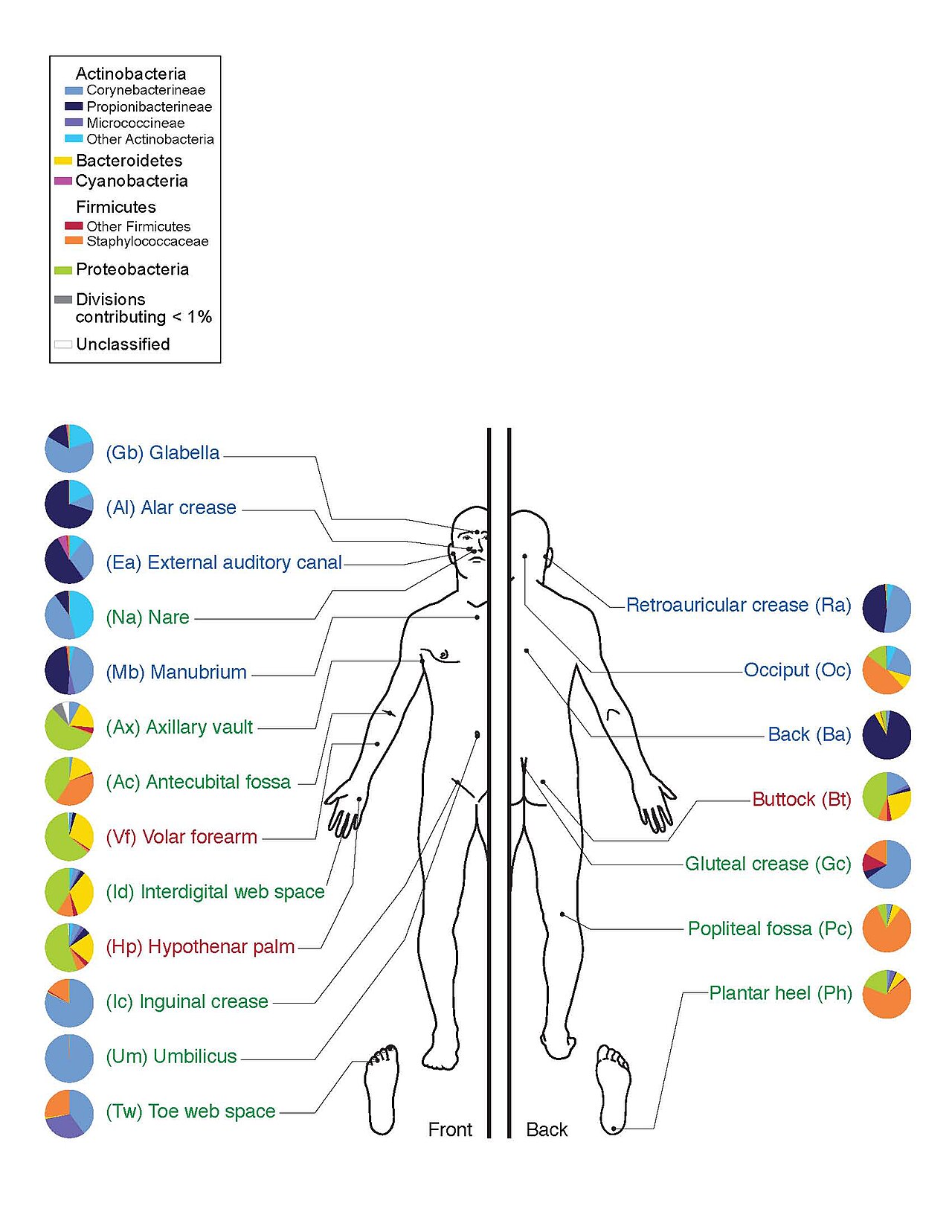
Site mosaic: Oily, moist and dry sites host different communities Typical pH: About 4.5–5.5 on much of adult skin Common residents: Cutibacterium, Staphylococcus, Malassezia yeasts Map paper: 2009 — Grice et al., Science, 20 skin sites
Quick facts Oily, moist and dry sites host different communities Site mosaic
About 4.5–5.5 on much of adult skin Typical pH
Cutibacterium, Staphylococcus, Malassezia yeasts Common residents
2009 — Grice et al., Science, 20 skin sites Map paper
Healthy skin is occupied; occupancy can be protective Not sterile
Ordinary washing removes dirt; it does not make a desert Soap vs sterilise
The skin microbiome is a site-specific film of bacteria, yeasts and other residents. Oily T-zones, moist folds and dry forearms are different neighbourhoods.
Healthy skin is not sterile. Acid, occupancy and lipids make it harder for some invaders to bloom.
This atlas is ecology, not a cosmetics prescription or a culture protocol.
Local lens public-health desks and lab teaching frames.
Public-health education — not a care plan, prescription, or outbreak briefing.
Beneficial allies.
Start here 62 Familiarity Editorial 0–100 browsing aid within this atlas.
55 Medical weight Editorial 0–100 browsing aid within this atlas.
70 Benefit Editorial 0–100 browsing aid within this atlas.
22 Risk Editorial 0–100 browsing aid within this atlas.
Orient — Skin microbiome — Beneficial alliesCompare — Use compare / related rails for neighbours.Go deep — How they liveCheck local — Check localLens before treating English norms as universal.Note Public-health education — not a care plan, prescription, or outbreak briefing.
Scope Editorial scores are browsing aids, not certificates.
Primary — public-health desks and lab teaching framesSecondary — Beneficial alliesMethod — Editorial synthesis — prefer primary desks for decisions.Skin microbiome — concrete atlas depth on Tool-Lifes.
Local source desk Which agency to read first Public-health and food-safety desks are national. This atlas is literacy — not an outbreak briefing.
Public-health desk CDC-style pages — other languages name KDCA, 厚労省, RKI, Santé publique
Food safety FDA/FSIS-style desks for kitchen and market claims
Lab teaching School/clinic frames — not a personal culture result
Variant literacy Named lineage notes from the home agency — not a panic ticker Open this desk before treating a kitchen myth as a national rule.
Not a care plan, prescription or outbreak briefing. Wash and referral rules stay local.
Limit Public-health education — not a care plan, prescription, or outbreak briefing.
Field terms
Local lens Everyday desks for this language community.
Editorial score 0–100 browsing aid inside this atlas only.
Caveat Public-health education — not a care plan, prescription, or outbreak briefing.
Primary desk public-health desks and lab teaching frames
Start path identity → biology → human
FAQ Eight distinct questions per topic page.
Share blurb Native one-liner for social previews.
Best-30 Quality pass for locale, traffic and premium rails. How to use this atlas Start here — IdentityNext — How they liveThen — Body & healthCheck local — Local lensTools Best-of microbe rankings
Local systems
English-speaking public health CDC/FDA/WHO wording - not a care plan
labs, clinics and food cultures kitchens, schools and health desks
identity allies · Skin microbiome Local examples kitchens, schools and health desks labs, clinics and food cultures Prefer local desks before English defaults. Quick FAQ Where to start? Identity → How they live → Body & health — Skin microbiome
Is this advice? Public-health education — not a care plan, prescription, or outbreak briefing.
Local lens? public-health desks and lab teaching frames — Beneficial allies
Related searches Skin microbiome Identity Skin microbiome FAQ Beneficial allies — public-health desks and lab teaching frames Skin microbiome how to read
How to read this page Start here — Identity — Skin microbiomeNext — How they live · public-health desks and lab teaching framesThen — Body & health · Beneficial alliesSkin microbiome — concrete atlas depth on Tool-Lifes.
Field note labs, clinics and food cultures — CDC/FDA/WHO wording - not a care plan
Editorial timeline 1 — identity · Skin microbiome2 — biology · labs, clinics and food cultures3 — human · allies2026 — Editorial review stampPrimary desks Primary frame — CDC/FDA/WHO wording - not a care planSecondary frame — labs, clinics and food culturesMethod note — kitchens, schools and health desksNote Public-health education — not a care plan, prescription, or outbreak briefing.
Local lens An organ with residents English beauty aisles now say microbiome-friendly. Dermatology English is older: barrier, acne bacteria as a cast member, not a villain with a single soap.
Ad copy Microbiome on a bottle is often unregulated vibe. Look for what the formula actually does to the barrier.
Acne English Cutibacterium (once Propionibacterium) is part of the cast. Kill-all marketing oversells.
Public-health desks Hygiene pages talk about hands. Face microbiome talk is a different, slower conversation.
Read the local lens — English-speaking public health
The profile
62 55 70 22 80 40
Familiarity 62 Medical weight 55 Benefit 70 Risk 22 Research 80 Live debate 40
Risk
22
/ 100
A site-specific living film — oily, moist and dry neighbourhoods, not a sterile wrapper.
Seven ways into this topic
Related on the scale
Slide across the log scale — teaching sizes, not lab measurements.
See size scale →
Frequently asked questions Where should I start with Skin microbiome? Read Identity → How they live → Body & health, then use compare rails.
Is this page advice for Skin microbiome? Public-health education — not a care plan, prescription, or outbreak briefing.
What does the local lens add? It names everyday desks for Beneficial allies before English norms look universal.
Are the scores a ranking of Skin microbiome? No — editorial 0–100 browsing aids inside this atlas only.
How do I compare Skin microbiome to neighbours? Use related cards and best-of / quiz rails after the first three chapters.
Which chapter is densest? How they live and Body & health carry mechanisms; skim Identity first.
Can I cite these scores externally? Treat them as atlas orientation, not certificates or forecasts.
What should I check before acting? Primary desks for Beneficial allies: public-health desks and lab teaching frames.
Previous
Fermentation
Next
Soil microbes
More in Beneficial allies