🏉GOAT Rankings

Rugby Union · Fifteen players, eighty minutes of collision and continuity, and a code that prizes the contest for the ball above all else.

Ranking rugby union's greatest players means weighing men who played different positions, in different eras, under laws that changed the game around them. A flanker's genius is invisible on a scoresheet; a fly-half's is written in points; a wing's in tries. Amateur-era greats played fewer Tests against narrower opposition; professionals play longer careers under video analysis and sports science their predecessors never knew. This list balances four things: peak level, longevity, achievement — what they won and how central they were to winning it — and influence on how the game is played.

The modern professional era makes hard numbers possible in a way it never was before, and the two-time World Cup-winning All Blacks of 2011 and 2015 sit near the summit on both statistics and silverware. But rugby's greatest-player debates have always crossed generations — Gareth Edwards still tops many all-time polls decades after retiring — and the cases below for amateur icons, one-tournament phenomena and the modern game's best are made with the records that survive them, not with nostalgia.

All-time podium

🥈
Dan Carter
New Zealand
2
🥇
Richie McCaw
New Zealand
1
🥉
Gareth Edwards
Wales
3

Comparison Lab

Toggle athletes on and off — every bar rescales to the leader of your selection.

5 / 12

The top 10

1

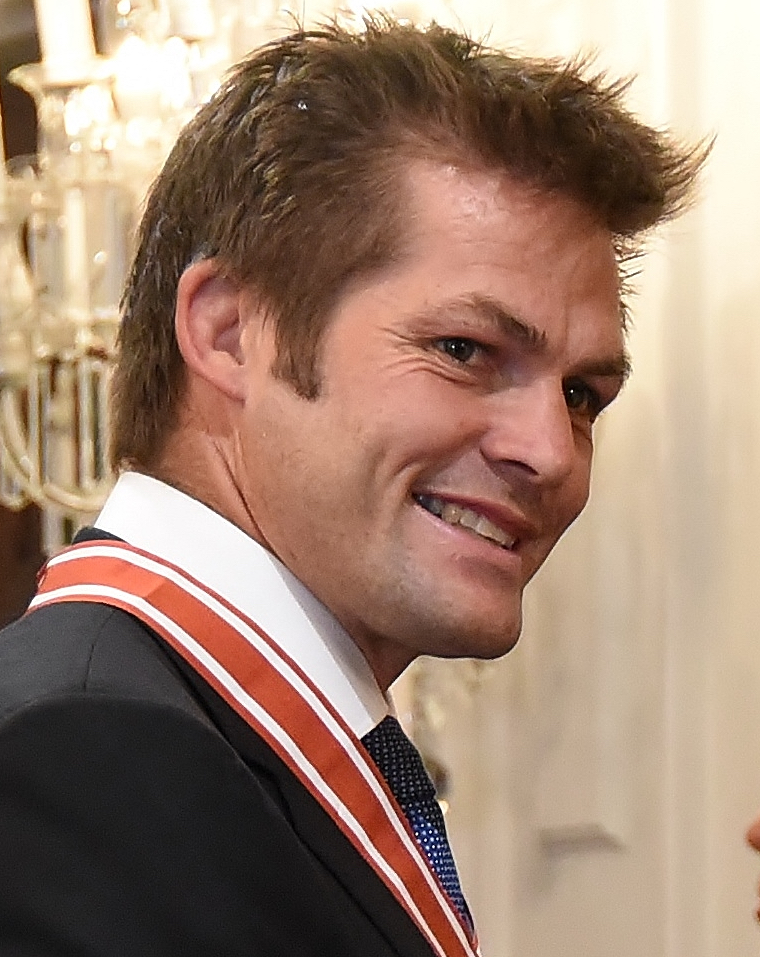
Richie McCaw

New Zealand · 2001-2015

The most successful player in the history of the game, and the defining openside flanker of the professional era. McCaw captained New Zealand to back-to-back World Cups in 2011 and 2015, won a record three World Rugby Player of the Year awards (2006, 2009, 2010), and finished with 148 Test caps — a world record for a forward at his retirement. He led the All Blacks a record 110 times and won 131 of his Tests, an astonishing win rate near 89 percent. His genius lay at the breakdown, where his mastery of the jackal and his reading of the referee's tolerance let him win turnovers and slow opposition ball more effectively than anyone before him, so much so that opponents and lawmakers alike shaped their thinking around him. Durable, ruthless and relentlessly competitive, he combined statistical dominance with two of the sport's biggest prizes — the twin pillars, peak and achievement, that make his case for the top spot.
Test caps
148
Tests as captain
110
Test wins
131
World Player of the Year
3
Rugby World Cups
2
2

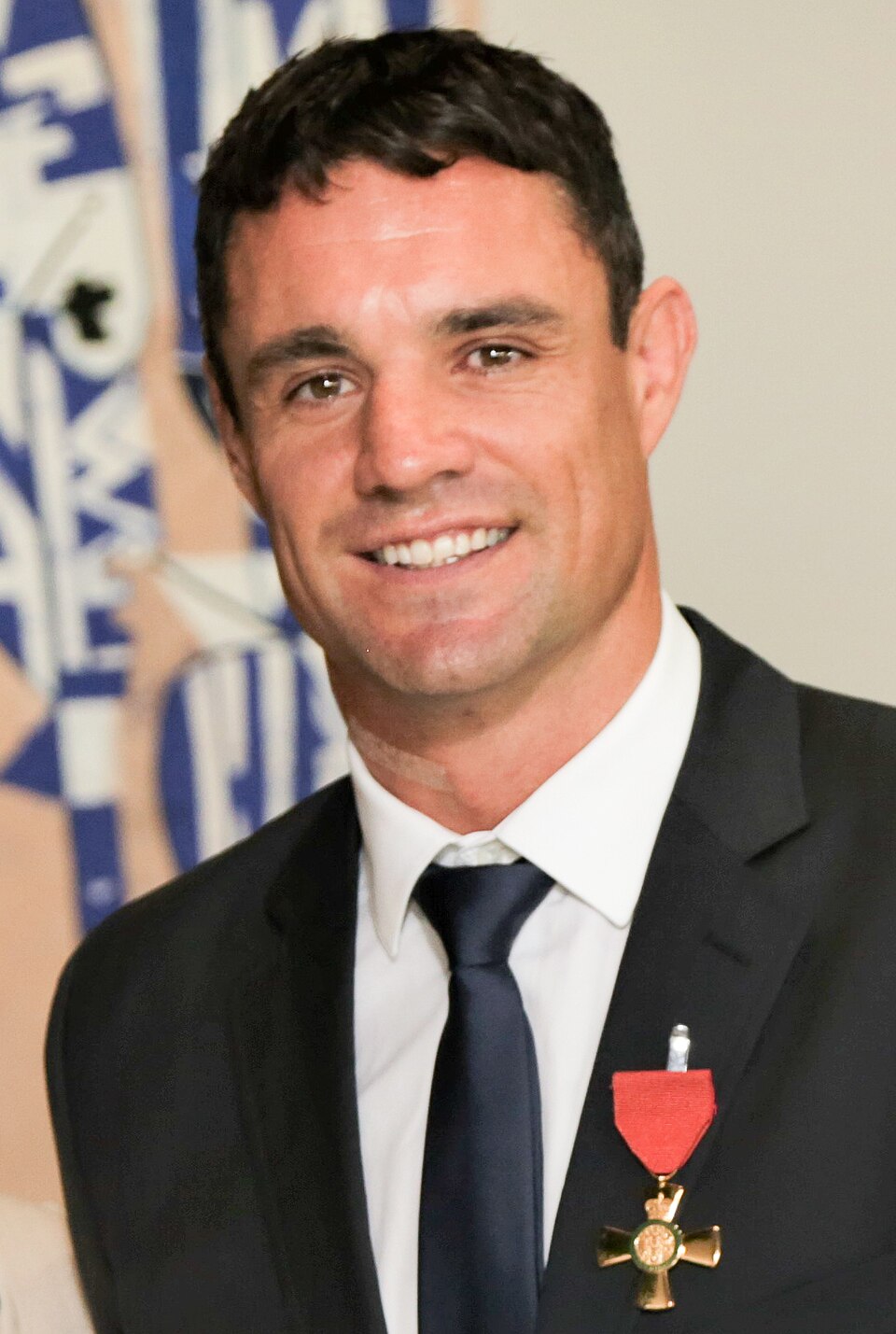
Dan Carter

New Zealand · 2003-2015

The most complete fly-half rugby has produced, and its all-time leading Test points scorer with 1,598. Carter combined every facet of the position — a flawless goal-kicking record, a punishing running game, tactical kicking, distribution and defence — into a template that defined the modern number 10. His 2005 performance against the British and Irish Lions, when he scored 33 points almost single-handedly, is often called the greatest individual fly-half display ever. Injury cruelly denied him the 2011 World Cup final, but he returned to orchestrate New Zealand's 2015 triumph, scoring 19 points in the final against Australia, including a majestic long-range drop goal, and signing off as player of the tournament. A three-time World Rugby Player of the Year (2005, 2012, 2015), Carter paired peak brilliance with rare longevity across 112 Tests, and his points record may stand for a generation.

Test points
1,598
Test caps
112
World Player of the Year
3
2015 final points
19
Rugby World Cups
1
3

Gareth Edwards

Wales · 1967-1978

Routinely voted the greatest rugby player of all time in polls of players and pundits decades after he retired. Edwards was a scrum-half of extraordinary power, athleticism and vision who never missed a match for Wales, playing all 53 of his caps consecutively — a testament to durability in a brutal amateur age. He was the engine of Wales' 1970s golden generation, winning three Grand Slams and multiple Five Nations titles, and a talismanic figure on the great British and Irish Lions tours, playing all four Tests in the series-winning 1971 tour of New Zealand and the unbeaten 1974 tour of South Africa. His crowning image is the try he finished for the Barbarians against the All Blacks in 1973, a length-of-the-field flowing move still replayed as the sport's most beautiful score. His statistical totals are modest by modern measure, but his blend of brilliance, influence and reputation is unmatched among amateur-era backs.

Wales caps (all consecutive)
53
Grand Slams
3
Lions Test caps
10
Wales tries
20
4

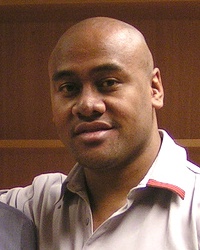
Jonah Lomu

New Zealand · 1994-2002

The player who made rugby a global commercial phenomenon and redefined what a wing could be. At the 1995 World Cup, an unstoppable 19-stone 20-year-old ran through the world's best defences, scoring four tries in the semi-final demolition of England and terrorising every opponent with a blend of sprinter's pace and prop's power never seen before. Lomu scored 37 tries in 63 Tests and holds the record, shared with Bryan Habana, for most World Cup tries with 15 across the 1995 and 1999 tournaments. He never won the World Cup — New Zealand lost the 1995 final to South Africa — and a rare kidney disorder eventually cut short his career and, tragically, his life at 40. But his impact transcended silverware: he was rugby's first true superstar, the man who proved the professional game could sell out stadiums and captivate audiences far beyond its traditional heartlands.

Rugby World Cup tries
15
Test tries
37
Test caps
63
Tries vs England, 1995 SF
4
5

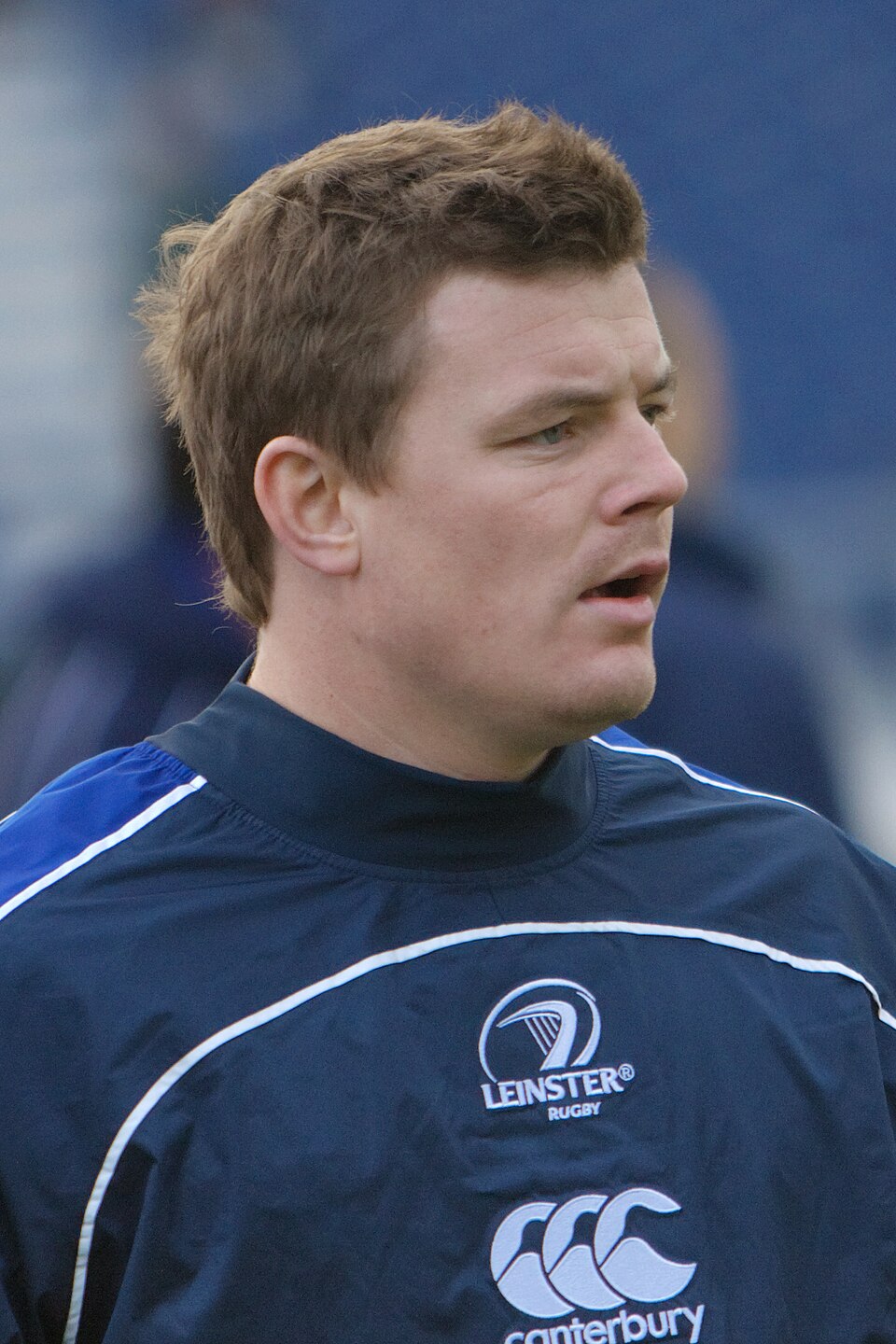
Brian O'Driscoll

Ireland · 1999-2014

The greatest centre of the professional era and, at his retirement, the most-capped player in the history of the game with 141 Tests. O'Driscoll combined a devastating attacking edge — sidesteps, offloads and support lines that made him one of the finest finishers among midfielders — with a fearless defensive game and a jackaling instinct usually reserved for flankers. He scored 46 tries for Ireland, an Irish record, and captained his country for a decade, leading them to the 2009 Grand Slam, their first in 61 years. He toured four times with the British and Irish Lions, captaining the 2005 tour, and his solo try against Australia on the 2001 tour remains iconic. Playing for a nation without New Zealand's or South Africa's resources, he elevated Ireland to consistent contention and set a standard of skill, courage and consistency that defined the position for fifteen years.

Test caps
141
Ireland tries
46
Lions tours
4
Grand Slam
1
6

Jonny Wilkinson

England · 1998-2011

The fly-half whose right boot won a World Cup and whose obsessive perfectionism reshaped the goal-kicking craft. Wilkinson is best remembered for the drop goal, struck with his weaker foot in the final minute of extra time, that beat Australia in the 2003 final and made England the only Northern Hemisphere side ever to be world champions. But he was far more than one kick: a ferocious tackler for a number 10, a metronomic marksman, and the 2003 World Rugby Player of the Year. He amassed 1,246 Test points across England and the Lions, second only to Dan Carter, and holds the record for most drop goals in international rugby with 36. Injuries robbed him of years at his peak, yet he returned repeatedly, and his combination of icy big-match temperament and relentless practice made him the defining Northern Hemisphere player of his generation.

Test points
1,246
Test drop goals
36
Test caps
91
Rugby World Cups
1
World Player of the Year
1
7

John Eales

Australia · 1991-2001

One of only a handful of players to win the World Cup twice, and a lock so complete his team-mates nicknamed him 'Nobody', because nobody's perfect. Eales won the 1991 tournament as a 21-year-old and captained Australia to a second title in 1999, a rare feat of sustained excellence at the pinnacle. He was a supreme lineout forward and athlete, but his signature was almost unheard-of for a second-rower: he was a reliable goal-kicker, amassing 173 Test points and famously slotting a last-minute touchline penalty to beat New Zealand in 2000. He captained the Wallabies 55 times through their most successful era, leading with a calm authority that made him one of the sport's most respected figures. Two World Cups, the leadership of a golden Australian side, and a versatility no other great lock has matched place him firmly among the game's elite forwards.

Rugby World Cups
2
Test caps
86
Tests as captain
55
Test points (a lock)
173
8

Bryan Habana

South Africa · 2004-2016

The fastest and most prolific wing of his era, and a World Cup winner who chased down the sport's records. Habana was central to South Africa's 2007 title, finishing as the tournament's top scorer with eight tries and being named World Rugby Player of the Year that year. He scored 67 tries in 124 Tests — a South African record and second only to Daisuke Ohata on the all-time international list — and equalled Jonah Lomu's record of 15 World Cup tries across three tournaments. Blessed with genuine track sprinter's pace, he once raced a cheetah for charity, but he paired that speed with a superb positional and aerial game and relentless work rate in defence and kick-chase. Durable across more than a decade at the top and decisive on the biggest stage, he is the benchmark modern finisher and one of the greatest wings the game has seen.

Test tries
67
Rugby World Cup tries
15
Test caps
124
Rugby World Cups
1
World Player of the Year
1
9

Martin Johnson

England · 1993-2003

The greatest leader in English rugby history and the only England captain to lift the World Cup. A towering, uncompromising lock, Johnson was the physical and psychological heart of the powerful England side that peaked in 2003, when he led them to a Grand Slam and then to the World Cup title in Sydney. His command of the collision, the lineout and the mental battle set the tone for a team of hardened professionals. Uniquely, he is the only man to have captained two British and Irish Lions tours, leading the successful 1997 tour of South Africa and the 2001 tour of Australia — an honour that speaks to the respect he commanded across four nations. He played 84 Tests for England and 8 for the Lions, and his brooding, ferocious presence made him the definitive enforcer-captain, a forward who won matches through sheer force of will as much as skill.

Rugby World Cups
1
Lions tours captained
2
England caps
84
Grand Slam
1
10

Serge Blanco

France · 1980-1991

The embodiment of French flair and the greatest attacking fullback of the amateur era. Blanco played the game with an improviser's instinct, counter-attacking from deep in his own half in a way that thrilled crowds and terrified defences, and he finished with 38 tries in 93 Tests — a French record when he retired that was remarkable for a fullback. His most famous moment came in the 1987 World Cup semi-final, when he finished a sweeping, last-minute counter-attack to beat Australia and send France to the inaugural final. He won Grand Slams in 1981 and 1987 as the creative fulcrum of a gifted French generation, playing with a cigarette-and-flair mystique that made him an icon beyond the sport. Where others measured the game in structure, Blanco measured it in instinct and adventure, and no fullback of his time matched his ability to turn defence into breathtaking attack.

Test caps
93
Test tries
38
Grand Slams
2
Rugby World Cup 1987
Runner-up
11

Antoine Dupont

France · 2017-present

Widely regarded as the best player in the world through the early 2020s, and a scrum-half who has redrawn the position's ceiling. Dupont was named World Rugby Player of the Year in 2021 and captains a resurgent France, whom he led to the 2022 Six Nations Grand Slam. He combines a scrum-half's sharp service and game management with the running threat, physicality and try-scoring instinct of a back-rower, breaking games open with a single stride or offload. In 2024 he switched codes to spearhead France's rugby sevens team to Olympic gold on home soil in Paris, dominating the tournament and taking his fame to a new audience. Still in his prime as of the 2024-25 season, with much of his career ahead, Dupont has already established himself as the defining player of his generation and the modern standard-bearer for the all-court number 9.

World Player of the Year
1
Olympic sevens gold
1
Six Nations Grand Slam
1
Test caps (as of 2024-25)
60+
12

David Campese

Australia · 1982-1996

The great entertainer of the amateur-into-professional transition, and for thirteen years the holder of the world Test try record. Campese scored 64 tries in 101 Tests, a mark that stood as the international record until 2006, and he did it with an audacity — the swerving 'goose step', the outrageous behind-the-back pass — that made him one of rugby's most watchable and infuriating players. He was the star of Australia's 1991 World Cup triumph, named player of the tournament, and his flick pass to set up a try against New Zealand in that semi-final is part of the sport's folklore. A wing or fullback who prized adventure over caution, he sometimes gambled and lost, but his willingness to attempt the impossible defined an attacking philosophy and inspired a generation. Few players have combined statistical achievement with pure showmanship as completely as Campese.

Test tries
64
Test caps
101
Rugby World Cups
1
Years holding try record
13

Bars are scaled to the leader in this list.

The debate

Comparing rugby's greats across eras runs into problems that cannot be normalised. Amateur icons like Gareth Edwards and Serge Blanco played fewer Tests, against a narrower pool of nations, on heavier pitches and with laws — lineouts, rucking, tackle contest — quite different from today's. Professionals like McCaw, Carter and Habana played more matches, with sports science extending their peaks and video analysis sharpening every contest, but also against defences and physical demands the amateurs never faced. Position complicates it further: a fly-half's points and a wing's tries are countable, but the value of a great flanker's breakdown work or a lock's set-piece dominance resists any single statistic.

So the ranking depends on which lens you privilege. If it is trophies and sustained excellence, McCaw's two World Cups and record caps lead, with Carter and the two-time winner John Eales close behind. If it is pure peak, Jonah Lomu's 1995 and Dan Carter's 2005 against the Lions are as high as anyone has reached. If it is influence and reputation across generations, Edwards still tops the polls and Lomu changed the sport's commercial destiny. And if the modern game is the measure, Antoine Dupont may finish his career atop the whole list. This ranking leans on the professional era's harder evidence while honouring the amateur greats the numbers cannot fully capture — which is exactly why the argument never ends.

Keep exploring

More sports

Soccer

The simplest game on Earth, played by hundreds of millions and argued over by half the planet.

🏀

Basketball

Five players, 24 seconds, and geometry at full sprint — the city game that conquered the world.

Baseball

The clockless chess match where a round bat meets a round ball and the best hitters on earth still fail seven times out of ten.

🎾

Tennis

The loneliest duel in sport: no clock, no teammates, no place to hide until the last point is won.

🏎️

F1

Twenty drivers, a thousand horsepower, and the most expensive engineering arms race in sport.

Golf

A six-century test of nerve where the only opponent is the ground, the wind, and yourself.

🏈

Football

Four downs, ten yards, one end zone: the ultimate game of territory, collision, and coaching.

🏏

Cricket

The bat-and-ball contest where a single match can last five days and still turn on one ball.

🏒

Hockey

The fastest team sport on Earth: six skaters, one frozen puck, and no time to breathe.

🥊

Boxing

The sweet science: two fighters, twelve three-minute rounds, and nowhere to hide behind a team.

🥋

MMA

Combat's most complete test — striking, wrestling and submission grappling settled inside a single cage.

🏐

Volleyball

Three touches, no second chances: the fast, vertical duel fought across a net no one may cross.

🏓

Table Tennis

The fastest ball sport on Earth, decided in the width of a fingernail and the spin no eye can fully read.

🏸

Badminton

The world's fastest racquet sport, where 400 km/h smashes and feather-soft net shots collide inside a single rally.

🏃

Track & Field

Faster, higher, stronger — the oldest contest in sport, settled in seconds and centimetres.

🏊

Swimming

Four strokes, one clock, and the oldest question in the water: who reached the wall first.

🚴

Road Cycling

An individual sport won by teams, where drafting, mountains and split-second timing decide everything.

🏍️

MotoGP

The premier class of motorcycle Grand Prix racing: 1,000cc prototypes, 360 km/h straights and 64-degree lean angles, decided by tenths of a second.

🎮

Esports

Competitive video gaming turned global spectator sport, where reactions measured in milliseconds decide million-dollar prizes in front of millions of viewers.