- 1 Start
- 2 Mid
- 3 End
Median nerve glide
●○○○○2 × 5–10 slow repetitions
Move the wrist and fingers through a sequence of positions that gently glides the median nerve, stopping short of any tingling.
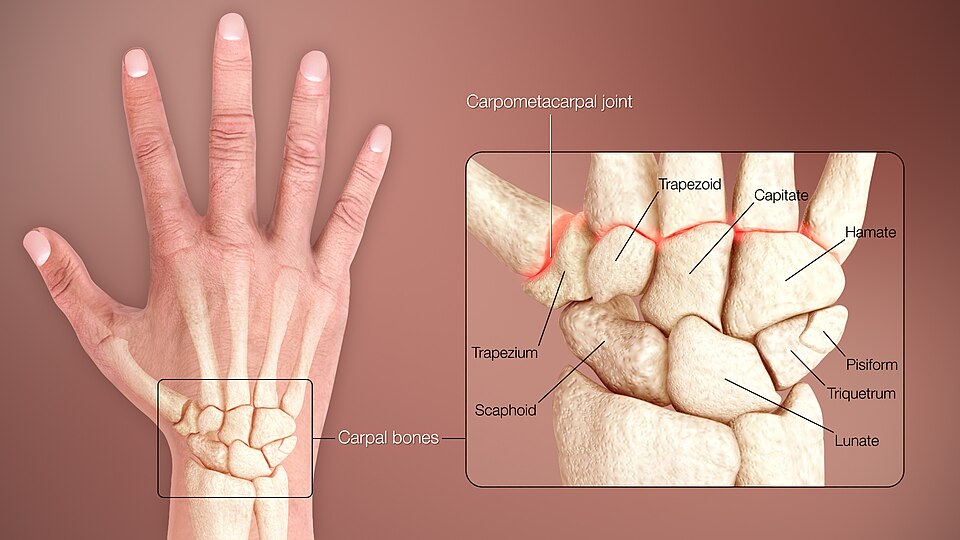
Wrist & Hand · The wrist and hand pack more small joints, tendons, and nerves into a small space than almost any other body region, enabling fine motor control at the cost of frequent overuse injury.
Darker cells mean a higher score for this topic on that metric.
LessMore
Last reviewed Sources & creditsMedia creditsMethodology
Carpal tunnel syndrome is compression of the median nerve as it passes through a narrow tunnel on the palm side of the wrist, producing numbness, tingling, and sometimes weakness in the thumb, index, and middle fingers.
De Quervain's tenosynovitis is irritation of the tendons on the thumb side of the wrist, often associated with repetitive gripping or thumb use, and is a common cause of pain near the base of the thumb.
Research on keyboard use as an isolated cause of carpal tunnel syndrome is mixed; wrist position, overall repetitive hand use, and individual anatomical factors are all thought to contribute.
Night-time wrist splinting in a neutral position is commonly recommended for mild to moderate carpal tunnel syndrome and is supported by several clinical guidelines as an early conservative measure.
Trigger finger is a condition in which a finger tendon catches within its sheath, causing the finger to click, lock, or require extra effort to straighten after bending.
Surgical release is typically considered when symptoms are severe, when there is measurable nerve damage on testing, or when conservative measures have not provided adequate relief.
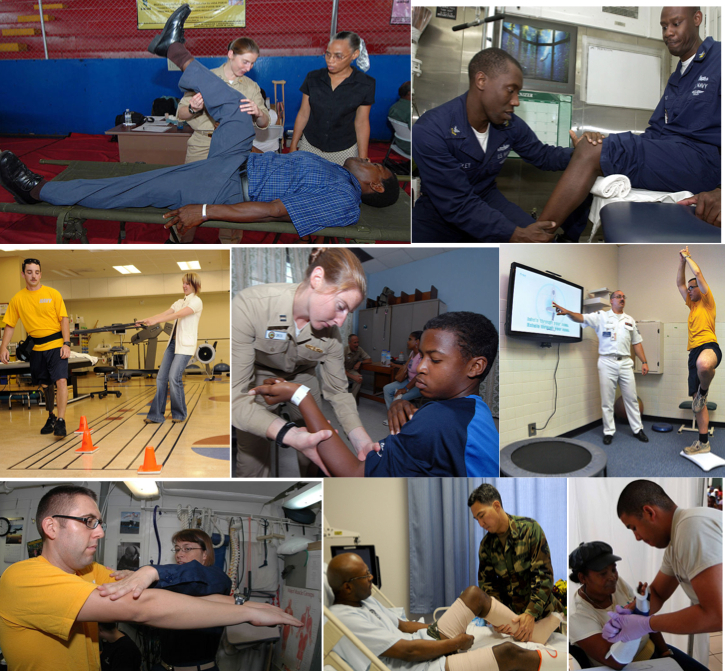
Exercise for wrist and hand conditions varies significantly by diagnosis, ranging from gentle nerve gliding techniques for carpal tunnel syndrome to progressive tendon loading for tenosynovitis.
Because fine motor control is central to hand function, exercise programs often include both general strengthening and task-specific practice relevant to the individual's daily or occupational demands.
Simple picture of a move already published on this page — not a prescription or medical advice.
2 × 5–10 slow repetitions
Move the wrist and fingers through a sequence of positions that gently glides the median nerve, stopping short of any tingling.
2 × 3 each direction, held 20–30s
With the elbow straight, gently bend the wrist forward and back using the opposite hand for a mild stretch.
2 × 10 through the sequence
Move the fingers through a series of hook, fist, straight, and tabletop positions to glide the flexor tendons through their sheaths.
2 × 5, held 15–20s
Gently extend the thumb's tip joint using the opposite hand to stretch the thumb-side tendons.
3 × 10–15
Squeeze a soft therapy putty or stress ball through a full close, holding briefly before releasing.
3 × 12
Using a light dumbbell, curl the wrist upward through a comfortable range and lower with control.
3 × 12
With a light rubber band around the fingers and thumb, spread the fingers apart against the band's resistance.
3 × 10
Pinch a small weighted object or pinch gauge between the thumb and fingers, holding briefly before releasing.
Exercise choice generally follows the specific diagnosis — nerve gliding for compression syndromes, tendon-specific loading for tenosynovitis, and general strengthening for post-injury or degenerative conditions.
Neighbouring topics share region literacy — not a severity ranking.
The shoulder trades stability for the greatest range of motion of any joint in the body, relying heavily on the rotator cuff muscles rather than bone to stay centered.
Pain frequency 60 Same body regionThe elbow's hinge-and-rotation design lets the forearm bend and turn simultaneously, but this dual role concentrates repetitive stress on a small set of tendons.
Pain frequency 45 Same body region