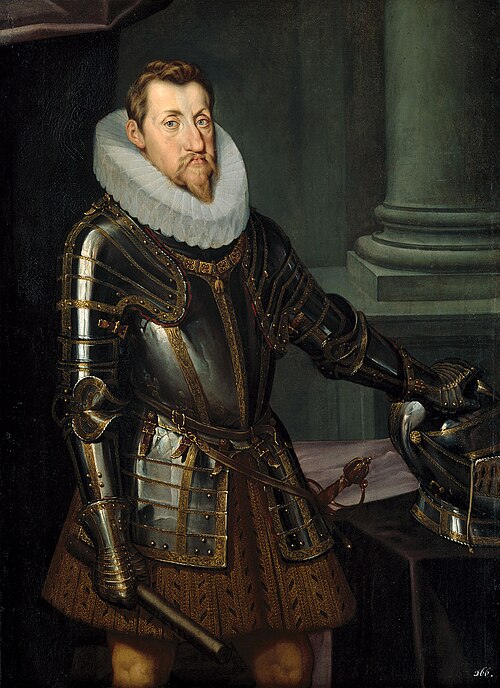
Ferdinand II
Jesuit-educated Habsburg whose Bohemian policy and Edict of Restitution widened a revolt into a general war.
Reign
3
Spark
3
Line
3
Ferdinand II, Gustavus, Wallenstein, Richelieu, Oxenstierna.
Educational history. Casualty figures are documented ranges. This is not operational advice, a ranking of nations, or a how-to for weapons or coups.
Darker cells mean a higher score for this topic on that metric.
LessMore
Last reviewed Sources & creditsMedia creditsMethodology
No. Scores are browsing aids inside an era-bounded atlas — not live league tables of countries.
In the Holy Roman Empire, about 4-8 million is a working band -- a huge share of some territories. Battle deaths were a minority beside famine and disease.
It began as a Bohemian and imperial confessional crisis. It became a European great-power war, especially after France entered against the Habsburgs.
Two 1648 treaties that resettled religion and imperial constitution and involved France and Sweden as guarantors. Later "Westphalian sovereignty" is a simplified teaching story.
King of Sweden, victor at Breitenfeld (1631), killed at Lutzen (1632). He made Sweden a Baltic great power and a Protestant military model in later myth.
England was not a main belligerent (though it had earlier Palatine ties). The war left no poppy ritual in London. Germany kept the demographic scar.
Gustavus became a Protestant saint; Wallenstein a cautionary entrepreneur; Richelieu a realist. All three images need archives under them.
There is no single "unknown soldier" for 1648 in English stone.
Jesuit-educated Habsburg whose Bohemian policy and Edict of Restitution widened a revolt into a general war.
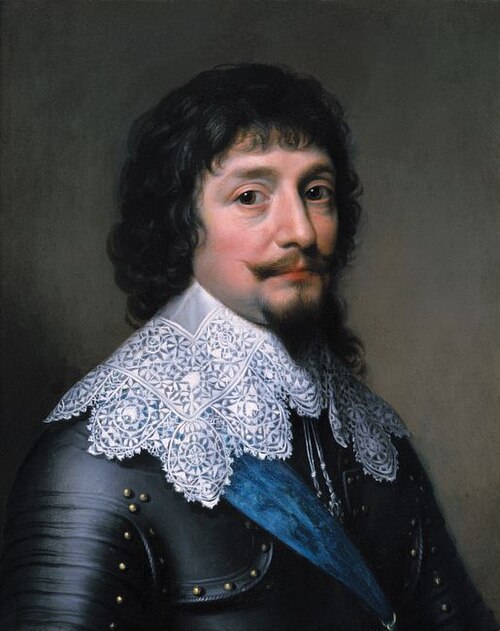
Elector Palatine whose acceptance of the Bohemian crown (1619) internationalised the revolt and cost him his lands.
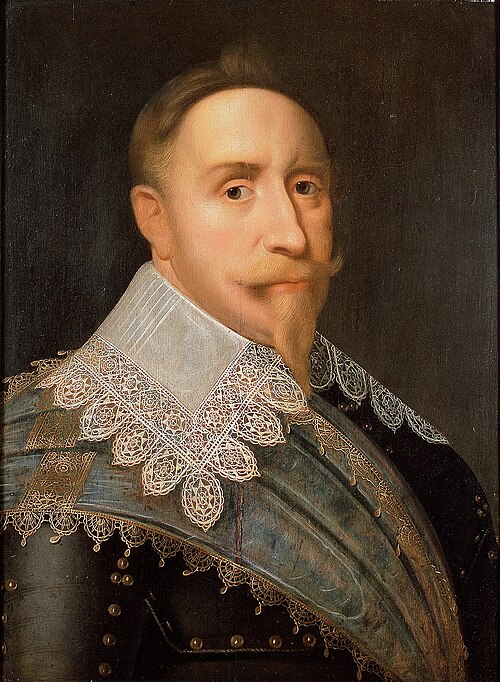
The war's most famous captain in later textbooks; dead at Lutzen at 37. His army's organisation became a Protestant legend.
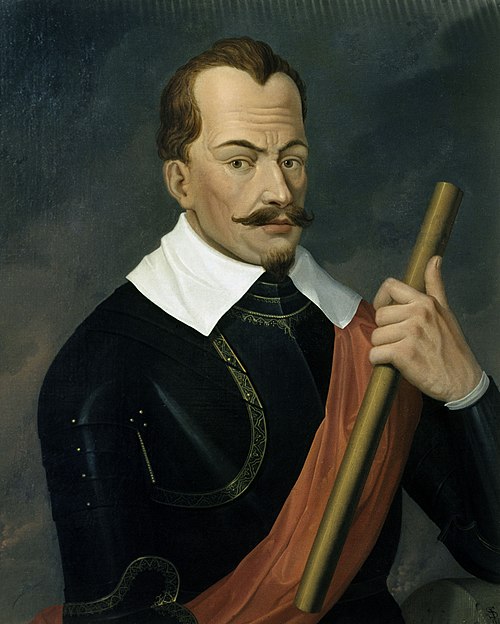
A Bohemian convert who raised armies as enterprises, won, was dismissed, recalled, and assassinated in 1634 with imperial consent.
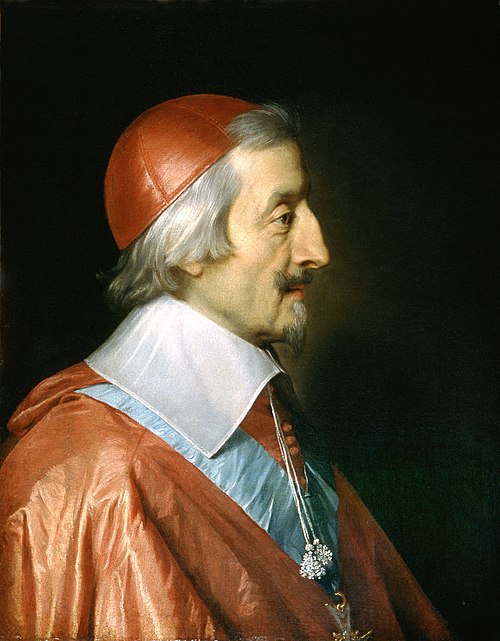
Richelieu funded the anti-Habsburg war for French security, not for Calvin. He died in 1642; Mazarin finished the peace.
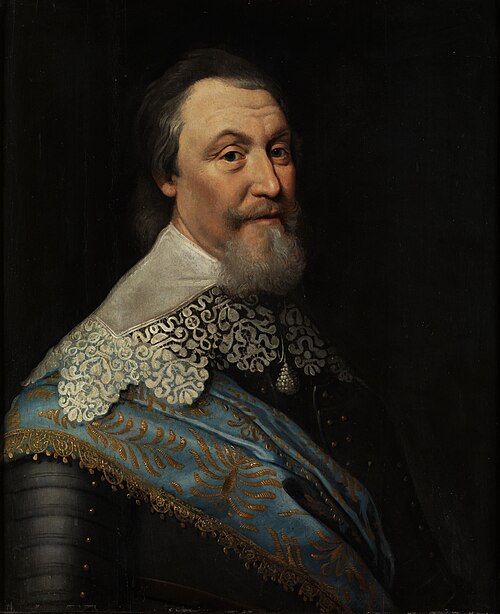
He held Sweden in the war after Lutzen and negotiated the Westphalian gains that paid for the blood.
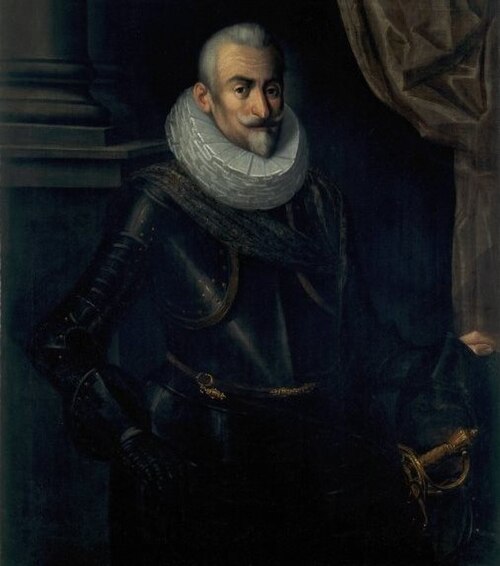
Tilly won White Mountain and lost Breitenfeld; his name is tied to Magdeburg's fall in Protestant memory.
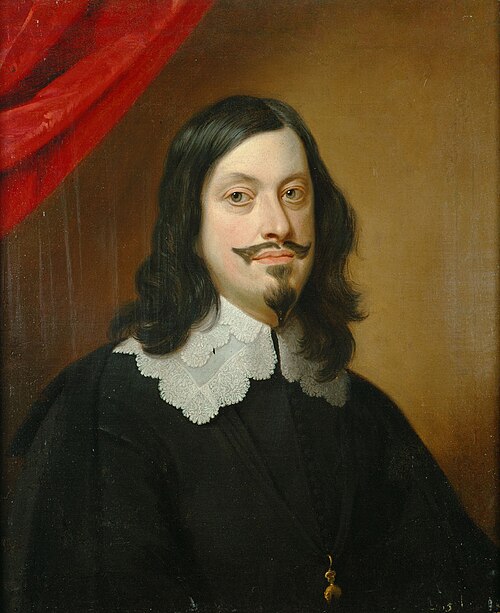
Ferdinand III inherited a war he could not win outright and accepted Westphalia -- a quieter icon than Gustavus, and as important.
Both, in sequence and in layers. Reducing it to one is how textbooks get short and wrong.
Most specialists say no, not in the cartoon sense; it remains useful as a later political language.
Schiller's Wallenstein trilogy is still how German theatre remembers the war's politics.
IR theorists are accidental icon-makers: they made "Westphalia" a person-sized idea.