The clearest number one in the sport's history. Bolt won the 100m and 200m at three consecutive Olympics — Beijing 2008, London 2012 and Rio 2016 — a sprint treble no one else has come close to, finishing with eight Olympic golds and eleven world titles. His 2009 World Championships in Berlin produced the two most extraordinary marks in track: 9.58 for 100m and 19.19 for 200m, both improved from his own records and both still untouched more than fifteen years later. He anchored Jamaica's 4x100m to 36.84 in 2012, another surviving world record. Beyond the numbers, Bolt did what no athlete had managed since Owens — he made track and field appointment television across the planet, filling stadiums and drawing hundreds of millions to the 100m final. He lost only a handful of finals in his prime and never lost one that mattered on the biggest stage. The margin at the top of any athletics ranking is his.
#1 Usain Bolt
#2 Carl Lewis
#3 Paavo Nurmi
Last reviewed Sources & creditsMedia creditsMethodology
Quick answers
What is the difference between 'athletics' and 'track and field'?
They are largely the same sport under two names. 'Athletics' is the international and British term, used by the governing body World Athletics, and it encompasses everything from stadium track and field to road running, cross country and race walking. 'Track and field' is the American term and refers more specifically to the stadium events: the track races — sprints, middle distance, distance, hurdles and relays — and the field events, the jumps and throws contested on the infield. In practice, when Americans say 'track and field' and the rest of the world says 'athletics', they usually mean the same collection of running, jumping and throwing events that form the core Olympic programme.
What are the main events in track and field?
The sport divides into five families. Sprints cover the 100m, 200m and 400m, plus the sprint relays. Middle and long distance runs from 800m through 1500m, 5000m and 10,000m to the marathon, with the 3000m steeplechase as a specialist event. Hurdles include the 110m (100m for women) and the 400m hurdles. The jumps are long jump, triple jump, high jump and pole vault. The throws are shot put, discus, hammer and javelin. Finally, the combined events — the men's decathlon and women's heptathlon — package several of these together over two days. Road running and race walking round out the full athletics programme beyond the stadium.
Who is the fastest human ever?
Usain Bolt of Jamaica holds the men's 100m world record at 9.58 seconds, set at the 2009 Berlin World Championships, and the 200m record at 19.19 seconds from the same meeting — both untouched for over fifteen years. During that 100m he reached a peak speed of around 44 km/h. On the women's side, Florence Griffith-Joyner's 10.49 seconds from 1988 remains the oldest and most debated sprint record, with her 200m mark of 21.34 also still standing. Bolt is almost universally regarded as the fastest human who has ever been reliably timed, and no active sprinter has come especially close to his records.
What is the false start rule?
Since 2010, a single false start means immediate disqualification, with no warning — a stricter rule introduced to speed up televised sprint starts and end the gamesmanship of deliberate early moves. A start is judged false if an athlete leaves the blocks before the gun or reacts within 0.100 seconds of it, since sports science holds that no human can hear and react faster than that. The rule most famously caught Usain Bolt, who was disqualified from the 100m final at the 2011 World Championships. Combined events such as the decathlon retain a one-warning system, reflecting the different demands on multi-event athletes across a long competition.
Why do Kenyan and Ethiopian runners dominate distance events?
It is a combination of factors rather than any single gene. Many top runners come from highland regions above 2,000 metres, where a lifetime at altitude boosts oxygen-carrying capacity. A culture of running long distances to school from childhood builds an aerobic base early, and specific East African populations appear to have physiological advantages such as slender lower limbs that make running economical. Crucially, the economic incentive is enormous: prize money and appearance fees from major marathons can transform a runner's family, drawing huge numbers into the sport and creating fierce competition. Training hubs like Iten in Kenya concentrate talent, coaching and pacing partners, producing a self-reinforcing cycle of excellence.
What are super-shoes, and are they legal?
Super-shoes are running shoes that combine a stiff carbon-fibre plate with a thick layer of lightweight, highly responsive foam, a design popularised by Nike's Vaporfly from 2017. Together they store and return energy and reduce the muscular cost of running, improving economy by an estimated 4 percent — enough to have driven marathon and distance records sharply downward. They are legal, but regulated: World Athletics caps the sole thickness (40mm for road shoes, less for track spikes), limits shoes to a single plate, and requires that models be available to all athletes rather than being one-off prototypes. Critics argue the shoes distort record comparisons across eras; supporters point out that the technology is on sale to anyone.
Ranking the greatest athletes in track and field is harder than in almost any other sport, because there is no single scoreboard across the disciplines. How do you weigh a sprinter's 9.58 against a distance runner's twelve Olympic medals, a pole vaulter's 35 world records against a heptathlete's four-decade-old points record? Athletics is really a federation of two dozen events, each with its own physics and its own history, and greatness looks utterly different in each. Any cross-event ranking is therefore an argument about values as much as a tally of medals.
This list weighs Olympic and world titles, world records and their longevity, dominance over contemporaries, and the degree to which an athlete transcended or transformed their event. The stat bars are normalised within this group of twelve — a full bar is the best mark on this list, not perfection. Athletes are compared across eras with the context of their times: amateur restrictions that cut careers short, world wars that erased prime years, and the technology and, at times, the chemistry that shaped what was possible. The top of the list is close to consensus; the middle will always be argued, which is exactly the point.
All-time podium
Comparison Lab
Toggle athletes on and off — every bar rescales to the leader of your selection.
Peak keeps each athlete’s strongest metrics; Career averages the full published set. Both stay editorial teaching marks.
Drag only reorders the cosmetic shortlist — it does not change teaching scores.
Default shortlist below works without JavaScript. Toggle chips after load to rebuild bars.
Compare · in selection · Career
- 1Usain Bolt94
- 2Paavo Nurmi91
- 3Carl Lewis88
- 4Jesse Owens86
- 5Emil Zatopek59
Olympic gold medals
World Championship golds
100m world record
200m world record
Olympic sprint doubles
Total Olympic medals
World records set
Golds at 1924 Paris
Straight Olympic long-jump titles
Unbeaten long-jump streak
World records in 45 minutes (1935)
Long-jump WR longevity
Golds at Berlin 1936
Golds at 1952 Helsinki
The top 10
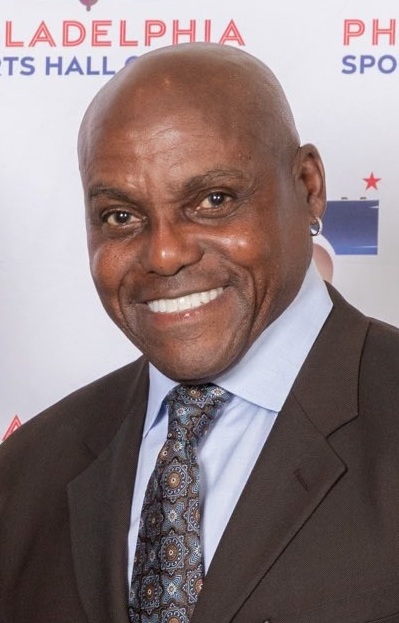
Voted Sportsman of the Century by the IOC, Lewis bridged sprinting and jumping like no one before or since. He won nine Olympic golds across four Games from 1984 to 1996, including the long jump at all four — a twelve-year reign in a single event — plus the 100m, 200m and sprint relays. His long-jump dominance was almost absurd: he went unbeaten in the event for a decade, winning 65 consecutive competitions between 1981 and 1991 before Mike Powell finally beat him with a world record. He added eight World Championship golds and a 100m world record of 9.86 in 1991. The knock on Lewis is that many of his sprint titles came in a doping-riddled era and that he never broke the long-jump world record himself, but his combination of range, longevity and championship temperament — he rarely lost when a medal was on the line — puts him second on nearly every serious list.
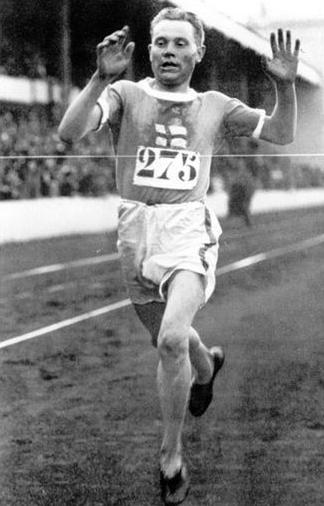
The Flying Finn defined distance running for a generation. Between 1920 and 1928 Nurmi won nine Olympic gold medals and three silvers — twelve in all, still the most any track and field athlete has won at the Games — across distances from 1500m to the 10,000m and cross country. At the 1924 Paris Olympics he won five golds, including the 1500m and 5000m finals barely an hour apart, running each with a stopwatch in his hand to hold an exact pace. Over his career he set 22 official world records at distances from 1500m to 20 kilometres. Nurmi ran with a metronomic, even-paced style that was revolutionary in an age of erratic racing, and his mastery of tempo effectively invented modern pacing. The Finnish state built its athletic identity around him, and the flame at the 1952 Helsinki Olympics was lit by Nurmi himself — the sport's first true international superstar.
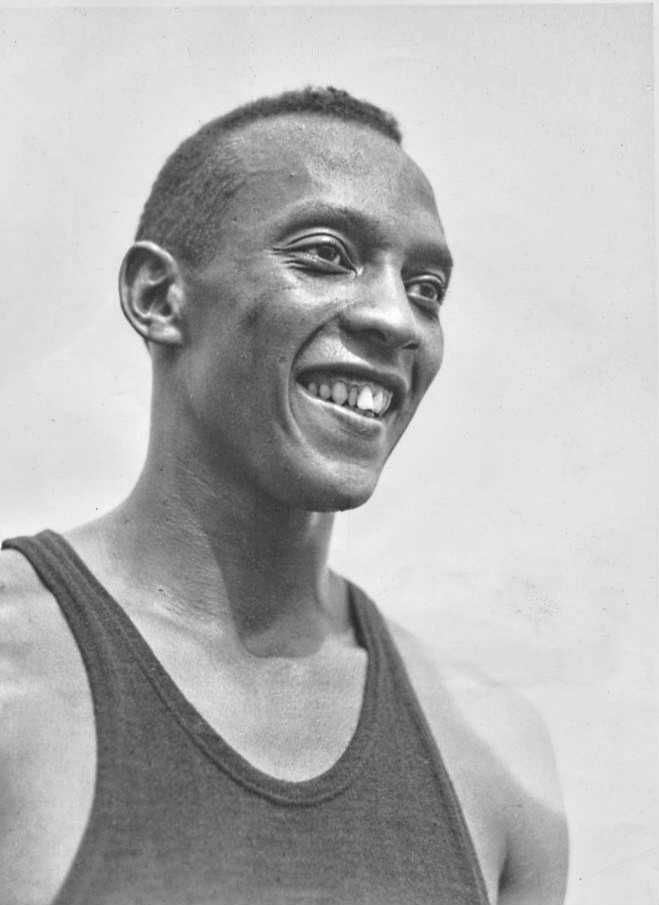
Owens compressed immortality into two dazzling stretches. On 25 May 1935, at a Big Ten meet in Ann Arbor, he set three world records and tied a fourth in the space of 45 minutes — including a long jump of 8.13m that would stand for 25 years. Fifteen months later, at the 1936 Berlin Olympics staged as a showcase for Nazi ideology, he won four gold medals — 100m, 200m, long jump and 4x100m relay — a rebuttal delivered in front of Hitler that made him a global symbol far beyond sport. He competed for only a few elite seasons before the amateur system, which offered no way to earn a living, pushed him out. Judged purely on peak, few have ever been higher: the 45 minutes in Ann Arbor is often called the greatest single day any athlete has had, and the Berlin four remained a sprint-jump benchmark for half a century.
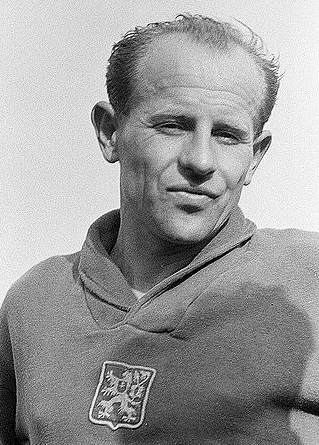
The Czech Locomotive ran with a grimacing, head-rolling style that looked agonised and proved unbeatable. His masterpiece came at the 1952 Helsinki Olympics, where he won the 5000m, the 10,000m and — entering his first ever marathon almost on a whim — the marathon too, a treble at a single Games that will almost certainly never be repeated. He won four Olympic golds and a silver in all, and set 18 world records at distances from 5000m to 30 kilometres. Zatopek pioneered brutal interval training, running hundreds of 400m repetitions in army boots, methods that underpin distance training to this day. He also embodied the sport's conscience, later demoted and punished for supporting the 1968 Prague Spring. For sheer range within distance running — track speed married to marathon endurance in the same fortnight — no one has ever matched his Helsinki fortnight.

Bubka owned the pole vault so completely that he made a business of the record book. He broke the world record 35 times — 17 outdoors and 18 indoors — famously raising it a centimetre at a time to collect appearance bonuses, and became the first human to clear both 6.00m (in 1985) and 6.10m. His outdoor record of 6.14m, set in 1994, stood for 26 years until Armand Duplantis surpassed it in 2020. He won six consecutive World Championship titles between 1983 and 1997, an unmatched run of global dominance. The paradox is his single Olympic gold, in Seoul 1988: freak weather, injury and one catastrophic no-height in Barcelona 1992 denied a vaulter who was, on any given day, untouchable. Judged on the event he transformed and the records he stockpiled, Bubka is the most dominant field-event athlete the sport has produced.
Johnson ran with a bolt-upright, short-stride style that coaches said should not work and that no one could beat. In 1996 in Atlanta he became the only man to win the 200m and 400m at the same Olympics, and he did it by demolishing the 200m world record with 19.32 — a mark so far ahead of its time it stood for twelve years until Bolt. His 400m record of 43.18, set in 1999, lasted seventeen years. He won four Olympic golds and eight World Championship titles, and was never beaten in a 400m final at a global championship across a decade. Johnson turned the one-lap sprint into a discipline of controlled, even-paced power rather than lung-bursting panic, and his combination of the 200m and 400m in one body — two events with opposing demands — has no real parallel in the sport's history.
Widely called the greatest female athlete of the twentieth century, Joyner-Kersee dominated the most demanding event in the sport. Her heptathlon world record of 7,291 points, set at the 1988 Seoul Olympics, still stands nearly four decades later and remains one of the most durable marks in athletics. She won three Olympic golds — heptathlon in 1988 and 1992, long jump in 1988 — plus a silver and two bronzes across four Games, and added four World Championship titles. She was simultaneously a world-class long jumper, with a best of 7.49m that ranks among the finest ever, and a sub-13-second hurdler, a range of abilities almost no one else has combined. Battling asthma throughout her career, she set the standard for the multi-event athlete: fast enough to sprint, strong enough to throw, springy enough to jump, and tough enough to do all seven over two exhausting days.
For a decade Gebrselassie was distance running, and then he reinvented himself on the roads. On the track he won the Olympic 10,000m in 1996 and 2000 — the second in one of the greatest races ever, edging Paul Tergat by nine hundredths of a second — and took four consecutive world 10,000m titles from 1993 to 1999. Across his career he set 27 world records at distances from 2000m to the marathon, an astonishing spread of speed and endurance. Moving up to the marathon, he ran 2:03:59 in Berlin in 2008 to become the first man under 2:04. His duels with Tergat and his beaming, arms-pumping finishing sprint made him one of the sport's most beloved figures. Few athletes have owned both the 10,000m and the full marathon at world-record level; Gebrselassie owned everything in between too.
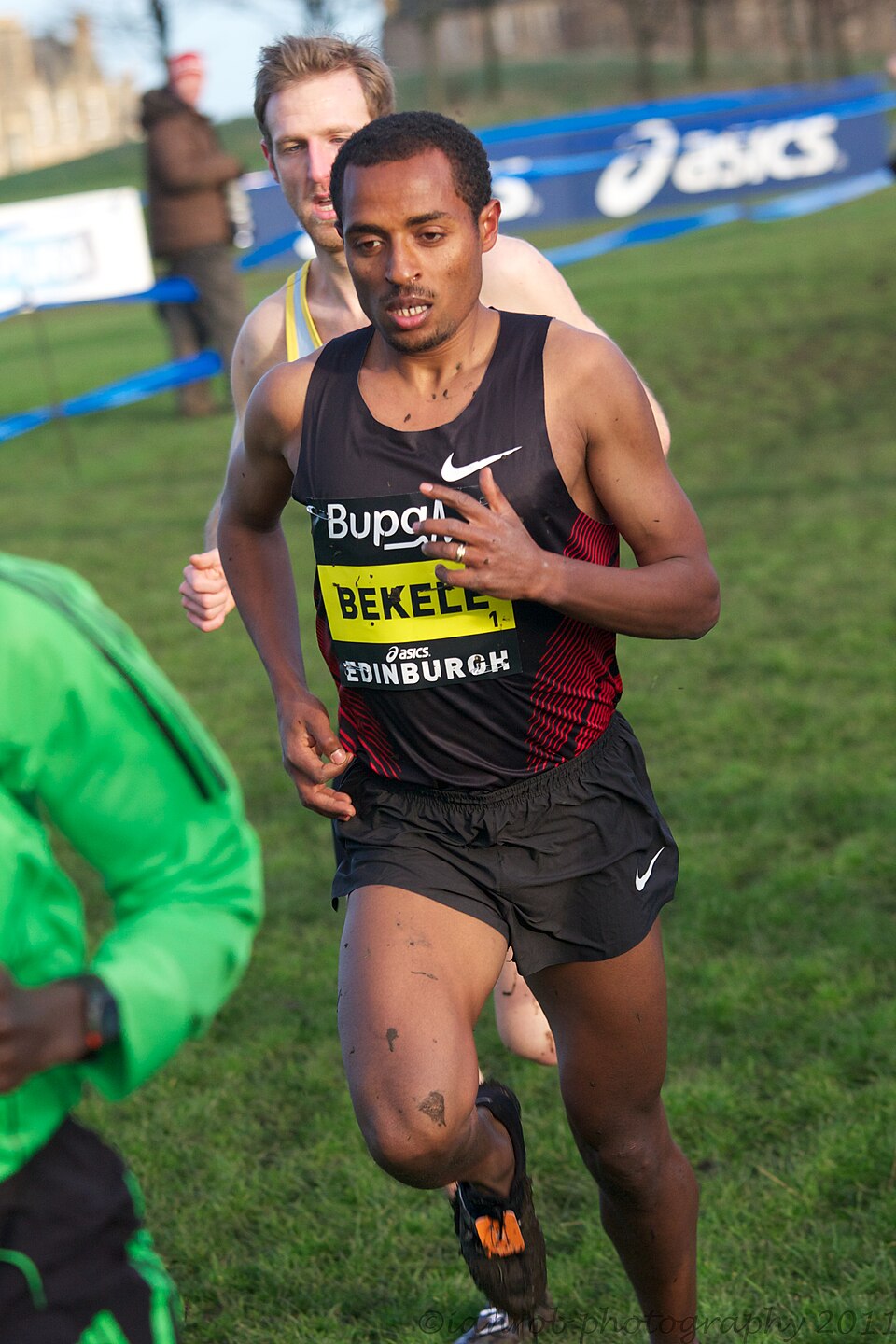
Bekele has a claim as the most complete distance runner ever measured. His world records of 12:37.35 for 5000m (2004) and 26:17.53 for 10,000m (2005) stood for roughly fifteen years, only falling in the super-shoe era. He won three Olympic golds — the 10,000m in 2004 and both the 5000m and 10,000m in 2008 — and five world track titles. On the country, he was untouchable: eleven World Cross Country titles between 2002 and 2008, winning the long and short course double in five straight years, a stretch of dominance over the sport's hardest terrain that no one else approaches. Late in his career he ran 2:01:41 in Berlin, at the time the second-fastest marathon in history, two seconds off the world record. Track, cross country and roads — Bekele reached the summit of all three, which almost no distance runner has done.
Felix retired as the most decorated athlete in World Championships history — 20 medals, 14 of them gold — and the most decorated American in Olympic track and field, with 11 Olympic medals including seven golds across five Games from 2004 to 2020. A 200m and 400m specialist who became the sport's greatest relay weapon, she anchored and split for US teams that seemed unbeatable, while also winning individual world titles at both distances. Her longevity was extraordinary: she medalled at global championships in three different decades. Off the track she became an equally important figure, publicly challenging her sponsor over maternity protections after a dangerous pregnancy in 2018 and helping force change across the industry. Judged on sustained excellence and sheer accumulation of championship medals, no woman in the sport's history collected more, and few did so while reshaping its business as profoundly.
Voted the IAAF Female Athlete of the Twentieth Century, Blankers-Koen produced one of the greatest single Olympics of all time. At the 1948 London Games, a 30-year-old mother of two — mocked in the press as too old to compete — won four gold medals in the 100m, 200m, 80m hurdles and 4x100m relay, the most by any woman at a single Olympics. The tragedy is how much more she might have won: competition rules limited her to four events, yet she simultaneously held world records in the high jump and long jump, and at one point held world records in as many as six different disciplines at once. The Second World War erased what should have been her peak years, from age 22 to 28. That she returned afterward to dominate sprints, hurdles and jumps simultaneously marks her as perhaps the most versatile woman the sport has seen.
Bars are scaled to the leader in this list.
The debate
The number-one spot is the least controversial part of any athletics ranking. Usain Bolt did what only a handful of athletes in any sport ever have: he combined absolute statistical supremacy — records so far ahead of their time they still stand — with a cultural reach that made his event the centrepiece of the Olympics. The arguments begin immediately below him and never end, because they are really arguments about which kind of greatness counts most. Do you reward the accumulation of medals across a long career, favouring Nurmi, Lewis and Felix? The single most dominant performance, favouring Owens's 45 minutes or Beamon's leap? The transformation of an event, favouring Bubka, Fosbury or the modern shoe-aided record-breakers? Each criterion produces a different list.
Era adjustment complicates everything. Amateurism cut Owens's and Zatopek's careers short and denied them any way to earn from their fame; two world wars erased the primes of athletes like Blankers-Koen; the amateur-professional divide, doping, and now super-shoes make comparing raw marks across decades almost meaningless. A women's 100m record from 1988 and a marathon record from 2023 sit in the same book but come from different worlds. The honest approach is to judge athletes against their own eras — how far ahead of their contemporaries they stood, how long their marks survived — rather than against a single absolute scale. By that measure the list rewards durable, verifiable dominance: Bolt and Lewis in the sprints, Nurmi and Bekele over distance, Joyner-Kersee and Blankers-Koen in the all-round events, each supreme in a way their own time could not match. Reorder the middle as your values dictate; the argument is the sport's oldest pastime.
Keep exploring
More in this category
Swimming
Four strokes, one clock, and the oldest question in the water: who reached the wall first.
🚴Road Cycling
An individual sport won by teams, where drafting, mountains and split-second timing decide everything.
🤸Gymnastics
Ten seconds of controlled flight, judged to a tenth of a point, after ten years of daily repetition.