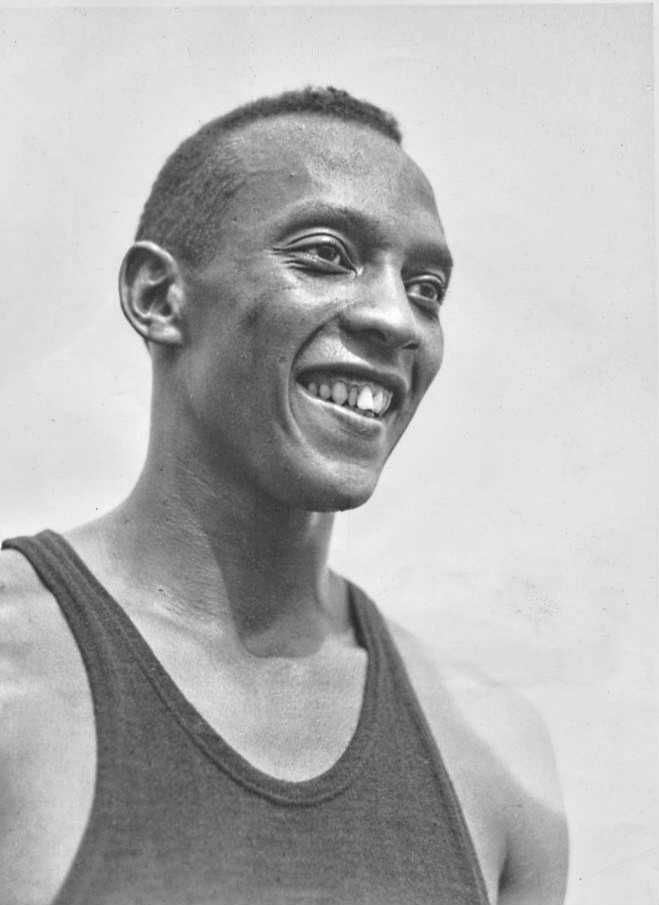
Why they rank here
Owens compressed immortality into two dazzling stretches. On 25 May 1935, at a Big Ten meet in Ann Arbor, he set three world records and tied a fourth in the space of 45 minutes — including a long jump of 8.13m that would stand for 25 years. Fifteen months later, at the 1936 Berlin Olympics staged as a showcase for Nazi ideology, he won four gold medals — 100m, 200m, long jump and 4x100m relay — a rebuttal delivered in front of Hitler that made him a global symbol far beyond sport. He competed for only a few elite seasons before the amateur system, which offered no way to earn a living, pushed him out. Judged purely on peak, few have ever been higher: the 45 minutes in Ann Arbor is often called the greatest single day any athlete has had, and the Berlin four remained a sprint-jump benchmark for half a century.
Career profile
Each bar shows how this athlete compares with the strongest in our all-time list for that metric.