- 1 Start
- 2 Mid
- 3 End
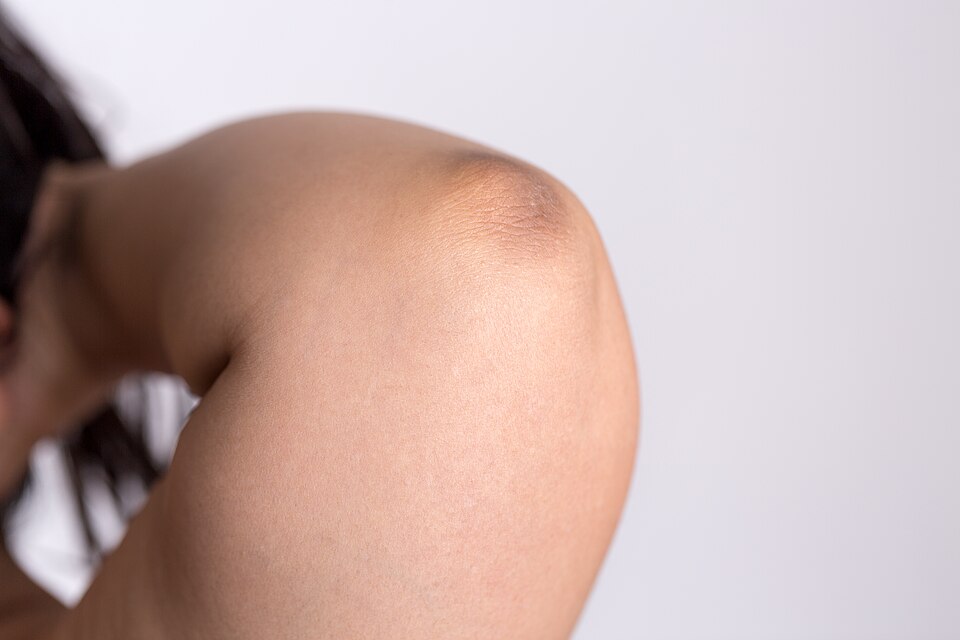
Wrist flexor/extensor stretch
●○○○○2 × 3 each direction, held 20–30s
With the elbow straight, gently bend the wrist forward and back using the opposite hand to add a mild stretch.
Elbow · The elbow's hinge-and-rotation design lets the forearm bend and turn simultaneously, but this dual role concentrates repetitive stress on a small set of tendons.
Darker cells mean a higher score for this topic on that metric.
LessMore
Last reviewed Sources & creditsMedia creditsMethodology
Tennis elbow, or lateral epicondylitis, is degenerative irritation of the tendons attaching to the outer bony bump of the elbow, most often related to repetitive wrist extension and gripping rather than tennis specifically.
Golfer's elbow, or medial epicondylitis, is a similar condition affecting the tendons on the inner side of the elbow, associated with repetitive gripping and wrist flexion activities.
Research has shown that chronically affected tendons often show degenerative changes with little active inflammation, which is part of why the term tendinopathy is now often preferred over the older term tendinitis.
Many cases improve substantially within six to twelve weeks with activity modification and progressive loading exercise, though some persist for six months or longer without proper management.
Cubital tunnel syndrome involves compression of the ulnar nerve as it passes behind the inner elbow, producing numbness and tingling in the ring and little fingers.
Counterforce bracing is commonly used to reduce load on irritated tendons during activity, though most guidelines consider it a supportive measure alongside, rather than a replacement for, progressive exercise.
Exercise for elbow tendon conditions typically centers on progressive tendon loading, beginning with isometric holds and advancing toward heavier and faster resisted movement as tolerated.
This approach reflects a broader shift in tendinopathy rehabilitation toward graded loading exercise, since evidence suggests tendons adapt and strengthen in response to controlled, progressively increasing stress.
Simple picture of a move already published on this page — not a prescription or medical advice.
2 × 3 each direction, held 20–30s
With the elbow straight, gently bend the wrist forward and back using the opposite hand to add a mild stretch.
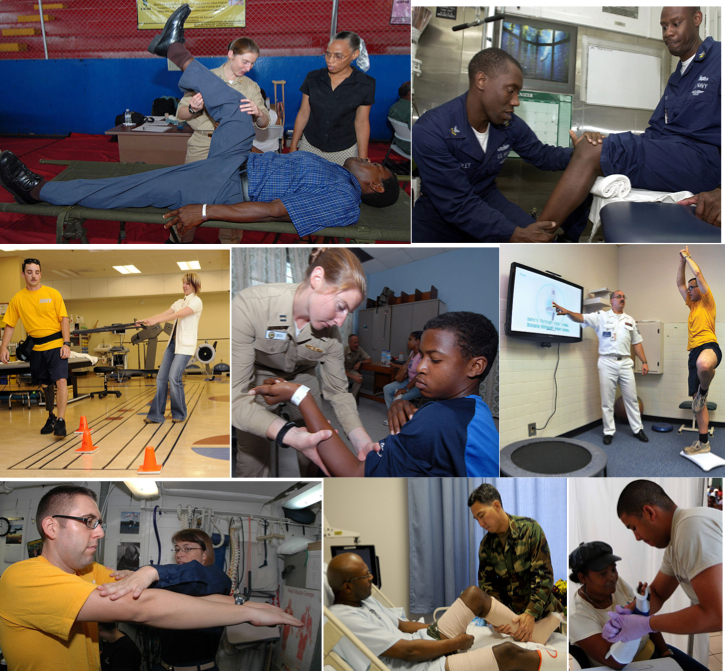
3 × 5, held 20–30s
Press the back of the hand up against a table or resistance without allowing wrist movement.
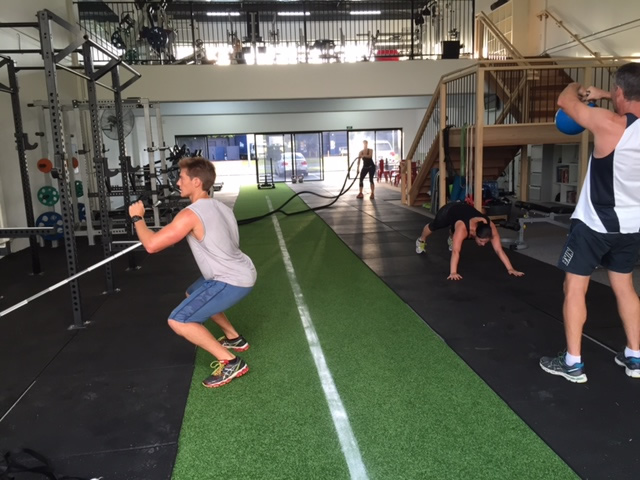
3 × 5, held 20–30s
Press the palm side of the hand down against a table or resistance without allowing wrist movement.
3 × 15
With a light weight, slowly lower the hand from an extended wrist position while keeping the motion controlled.
3 × 15
With a light weight, slowly lower the hand from a flexed wrist position, controlling the descent.
3 × 12
Using a light dumbbell, curl the wrist upward through a full comfortable range and lower with control.
3 × 10–15
Squeeze a soft ball or grip trainer through a full close, holding briefly before releasing.
3 × 10 each direction
Holding a light hammer or weighted bar, rotate the forearm from palm-up to palm-down under control.
Progression from isometric to eccentric to concentric loading, with gradually increasing weight and speed, generally reflects the sequence used in most evidence-based elbow tendon rehabilitation programs.
Neighbouring topics share region literacy — not a severity ranking.
The shoulder trades stability for the greatest range of motion of any joint in the body, relying heavily on the rotator cuff muscles rather than bone to stay centered.
Pain frequency 60 Same body regionThe wrist and hand pack more small joints, tendons, and nerves into a small space than almost any other body region, enabling fine motor control at the cost of frequent overuse injury.
Pain frequency 55 Same body region