Ferdowsi (Shahnameh poet)
Tenth-century verse became battery for later states — epics are politics.
Persianate societies · Iranian cultural sphere
Courts, poetry and administrative Persian from Iran to South and Central Asia — a cultural grammar, not a race.
Milestones in order. This is history, not a weekly activity grid.
Last reviewed Sources & creditsMedia creditsMethodology
Five research punchlines — scan before you dive.
Persianate culture names a shared toolkit of language, etiquette and arts that crossed empires — not a biological people.
From Safavid Isfahan to Mughal Delhi, Persian verse and bureaucracy traveled farther than any single ethnicity.
This page maps language, foodways, festivals and arts without ranking civilizations.
Imperial multilingual administration foreshadows later Persian prestige.
New Islamic polities inherit Iranian bureaucratic and literary habits.
Ferdowsi and peers rebuild epic memory in Persian.
Courts relocate; Persian remains a prestige medium.
Shiʿi state identity intertwines with Persian high culture.
Persian becomes elite language of much of South Asia.
English and vernaculars displace Persian bureaucracy in India.
Iran, Afghanistan and Tajikistan nationalize Persian varieties differently.
Exile literatures multiply Persianate voices abroad.
Social media recycles classical forms for protest and pop.
How Persian became a cross-imperial cultural grammar.
Persianate culture grew from Iranian empires and later Islamic courts that prized Persian as administration and art.
It is a sphere of practice — manuscripts, gardens, etiquette — not a gene pool.
Dari, Tajik, Urdu contact and Perso-Arabic script.
Persian varieties (Farsi, Dari, Tajik) sit beside Turkic, Indic and Caucasian languages in the same cities.
Script and loanwords mark contact; they do not invent races.
Rice, herbs, sour-sweet balances and Nowruz tables.
Herb-rice dishes, yogurt sauces and fruit-meat pairings travel with cookbooks and migration.
Nowruz tables (haft-sin) mark a seasonal calendar shared beyond any single state.
Nowruz, poetry nights and shrine calendars.
Nowruz is a spring new year with Zoroastrian roots and wide civic practice.
Poetry recitals and mourning calendars add layered public time.
Miniature, carpet, architecture and cinema.
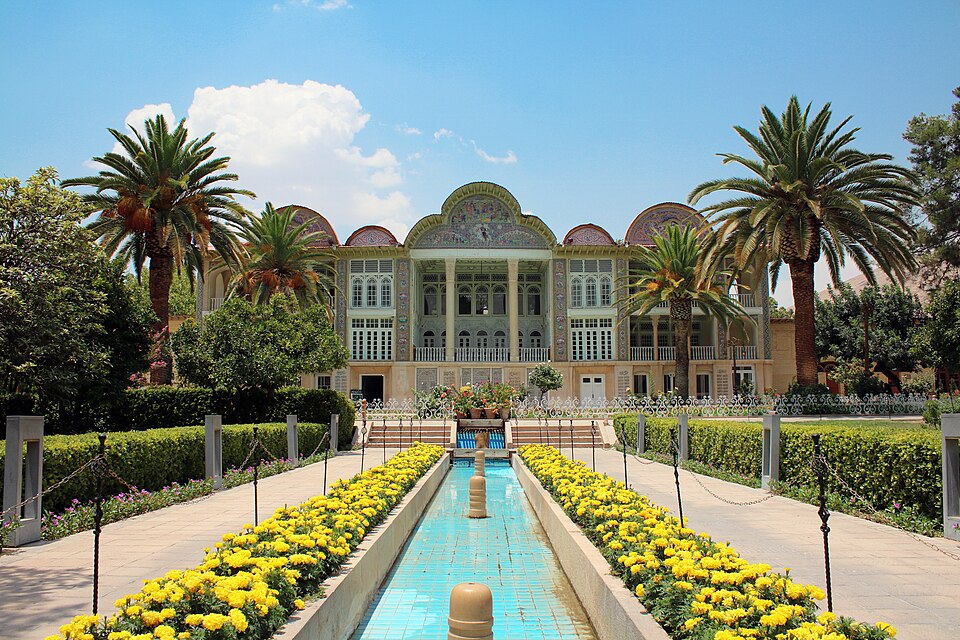
Miniature painting, carpet design and garden geometry encode status and cosmology.
Modern Iranian and diaspora cinema argue with that inheritance on screen.
Nation-states, sanctions, diaspora literature.
National borders split a once-overlapping sphere; soft power and exile keep it networked.
Young writers remix classical forms under censorship and abroad.
Named figures and living schools — culture as practice, not blood type.
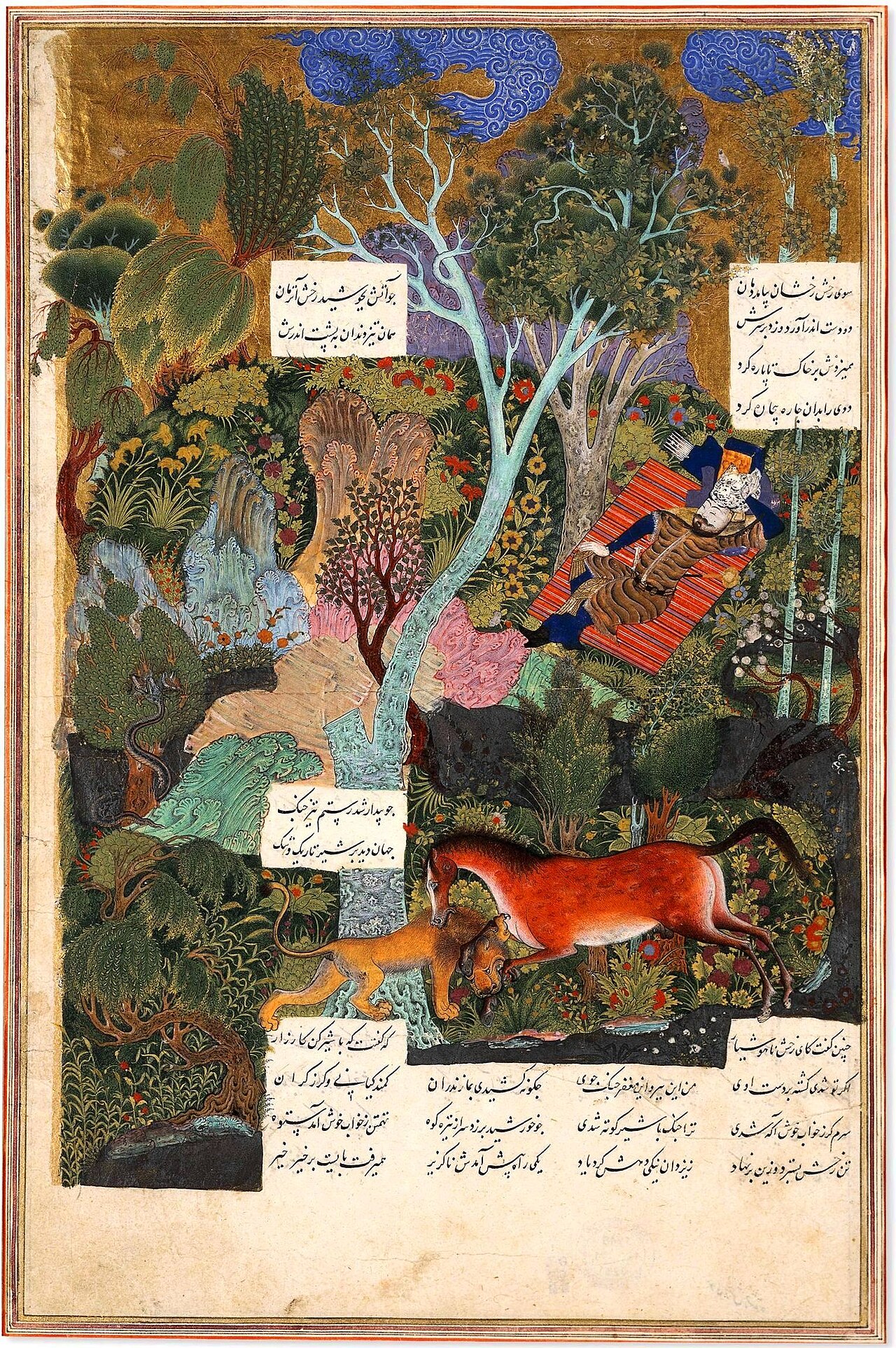
Tenth-century verse became battery for later states — epics are politics.
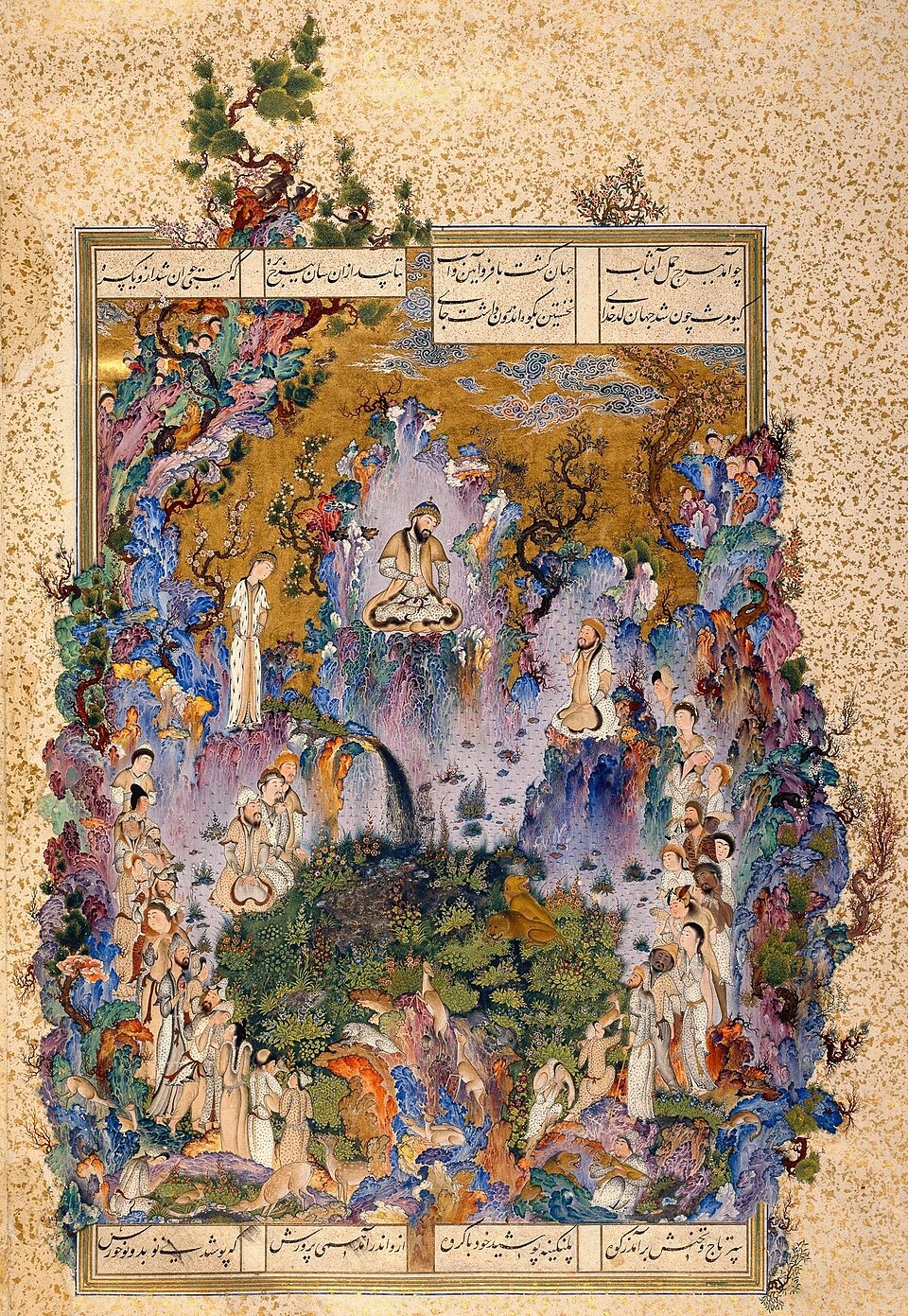
Collaborative painting ateliers signed "master" works — genius was often a studio.
Persian was Delhi's elite tongue for centuries — language of power ≠ ethnicity.
Classical meters go viral under censorship — form survives platform.
Scholarly themes rewritten for curious readers — not paywalled jargon, and never a race ranking.
Scholarship from India to Central Asia treats Persian as an administrative and poetic medium used by many ethnic and religious elites.
Takeaway A language of power is not a gene.
Readings of Ferdowsi show epic reused to legitimize later dynasties and national projects.
Takeaway Epics are batteries for states.
Garden studies link fourfold layouts to imperial ideology and water engineering.
Takeaway Paradise was irrigated.
Attribution and workshop research reveals collaborative production behind famous “masters.”
Takeaway Genius was often a studio.
Researchers follow Instagram poetry and exile media as continuations of classical forms under new censorship climates.
Takeaway Meters go viral.
Books, reviews and museum trails — starting points, not a syllabus.
How Persian language and aesthetics linked courts from Istanbul to Delhi.
Literary studies on epic reused by later dynasties.
Persian miniatures and carpets — workshop production, not lone genius.
Various films on Tehran bazaar, poetry slams and exile media.
Scholarly reference on Persian culture, history and language.

No. It is a cultural-linguistic sphere. Speakers and patrons included many ethnic and religious communities.
No. Iran alone hosts many languages; Persianate influence also shaped non-Iranian courts.
Court patronage made verse a prestige medium for ethics, love and politics across the sphere.
Persianate courts sponsored Muslim, Hindu and other communities at different times — faith is not the definition of the sphere.
Classical forms still animate cinema, pop music and diaspora literature.
Nineteenth-century racial myths abused linguistic labels. Here language history is not a ladder of races.
Compare Anatolia and South Asia culture pages; see the writing-systems atlas.
Literary histories and art catalogues — not folk race taxonomies.