Arrows are not invasions by default
Admixture graphics get sensationalized — read papers past "replacement" headlines.
Ice-age dispersals, farming spreads, empires and steamships — movement is the human default.
Side-by-side cultures and maps — never race ranks.
Read the map layers
Last reviewed Sources & creditsMedia creditsMethodology
Five research punchlines — scan before you dive.
Historical migration is a reference layer for the Peoples atlas: patterns you can check, not a podium for continents.
Each layer explains what the measure is, where it misleads, and how it connects to culture pages without racial ranking.
Demography and linguistics change; treat figures as era-bound.
What Historical migration measures and why it matters.
This layer exists to answer “where?” and “how connected?” without sliding into “who is better?”
Read it beside culture pages: tongues, cities and migrations are how peoples actually meet.
Coastal and inland paths peopled continents over millennia.
Crops, animals and languages often traveled together — not always.
Armies, slaves and administrators relocated millions before nation-states.
Rail and steam made mass voluntary moves possible.
Admixture dates are models with uncertainty, not racial origin myths.
Signals a careful reader looks for — and the traps that turn maps into myths.
Admixture graphics get sensationalized — read papers past "replacement" headlines.
Slave trades, expulsions and partitions are migrations too — demand they appear.
Indo-European homeland debates stay scientific — don't import nineteenth-century racism.
Drought correlates with some moves but never alone — weather pressures, states decide.
Scholarly themes rewritten for curious readers — not paywalled jargon, and never a race ranking.
Tooth enamel and aDNA reconstruct individual mobility — people moved more than nationalist textbooks admit.
Takeaway Bones remember roads.
Slave trades, expulsions and partitions are migrations too; voluntary settler myths erase them.
Takeaway Name the coerced arrows.
Ongoing arguments over steppe vs other homelands show healthy scientific conflict.
Takeaway Homeland ≠ master race.
Drought and sea-level change correlate with some movements — never as sole causes.
Takeaway Weather pressures; politics decides.
Media often turns admixture into “replacement” clickbait; careful papers use quieter language.
Takeaway Read past the headline.
Books, reviews and museum trails — starting points, not a syllabus.
Deep-time and recent moves — bones remember roads.
Isotope and aDNA show individuals traveled more than nationalist textbooks admit.
Forced and voluntary migrations both belong on the map — name coerced arrows.
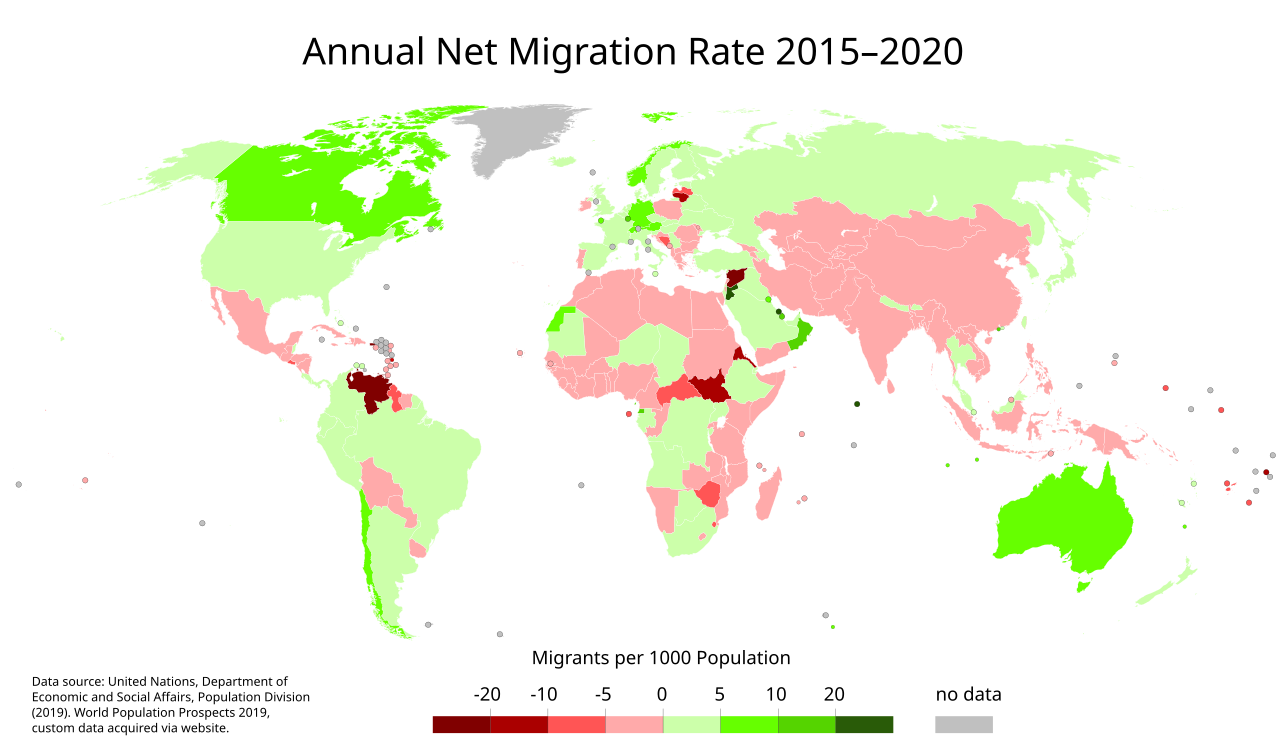
Contemporary displacement — migration is visible crisis, not ancient only.
Contemporary flow statistics — pair with historical layers.
No. Atlas pages refuse superior/inferior framing.
When masters revise; UN and linguistic datasets move — check dates in prose.
Yes, with attribution to Tool-Lifes and underlying public datasets named in text.
Reusable licences and stable Wikipedia titles feed our media pipeline.
No. They show languages, density, migration or methods — never race league tables.
Cultural pages note conflict when relevant; atlas layers prefer demographic basins over propaganda maps.
The metric is not; using it to rank human worth is.
Pair this page with Race is not biology in the diversity pillar.