Side by side
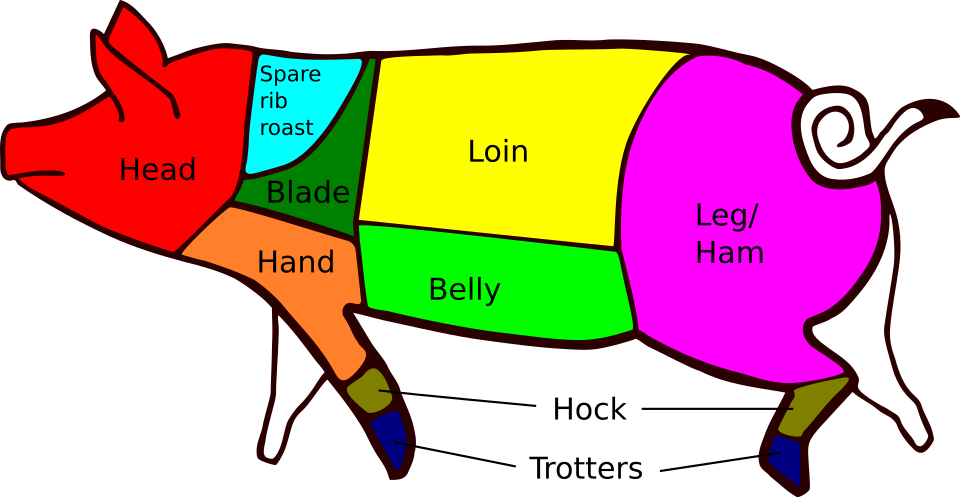
Shoulder
Boston butt · collar · spare rib roast
The upper foreleg and neck, a bundle of small muscles held together by generous seams of fat and connective tissue. That structure makes it almost impossible to overcook slowly, which is why every barbecue tradition on earth converged on this one cut for pulled pork.
Choose a piece with visible fat seams running through the middle, not just a cap on the outside.
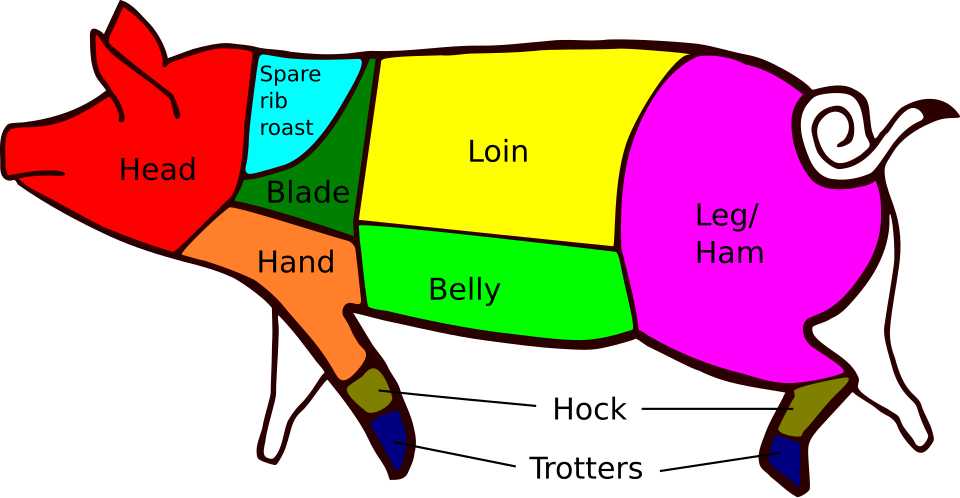
Picnic shoulder
Front leg · hand · arm shoulder
The lower half of the foreleg, below the shoulder proper. Leaner and more sinewy than the butt above it, with a thick skin that crisps into crackling if you let it dry out first. It is the traditional cut for pressed and boiled pork dishes across Asia and Europe alike.
Skin should be smooth and dry to the touch. A damp, sticky rind will steam rather than crisp.
Which one to buy
- Better forShoulder : Picnic shoulder
- Slow roastingShoulder95 : —
- StewsShoulder82 : —
- GrillingShoulder60 : —
- Boiled & slicedPicnic shoulder— : 88
- RoastingPicnic shoulder— : 78
- SausagePicnic shoulder— : 66
Other comparisons
All cuts
Beef Primals
Chicken Portions
Bluefin Tuna Cuts
Temperatures are guidance for whole-muscle cuts. Ground meat and poultry need 71°C / 160°F throughout.