Side by side
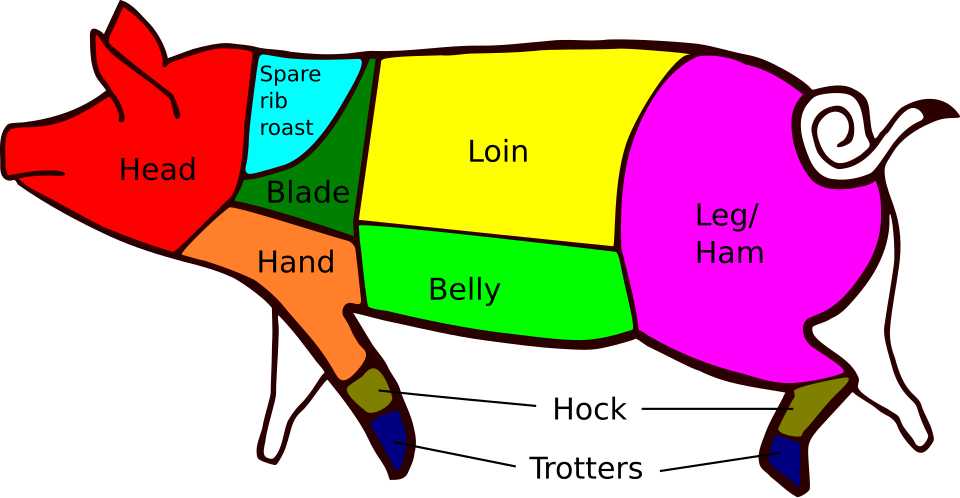
Picnic shoulder
Front leg · hand · arm shoulder
The lower half of the foreleg, below the shoulder proper. Leaner and more sinewy than the butt above it, with a thick skin that crisps into crackling if you let it dry out first. It is the traditional cut for pressed and boiled pork dishes across Asia and Europe alike.
Skin should be smooth and dry to the touch. A damp, sticky rind will steam rather than crisp.
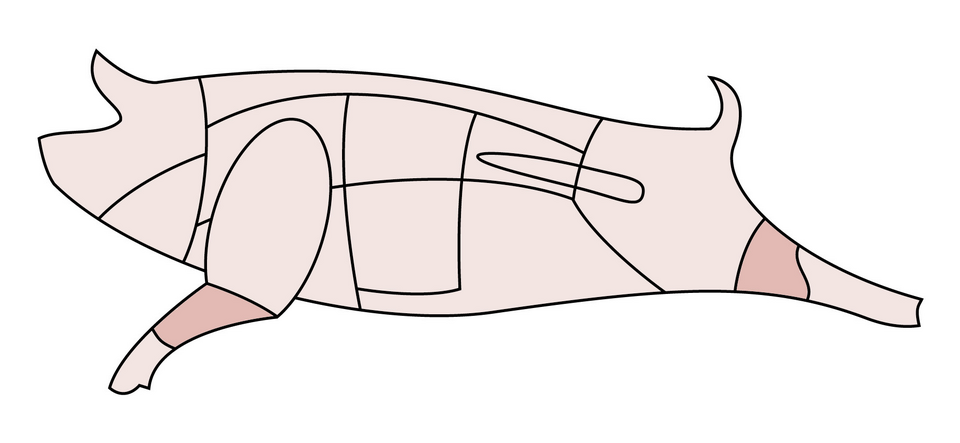
Hock & trotter
Knuckle · eisbein · jokbal
Ankle and foot: skin, tendon and bone with very little muscle. Almost pure collagen, which is why it turns broths silky and why chilled versions set into jelly on their own. Germany roasts it, Korea braises it in soy and spices, and both end up somewhere gelatinous and addictive.
Pick hocks with unbroken skin and a clean cut through the bone; splintered ends cloud the broth.
Which one to buy
- Better forPicnic shoulder : Hock & trotter
- Boiled & slicedPicnic shoulder88 : —
- RoastingPicnic shoulder78 : 62
- SausagePicnic shoulder66 : —
- BraisingHock & trotter— : 92
- Bone brothHock & trotter— : 85
Other comparisons
All cuts
Beef Primals
Chicken Portions
Bluefin Tuna Cuts
Temperatures are guidance for whole-muscle cuts. Ground meat and poultry need 71°C / 160°F throughout.