Side by side
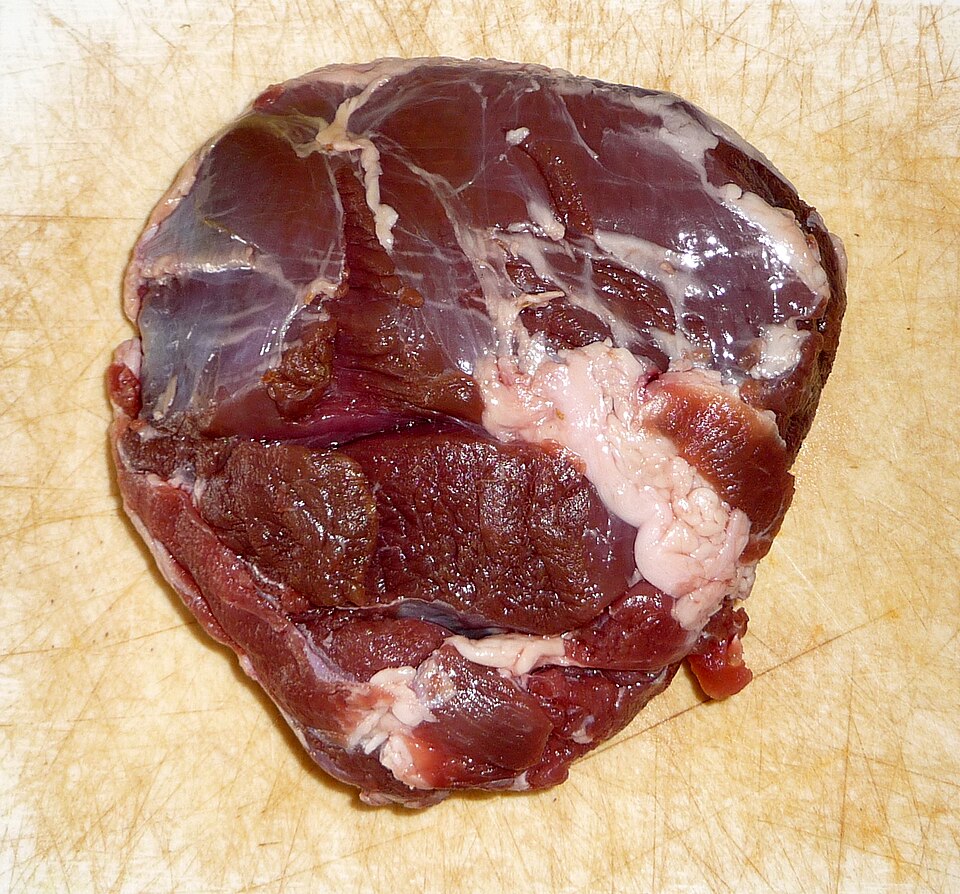
Shoulder
Square-cut · épaule · 어깨
The everyday roasting joint of the sheep: enough fat and collagen to stay juicy for hours, large enough to feed a table. Bone-in holds shape; boneless rolls for even slicing. This is the cut behind most weekend lamb roast traditions.
A thick fat cap bastes the meat as it renders — do not trim it bare before roasting.
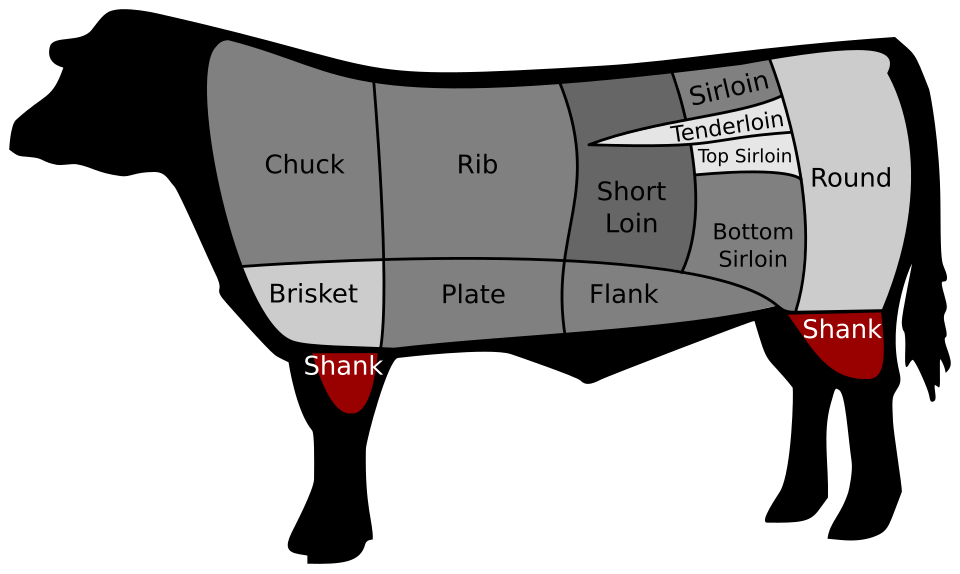
Shank
Knuckle · jarret · 정강이
Lower leg packed with collagen. Hours of moist heat turn it into the sticky, spoonable meat of osso-style braises. Cheap per kilo until restaurants rediscovered it; still one of the best value cuts on the animal.
French-trimmed shanks with a clean bone handle look better and brown more evenly.
Which one to buy
- Better forShoulder : Shank
- Slow roastingShoulder94 : 70
- BraisingShank85 : 96
- BarbecueShoulder70 : —
- StewsShank— : 88
Other comparisons
All cuts
Beef Primals
Chicken Portions
Bluefin Tuna Cuts
Temperatures are guidance for whole-muscle cuts. Ground meat and poultry need 71°C / 160°F throughout.