Side by side
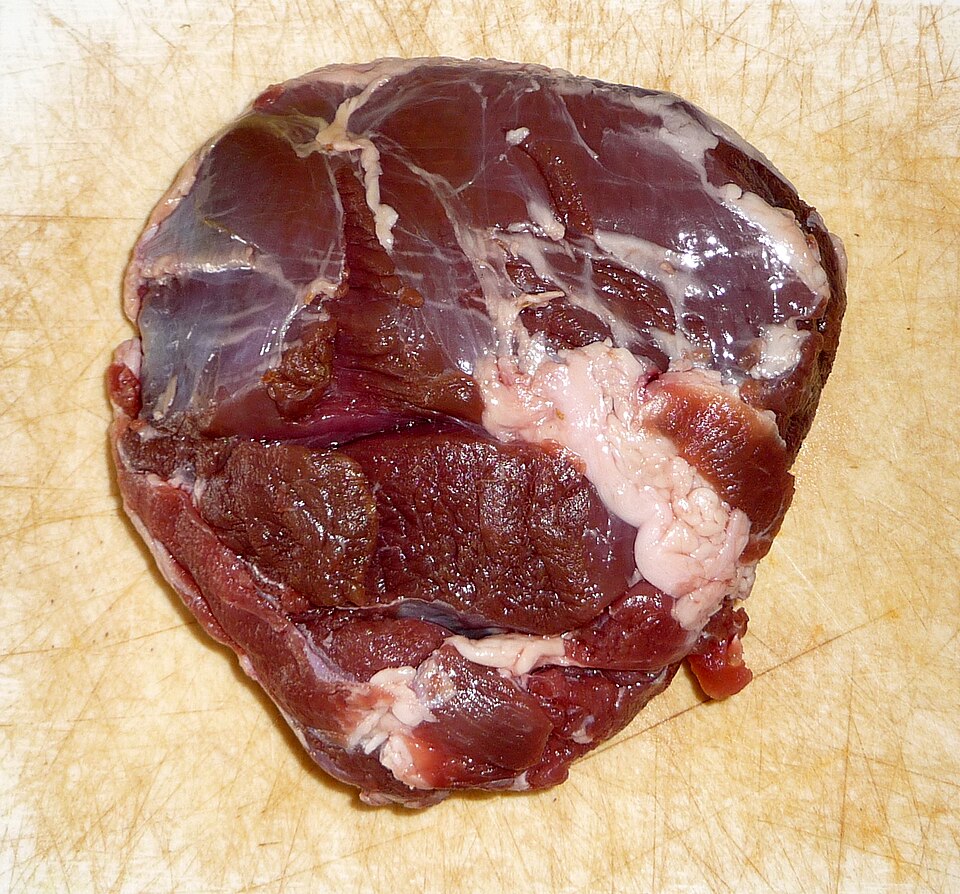
Neck
Scrag · collier · 목심
Worked hard and threaded with connective tissue, so it is cheap until you give it time. Long braises turn the collagen into gravy; rushed heat leaves it stringy. In many butcheries the neck is rolled and tied for pot roasting.
Ask for neck fillet with the bone removed if you want even slices; bone-in is better for stock.
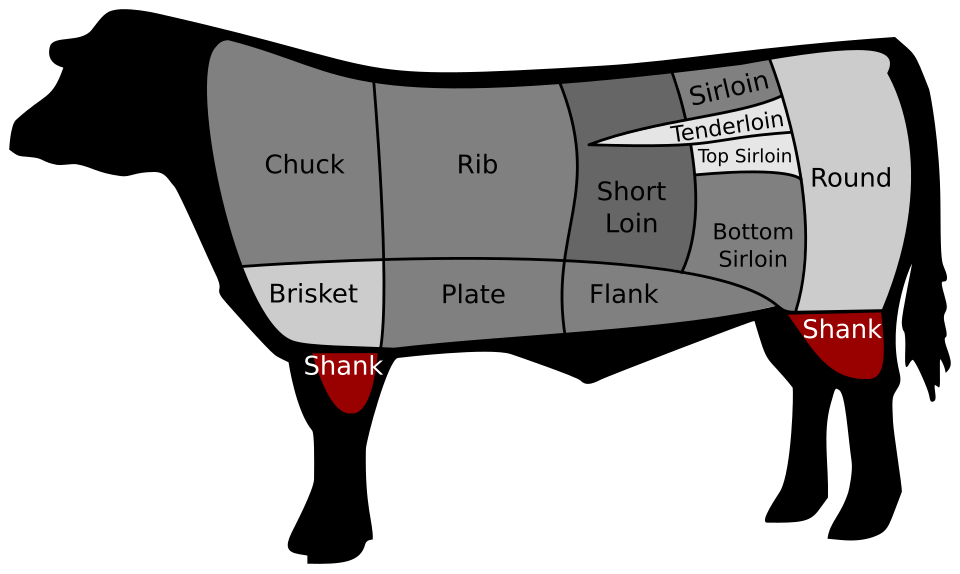
Shank
Knuckle · jarret · 정강이
Lower leg packed with collagen. Hours of moist heat turn it into the sticky, spoonable meat of osso-style braises. Cheap per kilo until restaurants rediscovered it; still one of the best value cuts on the animal.
French-trimmed shanks with a clean bone handle look better and brown more evenly.
Which one to buy
- Better forNeck : Shank
- BraisingAbout the same92 : 96
- StewsAbout the same88 : 88
- RoastingNeck55 : —
- Slow roastingShank— : 70
Other comparisons
All cuts
Beef Primals
Chicken Portions
Bluefin Tuna Cuts
Temperatures are guidance for whole-muscle cuts. Ground meat and poultry need 71°C / 160°F throughout.