Side by side
ShankHead & cheek
Tenderness
26
34
Marbling
30
44
Umami
80
88
Price
30
44
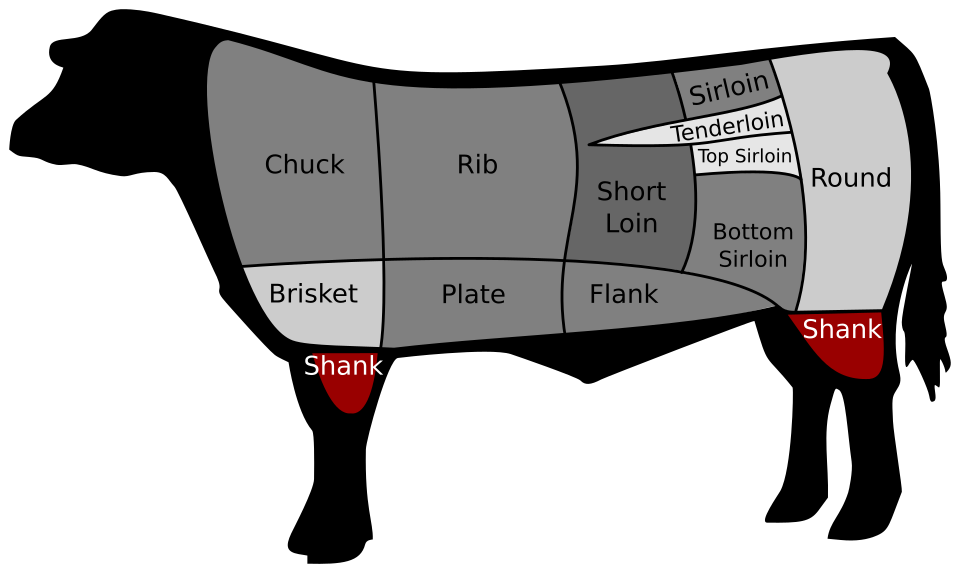
Shank
Shin · jarret · osso buco
Leg muscle, and essentially a block of collagen. Under pressure or in a sous vide bath it converts completely into gelatin, at which point a spoon will cut it.
Pressure 40 minCook it right through
Look for tendon that is translucent rather than chalky, and meat that springs back when pressed.
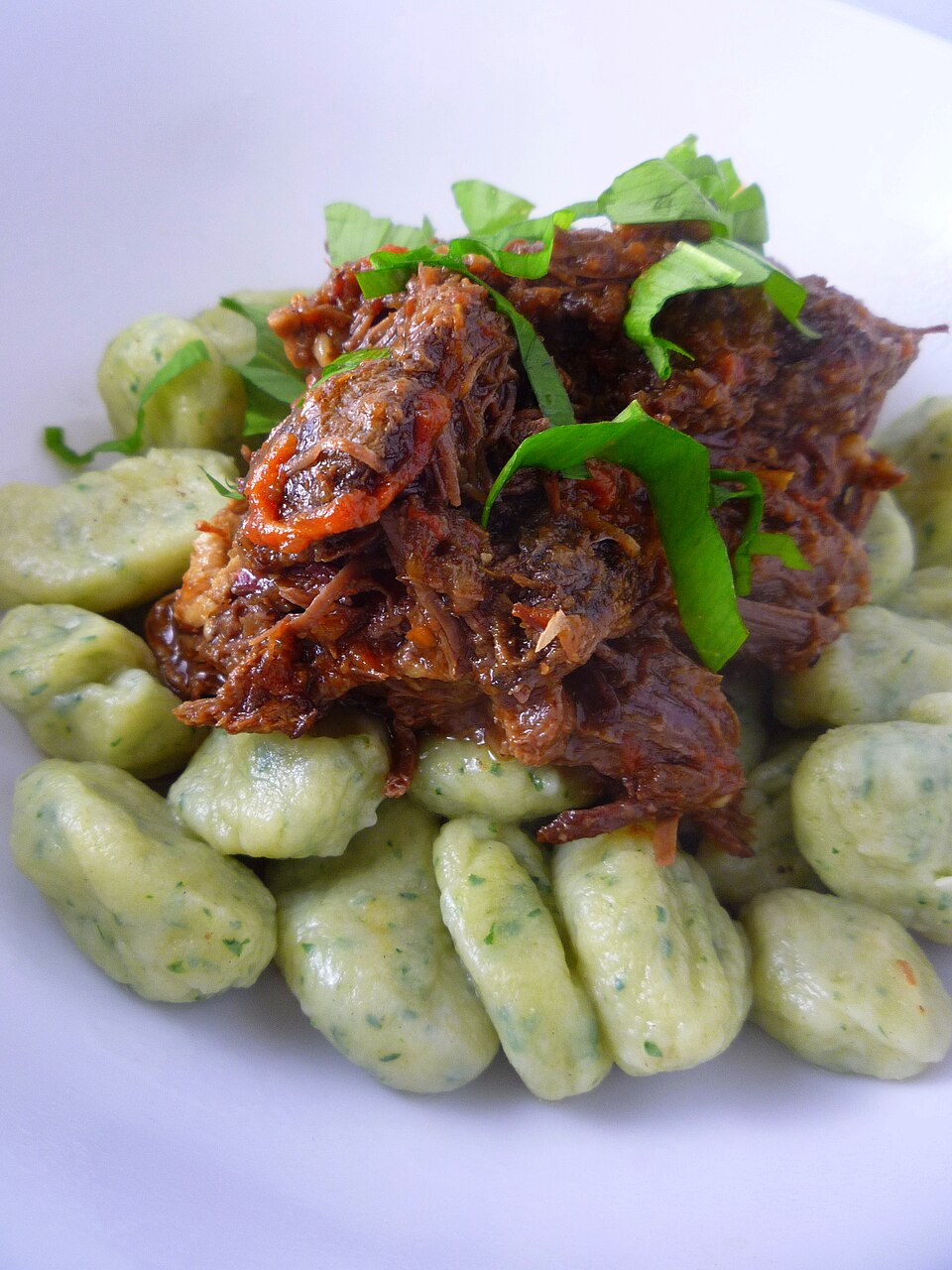
Head & cheek
Cheek · joue · carrillera
The cheek chews for a living, so its collagen is packed unusually tight. It is the paradox cut: the longer you cook it, the more tender it gets, and cultures from Spain to Japan prize it for exactly that.
Low and longCook it through
Good cheek is tight-grained and still springy; avoid pieces that feel slack or look dull.
Which one to buy
- Better forShank : Head & cheek
- Braised in soyShank90 : —
- StewsShank85 : —
- Bone brothShank75 : —
- BraisingHead & cheek— : 85
- Pressed & slicedHead & cheek— : 80
- Boiled & slicedHead & cheek— : 60
Other comparisons
All cuts
Beef Primals
Chicken Portions
Bluefin Tuna Cuts
Temperatures are guidance for whole-muscle cuts. Ground meat and poultry need 71°C / 160°F throughout.