Side by side
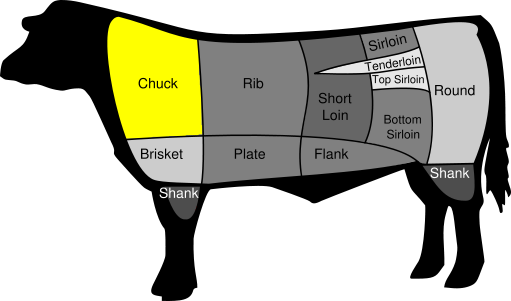
Chuck
Neck & shoulder · paleron · aguja
A bundle of working muscles running from the shoulder into the neck. The grain is coarse and it carries a lot of connective tissue, but simmer it long enough and that tissue melts into gelatin and gives you the deepest broth on the animal. It is also the standard cut for thin-sliced barbecue.
Look for even red muscle with minimal white sheets of membrane running through it. Heavily seamed pieces are better bought for stew.
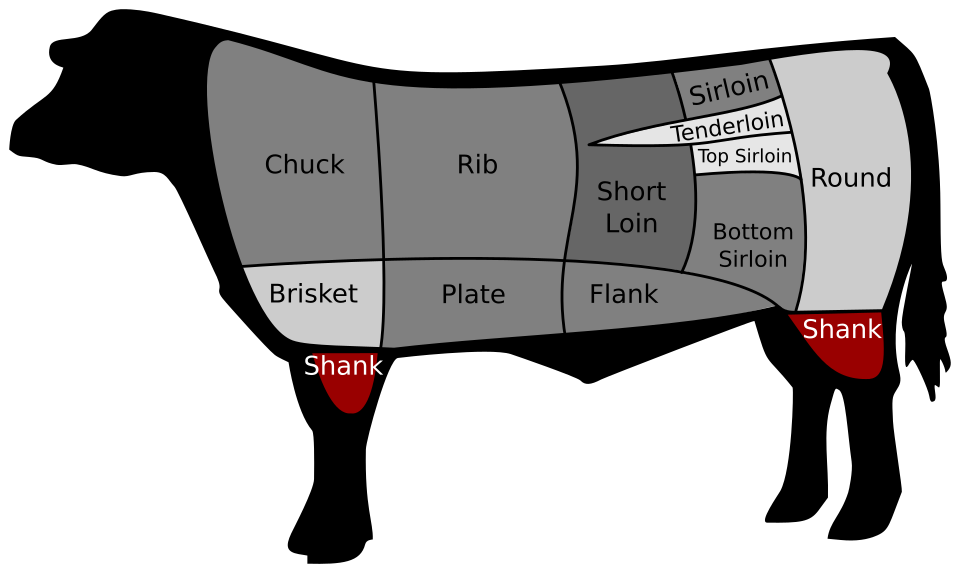
Shank
Shin · jarret · osso buco
Leg muscle, and essentially a block of collagen. Under pressure or in a sous vide bath it converts completely into gelatin, at which point a spoon will cut it.
Look for tendon that is translucent rather than chalky, and meat that springs back when pressed.
Which one to buy
- Better forChuck : Shank
- BraisingChuck88 : —
- Soups & stewsChuck80 : —
- GrillingChuck55 : —
- Braised in soyShank— : 90
- StewsShank— : 85
- Bone brothShank— : 75
Other comparisons
All cuts
Beef Primals
Chicken Portions
Bluefin Tuna Cuts
Temperatures are guidance for whole-muscle cuts. Ground meat and poultry need 71°C / 160°F throughout.