Side by side
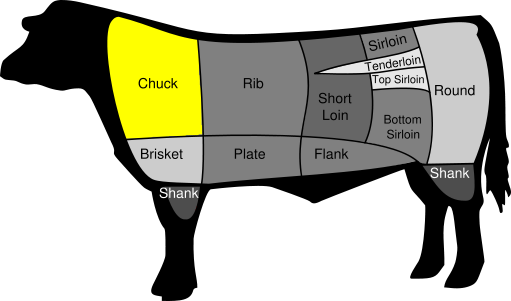
Chuck
Neck & shoulder · paleron · aguja
A bundle of working muscles running from the shoulder into the neck. The grain is coarse and it carries a lot of connective tissue, but simmer it long enough and that tissue melts into gelatin and gives you the deepest broth on the animal. It is also the standard cut for thin-sliced barbecue.
Look for even red muscle with minimal white sheets of membrane running through it. Heavily seamed pieces are better bought for stew.
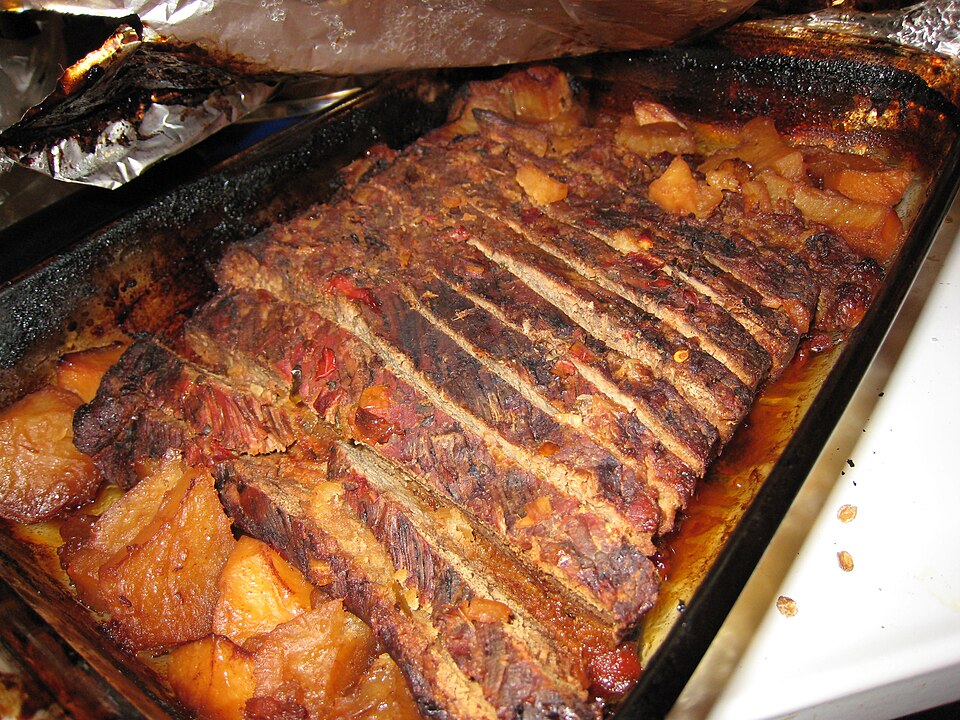
Brisket
Breast · poitrine · pecho
The chest. Thick sheets of connective tissue mean it only becomes tender after long, low cooking — which is why clear Asian broths and Texas barbecue, two utterly unrelated traditions, both land on the same piece of the animal.
Distinct alternating layers of fat and lean give the richest broth; a single lean slab will taste thin.
Which one to buy
- Better forChuck : Brisket
- BraisingChuck88 : —
- Soups & stewsChuck80 : —
- GrillingChuck55 : —
- Broths & soupsBrisket— : 95
- Boiled & slicedBrisket— : 85
- BarbecueBrisket— : 80
Other comparisons
All cuts
Beef Primals
Chicken Portions
Bluefin Tuna Cuts
Temperatures are guidance for whole-muscle cuts. Ground meat and poultry need 71°C / 160°F throughout.