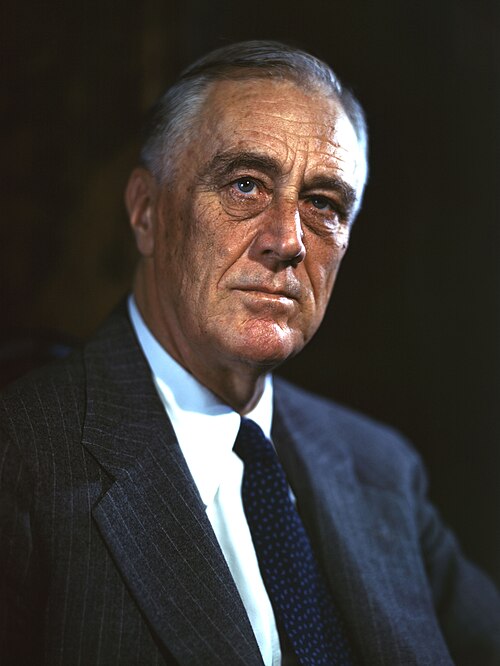
Franklin D. Roosevelt
Roosevelt moved the US from neutrality to Lend-Lease and full belligerency, then died on 12 April 1945 before the final surrenders. His Four Freedoms and UN design shaped the postwar script.
Office
3
Key act
3
Died
3
Commanders, statesmen and the arguments historians still run about 1939-1945.
Educational history. Casualty figures are documented ranges. This is not operational advice, a ranking of nations, or a how-to for weapons or coups.
Darker cells mean a higher score for this topic on that metric.
LessMore
Last reviewed Sources & creditsMedia creditsMethodology
No. Scores are browsing aids inside an era-bounded atlas — not live league tables of countries.
Scholarly ranges centre on about 70-85 million dead, including combatants and civilians. The Soviet Union (about 24-27 million) and China (about 15-20 million, wide range) are the largest national totals. Precise counts remain impossible.
Nazi Germany and collaborators murdered about six million Jews, using ghettos, shooting pits and killing centres, alongside mass murder of Roma, disabled people, Soviet POWs and others. It is documented as genocide within the wider war, not a side-effect.
No single cause. Coalition resources, Soviet manpower and industrial relocation, US production and sea power, intelligence, and Axis strategic overreach all matter. Historians argue about weights; they do not treat victory as destiny.
Japan announced surrender on 15 August 1945 after the Hiroshima and Nagasaki bombings and the Soviet invasion of Manchuria; the formal instrument was signed on 2 September 1945 aboard USS Missouri. Debate continues on the relative weight of those shocks.
Japanese colonial rule collapsed in August 1945. US and Soviet occupation zones met at the 38th parallel, creating two Korean states by 1948 and the setting for the 1950-53 Korean War.
The photogenic "Big Three" did not exhaust the war's political cast. Chiang, de Gaulle, Tito and colonial soldiers sit in a wider iconography.
Historians still argue about strategic bombing, the second-front delay, and the decision to use nuclear weapons -- arguments, not verdicts for a scoreboard.
Roosevelt moved the US from neutrality to Lend-Lease and full belligerency, then died on 12 April 1945 before the final surrenders. His Four Freedoms and UN design shaped the postwar script.
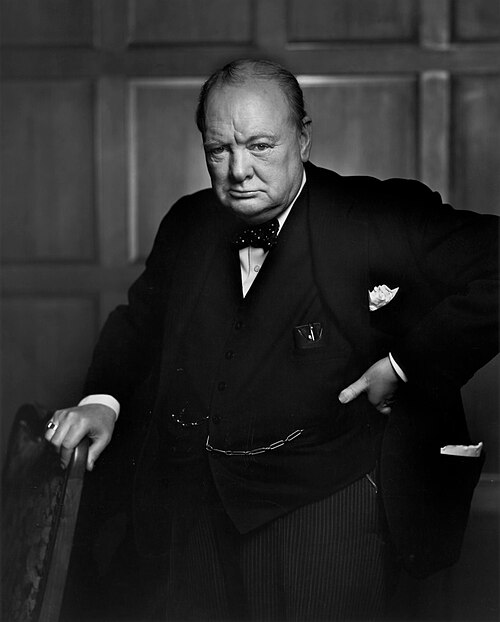
Churchill's May 1940 premiership kept Britain in the war after France fell. He was a coalition broker and memoirist whose "finest hour" prose still sets English memory -- and hides imperial contradictions.
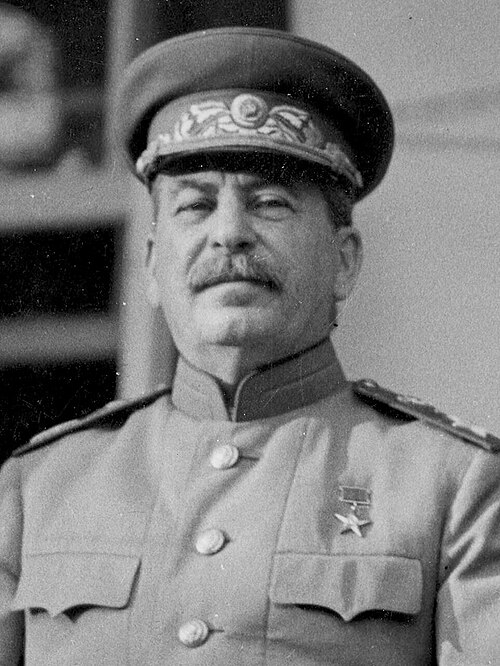
Stalin's regime absorbed the German invasion after 1941, relocated industry, and drove to Berlin. The same state ran the Gulag and imposed a postwar order on Eastern Europe.
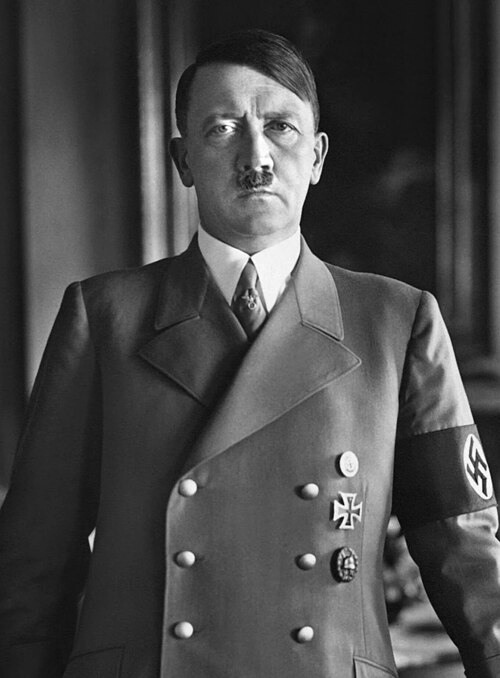
Hitler's racial war and strategic gambles -- especially Barbarossa -- destroyed the German state he claimed to exalt. He died in Berlin on 30 April 1945.
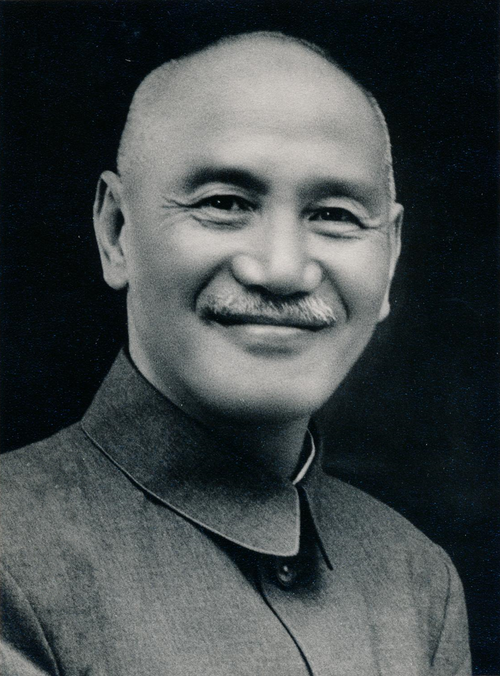
Chiang's Nationalist government held a formal great-power seat while fighting Japan and preparing to resume civil war with the Communists. US aid never matched the China theatre's scale.
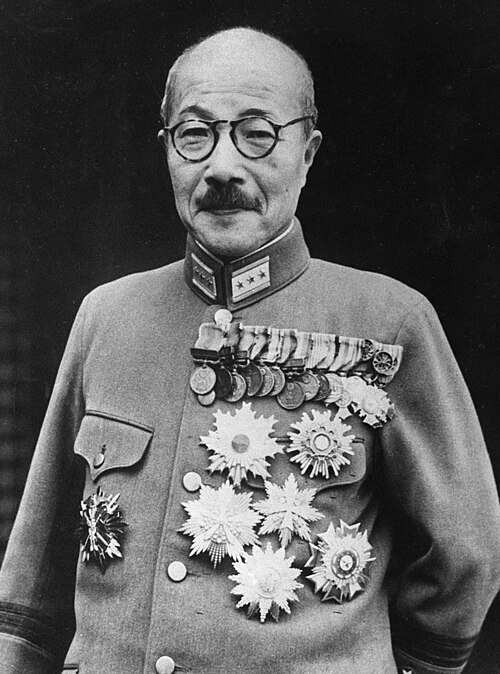
Tojo presided over the 1941 decision for war with the US, Britain and the Netherlands. He was tried and executed in 1948 after the Tokyo tribunal.
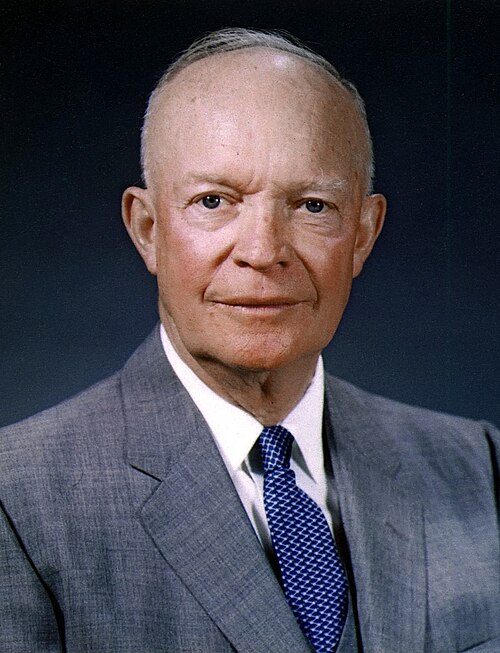
Eisenhower coordinated Overlord and the Western European campaign, then became a postwar US president who managed the early nuclear alliance.
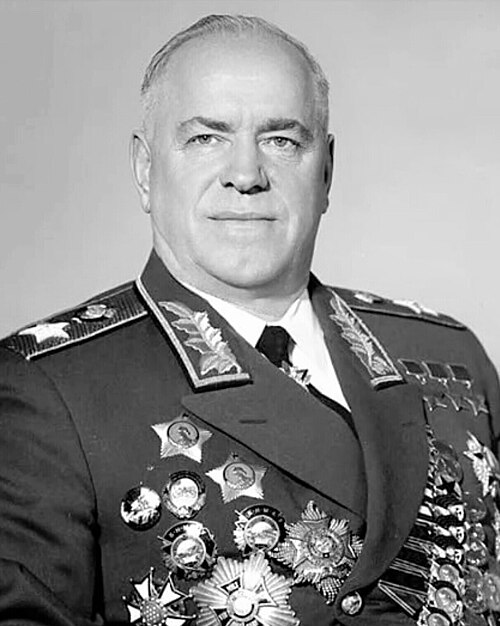
Zhukov was associated with Moscow, Stalingrad's relief architecture, and the 1945 Berlin operation. His fame was later trimmed by Stalin's jealousy, then restored.
Historians still weigh the atomic bombings against the Soviet Manchurian offensive and Japan's internal politics as causes of surrender in August 1945.
Whether 1944 was the earliest feasible cross-Channel attack, or a delay that left the USSR to pay more of the land bill, remains a live argument.
Biography is not a substitute for logistics. A famous general still needed ships, oil and a working railway.
Postwar memoirs (Churchill, Eisenhower, German generals) shaped early English-language history and later needed correction from archives.