Skip to content

🎱GOAT Rankings

Snooker · Twenty-two balls, six pockets barely wider than they are, and the most pitiless scoreboard in sport.

Ranking snooker's greatest is complicated by a professional game that has changed shape three times. Joe Davis competed against a field of a few dozen on slow cloth with heavy equipment and won a championship he had personally invented. Ray Reardon peaked in a decade when the World Championship was the only ranking event that existed. Ronnie O'Sullivan and Judd Trump play more than twenty ranking events a season on faster tables against a 128-player tour drawn from four continents. Raw title counts therefore mislead in both directions, and this list weighs four things: peak standard, longevity, achievement in the events that mattered at the time, and influence on how the game is played.

The top two are effectively settled. O'Sullivan and Hendry each hold seven world titles in the Crucible era, and O'Sullivan leads on every other measure — ranking titles, Triple Crown titles, career centuries and maximum breaks — while also winning across a span of four decades. Below them the argument is real. Joe Davis's fifteen unbeaten championships are either the greatest record in the sport or an artefact of a tiny field, depending on how much weight era-adjustment deserves, and the same question decides whether Reardon belongs above Selby or Trump. Every placing below is argued with numbers rather than nostalgia.

All-time podium

🥈
Stephen Hendry
Stephen Hendry
Scotland
2
🥇
Ronnie O'Sullivan
Ronnie O'Sullivan
England
1
🥉
Joe Davis
Joe Davis
England
3

Comparison Lab

Toggle athletes on and off — every bar rescales to the leader of your selection.

5 / 12

The top 10

1
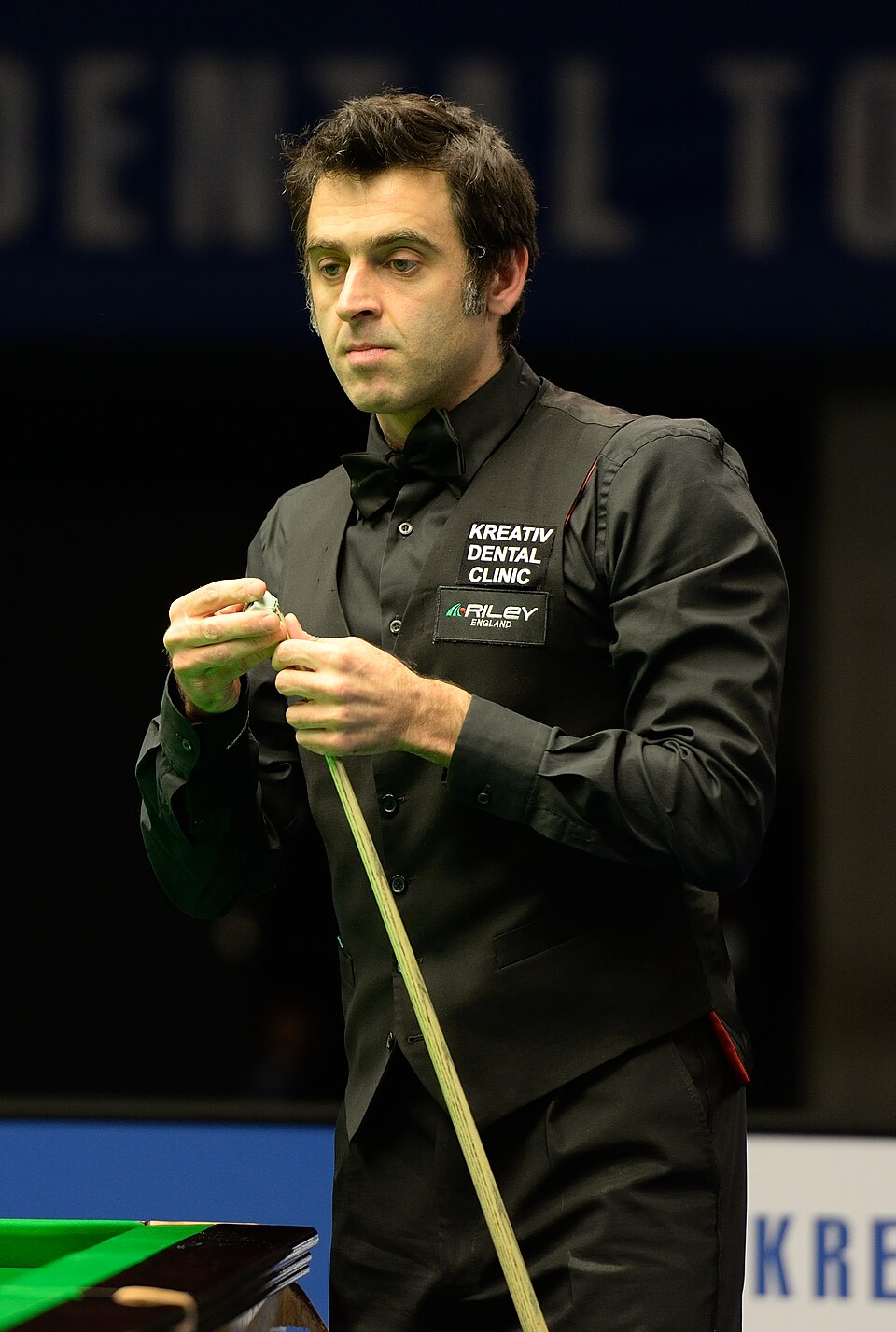
Ronnie O'Sullivan

Ronnie O'Sullivan

England · 1992-present

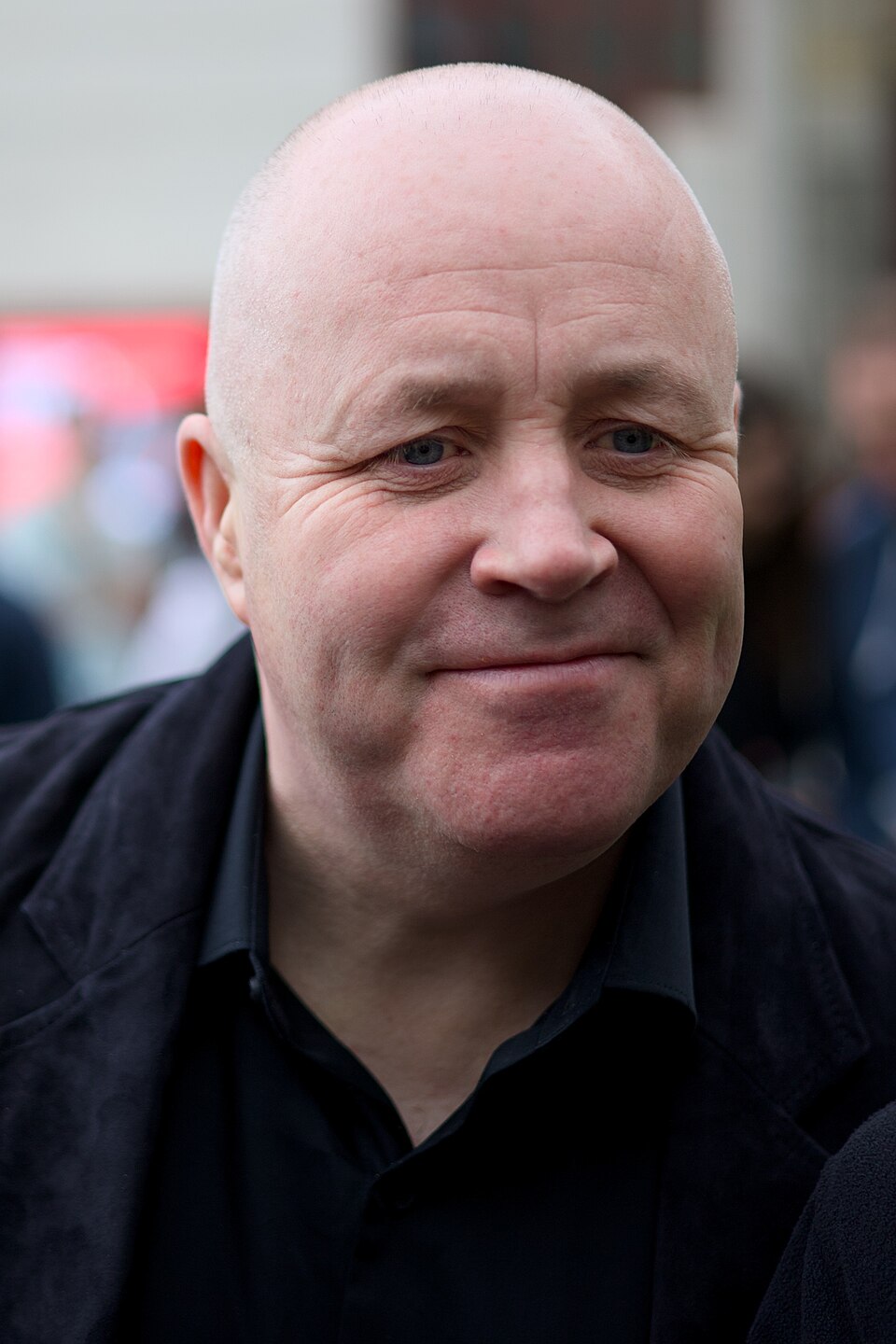
The most complete resume in the sport's history, assembled over four decades. O'Sullivan won the 1993 UK Championship at 17 years and 358 days, still the youngest winner of a ranking event, and was still winning majors in his late forties. He holds seven world titles (2001, 2004, 2008, 2012, 2013, 2020, 2022), eight UK Championships and eight Masters, giving him 23 Triple Crown titles, more than anyone. He has more ranking titles than any player, having passed 40, and more career centuries than anyone, having become the first to 1,000 in 2019 and pushed past 1,200 since. His 15 official maximum breaks are a record, including the 5 minute 8 second 147 against Mick Price at the Crucible in 1997. His 2022 world title, won at 46, made him the oldest Crucible champion. Naturally left-handed and able to play to a high standard right-handed, he combines the fastest execution in the game with the finest cue ball control of his era.
World titles
7
Ranking titles
40+
Triple Crown titles
23
Career centuries
1,200+
Maximum breaks
15
2
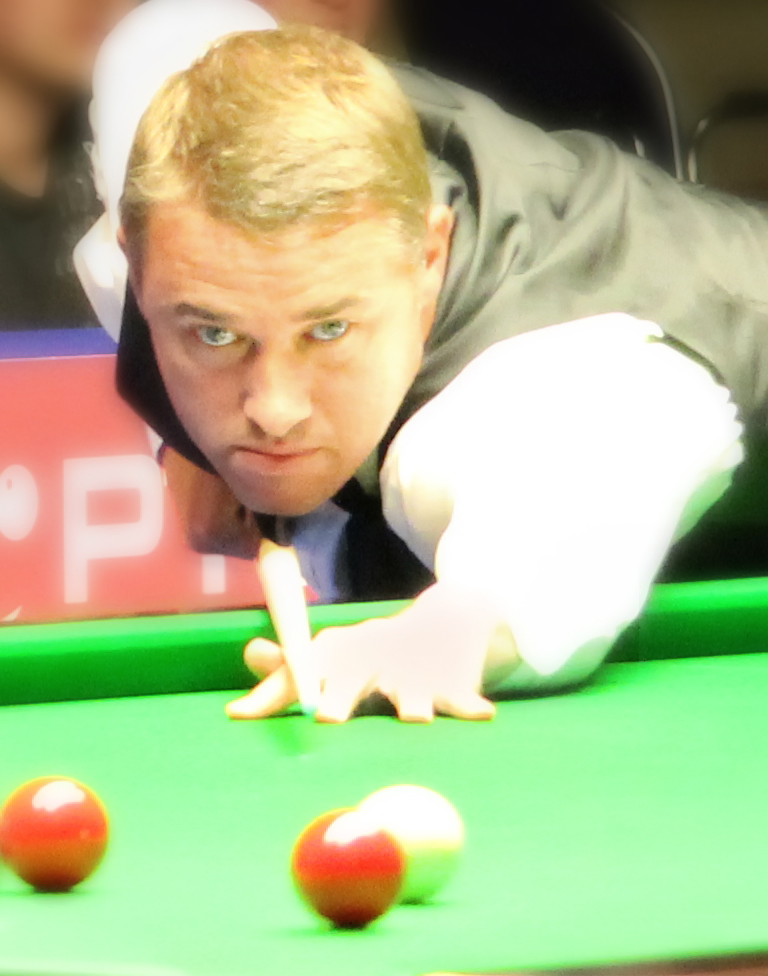
Stephen Hendry

Stephen Hendry

Scotland · 1985-2012

The most dominant player of snooker's modern peak and the man who redefined how fast a frame should be won. Hendry took the world title in 1990 at 21 years and 106 days, still the youngest champion, and added six more (1992, 1993, 1994, 1995, 1996, 1999), including five in a row from 1992 to 1996 — a run no one else has approached in the Crucible era. He finished with 36 ranking titles, five UK Championships, six Masters and 18 Triple Crown titles, and held the world number one ranking for eight consecutive seasons from 1990 to 1998. He retired in 2012 with 775 career centuries and 11 official maximums, the last of them made at the Crucible in his final World Championship appearance. His contribution was tactical as much as statistical: by attacking long reds that his contemporaries played safe on, he forced the entire tour to raise its scoring rate.

World titles
7
Ranking titles
36
Triple Crown titles
18
Career centuries
775
Maximum breaks
11
3
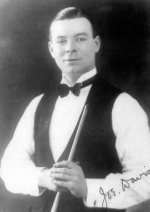
Joe Davis

Joe Davis

England · 1919-1964

Snooker's founder, first champion and first theorist. Davis co-created the World Championship in 1927 with promoter Bill Camkin, beat Tom Dennis 20-11 in the inaugural final for a purse of roughly six pounds ten shillings, and then won all fifteen stagings held up to 1946 before withdrawing permanently. He never lost a World Championship match. He was also a leading billiards professional, taking four world billiards titles between 1928 and 1932, and it was his understanding of positional play in that game that he transplanted into snooker. On 22 January 1955 at Leicester Square Hall he made the first officially ratified maximum break of 147. His instructional books taught a generation that snooker was a scoring game rather than a defensive one, establishing break-building from the black as orthodoxy. Comparisons across eras are impossible in his case: he faced a tiny professional field on slower equipment, but he invented the standards everyone since has been measured against.

World titles
15
World finals reached
15
Consecutive world titles
15
Maximum breaks
1 (first ever ratified)
4
Steve Davis

Steve Davis

England · 1978-2016

The player who made snooker a mainstream British obsession and the most complete tactician the sport has produced. Davis won six world titles (1981, 1983, 1984, 1987, 1988, 1989) from eight finals, took 28 ranking titles, and spent seven consecutive seasons as world number one through the 1980s. With six UK Championships and three Masters he finished on 15 Triple Crown titles. In 1982 he made the first maximum break shown on television, a 147 against John Spencer at the Lada Classic in Oldham. His game was built on percentages: safety of a quality no one could match, positional play that rationed opponents to a handful of chances, and an absence of unforced error that opponents found demoralising. He was also central to the sport's two most famous defeats, losing the 1985 final 18-17 on the last black to Dennis Taylor before an estimated 18.5 million British viewers, and losing to 150-1 outsider Joe Johnson in 1986.

World titles
6
World finals reached
8
Ranking titles
28
Triple Crown titles
15
Maximum breaks
1 (first on television)
5
John Higgins

John Higgins

Scotland · 1992-present

The finest all-round technician of the modern era and the most durable competitor of a remarkable generation. Higgins won world titles in 1998, 2007, 2009 and 2011 and reached eight world finals in total, including three consecutive losing finals in 2017, 2018 and 2019, two of them decided in the final frame. He has more than 30 ranking titles, three UK Championships, two Masters and nine Triple Crown titles, and has compiled more than 900 career centuries. What sets him apart is completeness: he is regarded across the tour as the best safety player of his generation while also being capable of clearing from behind under maximum pressure, most famously in the deciding frames of his later Crucible finals. Turning professional in 1992 alongside Ronnie O'Sullivan and Mark Williams, he was still winning ranking events past 45 and still competing at the top of the tour in his fifties.

World titles
4
World finals reached
8
Ranking titles
30+
Triple Crown titles
9
Career centuries
900+
6
Ray Reardon

Ray Reardon

Wales · 1967-1991

The dominant figure of snooker's television revival and the bridge between the amateur game and the professional boom. A former coal miner and policeman, Reardon turned professional in 1967 and won six world titles in nine years (1970, 1973, 1974, 1975, 1976, 1978), reaching seven finals in all. He became the first official world number one when the ranking system was introduced in 1976, and his 1978 title made him world champion at 45, the oldest until Ronnie O'Sullivan in 2022. He also won the Masters in 1976, taking his Triple Crown tally to seven. Because ranking events barely existed in his prime — the World Championship was the only one until 1982 — his single ranking title badly understates his record. Nicknamed Dracula for his widow's peak and his habit of finishing opponents off slowly, he later coached O'Sullivan through his 2004 world title.

World titles
6
World finals reached
7
Ranking titles
1
Triple Crown titles
7
7
Mark Selby

Mark Selby

England · 2000-present

The hardest man in modern snooker to beat over a long match. Selby has four world titles (2014, 2016, 2017, 2021) from six finals, more than 20 ranking titles, and eight Triple Crown titles including the 2012 UK Championship and three Masters (2008, 2010, 2013). He has passed 800 career centuries. His reputation rests on attrition: a safety game good enough to strangle opponents for whole sessions, an unusual willingness to play a frame out over an hour, and a recovery rate from behind that has produced repeated Crucible comebacks, most notably from 10-4 down to beat Ronnie O'Sullivan in the 2014 final. The caricature of him as purely defensive is unfair — in the 2023 world final against Luca Brecel he made the first maximum break ever compiled in a World Championship final. Known as the Jester from Leicester, he has spent long spells as world number one across three separate periods.

World titles
4
World finals reached
6
Ranking titles
20+
Triple Crown titles
8
Career centuries
800+
8

Mark Williams

Wales · 1992-present

The purest long potter of the modern game and the owner of its most remarkable second act. Williams won world titles in 2000 and 2003, disappeared from contention for well over a decade, then won again in 2018 at the age of 43 — the longest gap between first and last world title in the sport's history, and a result he had considered so unlikely that he had promised to attend the winner's press conference naked, and did. He has more than 25 ranking titles, two UK Championships (1999, 2002), two Masters (1998, 2003), seven Triple Crown titles and over 600 career centuries. In 2025, at 50, he reached the world final again, becoming the oldest Crucible finalist before losing 18-12 to Zhao Xintong. Left-handed, with an unusually relaxed technique and the best cut-back potting of his generation, he is the third member of the Class of 1992 alongside O'Sullivan and Higgins.

World titles
3
World finals reached
5
Ranking titles
25+
Triple Crown titles
7
Career centuries
600+
9
Judd Trump

Judd Trump

England · 2005-present

The most prolific scorer of the post-Hendry generation and the player who normalised attacking snooker from impossible angles. Trump won the world title in 2019, beating John Higgins 18-9 in a final containing a record seven century breaks from the champion, and reached two other finals, in 2011 and 2022. He has passed 30 ranking titles, a total exceeded by only a handful of players in history, and became the second man after Ronnie O'Sullivan to reach 1,000 career centuries. In 2019-20 he became the second player to make 100 centuries in a single season. His Triple Crown haul includes the 2011 UK Championship and the Masters in 2019 and 2023. Trump's signature is shot selection that other professionals would refuse: pots from the cushion, deep screw shots across the table, and a willingness to attack from safety positions, married to a positional game that has grown steadily more disciplined.

World titles
1
World finals reached
3
Ranking titles
30+
Triple Crown titles
4
Career centuries
1,000+
10
Neil Robertson

Neil Robertson

Australia · 2003-present

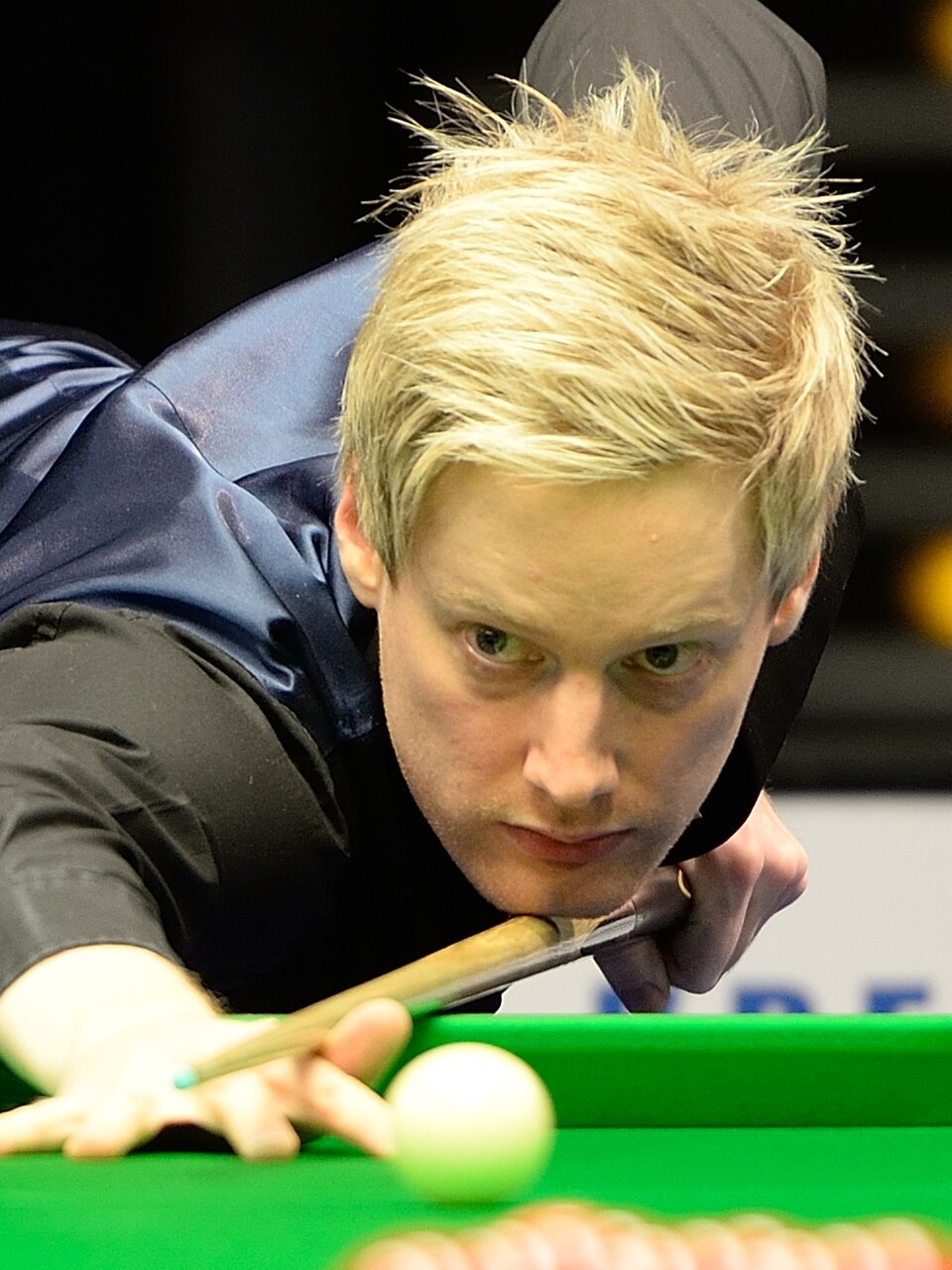
The most successful player produced outside Britain and Ireland, and for a long stretch the only one. Robertson won the World Championship in 2010, becoming the first Australian champion and the only player from outside the British Isles to take the title between Cliff Thorburn in 1980 and Luca Brecel in 2023. He has more than 24 ranking titles and five Triple Crown titles, including three UK Championships (2013, 2015, 2020) and the 2012 Masters, and has compiled over 800 career centuries. In 2013-14 he became the first player in history to make 100 century breaks in a single season, finishing with 103, a benchmark that has since become the marker of an elite scoring campaign. Left-handed and technically orthodox, he built his career by moving to Britain as a teenager after failing to make an impact from Melbourne, and remains the proof that the tour's talent pipeline is not geographically fixed.

World titles
1
World finals reached
1
Ranking titles
24+
Triple Crown titles
5
Career centuries
800+
11

Alex Higgins

Northern Ireland · 1971-1997

The player whose record understates his importance more than anyone's. Higgins won the world title in 1972 at 22, then the youngest champion, having qualified from the amateur ranks in his first professional season, and won it again a decade later in 1982, when he called his wife and daughter to the table in tears — the most replayed image in the sport. He reached four world finals, won the UK Championship in 1983 and the Masters in 1978 and 1981, giving him five Triple Crown titles. The 69 break he made against Jimmy White from a hopeless position in the 1982 semi-final is still cited as the finest clearance under pressure ever played. Nicknamed Hurricane for his speed, he brought crowds and controversy in equal measure and made snooker a spectacle rather than a pastime, at enormous personal cost. He died in 2010 at 61.

World titles
2
World finals reached
4
Ranking titles
1
Triple Crown titles
5
12

Ding Junhui

China · 2003-present

The most successful Asian player in the sport's history and the single figure most responsible for its expansion into China. Ding won the 2005 China Open in Beijing at 18, beating Stephen Hendry 9-5 in front of an enormous home audience, and has since taken more than 14 ranking titles, more than any other player from Asia. His Triple Crown record stands at four: three UK Championships (2005, 2009, 2019) and the 2011 Masters. In 2013-14 he won five ranking events in a single season, equalling Hendry's record for a campaign. He reached the 2016 world final, the first Asian player to do so, losing 18-14 to Mark Selby, and has passed 500 career centuries. The absence of a world title is the gap in his case, but the academies, sponsorships and junior pathways that produced Zhao Xintong's 2025 championship were built on the interest Ding created twenty years earlier.

World titles
0
World finals reached
1
Ranking titles
14+
Triple Crown titles
4
Career centuries
500+

Bars are scaled to the leader in this list.

The debate

The honest difficulty is that snooker's eras are not merely different in standard, they are different in structure. Joe Davis won fifteen world titles from fifteen attempts, a record no one will approach, but he faced a professional field that at times numbered fewer than a dozen serious rivals and he stopped entering when younger players arrived. Ray Reardon and Alex Higgins were at their peak when almost nothing carried ranking points, so their ranking-title columns are close to empty in a way that says nothing about their quality. Conversely, the modern tour offers more than twenty ranking events a season, so a leading player accumulates trophies at a rate that would have been arithmetically impossible in 1975. Any comparison that does not adjust for opportunity is measuring the calendar rather than the player.

What remains genuinely contested is the shape of greatness. If it means peak level, the argument runs between Hendry between 1992 and 1996, when he took five world titles in a row, and O'Sullivan at his most fluent, when a frame could be over in five minutes. If it means longevity, O'Sullivan and John Higgins are alone, both winning majors more than thirty years after turning professional, with Mark Williams reaching a world final at 50. If it means influence, Joe Davis invented break-building and Hendry invented the modern scoring rate. And if it means significance beyond results, Alex Higgins and Ding Junhui outrank several players who beat them on every statistic, one because he made the sport a spectacle and the other because he made it Chinese. Fred Davis, with eight world titles across the split of the 1950s, and Cliff Thorburn, the first overseas champion of the television age, have reasonable claims to places on this list; they lose out to players whose records are easier to read across eras.

Embed this ranking

Paste this code into your blog or site — the ranking stays up to date.

Keep exploring

More in this category