🏍️GOAT Rankings

MotoGP · The premier class of motorcycle Grand Prix racing: 1,000cc prototypes, 360 km/h straights and 64-degree lean angles, decided by tenths of a second.

Ranking Grand Prix motorcycle racers across eight decades means comparing riders who did fundamentally different jobs. Giacomo Agostini raced two classes in an afternoon on public roads with no run-off; Marc Marquez races one class on sanitised circuits with airbag suits, carbon brakes and traction control. Fields have grown from a handful of competitive machines to a grid where the top fifteen can be covered by a second. Any honest list weighs raw totals against the depth of opposition, the quality of the machinery and how a rider performed when the bike was not the best on the grid.

The measures used here are premier-class titles, total world championships across all classes, premier-class and career Grand Prix wins, and career podiums, with the arguments filled in around them. The percentages compare each rider only against the others on this list. Where a rider is still active, figures are anchored to the end of the 2025 season unless stated otherwise.

All-time podium

🥈
Valentino Rossi
Italy
2
🥇
Giacomo Agostini
Italy
1
🥉
Marc Marquez
Spain
3

Comparison Lab

Toggle athletes on and off — every bar rescales to the leader of your selection.

5 / 12

The top 10

1

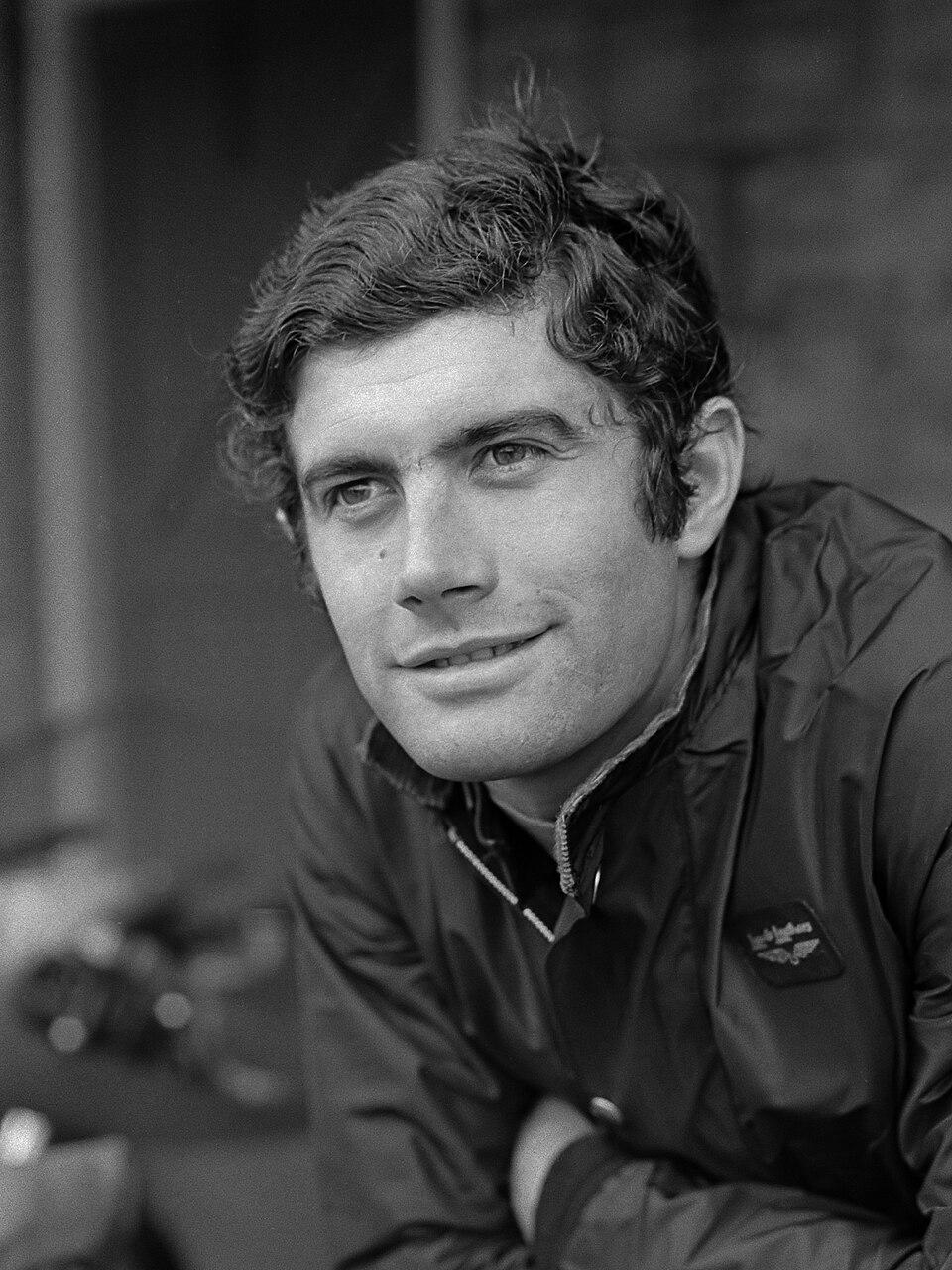
Giacomo Agostini

Italy · 1963-1977

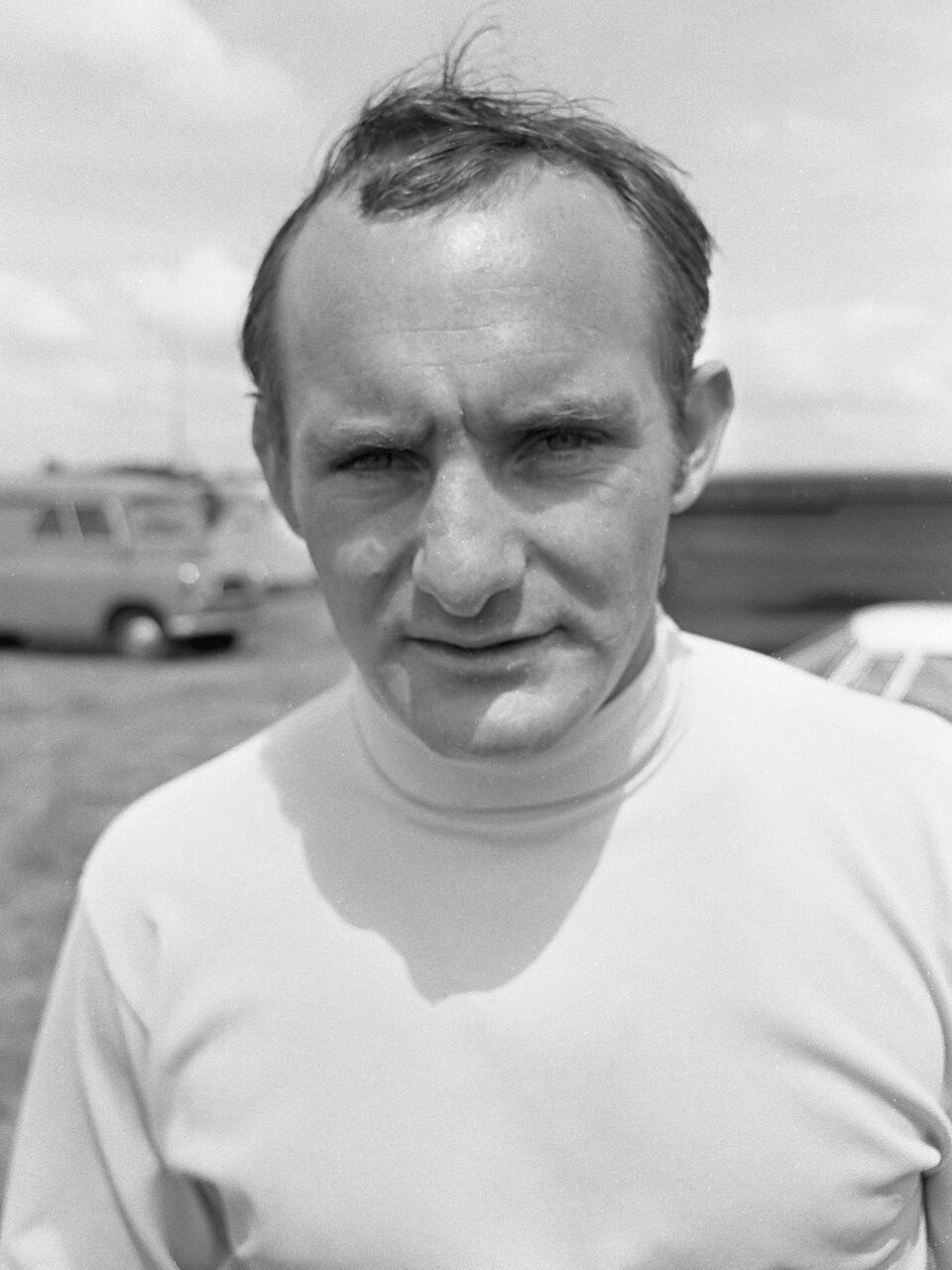
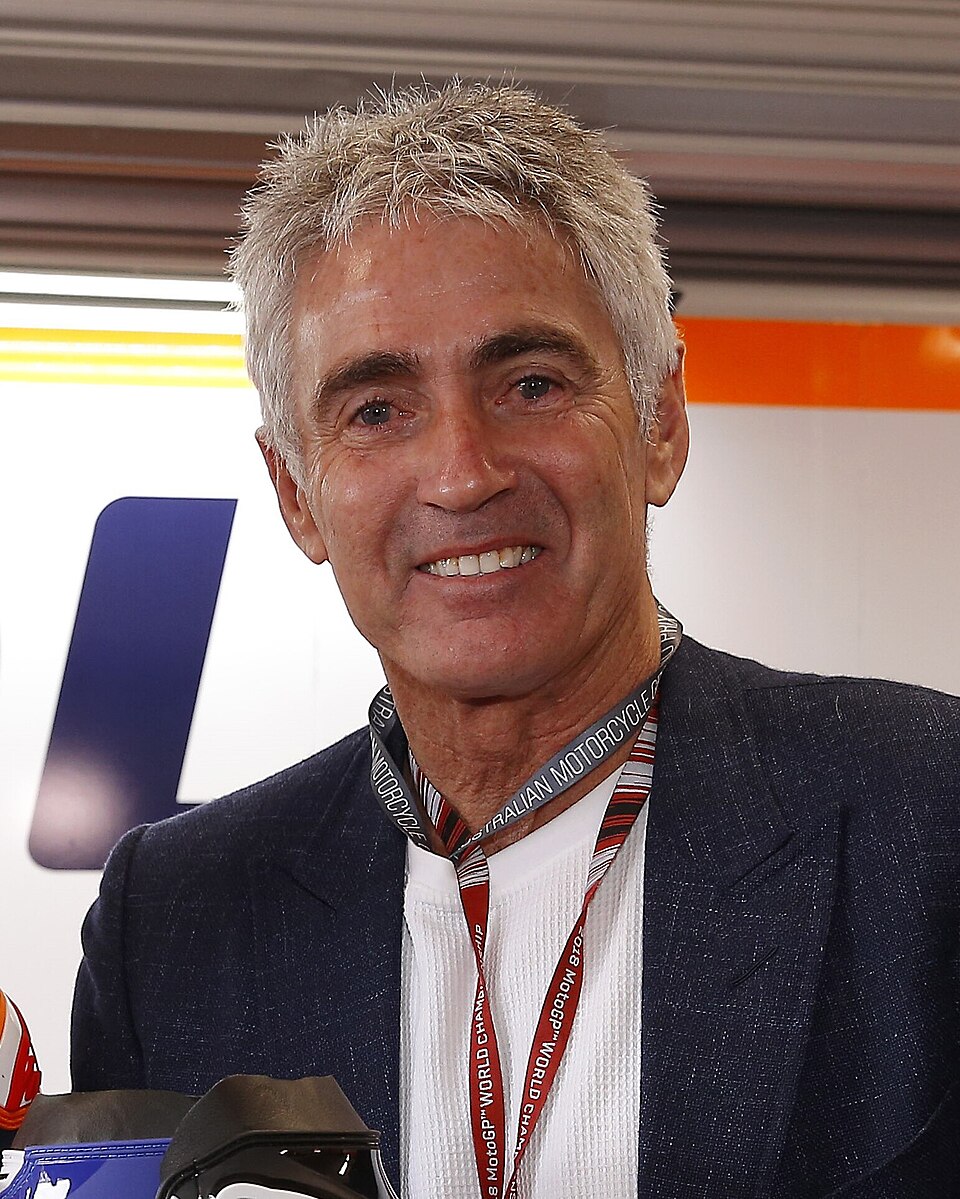
Fifteen world championships and 122 Grand Prix wins, neither total seriously threatened in fifty years. Agostini won eight 500cc titles, seven of them consecutively from 1966 to 1972, and seven 350cc crowns, frequently taking both on the same afternoon. His premier-class record reads 68 wins from around 120 starts, a strike rate above 55 percent that nobody in the modern era approaches, and he once won 20 consecutive premier races across 1968 and 1969, including a clean sweep of the 1968 season. The standard objection is machinery: MV Agusta's multi-cylinder fours were often the only genuinely competitive bikes on a thin grid. He answered it in 1975 by leaving MV for Yamaha and winning the 500cc title on a two-stroke at 33, the first two-stroke premier crown and the end of MV Agusta's seventeen-year run. He also won ten Isle of Man TTs before refusing to return after Gilberto Parlotti's death in 1972.
Premier-class titles
8
World titles, all classes
15
Premier-class wins
68
Career GP wins
122
Career GP podiums
159
2

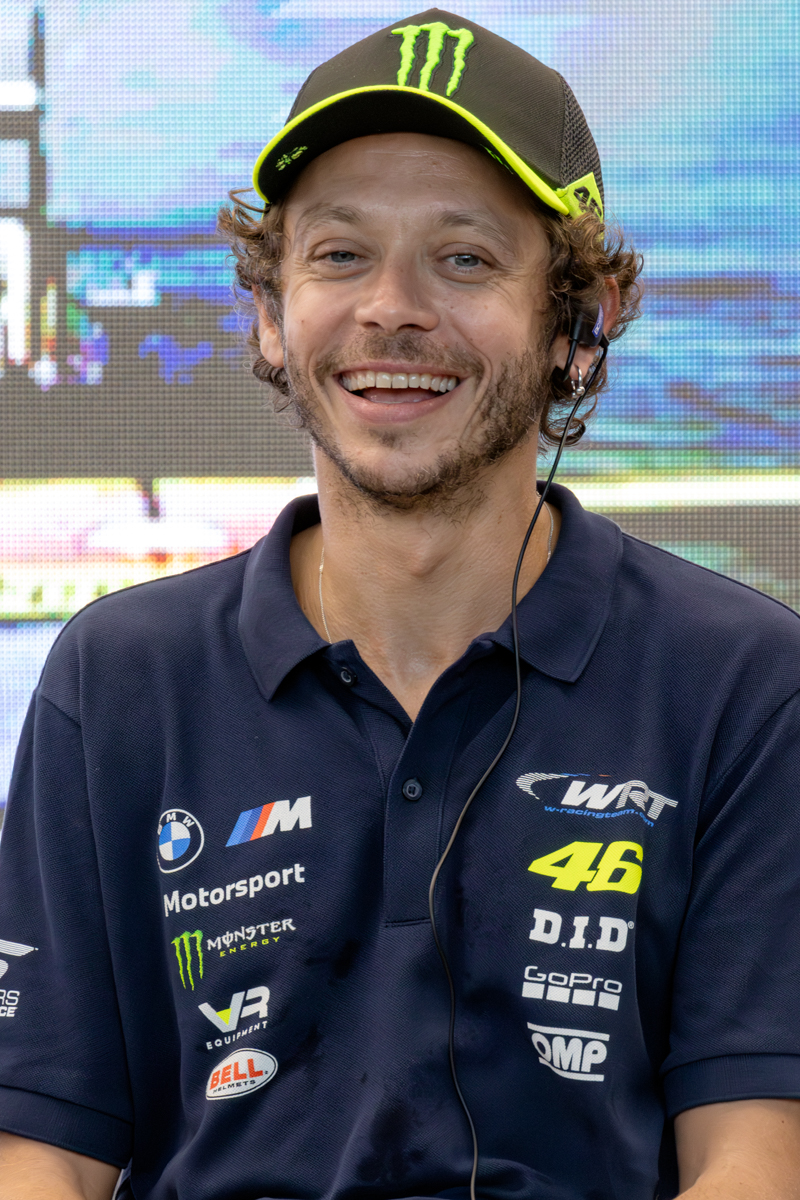
Valentino Rossi

Italy · 1996-2021

Nine world titles and 115 Grand Prix wins across 125cc, 250cc, 500cc and MotoGP, plus records that still stand for premier-class victories, 89, and premier-class podiums, 199, from 432 career starts over 26 seasons. Rossi won the last 500cc two-stroke title in 2001 and the first MotoGP four-stroke title in 2002, then made the defining move of the modern era: he joined a Yamaha that had not won a race in 2003, won first time out at Welkom in 2004 and took the championship, then repeated it in 2005. Titles followed again in 2008 and 2009. His durability is the outlier. He was still winning Grands Prix in 2017 at 38, seventeen years after his first premier-class win, and finished runner-up in 2015 after the most bitter title fight of the era. He also did more than anyone to turn MotoGP into a global commercial property.

Premier-class titles
7
World titles, all classes
9
Premier-class wins
89
Career GP wins
115
Career GP podiums
235
3

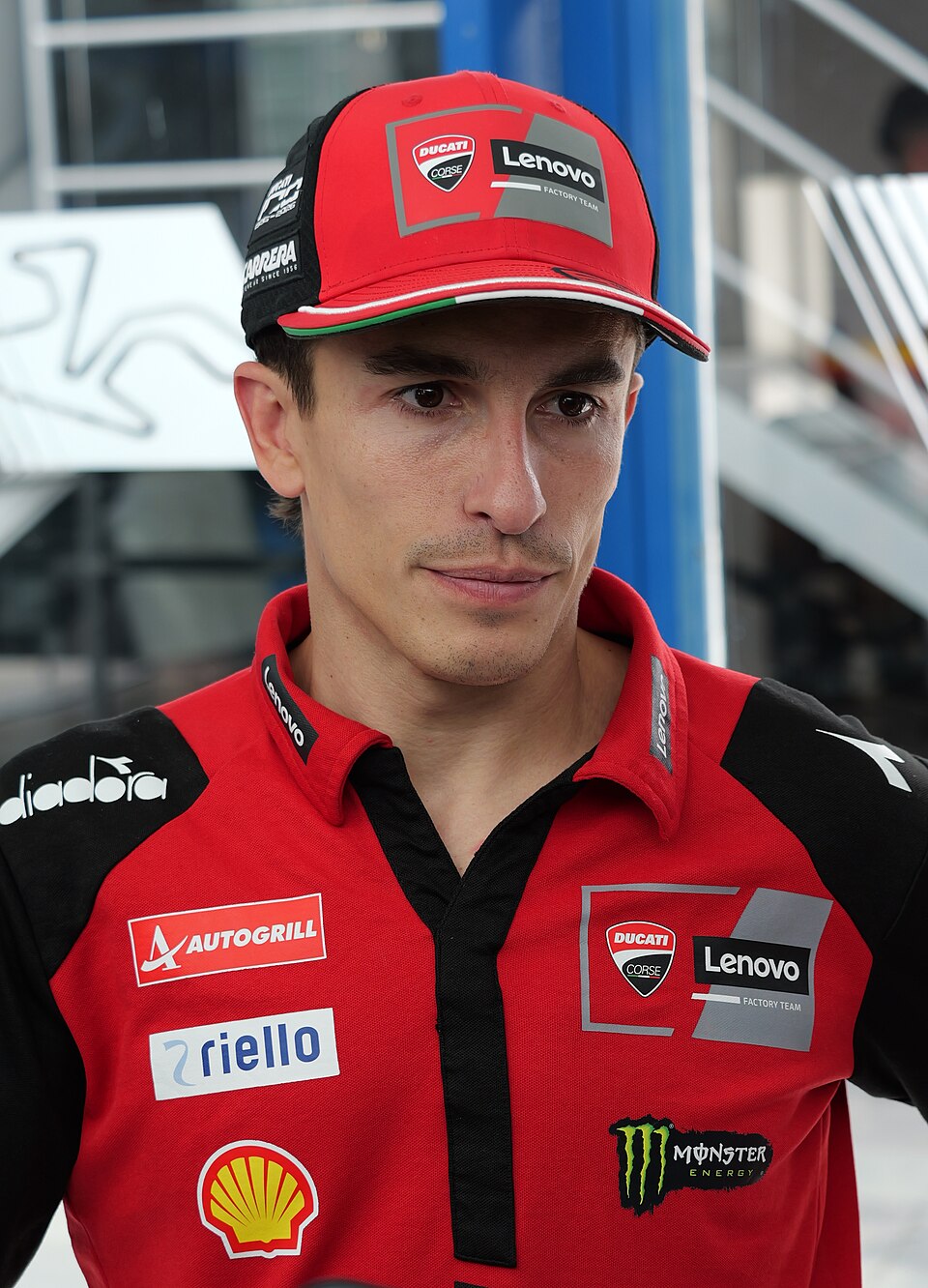
Marc Marquez

Spain · 2008-present

Nine world championships: 125cc in 2010, Moto2 in 2012 and seven premier-class titles in 2013, 2014, 2016, 2017, 2018, 2019 and 2025. He became the youngest premier champion at 20 years and 266 days, having already become the youngest premier-class winner at Austin aged 20 years and 63 days. In 2014 he won 13 of 18 races, still the single-season record. Through the end of 2025 he had 73 premier-class wins, second only to Rossi, 99 career wins and 126 premier podiums from 206 starts. The 2025 season was the most statistically dominant on record: 11 Grands Prix, 14 Sprints and 545 points, a total no rider had reached, in his first year with the factory Ducati. It came after five operations on his right arm, 30 races missed and 2,184 days between championships, which is the strongest single argument in his favour.

Premier-class titles
7
World titles, all classes
9
Premier-class wins
73
Career GP wins
99
Career GP podiums
165
4

Mike Hailwood

United Kingdom · 1958-1967

Nine world championships in ten seasons: 250cc in 1961, 1966 and 1967, 350cc in 1966 and 1967, and four consecutive 500cc titles from 1962 to 1965 with MV Agusta. He took 76 Grand Prix wins from just 152 starts, 37 of them in the premier class, and 112 podiums, all before his 28th birthday. Hailwood's range is what separates him: he won world titles on MV Agusta and Honda, competed across four capacity classes in a single weekend, and won 14 Isle of Man TTs. After leaving bikes he raced in Formula 1 across 50 entries with two podiums, and was awarded the George Medal for pulling Clay Regazzoni from a burning car at Kyalami in 1973. In 1978, aged 38 and eleven years out of the sport, he returned to the Isle of Man and won the Formula One TT on a Ducati.

Premier-class titles
4
World titles, all classes
9
Premier-class wins
37
Career GP wins
76
Career GP podiums
112
5

Mick Doohan

Australia · 1989-1999

Five consecutive 500cc world championships from 1994 to 1998, a run matched in the premier class only by Agostini's seven. Doohan took 54 wins, 58 pole positions and 95 podiums from 137 starts, all with Honda, and every one of those wins came in the premier class. His 1997 season remains a benchmark: twelve victories from fifteen races, with two second places and a crash while leading his home Grand Prix by more than six seconds. The context makes it heavier. A crash in practice at Assen in 1992 left him with permanent damage to his right leg and close to amputation; he lost that year's title to Wayne Rainey by four points, and rode the rest of his career with a thumb-operated rear brake because his right foot could no longer work the pedal. A crash at Jerez in 1999 ended his career.

Premier-class titles
5
World titles, all classes
5
Premier-class wins
54
Career GP wins
54
Career GP podiums
95
6

Casey Stoner

Australia · 2001-2012

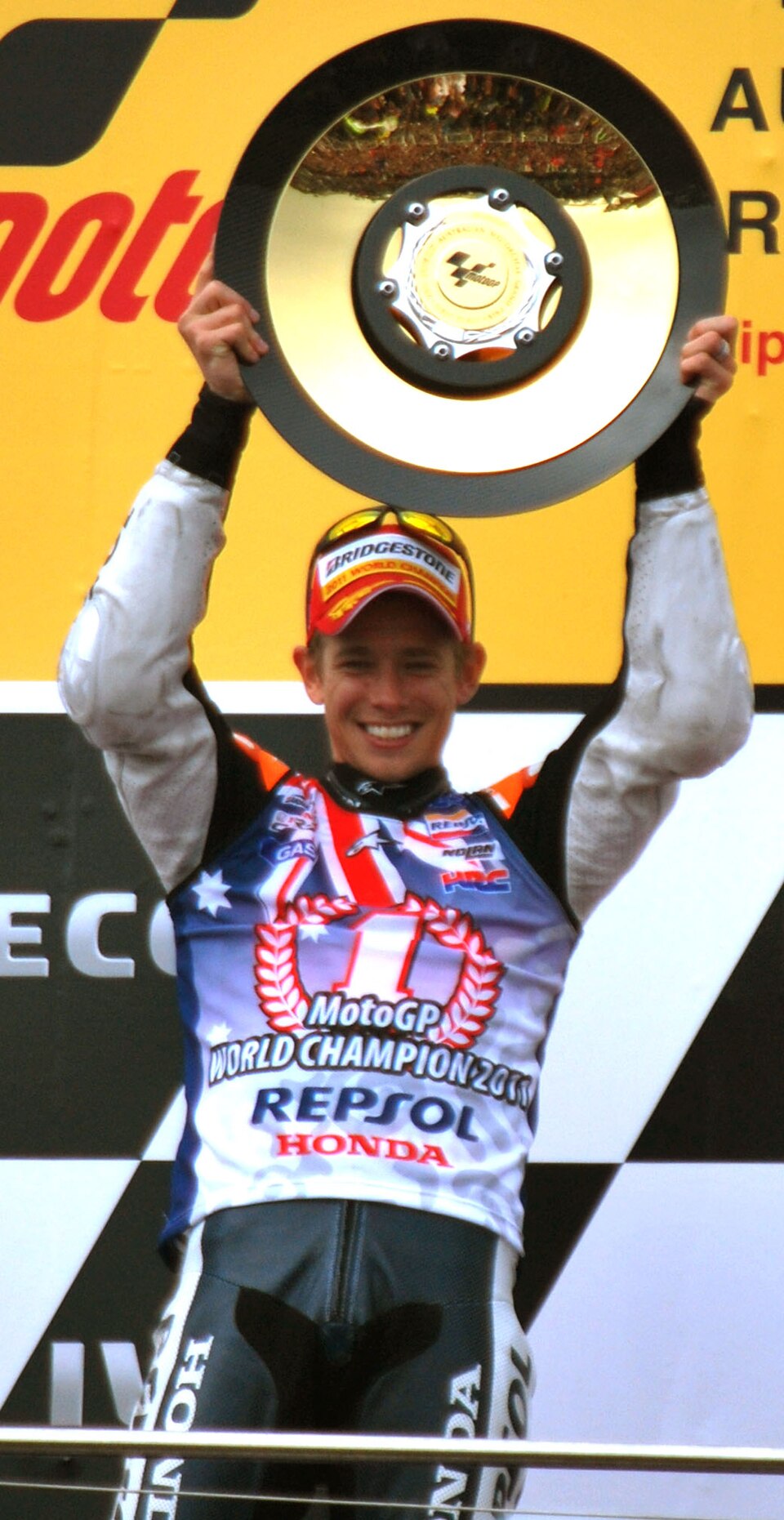
Two premier-class titles that most of the paddock rates far above their number. In 2007 Stoner won ten races on the Ducati Desmosedici and gave the factory its first riders' championship; no other rider won a title on that machine until Francesco Bagnaia in 2022, and several world champions failed to be competitive on it. In 2011 he moved to Honda and won ten more races and a second crown. His premier-class record is 38 wins, 39 poles and 69 podiums from 115 starts, with 45 Grand Prix wins in total across three classes. Stoner's distinguishing skill was riding beyond the point where the rear tyre was sliding, controlling spin by feel in an era when rivals leaned on electronics. He retired at 27, at the end of the 2012 season, which is the only real argument against him.

Premier-class titles
2
World titles, all classes
2
Premier-class wins
38
Career GP wins
45
Career GP podiums
89
7

Kenny Roberts

United States · 1974, 1978-1983

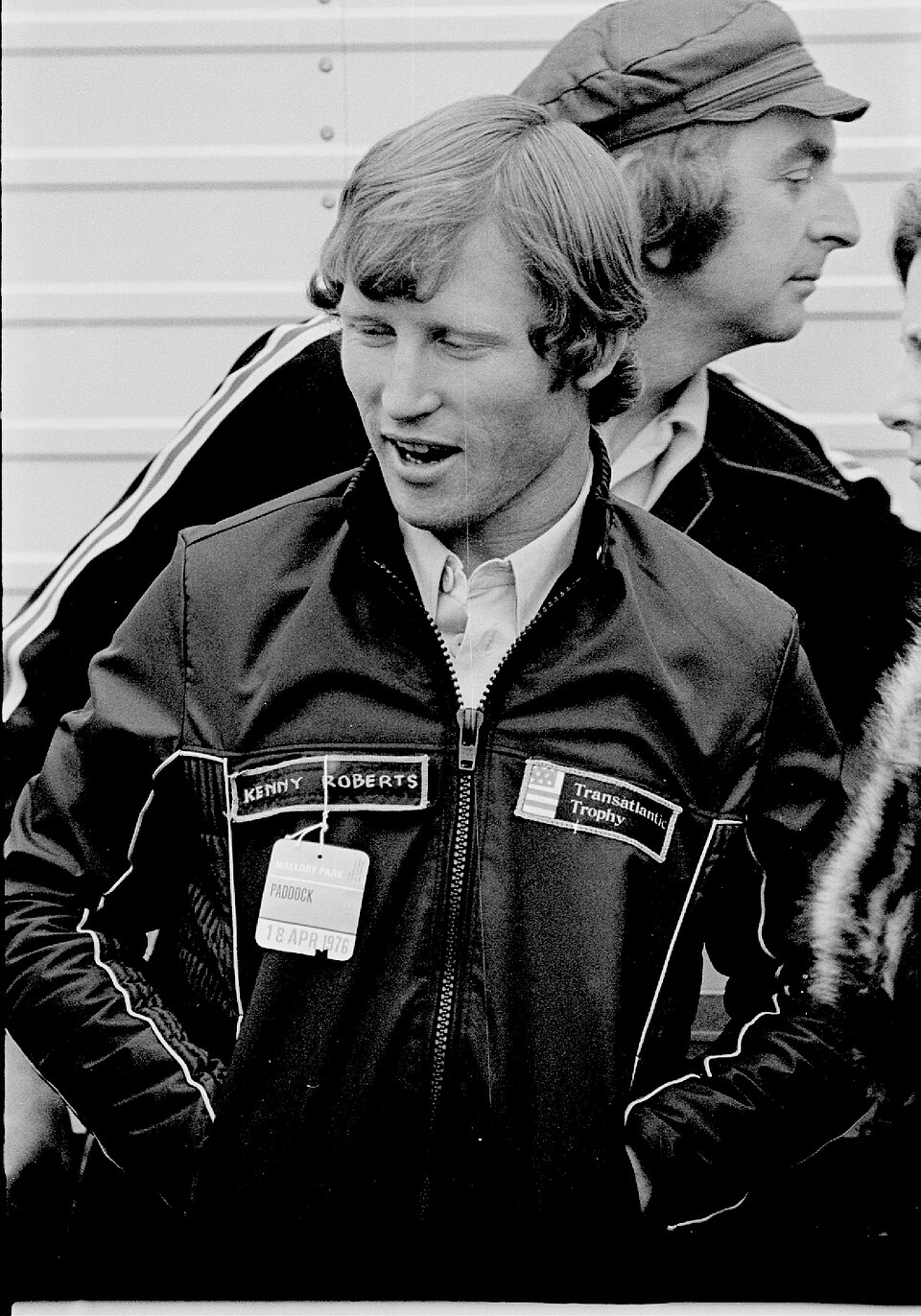
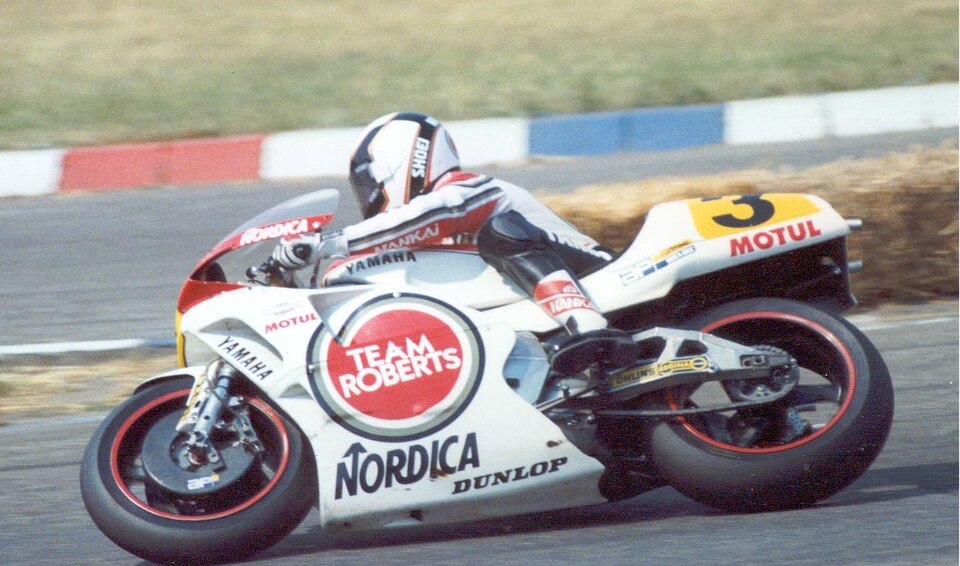
Three consecutive 500cc world championships from 1978 to 1980, the first of them as a rookie, from a career of only 60 Grand Prix starts. Roberts took 24 wins, 22 in the premier class, and 44 podiums, having already won back-to-back AMA Grand National titles in 1973 and 1974 and completed the Grand Slam of victories across all five American dirt-track and road-race disciplines. His influence outweighs his totals. He imported dirt-track technique to Grand Prix racing, deliberately breaking rear traction to steer a 500cc two-stroke, and every rider since has ridden some version of that. Off track he was equally consequential: his threatened breakaway World Series in 1979 forced the FIM to improve circuit safety and lifted rider payments dramatically. He later ran his own team and built his own three-cylinder 500cc machine.

Premier-class titles
3
World titles, all classes
3
Premier-class wins
22
Career GP wins
24
Career GP podiums
44
8

Eddie Lawson

United States · 1983-1992

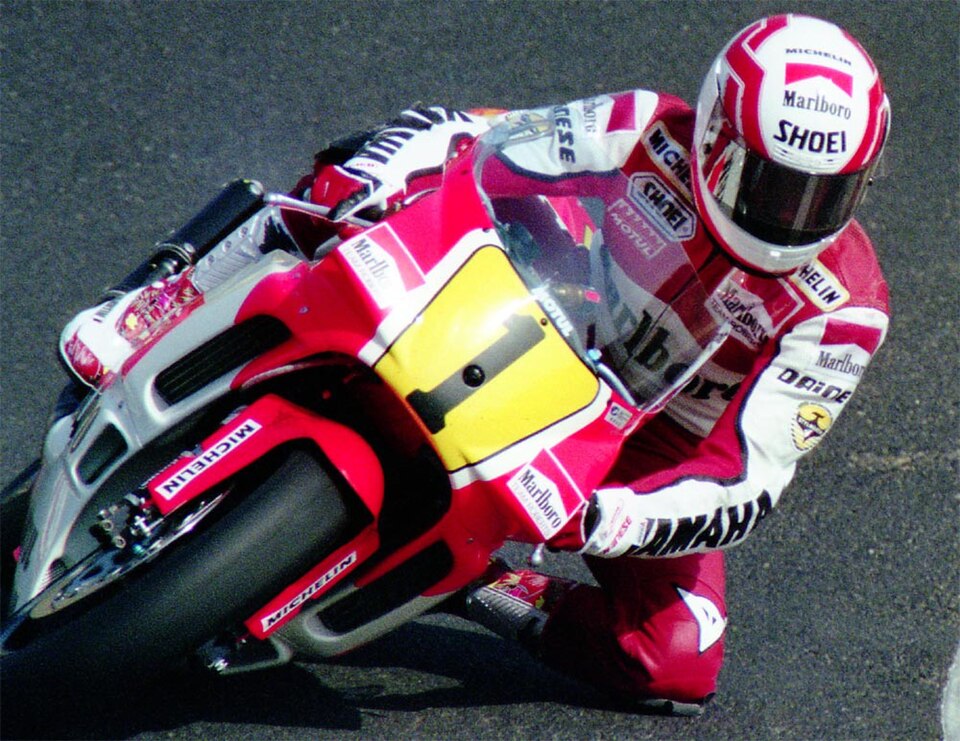
Four 500cc world championships, in 1984, 1986 and 1988 with Yamaha and in 1989 with Honda, making him the first rider to win back-to-back premier titles on machinery from different manufacturers. Rossi did not repeat the feat until 2004. Lawson's numbers, 31 wins and 78 podiums from 127 starts, understate a career built on a specific method: he raced the championship rather than the Grand Prix, taking the available result rather than the maximum one, which earned him the nickname Steady Eddie. In a two-stroke era where crashing was routine, his finishing rate was extraordinary. The 1989 switch to Honda, made to work with engineer Erv Kanemoto on a bike he had never ridden, is the single strongest line on his record: he beat the factory Yamahas he had just left.

Premier-class titles
4
World titles, all classes
4
Premier-class wins
31
Career GP wins
31
Career GP podiums
78
9

Wayne Rainey

United States · 1984, 1988-1993

Three consecutive 500cc world championships from 1990 to 1992, with 24 wins and 65 podiums from 94 Grand Prix starts, all achieved in what is widely regarded as the deepest premier-class field ever assembled, against Kevin Schwantz, Eddie Lawson, Wayne Gardner, Mick Doohan and John Kocinski. Rainey's Yamaha YZR500 was rarely the fastest bike; his method was relentless consistency and a refusal to make the error his rivals eventually would. He was leading the 1993 championship by 11 points from Schwantz when he crashed at Misano in September, breaking his spine and losing the use of his legs. He was 32 and had won three of the previous four titles. He returned as a team owner and later raced hand-controlled machinery, and the sport's modern safety standards owe much to what happened to him.

Premier-class titles
3
World titles, all classes
3
Premier-class wins
24
Career GP wins
24
Career GP podiums
65
10

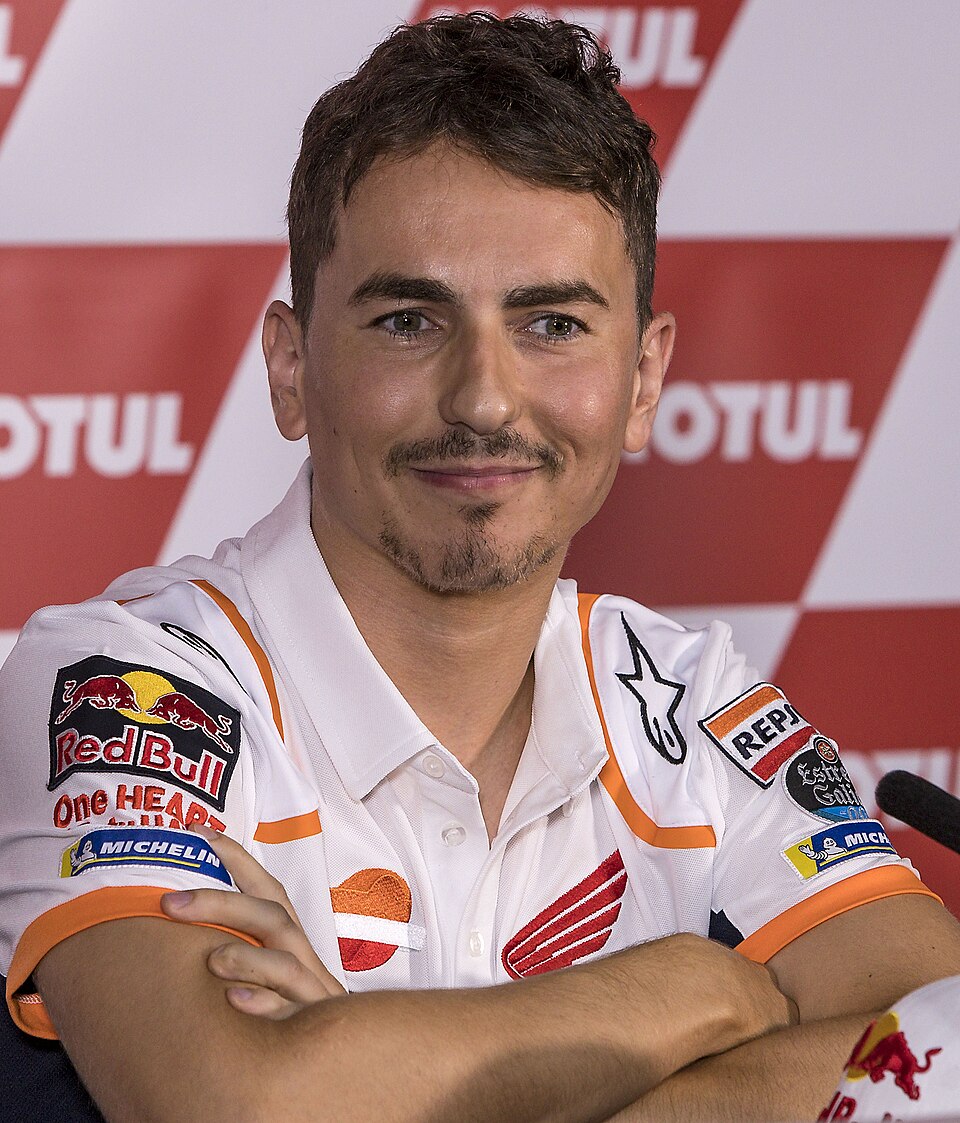
Jorge Lorenzo

Spain · 2002-2019

Five world championships: 250cc in 2006 and 2007, and MotoGP in 2010, 2012 and 2015. Lorenzo took 68 Grand Prix wins from 297 starts, 47 of them in the premier class, along with 114 premier podiums and 69 career poles. He is the purest exponent of the corner-speed style that Yamaha's inline-four M1 rewarded, a rider whose lap times could be laid on top of one another for an entire race distance. Two moments define him: riding at Assen in 2013 two days after surgery to plate a broken collarbone, and the 2015 championship, won by five points from Rossi in a season that ended in open hostility. His Ducati years from 2017 to 2018 were slow to start but produced three wins once the bike was adapted to him, before a difficult final season at Honda.

Premier-class titles
3
World titles, all classes
5
Premier-class wins
47
Career GP wins
68
Career GP podiums
152
11

John Surtees

United Kingdom · 1952-1960

Seven world championships in nine seasons of Grand Prix racing: the 500cc title in 1956, 1958, 1959 and 1960, and the 350cc title in 1958, 1959 and 1960, taking the double in each of those three years. He won 38 Grands Prix, 22 of them in the premier class, almost all on MV Agusta after starting with Norton. In 1958 and 1959 he was close to unbeatable in both classes he contested. He then walked away from motorcycles at 26 and moved to cars, winning the 1964 Formula 1 world championship with Ferrari, which makes him the only person to have won world titles on two and four wheels. That crossover, together with his later career as a constructor, gives him a place on any list even though his motorcycle career was short.

Premier-class titles
4
World titles, all classes
7
Premier-class wins
22
Career GP wins
38
12

Geoff Duke

United Kingdom · 1950-1959

Six world championships: the 500cc title in 1951, 1953, 1954 and 1955, and the 350cc title in 1951 and 1952. Duke won 33 Grands Prix and 50 podiums from 89 starts, 22 of the wins in the premier class, and was the first rider to take premier-class titles with two different manufacturers, Norton in 1951 and Gilera from 1953. He is also the sport's first genuine modernist: he commissioned a local tailor to make him a one-piece racing suit, replacing the two-piece leathers everyone else wore, and his smooth, low-drag style became the template for road racing technique. In 1956 the FIM suspended him for six months for supporting a riders' strike over start money, which cost him any chance of a fourth consecutive 500cc crown.

Premier-class titles
4
World titles, all classes
6
Premier-class wins
22
Career GP wins
33
Career GP podiums
50

Bars are scaled to the leader in this list.

The debate

The core argument is between accumulation and difficulty. Agostini's 15 titles and 122 wins are untouchable, but he took most of them on MV Agusta machinery that no rival could match, against grids where a handful of privateers made up the numbers. Rossi and Marquez both won seven premier crowns against fields where the top ten were routinely within a second, and both won on more than one manufacturer. Rossi's case rests on longevity and on 2004, when he took a Yamaha that had won nothing the previous year and beat Honda with it. Marquez's rests on peak intensity: 13 wins in a season, the youngest champion in history, and a 2025 comeback worth 545 points after four years of injury.

Several riders have strong claims to the places just outside this twelve. Kevin Schwantz won only one title but 25 races and is remembered as the most spectacular rider of his generation; Freddie Spencer's 1985 250cc and 500cc double has never been repeated; Phil Read took seven world championships across three classes; Angel Nieto won 13 titles and 90 races, though entirely in the 50cc and 125cc classes. Dani Pedrosa is the most successful rider never to win a premier title, with 31 wins and 112 podiums, and Francesco Bagnaia's back-to-back Ducati championships in 2022 and 2023 ended a drought that had lasted since Stoner. Where any of them belong depends on how much weight a list gives to titles rather than to the way a rider raced.

Keep exploring

More sports

Soccer

The simplest game on Earth, played by hundreds of millions and argued over by half the planet.

🏀

Basketball

Five players, 24 seconds, and geometry at full sprint — the city game that conquered the world.

Baseball

The clockless chess match where a round bat meets a round ball and the best hitters on earth still fail seven times out of ten.

🎾

Tennis

The loneliest duel in sport: no clock, no teammates, no place to hide until the last point is won.

🏎️

F1

Twenty drivers, a thousand horsepower, and the most expensive engineering arms race in sport.

Golf

A six-century test of nerve where the only opponent is the ground, the wind, and yourself.

🏈

Football

Four downs, ten yards, one end zone: the ultimate game of territory, collision, and coaching.

🏏

Cricket

The bat-and-ball contest where a single match can last five days and still turn on one ball.

🏉

Rugby Union

Fifteen players, eighty minutes of collision and continuity, and a code that prizes the contest for the ball above all else.

🏒

Hockey

The fastest team sport on Earth: six skaters, one frozen puck, and no time to breathe.

🥊

Boxing

The sweet science: two fighters, twelve three-minute rounds, and nowhere to hide behind a team.

🥋

MMA

Combat's most complete test — striking, wrestling and submission grappling settled inside a single cage.

🏐

Volleyball

Three touches, no second chances: the fast, vertical duel fought across a net no one may cross.

🏓

Table Tennis

The fastest ball sport on Earth, decided in the width of a fingernail and the spin no eye can fully read.

🏸

Badminton

The world's fastest racquet sport, where 400 km/h smashes and feather-soft net shots collide inside a single rally.

🏃

Track & Field

Faster, higher, stronger — the oldest contest in sport, settled in seconds and centimetres.

🏊

Swimming

Four strokes, one clock, and the oldest question in the water: who reached the wall first.

🚴

Road Cycling

An individual sport won by teams, where drafting, mountains and split-second timing decide everything.

🎮

Esports

Competitive video gaming turned global spectator sport, where reactions measured in milliseconds decide million-dollar prizes in front of millions of viewers.