Milestones in order. This is history, not a weekly activity grid.
- First adult references
- First Laws of Cricket
- MCC founded and Lord's opens
- First overseas tour
- Overarm bowling legalized
- The first Test match
- The Ashes are born
- Imperial Cricket Conference formed
- The Bodyline series
- Bradman and the Invincibles
- First one-day knockout
- The first One Day International
- The first World Cup
- World Series Cricket
Last reviewed Sources & creditsMedia creditsMethodology
Quick answers
Why does a Test match last five days?
A Test gives each side two full innings and asks them to bowl the other out twice, which simply takes time; a minimum of 90 overs is bowled each day across five days, roughly 450 overs in all. The format is designed as an examination of skill, stamina, and temperament rather than a quick result, so batters can occupy the crease for hours and bowlers must find sustained ways to take twenty wickets. If neither side completes the task in time, the match is drawn. This endurance is the point: Test cricket rewards patience and shifting momentum that shorter formats, decided in a single innings, cannot offer.
What is the difference between Test, ODI, and T20 cricket?
The three formats differ in length and intent. Test cricket is played over five days with two innings each and no limit on overs; it is the traditional, most demanding form, ending in a win, loss, or draw. A One Day International gives each side a single innings of 50 overs and always produces a result, favouring a balance of caution and aggression. A Twenty20 gives each side just 20 overs and lasts about three hours, rewarding constant attacking play and big hitting. In short, Test cricket prizes patience and technique, ODIs blend the two, and T20 is built for entertainment and rapid scoring.
What does LBW mean in cricket?
LBW stands for leg before wicket, one of the main ways a batter is dismissed. If the ball strikes the batter's pad or body, rather than the bat, and the umpire judges that it would have gone on to hit the stumps, the batter can be given out. Several conditions apply: the ball must not pitch outside the line of leg stump, and if it strikes the pad outside the line of off stump the batter is safe provided he was attempting a shot. Ball-tracking technology now assists the decision through the review system, projecting the ball's path to show whether it would have hit the wicket.
Who is the greatest cricketer of all time?
There is near-consensus that Sir Donald Bradman is the greatest batsman, and often the greatest cricketer, purely on the strength of his Test average of 99.94, a figure no one else has approached, roughly double that of other all-time greats. Beyond Bradman the debate is genuinely open. Sachin Tendulkar holds the records for most international runs and centuries; Garfield Sobers and Jacques Kallis are the leading all-rounders; Muttiah Muralitharan and Shane Warne dominate bowling; and Brian Lara, Viv Richards, and Virat Kohli have their strong advocates. Because the game has changed so much across eras, most fans accept Bradman at the top and argue endlessly about the order below him.
Why is cricket so popular in India?
Cricket took root in India under British rule and grew into a national passion after independence, but the turning point was the 1983 World Cup, when Kapil Dev's underdog side beat the mighty West Indies at Lord's and inspired a generation. Television then carried the game into hundreds of millions of homes, and stars such as Sachin Tendulkar became national icons. India's vast population and the commercial power of its market made it the financial centre of world cricket, a status cemented by the Indian Premier League from 2008. Today cricket in India is closer to a shared cultural language than a mere sport, cutting across region, language, and class.
What is the Duckworth-Lewis-Stern method?
The Duckworth-Lewis-Stern, or DLS, method is the mathematical formula used to reset targets in limited-overs matches shortened by rain or other interruptions. It recognizes that a team's scoring potential depends on two resources, the overs remaining and the wickets in hand, and calculates a fair revised target based on how much of those resources each side had available. Developed by statisticians Frank Duckworth and Tony Lewis and later refined by Steven Stern, it replaced cruder systems that could produce absurd targets. While its calculations can look opaque to spectators, DLS is widely accepted as the fairest available way to decide interrupted white-ball matches and is used at all levels including World Cups.
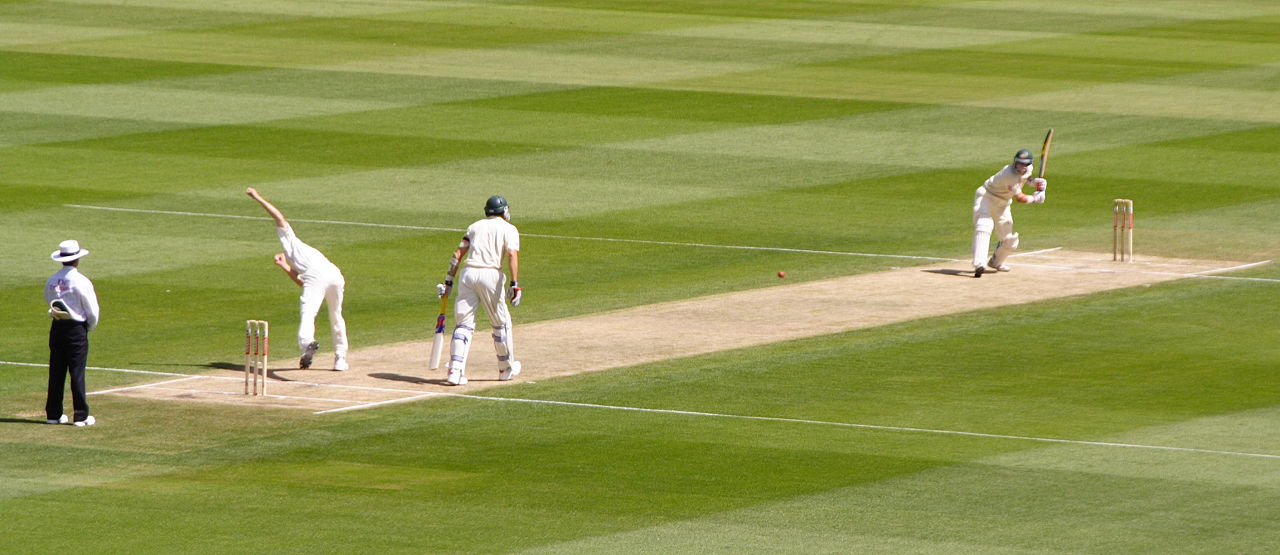
Cricket is among the oldest codified team sports, its Laws predating those of most modern games. It grew from a children's pastime in the pastures of south-east England into a codified contest governed by written rules from 1744, then spread along the routes of the British Empire to Australia, the Caribbean, South Asia, and southern Africa, where it took deeper root than in many of its birthplace's suburbs.
The game's history is a story of formats multiplying rather than replacing one another. The five-day Test, born in 1877, was joined by the one-day international in 1971 and the twenty-over game in 2005, each expansion widening the audience and reshaping the sport's economics while the older forms survived alongside the new. The timeline below traces that arc from folk game to global, billion-dollar industry.
Timeline
Court and dictionary records document adults playing cricket for wagers, marking the game's move from a rural children's pastime toward organized, gambled-upon competition.
The earliest known written Laws standardize the pitch length, the wicket, and the manner of dismissal, giving the game a common framework across clubs.
The Marylebone Cricket Club is established in London and takes custody of the Laws of Cricket, a role it would hold for the next two centuries.
An England side travels to North America for the first international cricket tour, beginning the game's spread beyond British shores.
The Laws permit overarm bowling for the first time, transforming attacking play; the same year the Wisden Cricketers' Almanack is first published.
Australia beat England by 45 runs at the Melbourne Cricket Ground in the inaugural Test, launching international cricket's oldest format.
After Australia won at The Oval, a mock obituary in the Sporting Times mourned the death of English cricket, giving the England-Australia rivalry its enduring name.
England, Australia, and South Africa found the body that would become the ICC, formalizing the international game across the Empire.
England's short-pitched leg-theory attack, designed to curb Don Bradman, wins the Ashes but sparks a diplomatic crisis and forces later changes to the Laws.
Don Bradman leads Australia's unbeaten tour of England, then is bowled for a duck in his final Test, ending four runs short of a career average of 100.
England launches the Gillette Cup, the first major limited-overs competition, proving that a guaranteed single-day result could draw crowds.
A washed-out Melbourne Test is replaced by a 40-over exhibition that packs the ground, giving birth to the ODI almost by accident.
Clive Lloyd's West Indies beat Australia at Lord's to win the inaugural men's Cricket World Cup, ushering in the era of limited-overs spectacle.
Kerry Packer's breakaway circuit introduces night cricket, coloured clothing, and white balls, innovations the one-day game kept after the 1979 peace deal.
Kapil Dev's underdog India beat the dominant West Indies at Lord's, igniting a commercial boom that shifted cricket's centre of gravity to the subcontinent.
Australia and New Zealand contest the inaugural men's Twenty20 International at Auckland, launching the format that would reshape the sport.
The IPL marries T20 to franchise ownership and vast broadcast money, becoming the wealthiest competition in cricket and the model for leagues worldwide.
The inaugural World Test Championship starts, and England win the ODI World Cup on boundary count after a tied final and tied Super Over at Lord's.
India beat South Africa by seven runs at Barbados in a tournament co-hosted by the United States, its biggest push yet into a new market.
Confirmed for Los Angeles 2028 in the T20 format, cricket rejoins the Games for the first time since 1900, a landmark for its global growth.
The eras
Folk game to codified sport
Cricket emerged among children in the Weald of south-east England, played on sheep-cropped downland with a shepherd's crook for a bat and a ball of wool or stone. The earliest firm reference dates to a 1597 court case recalling the game decades earlier. By the seventeenth century adults played for wagers, and gambling drove the sport's early organization: patrons fielded teams, and the need to settle bets demanded agreed rules. The first known Laws of Cricket were drawn up in 1744, standardizing the pitch length, the wicket, and the manner of dismissal. The Hambledon Club in Hampshire became the game's leading force in the 1760s and 1770s, refining technique and drawing large crowds to matches for high stakes. The straight bat gradually replaced the old curved club as bowlers began pitching the ball rather than rolling it along the ground, changing how batters had to defend. This period turned a rustic pastime into a codified contest with recognizable structure, setting the stage for the Marylebone Cricket Club, founded in 1787, to assume custody of the Laws and lead the game into its imperial age.
MCC, the Golden Age, and first Tests
MCC's founding in 1787 and the opening of Lord's Cricket Ground gave the game an institutional home; MCC would revise and guard the Laws for two centuries. The nineteenth century saw overarm bowling legalized in 1864, the same year the Wisden Cricketers' Almanack first appeared, and the rise of touring, beginning with an English side visiting North America in 1859. International competition crystallized in 1877, when Australia beat England at Melbourne in the first Test match. Five years later Australia's win at The Oval prompted a mock obituary for English cricket, and the Ashes were born, giving the sport its oldest and most storied rivalry. W. G. Grace towered over the era, a physician-cricketer whose vast run-scoring and showmanship made him Victorian England's most famous sportsman. The turn of the century, later dubbed the Golden Age, produced elegant amateur batsmen such as Ranjitsinhji, who pioneered the leg glance and brought subcontinental grace to English cricket. By 1909 the Imperial Cricket Conference united England, Australia, and South Africa, formalizing the international game across the British Empire and laying the administrative foundations for its later global expansion.
Bradman and Bodyline
The interwar decades belonged to Donald Bradman, whose Test average of 99.94 remains the most freakish statistic in sport, a figure so far beyond his peers that no batsman since has approached it. His run-scoring so alarmed England that on the 1932-33 tour they devised Bodyline: fast, short-pitched bowling aimed at the body with a packed leg-side field, a tactic that won the Ashes but provoked a diplomatic crisis between Britain and Australia and forced changes to the Laws. West Indies, India, and New Zealand all entered Test cricket in this period, broadening the game well beyond its founding trio and hinting at the multipolar sport to come. Bodyline exposed how tactics could weaponize pace, while Bradman's dominance set an aspirational standard that framed batting for a generation. The Second World War halted first-class cricket for six years, emptying grounds and interrupting careers, but Bradman returned in 1948 to lead Australia's unbeaten Invincibles through a tour of England, then fell for a duck in his final innings, four runs short of a career average of 100.
Post-war expansion and the birth of limited-overs
Post-war cricket saw the balance of power shift toward the Caribbean and the subcontinent. The three Ws, Worrell, Weekes, and Walcott, and the all-round genius of Garfield Sobers announced West Indian batting flair, while gifted stroke-players and spinners emerged across India and Pakistan. England's Jim Laker took nineteen wickets in the 1956 Old Trafford Test, a match record that still stands. Yet attendances for five-day cricket were declining, and administrators sought a shorter, result-guaranteed product to draw paying crowds back. England launched the first major one-day knockout, the Gillette Cup, in 1963, proving that a result decided in a single day had wide appeal. The first One Day International followed almost by accident in 1971, when a washed-out Melbourne Test was replaced by a forty-over exhibition that packed the ground. The format's popularity culminated in 1975 with the inaugural World Cup, won by Clive Lloyd's West Indies at Lord's, ushering in an era of coloured, crowd-pleasing limited-overs spectacle that would soon rival the primacy of the Test match.
World Series revolution and globalization
Kerry Packer's World Series Cricket, launched in 1977 after he was refused broadcast rights, was the most disruptive event in the sport's modern history. Packer signed the world's best players to a breakaway circuit and introduced night cricket under lights, coloured clothing, white balls, and aggressive television coverage, innovations that limited-overs cricket kept permanently after the peace deal of 1979. The West Indies dominated the game from the late 1970s through the 1980s, their battery of fast bowlers and batsmen like Viv Richards going fifteen years without losing a Test series, an unmatched run of collective supremacy. India's shock World Cup victory in 1983 transformed cricket's centre of gravity, igniting a commercial boom on the subcontinent that reshaped the sport's economics for good. Pakistan's reverse-swing pioneers Wasim Akram and Waqar Younis, and Australia's leg-spinner Shane Warne, redefined bowling craft during a golden decade for bowlers. The century closed under the shadow of the 2000 match-fixing scandal, which exposed corruption reaching to national captains and forced the game to confront its integrity.
The T20 era and franchise cricket
Twenty20 cricket, introduced to England's counties in 2003 and to internationals in 2005, compressed the game into a three-hour spectacle and changed everything. The Indian Premier League, launched in 2008, married the format to franchise ownership, celebrity, and vast broadcast money, becoming the wealthiest cricket competition on earth and the template for leagues in Australia, the Caribbean, South Africa, and the United States. Batting was revolutionized: ramp shots, switch-hits, and range-hitting pushed scoring rates that once seemed impossible, while bowlers answered with slower-ball bouncers, wide yorkers, and mystery spin. Test cricket sought fresh relevance through the World Test Championship, inaugurated in 2019, the same year England won a tied World Cup final on boundary count. England's Bazball approach then brought T20 aggression to the five-day game. India won the 2024 T20 World Cup in a tournament co-hosted by the United States, women's cricket professionalized with the Women's Premier League, and the sport prepared to return to the Olympics at Los Angeles 2028.
From a children's game on English commons to a billion-dollar global industry, cricket has grown by adding formats rather than discarding them, so that a purist's five-day Test and a three-hour T20 blockbuster now share the same calendar. The tension between those forms, and between international cricket and the booming franchise circuit, defines the game's present, but the through-line remains the duel between bat and ball that has held spectators for nearly three centuries.
Keep exploring
More in this category
Soccer
The simplest game on Earth, played by hundreds of millions and argued over by half the planet.
🏀Basketball
Five players, 24 seconds, and geometry at full sprint — the city game that conquered the world.
⚾Baseball
The clockless chess match where a round bat meets a round ball and the best hitters on earth still fail seven times out of ten.
🏈Football
Four downs, ten yards, one end zone: the ultimate game of territory, collision, and coaching.
🏉Rugby Union
Fifteen players, eighty minutes of collision and continuity, and a code that prizes the contest for the ball above all else.
🏒Hockey
The fastest team sport on Earth: six skaters, one frozen puck, and no time to breathe.
🏐Volleyball
Three touches, no second chances: the fast, vertical duel fought across a net no one may cross.
🤾Handball
The fastest scoring team sport on the planet: seven a side, thirty minutes a half, and a goal roughly every ninety seconds.