Single "Silk Road" line is tourist myth
Historians insist on networks across eras — reject one highway ranking civilizations.
Silk Roads, Indian Ocean and Saharan routes moved goods, genes and stories — corridors, not race ladders.
Side-by-side cultures and maps — never race ranks.
Read the map layers
Last reviewed Sources & creditsMedia creditsMethodology
Five research punchlines — scan before you dive.
Long-distance trade braided cultures without needing a racial hierarchy.
Monsoon schedules and oasis taxes structured movement more than “civilization scores”.
Modern Belt-and-Road talk rhymes with older corridor politics.
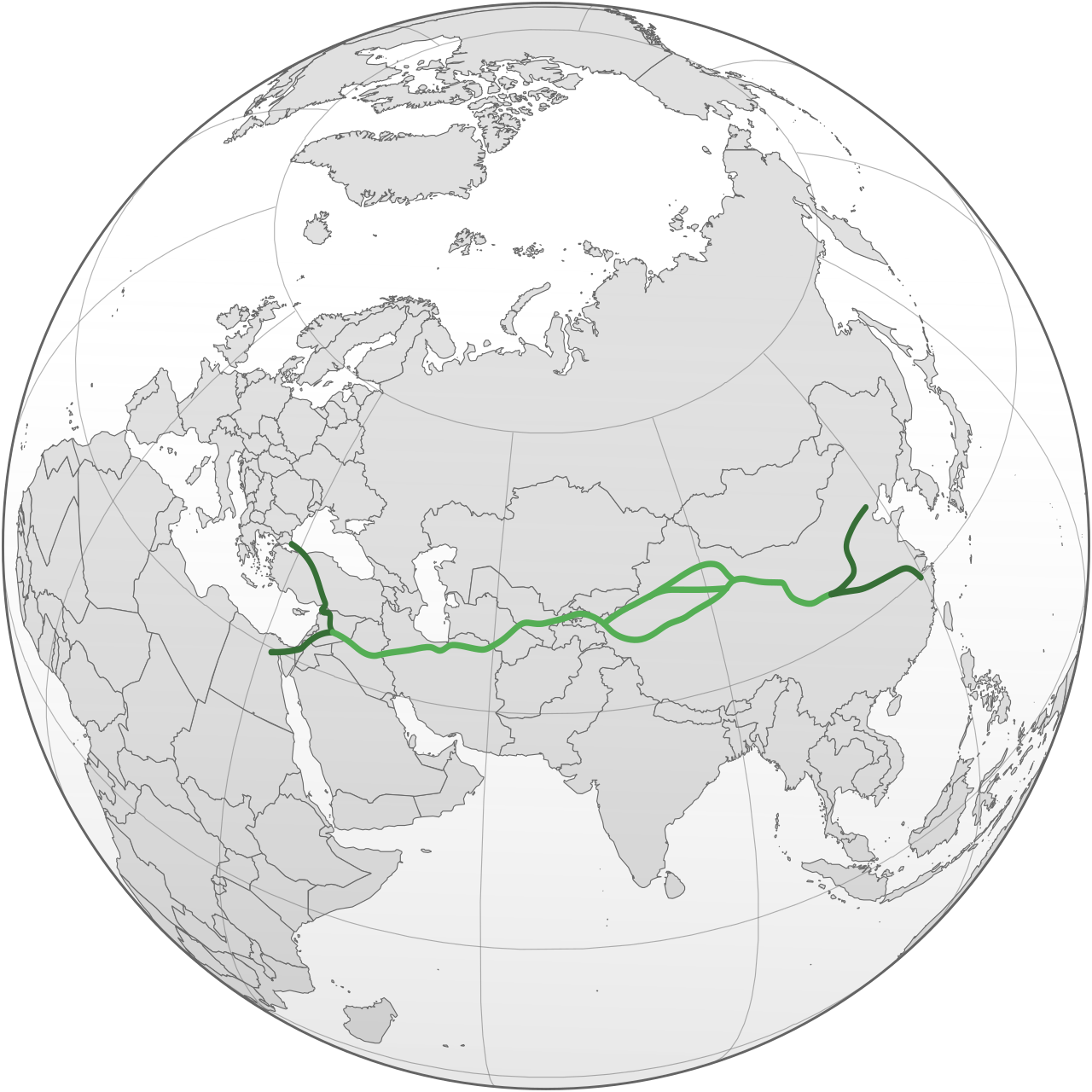
How routes structured contact.
Routes optimize water, fodder and wind; cultures ride those constraints.
Merchants often lived as minorities with legal privileges and risks.
Oasis chains and steppe detours linked China to the Mediterranean unevenly.
Predictable winds made Afro-Asian sea trade routine.
Salt, gold and scholarship moved with camel caravans.
European sea power redirected profits and violence.
Containers and fiber-optic cables are new corridor tech.
Signals a careful reader looks for — and the traps that turn maps into myths.
Historians insist on networks across eras — reject one highway ranking civilizations.
Spices and texts moved; admixture arrows need careful captions, not invasion clickbait.
Plague and smallpox shadow exchange — contact has shadow costs.
Contemporary debt and rail politics echo ancient tolls — new rails, old questions.
Scholarly themes rewritten for curious readers — not paywalled jargon, and never a race ranking.
Modern historians insist on networks across eras, not one romantic highway of civilizational ranking.
Takeaway Many roads, many centuries.
Predictable winds scheduled Afro-Asian exchange of goods, scholars and styles.
Takeaway Weather timed globalization 1.0.
Caravan studies restore African agency in gold-salt-manuscript trades.
Takeaway Deserts were bridges.
Plague and other pathogens rode the same routes as silk — contact’s shadow.
Takeaway Exchange isn’t only treasure.
Contemporary corridor politics rhyme with older chokepoint taxes and debt debates.
Takeaway New rails, old questions.
Books, reviews and museum trails — starting points, not a syllabus.
Networks plural — many roads, many centuries, no civilizational ladder.
Scheduled winds moved goods, scholars and styles — globalization 1.0.
Objects as contact evidence — things, not races, traveled.
Caravan labor and desert bridges — African agency restored.
Corridor maps and heritage sites — check UNESCO dating.
No. It mixed people and goods; racial categories are later political inventions.
Better as a network of routes across eras.
Monsoon sailing linked East Africa, Arabia, India and Southeast Asia.
Pathogens traveled too — see immune and plague histories.
Coerced movement is part of corridor history; name it without euphemism.
Diaspora-corridors; Horn; Persianate; historical-migration.
Corridors leave ancestry traces; they do not justify race ranks.
Schematic — borders and names shift by century.