Tigre es una de las veinticuatro especies de este atlas. No es un catálogo: trata evolución, anatomía, conducta, cultura, iconos, conservación y área como un solo sistema.
Las puntuaciones comparan velocidad, inteligencia, área, resiliencia, impacto cultural y rol ecológico. Son juicios editoriales relativos, no un ranking de laboratorio.
Siete capítulos profundizan: orígenes, cuerpo y sentidos, vida y conducta, cultura, iconos, presión de conservación y el área que se comparte con la gente.
Introducción profunda
Inmersión: Tigre
Tigre no es un animal de postal. Es un conjunto de poblaciones, subespecies y reglas humanas dentro de la familia fauna de este atlas.
Diversidad, cuerpos, cultura y áreas — más una lente de esta región lingüística.
Diversidad dentro del tipo
Las guías de campo comprimen muchos linajes en la palabra Tigre. Subespecies, rutas y líneas cautivas no comparten un solo destino.
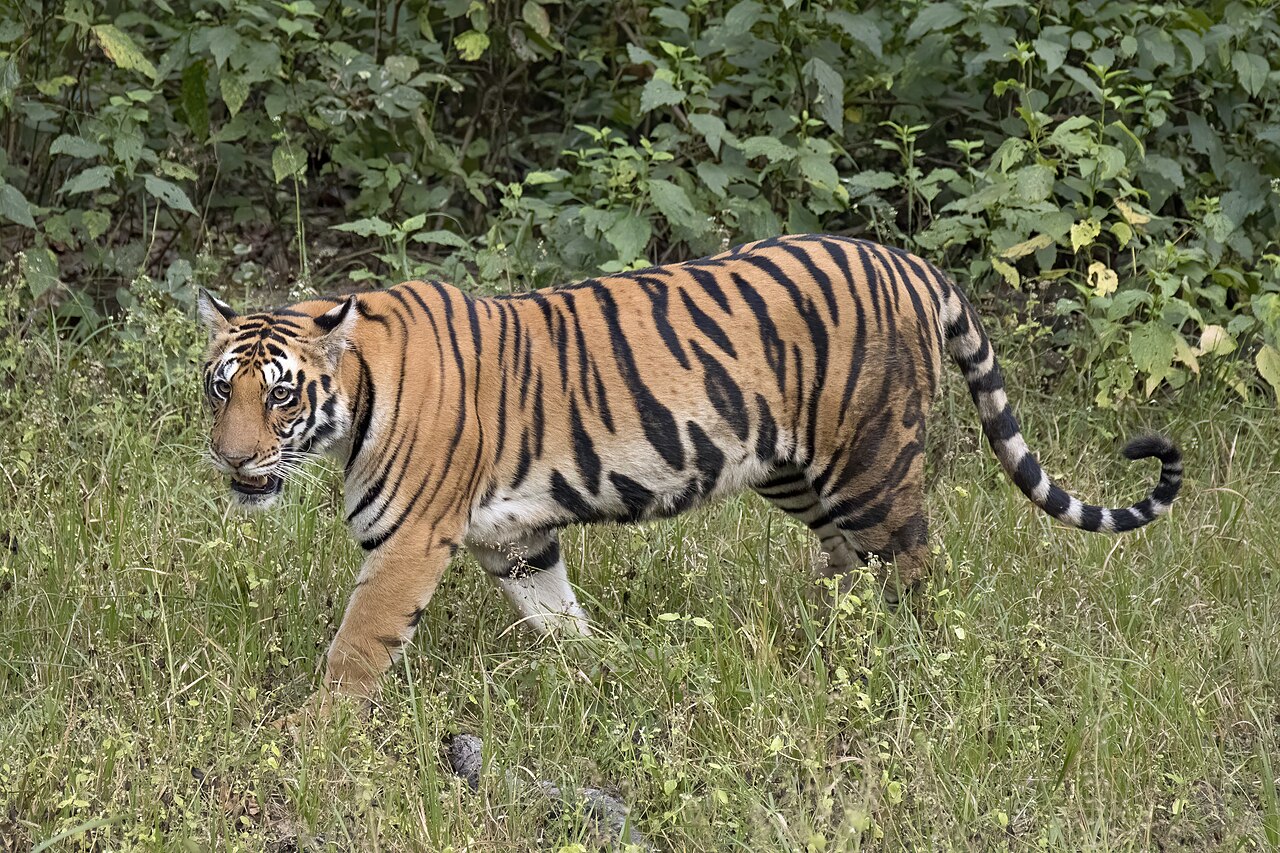
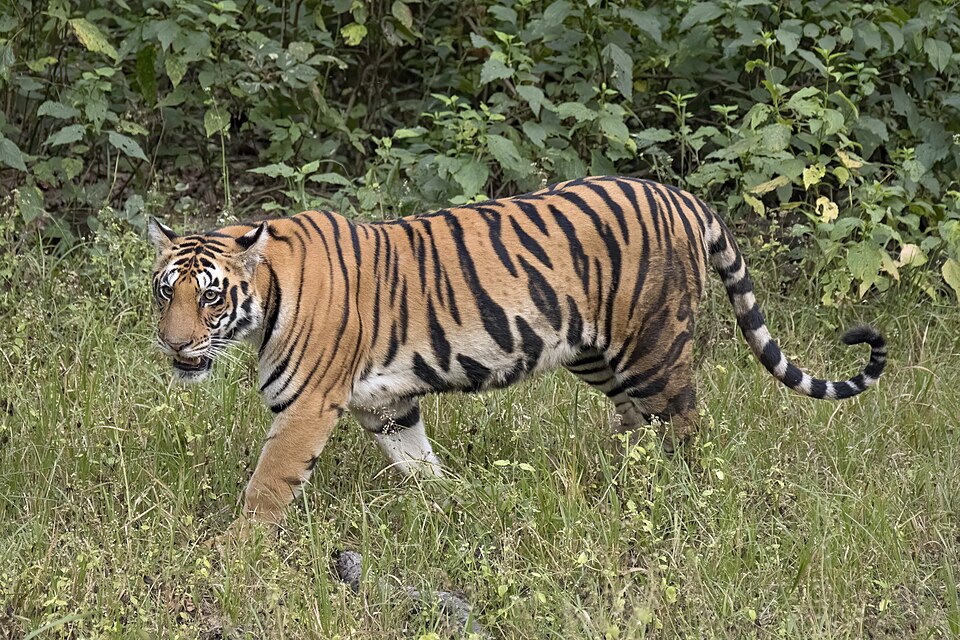
Este atlas elige un título de Wikipedia como imagen heroica y deja a la vista el resto del grado para que una población recuperada no lave a una prima En peligro crítico.
Life in the landscape
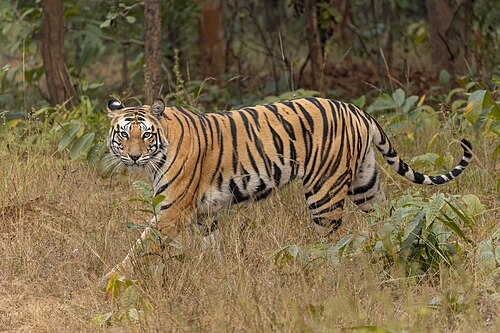
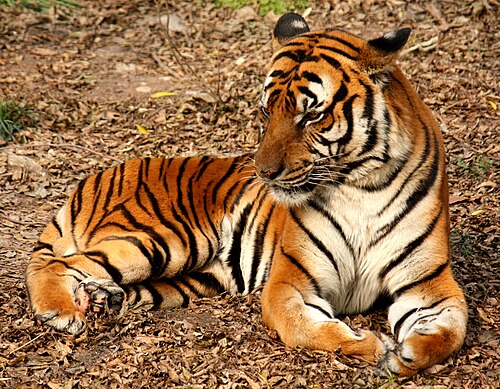
A solitary pantherine with a long body, striped disruptive coat and forelimbs built to wrestle large ungulates. Canines and a killing bite to the neck or throat finish what the ambush starts.
Sit-and-ambush on chital, sambar, wild pig and, in the Amur, deer and boar. A large kill funds days; livestock is the conflict calorie.
Cultura y significado
Cine, ley, heráldica, zoológicos y relato local encontraron a Tigre. Esas imágenes mueven dinero; no son un censo de campo.
El capítulo de cultura fecha carteles y leyes para que una película de 1975 o un logotipo de 1961 no finjan ser la Lista Roja de los años 2020.
Conservation and money
Endangered. Wild numbers rose in India after Project Tigre (1973) and Tx2 pledges (2010); Southeast Asian and South China lineages did not share that graph.
Tourism, conflict payments, quotas and captive loans are dated economic bands in the market chapter -- not live prices and not a best-species prize.
Inmersión de ciencias de la vida
Biología a fondo: Tigre
La biología de Tigre es una pila de estructura, energía, sentidos y límites. Los cuatro apartados usan los mismos títulos del atlas para comparar sin un marco de mejor especie.
Anatomía, sentidos, conducta y límites — más el lenguaje de campo de esta región.
Structure
A solitary pantherine with a long body, striped disruptive coat and forelimbs built to wrestle large ungulates. Canines and a killing bite to the neck or throat finish what the ambush starts.
Load paths and tissues (not metals) are expanded in the anatomy chapter.
Energy and foraging
Sit-and-ambush on chital, sambar, wild pig and, in the Amur, deer and boar. A large kill funds days; livestock is the conflict calorie.
The how-it-works diagrams reduce that budget to a six-node loop.
Senses and control
Night vision and hearing in closed forest. Stripes break outline more than they advertise.
Control here means the animal steering itself -- not a vehicle ECU.
Limits
A few thousand animals, shrinking SE Asian forest, and a prey base that snares erase. High cultural impact does not raise resilience.
Resilience scores encode those limits relative to the other 23 types.
Las estimaciones mundiales de la década de 2020 rondan 4.000–5.500 según el año y el método. India tiene la mayoría. La cifra es producto de cámaras trampa, no un relato de cazador victoriano.
¿Funcionó el Proyecto Tigre?
Los conteos silvestres de India subieron de una crisis en los años 1970 a la mayor población nacional. El método pasó de huellas a cámaras, así que la gráfica no es un solo instrumento. El Sudeste Asiático no copió el rebote.
¿Qué fue Tx2?
Un compromiso de 2010, en San Petersburgo, de los Estados con tigres para duplicar los números silvestres hacia 2022. Unos países ganaron; otros perdieron. El lema sobrevivió al plazo.
¿Por qué no puntuar igual a tigres y leones?
El león es Vulnerable, con una huella africana más amplia y un relicto minúsculo en Gir. El tigre está En peligro, más atado al bosque y con más peso cultural en el sur y el este de Asia. Las notas siguen siendo relativas entre las 24 especies.
¿Quién fue Jim Corbett en esta historia?
Un cazador de tigres devoradores de hombres que escribió Man-Eaters of Kumaon (1944) y luego prestó su nombre al primer parque nacional de India: un arco de colonia a reserva.
¿El tigre siberiano es otra conservación?
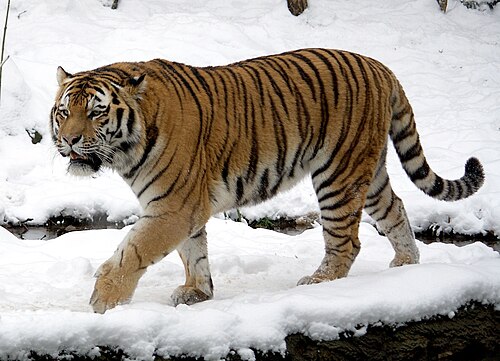
En algunas taxonomías Panthera tigris tigris agrupa muchos tigres continentales; los animales del Amur siguen con un programa fronterizo ruso-chino y un invierno de presas distinto.
¿Y el tigre del sur de China?
El P. t. amoyensis silvestre se considera extinto o funcionalmente extinto. Las líneas cautivas chinas son un argumento genético y político, no una población de bosque.
¿Los tigres necesitan núcleos inviolables?
La ideología del Proyecto Tigre decía que sí. La gente de las zonas de amortiguación y la ciencia de corredores complicaron luego el modelo de fortaleza sin abandonar la idea del núcleo.
Fijar la anatomia del tigre frente a su conducta
Como leo la anatomia del tigre frente a la conducta en esta pagina?
Fije un sistema anatomico ya listado, por ejemplo soporte e integumento (cuerpo de emboscada rayado y mordida letal al cuello o garganta) o aparato de alimentacion (sentarse y emboscar chital, sambar, jabali), contra un principio de funcionamiento como Energia entra, trabajo sale o Informacion antes del movimiento. El par es una ayuda de lectura, no un tablero de ganadores.
Este atlas clasifica tigres frente a leones u otras especies?
No. Las puntuaciones son marcas editoriales relativas entre 24 tipos: velocidad 69, inteligencia 76, area 37, resiliencia 14, impacto cultural 94, papel ecologico 82. No son un ranking de la mejor especie ni una carrera en vivo.
El numero de resiliencia es un feed IUCN en vivo?
No. La resiliencia 14/100 es una banda didactica ya en el expediente: En peligro; los conteos de la India subieron tras Project Tiger (1973) y los compromisos Tx2 (2010), mientras que los linajes del sudeste asiatico y del sur de China no compartieron esa grafica. No hay consulta en vivo a la Lista Roja en esta pagina.
Por que fijar la vision nocturna con el pelaje rayado?
El capitulo de anatomia dice que la vision nocturna y el oido trabajan en bosque cerrado, y que las rayas rompen el contorno mas de lo que anuncian. El principio de conducta que encaja es Informacion antes del movimiento. Fijar esos dos ensena la emboscada ya en el expediente; no es una medicion de campo nueva.
Puedo restaurar el ultimo par anatomia-conducta?
Si, solo en este aparato. Cambie un pin para reabrir el mismo par. La biologia de campo y la ley local siguen decidiendo cualquier encuentro real. La pagina no clasifica especies ni actualiza un estado IUCN en vivo.
Leer conservación sin ranking de especies
En Tigre, fija Support and integument y Energy in, work out; la resiliencia es alfabetización del atlas, no un feed IUCN en vivo.
Fijar un sistema anatómico — Empieza con Support and integument del capítulo de anatomía.
Fijar un principio conductual — Empáralo con Energy in, work out — ayuda de lectura, no tabla de ganadores.
Conservación como alfabetización — Resiliencia e IUCN en archivo son notas publicadas.
Las puntuaciones no son ranking — Las seis marcas comparan tipos en este atlas.
Support and integument + Energy in, work out en Tigre enseña estructura antes del titular.
Marcas editoriales. No consejo médico ni IUCN en vivo.
Segundo eje: resiliencia junto a rol ecologico
En Tigre, lea conservacion como dos marcas publicadas — resiliencia 14 y rol ecologico 82 — no podium ni feed IUCN en vivo.
Leer la marca de resiliencia — Resiliencia 14/100 — alfabetizacion relativa entre 24 tipos.
Leer la marca de rol ecologico — Rol ecologico 82/100 — otro eje que quien parece mas fuerte.
Sin ranking de especies — Dos ejes explican trade-offs; no coronan al mejor animal.
Sigue sin ser lista roja en vivo — Cualquier etiqueta IUCN en archivo es nota publicada.
Resiliencia 14 y rol 82 en Tigre son una segunda lectura de conservacion — sin podium.
Marcas editoriales. No consejo medico ni IUCN en vivo.
Rol, no un ganador
Alfabetización de conservación. No es una consulta IUCN en vivo.
Insertar este ranking
Pega este código en tu blog o web; el ranking se mantiene actualizado.
¡Copiado!
Especies similares
Vecinos más cercanos en los seis ejes — velocidad, inteligencia, área, resiliencia, cultura y rol ecológico.