Flamenco es una de las veinticuatro especies de este atlas. No es un catálogo: trata evolución, anatomía, conducta, cultura, iconos, conservación y área como un solo sistema.
Las puntuaciones comparan velocidad, inteligencia, área, resiliencia, impacto cultural y rol ecológico. Son juicios editoriales relativos, no un ranking de laboratorio.
Siete capítulos profundizan: orígenes, cuerpo y sentidos, vida y conducta, cultura, iconos, presión de conservación y el área que se comparte con la gente.
Introducción profunda
Inmersión: Flamenco
Flamenco no es un animal de postal. Es un conjunto de poblaciones, subespecies y reglas humanas dentro de la familia aves de este atlas.
Diversidad, cuerpos, cultura y áreas — más una lente de esta región lingüística.
Diversidad dentro del tipo
Las guías de campo comprimen muchos linajes en la palabra Flamenco. Subespecies, rutas y líneas cautivas no comparten un solo destino.
Este atlas elige un título de Wikipedia como imagen heroica y deja a la vista el resto del grado para que una población recuperada no lave a una prima En peligro crítico.
Life in the landscape
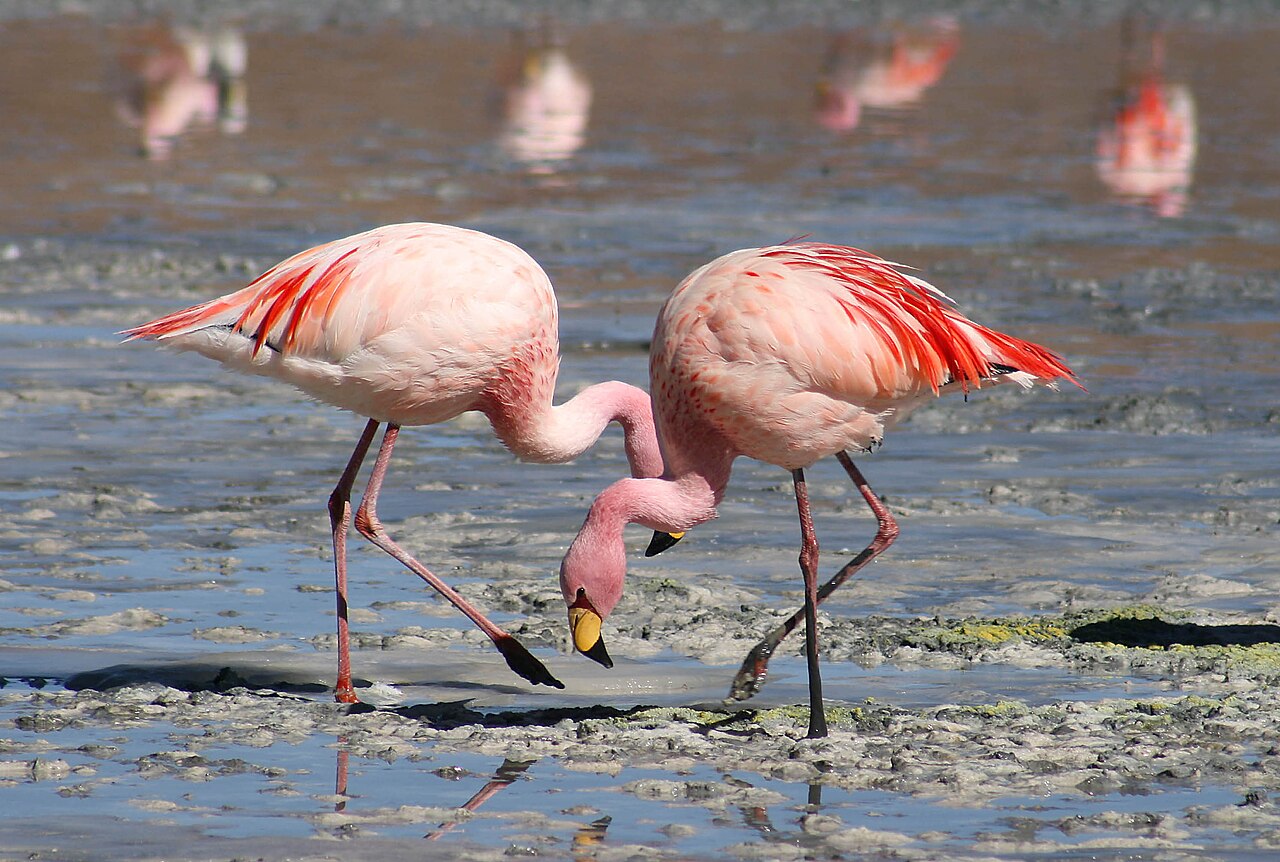
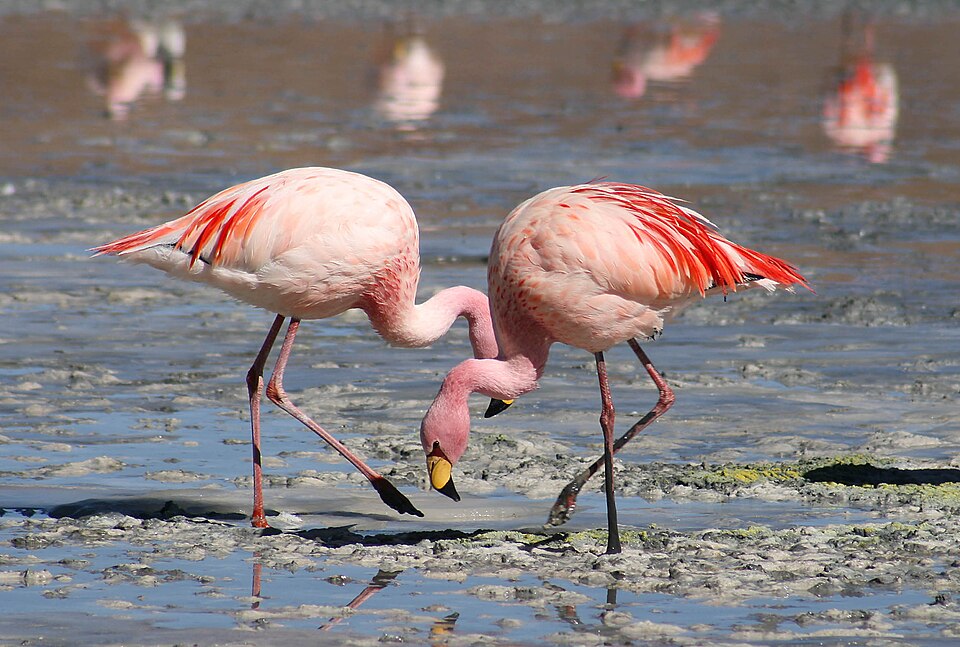
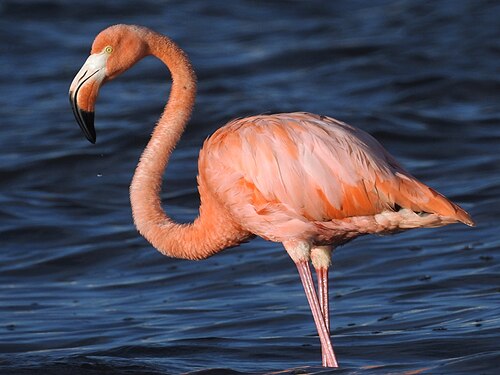
Extreme tibiotarsi, webbed feet and a deep-keeled bill with lamellae. The neck is a hose that inverts the head into the soup.
Filter-feeding on cyanobacteria, diatoms and brine invertebrates. Crop milk feeds the single chick; adults commute to fresher water.
Cultura y significado
Cine, ley, heráldica, zoológicos y relato local encontraron a Flamenco. Esas imágenes mueven dinero; no son un censo de campo.
El capítulo de cultura fecha carteles y leyes para que una película de 1975 o un logotipo de 1961 no finjan ser la Lista Roja de los años 2020.
Conservation and money
Greater and American flamingos are Least Concern; Andean and puna species sit closer to the edge.
Tourism, conflict payments, quotas and captive loans are dated economic bands in the market chapter -- not live prices and not a best-species prize.
Inmersión de ciencias de la vida
Biología a fondo: Flamenco
La biología de Flamenco es una pila de estructura, energía, sentidos y límites. Los cuatro apartados usan los mismos títulos del atlas para comparar sin un marco de mejor especie.
Anatomía, sentidos, conducta y límites — más el lenguaje de campo de esta región.
Structure
Extreme tibiotarsi, webbed feet and a deep-keeled bill with lamellae. The neck is a hose that inverts the head into the soup.
Load paths and tissues (not metals) are expanded in the anatomy chapter.
Energy and foraging
Filter-feeding on cyanobacteria, diatoms and brine invertebrates. Crop milk feeds the single chick; adults commute to fresher water.
The how-it-works diagrams reduce that budget to a six-node loop.
Senses and control
Touch and flow at the bill matter as much as vision in turbid pink water. Colonial cues time breeding more than calendars.
Control here means the animal steering itself -- not a vehicle ECU.
Limits
A handful of breeding lakes hold millions. Change those water budgets and the pink city has nowhere to move the nest towers.
Resilience scores encode those limits relative to the other 23 types.
Four other atlas types, six terms, three threads and three local notes -- a map out of the Flamenco page without leaving the 24-id taxonomy.
Especies relacionadas, términos, hilos adyacentes y notas regionales de este idioma.
Véase también
🦢GrullaAnother tall wader used as a cultural emblem, different diet and gait.
🐦ColibríDiet-coloured plumage — brine pigments vs nectar iridescence.
🎏KoiCarotenoid colour as a human-managed aesthetic, versus wild lake chemistry.
🐧PingüinoColonial waterbird on a different thermal and salinity extreme.
Términos clave
Lamellae
Comb-like bill ridges that sieve cyanobacteria, diatoms and brine shrimp.
Carotenoids
Canthaxanthin and related pigments from diet — captive birds fade on pigment-poor feed.
Soda lake
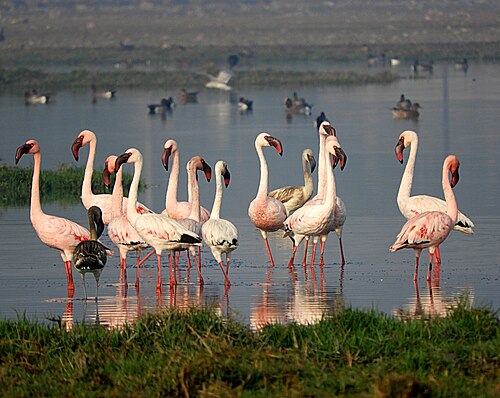
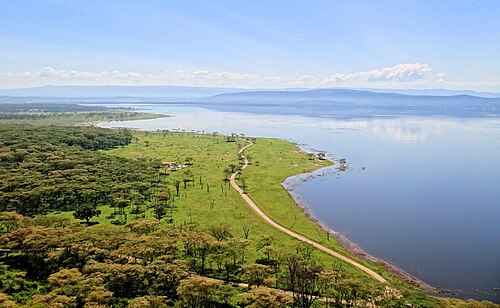
High-pH East African lakes (Nakuru, Bogoria, Natron) that hold lesser Flamenco swarms.
Mud tower nest
A raised cone that keeps the single egg above salt crust and shallow flood.
Phoenicopterus
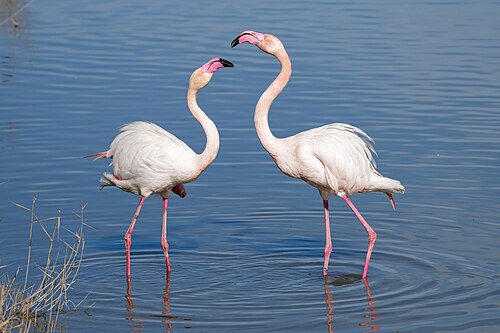
Greater and American Flamenco genus — the tourist-pink default.
Camargue colony
Tour du Valat and salt-pan management in southern France — a European breeding stronghold.
Habitat and movement
Where the Flamenco breeds and feeds is the first constraint. Single lakes, islands and forests appear again in the history timeline.
Range scores in this atlas mark how widely that movement runs -- albatross and blue whale high, koi and panda low -- not a quality ranking.
Research and law
Named projects (Project Tiger, ACAP, ICCAT, Amboseli) are the English-language bureaucracy of the type.
Listings and downlists are dated events in the timeline, not eternal essences.
Culture and price
Film, auction and logo years are filed under culture and market so they cannot masquerade as demography.
The icons chapter keeps eight real Wikipedia titles so a later language pack can attach the same faces.
Notas de campo visuales
Fotos con licencia de esta especie — héroes, eras e iconos en un muro.
Valdiney PimentaValdiney PimentaGiles LaurentSumita Roy DuttaJeffreyGammonBiodiversity 01Bjørn Christian TørrissenJoshua Stevens/NASA(c) Luciano Massa, some rights reserved (CC BY)
El perfil
Velocidad44
Inteligencia39
Área64
Resiliencia69
Impacto cultural46
Rol ecológico49
Fijar anatomía frente a conducta
Elija un sistema anatómico y un hecho de operación ya en esta página de especie. Un par de lectura — no un tablero de ganadores.
Ayuda de navegación de este atlas. La biología de campo y la ley local deciden cualquier encuentro real. Sin feed en vivo.
Dietary carotenoids from brine shrimp and cyanobacteria deposit in feathers. A white flamingo is usually a diet or age story, not a different species.
Why is the bill bent “upside down”?
The bird feeds with the head inverted. The upper jaw is the mobile filter; lamellae comb a soup of algae and invertebrates.
Are lesser flamingos the East African pink clouds?
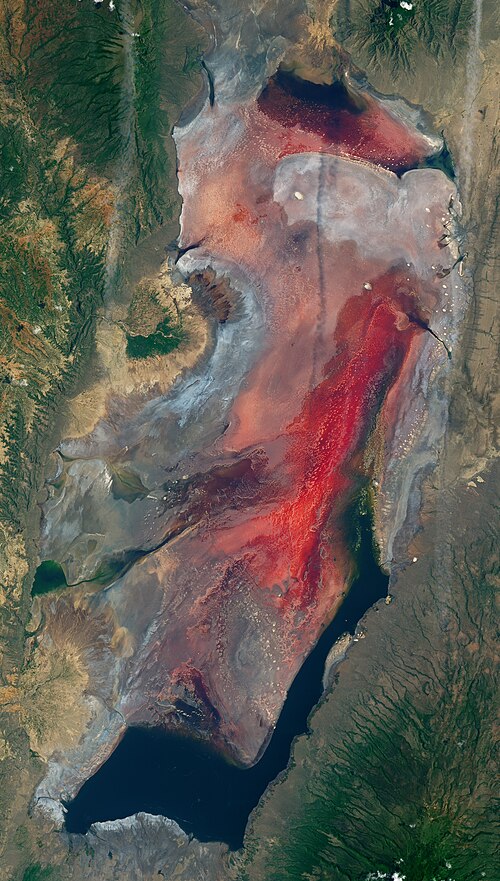
Yes. Phoeniconaias minor can number more than a million on Rift soda lakes when Arthrospira blooms. Breeding still hinges on sites like Lake Natron.
What is the Camargue’s role in Europe?
Salt pans and Tour du Valat management rebuilt a greater flamingo colony that now seeds Mediterranean satellites.
Do American flamingos still belong in Florida?
A breeding population has returned to Florida Bay after a long absence. Some birds are escapees; others are wild Caribbean wanderers — the mix is a current field argument.
Why do Andean flamingos look more at risk?
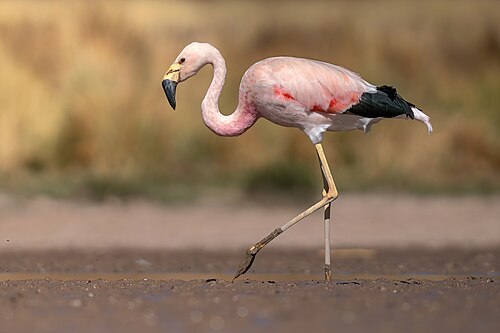
High-Andean salars face lithium and water extraction. Three highland species share a small set of lakes.
Can flamingos drink hypersaline water?
They use salt glands and fresh seeps. Chicks on soda lakes need adult crop milk and freshwater access.
Is the plastic lawn flamingo part of the biology story?
Union Products’ 1957 pink flamingo (Don Featherstone) is culture, not field mark — but it fixed the colour in US suburbia more firmly than field guides did.
Rol, no un ganador
Alfabetización de conservación. No es una consulta IUCN en vivo.
Insertar este ranking
Pega este código en tu blog o web; el ranking se mantiene actualizado.
¡Copiado!
Especies similares
Vecinos más cercanos en los seis ejes — velocidad, inteligencia, área, resiliencia, cultura y rol ecológico.