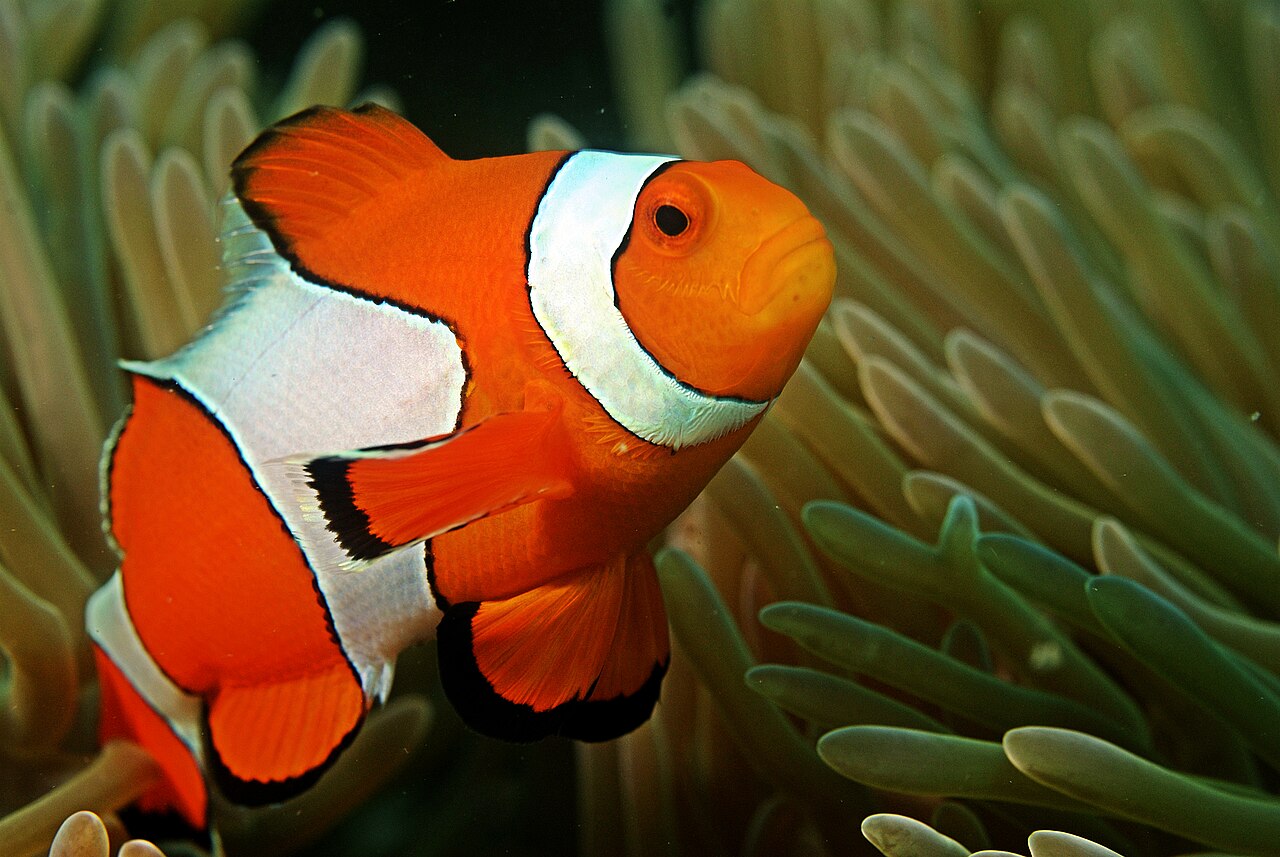
Pez payaso es una de las veinticuatro especies de este atlas. No es un catálogo: trata evolución, anatomía, conducta, cultura, iconos, conservación y área como un solo sistema.
Las puntuaciones comparan velocidad, inteligencia, área, resiliencia, impacto cultural y rol ecológico. Son juicios editoriales relativos, no un ranking de laboratorio.
Siete capítulos profundizan: orígenes, cuerpo y sentidos, vida y conducta, cultura, iconos, presión de conservación y el área que se comparte con la gente.
Introducción profunda
Inmersión: Pez payaso
Pez payaso no es un animal de postal. Es un conjunto de poblaciones, subespecies y reglas humanas dentro de la familia peces de este atlas.
Diversidad, cuerpos, cultura y áreas — más una lente de esta región lingüística.
Diversidad dentro del tipo
Las guías de campo comprimen muchos linajes en la palabra Pez payaso. Subespecies, rutas y líneas cautivas no comparten un solo destino.
Este atlas elige un título de Wikipedia como imagen heroica y deja a la vista el resto del grado para que una población recuperada no lave a una prima En peligro crítico.
Life in the landscape
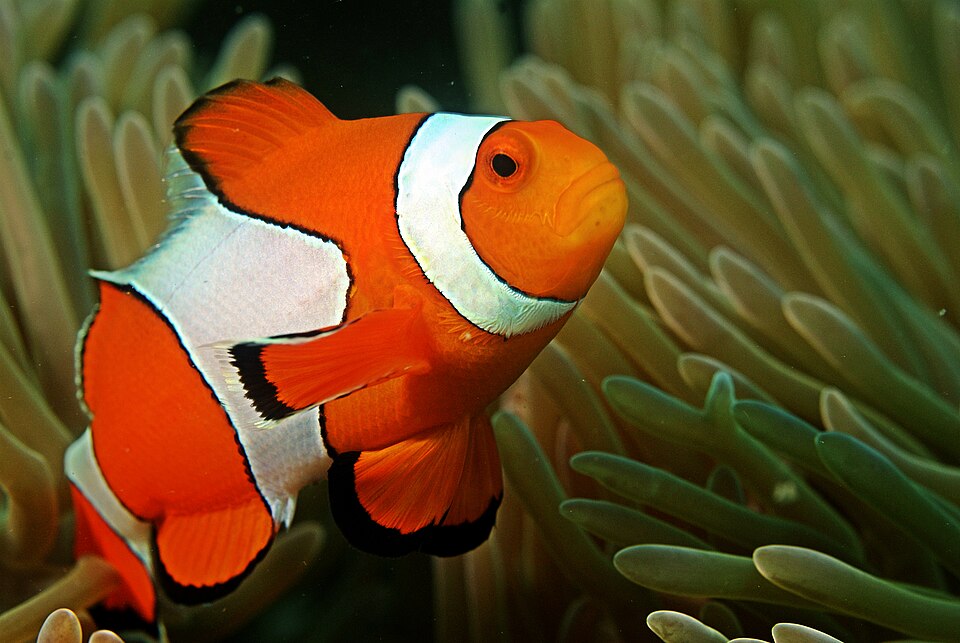
A small pomacentrid with a mucus coat and a body plan for hovering in tentacles. The swim bladder and pectorals are built for a tiny territory, not a gyre.
Algae, zooplankton and anemone scraps inside a few cubic metres. The expensive trick is immunity, not speed.
Cultura y significado
Cine, ley, heráldica, zoológicos y relato local encontraron a Pez payaso. Esas imágenes mueven dinero; no son un censo de campo.
El capítulo de cultura fecha carteles y leyes para que una película de 1975 o un logotipo de 1961 no finjan ser la Lista Roja de los años 2020.
Conservation and money
Ocellaris is not the most threatened reef fish; binding risks are anemone bleaching, aquarium take and the Nemo effect.
Tourism, conflict payments, quotas and captive loans are dated economic bands in the market chapter -- not live prices and not a best-species prize.
Inmersión de ciencias de la vida
Biología a fondo: Pez payaso
La biología de Pez payaso es una pila de estructura, energía, sentidos y límites. Los cuatro apartados usan los mismos títulos del atlas para comparar sin un marco de mejor especie.
Anatomía, sentidos, conducta y límites — más el lenguaje de campo de esta región.
Structure
A small pomacentrid with a mucus coat and a body plan for hovering in tentacles. The swim bladder and pectorals are built for a tiny territory, not a gyre.
Load paths and tissues (not metals) are expanded in the anatomy chapter.
Energy and foraging
Algae, zooplankton and anemone scraps inside a few cubic metres. The expensive trick is immunity, not speed.
The how-it-works diagrams reduce that budget to a six-node loop.
Senses and control
Chemical cues from the host and social rank by size. Vision is tuned to a bright, shallow reef, not to open water.
Control here means the animal steering itself -- not a vehicle ECU.
Limits
No anemone, no species behaviour. Heat and trade both remove the house or the household.
Resilience scores encode those limits relative to the other 23 types.