Salmón es una de las veinticuatro especies de este atlas. No es un catálogo: trata evolución, anatomía, conducta, cultura, iconos, conservación y área como un solo sistema.
Las puntuaciones comparan velocidad, inteligencia, área, resiliencia, impacto cultural y rol ecológico. Son juicios editoriales relativos, no un ranking de laboratorio.
Siete capítulos profundizan: orígenes, cuerpo y sentidos, vida y conducta, cultura, iconos, presión de conservación y el área que se comparte con la gente.
Introducción profunda
Inmersión: Salmón
Salmón no es un animal de postal. Es un conjunto de poblaciones, subespecies y reglas humanas dentro de la familia peces de este atlas.
Diversidad, cuerpos, cultura y áreas — más una lente de esta región lingüística.
Diversidad dentro del tipo
Las guías de campo comprimen muchos linajes en la palabra Salmón. Subespecies, rutas y líneas cautivas no comparten un solo destino.
Este atlas elige un título de Wikipedia como imagen heroica y deja a la vista el resto del grado para que una población recuperada no lave a una prima En peligro crítico.
Life in the landscape
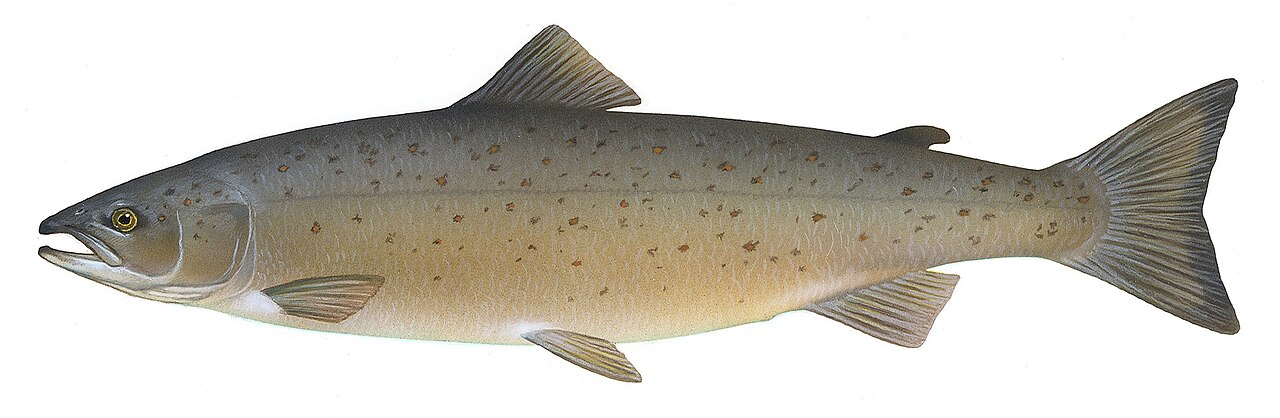
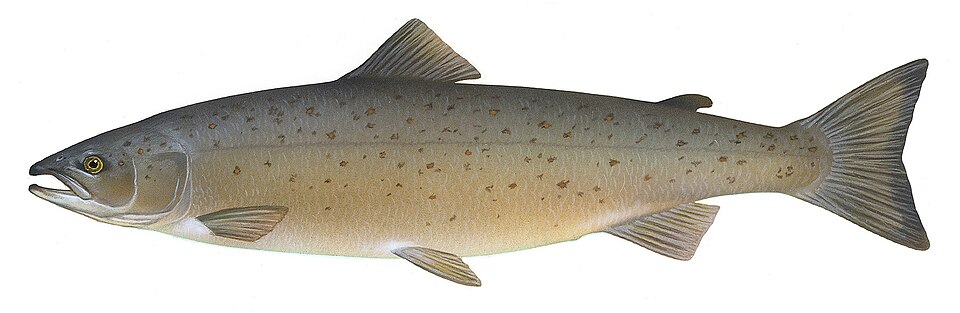
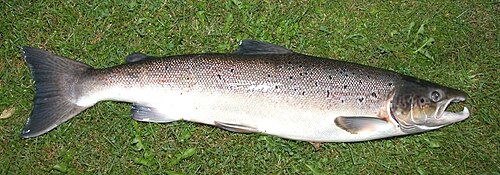
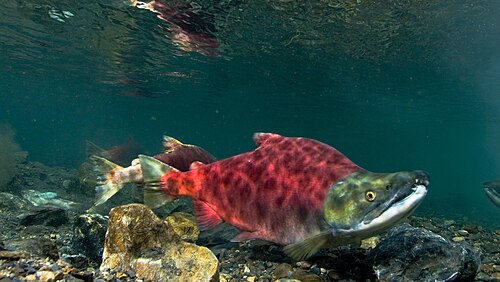
An adipose-finned salmonid with a kype in breeding males. Osmoregulatory gills and kidney switch twice -- downriver as smolts, upriver as adults.
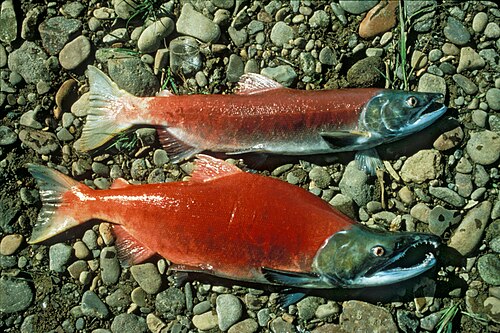
Marine fat built on plankton and forage fish, then spent on the upstream fast. Semelparous Pacific bodies become the forest fertiliser.
Cultura y significado
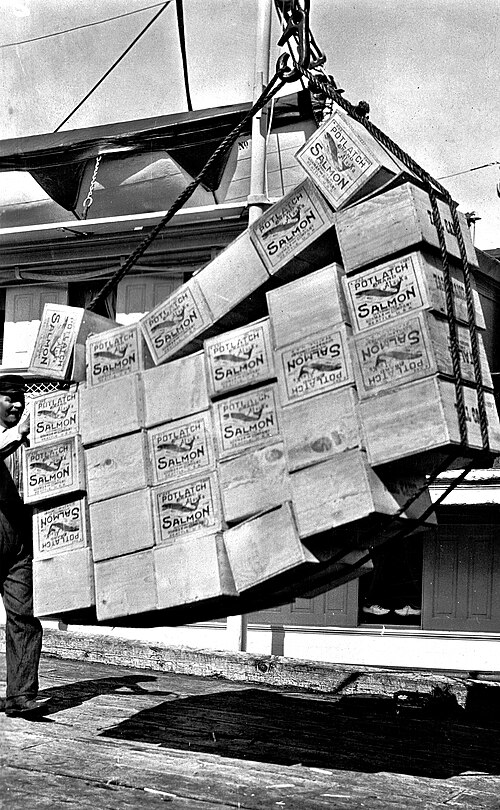
Cine, ley, heráldica, zoológicos y relato local encontraron a Salmón. Esas imágenes mueven dinero; no son un censo de campo.
El capítulo de cultura fecha carteles y leyes para que una película de 1975 o un logotipo de 1961 no finjan ser la Lista Roja de los años 2020.
Conservation and money
Some Pacific stocks remain productive; many Atlantic and southern-US Chinook runs are endangered or extirpated behind dams.
Tourism, conflict payments, quotas and captive loans are dated economic bands in the market chapter -- not live prices and not a best-species prize.
Inmersión de ciencias de la vida
Biología a fondo: Salmón
La biología de Salmón es una pila de estructura, energía, sentidos y límites. Los cuatro apartados usan los mismos títulos del atlas para comparar sin un marco de mejor especie.
Anatomía, sentidos, conducta y límites — más el lenguaje de campo de esta región.
Structure
An adipose-finned salmonid with a kype in breeding males. Osmoregulatory gills and kidney switch twice -- downriver as smolts, upriver as adults.
Load paths and tissues (not metals) are expanded in the anatomy chapter.
Energy and foraging
Marine fat built on plankton and forage fish, then spent on the upstream fast. Semelparous Pacific bodies become the forest fertiliser.
The how-it-works diagrams reduce that budget to a six-node loop.
Senses and control
Natal-stream olfaction is the famous sense. Polarised light and magnetite help the ocean leg.
Control here means the animal steering itself -- not a vehicle ECU.
Limits
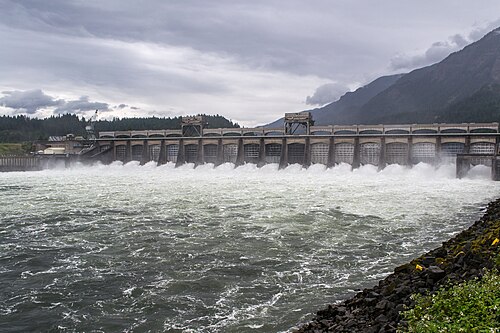
Dams, warm water, and a hatchery that smells like a factory. Climate-warmed rivers close the adult run before the gravel is reached.
Resilience scores encode those limits relative to the other 23 types.
🦅ÁguilaBald eagles and bears are the visible customers of a Salmón pulse.
Términos clave
Anadromy
Hatch in fresh water, grow at sea, return to spawn -- the Salmón contract.
Redd
Gravel nest dug by the female; silt from logging and roads smothers it.
Semelparity
Most Pacific Salmón die after one spawning; Atlantic Salmón can repeat.
Fish ladder
Dam bypass that works for some stocks and fails for others -- Bonneville as type case.
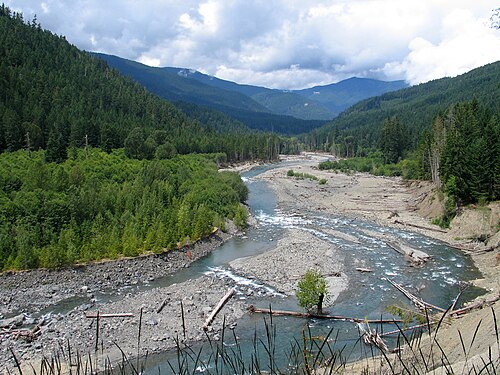
Elwha removal
2011-14 dam teardown in Washington that became the textbook of river reset.
Hatchery mark
Clipped fins and otolith thermal marks -- the paper trail of industrial supplementation.
Habitat and movement
Where the Salmón breeds and feeds is the first constraint. Single lakes, islands and forests appear again in the history timeline.
Range scores in this atlas mark how widely that movement runs -- albatross and blue whale high, koi and panda low -- not a quality ranking.
Research and law
Named projects (Project Tiger, ACAP, ICCAT, Amboseli) are the English-language bureaucracy of the type.
Listings and downlists are dated events in the timeline, not eternal essences.
Culture and price
Film, auction and logo years are filed under culture and market so they cannot masquerade as demography.
The icons chapter keeps eight real Wikipedia titles so a later language pack can attach the same faces.
Notas de campo visuales
Fotos con licencia de esta especie — héroes, eras e iconos en un muro.
Knepp, TimothyKnepp, TimothyDavid MenkeUser:Wolfgang StriewskiVisitor7[email protected] ( talk )U.S. GovernmentUnknown author Unknown authorMilton Love, Marine Science Institute, University of California, Santa Barbara, CA 93106
El perfil
Velocidad63
Inteligencia28
Área86
Resiliencia50
Impacto cultural61
Rol ecológico88
Fijar anatomía frente a conducta
Elija un sistema anatómico y un hecho de operación ya en esta página de especie. Un par de lectura — no un tablero de ganadores.
Ayuda de navegación de este atlas. La biología de campo y la ley local deciden cualquier encuentro real. Sin feed en vivo.