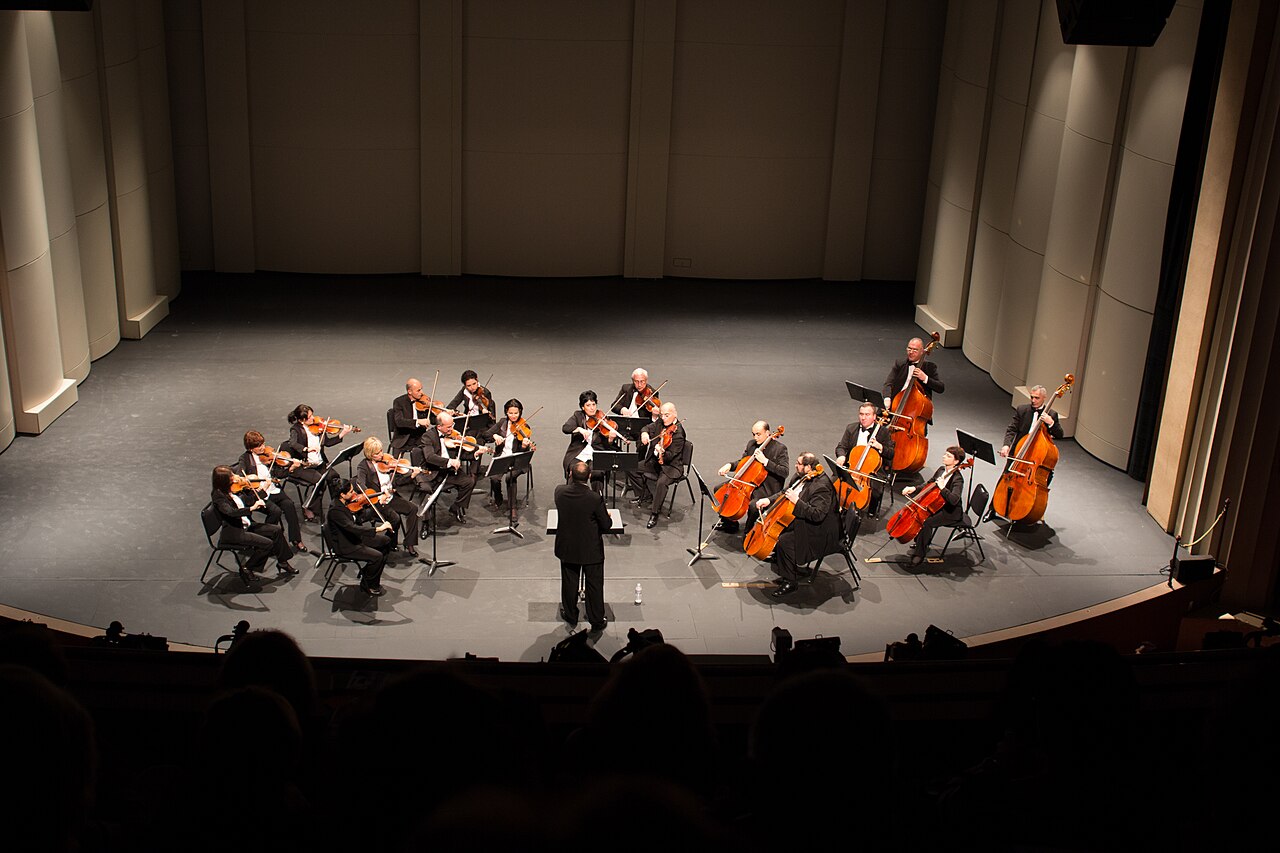
Musical talent is the cluster of perceptual, motor and memory skills that make pitch, rhythm and timbre available for a tradition — plus the years of designed practice that turn those skills into a public craft.
Absolute pitch is more common among musicians who started early in tone-language or conservatoire cultures, but it is neither required nor sufficient for excellence. Ericsson’s Berlin violinists made solitary designed practice famous; Macnamara’s 2014 music band still left most variance unexplained (~21%).
Ellen Winner and others have described uneven musical children: a remarkable ear beside ordinary schoolwork. This page is not a ranking of composers and not a diagnosis.
How this talent is seen here
English-speaking systems · US, UK, Canada, Australia and related school markets
Musical talent shows up here through tests, conservatories, academies and workplace stories — windows that already mix training with starting points.
What follows is a map of institutions, not a diagnosis. Selection usually measures current performance.
Memory talentSame atlas neighbourhood as Musical talent (arts).
Key terms
Corridor
Route, season or institution that sets access.
Envelope
Safe operating band — speed, depth, load or dose.
Certification
Agency or type-approval gate before public use.
Transfer
Skill carry-over across domains; usually limited.
Era bound
Figures valid only inside a dated window.
Local lens
Country/language notes that must not stay English under a local URL.
Local lens
schools, clubs and labs.
selection systems without group rankings.
Field note
coaches, teachers and clinics.
conservatories, gyms and classrooms.
Caveat
Prefer dated bands over current live figures.
Scores here are browsing aids.
70innateWeightEditorial 0-100 browsing score
80trainabilityEditorial 0-100 browsing score
85earlyWindowEditorial 0-100 browsing score
78evidenceEditorial 0-100 browsing score
Musical talent: concrete atlas depth on Tool-Lifes.
Frequently asked questions
Does this atlas rank groups by IQ, race or nation?
No. Pathways and evidence stay individual. Scores are browsing aids — never group biological or racial ranks.
Must a child have absolute pitch?
No. Many major musicians lack it. Early training raises its odds; it is not a concert ticket.
What did the 1993 violin study show?
Higher-rated Berlin students had accumulated more solitary practice by 18. It did not show that any child becomes a soloist at 10,000 hours (Gladwell’s slogan, not Ericsson’s law).
How much variance does practice explain in music?
Macnamara et al. 2014: on the order of 21% in their music coding — a minority, and still the largest lever many families control.
Is Suzuki a talent factory?
Shinichi Suzuki’s method bets on early environment and repetition (“every child”). It is nurture-forward pedagogy, not a proof that starting points are equal.
Do conservatories identify talent or polish the already trained?
Both. Auditions measure current performance, which already includes lessons, instruments and hours.
Does musical skill transfer to IQ?
Near transfer to listening and motor control is clearer than far transfer to general intelligence. “Mozart effect” headlines overreached.
Is this a ranking of cultures?
No. Conservatoire density is a policy and class fact, not a racial ranking.