Skip to content Skip to a section

🏊GOAT Rankings

Swimming · Four strokes, one clock, and the oldest question in the water: who reached the wall first.

At a glance
All-time shape

#1 Michael Phelps

#2 Katie Ledecky

#3 Mark Spitz

Last reviewed Sources & creditsMedia creditsMethodology

Quick answers

What are the four competitive swimming strokes?

Competitive swimming is contested in four strokes, each with its own rules. Freestyle (front crawl) is the fastest and allows any technique, so swimmers universally use the crawl. Backstroke is swum on the back with an alternating arm pull and is the only stroke started in the water. Breaststroke uses a simultaneous, symmetrical frog-kick and arm pull and is the slowest and most technical. Butterfly features a simultaneous over-water double-arm recovery above a dolphin kick and is the second-fastest but most exhausting. The individual medley combines all four in the order butterfly, backstroke, breaststroke, freestyle. Ranked by 100m world-record pace, the strokes go freestyle, butterfly, backstroke, breaststroke.

Who is the greatest swimmer of all time?

By any objective measure it is Michael Phelps. The American won 28 Olympic medals, 23 of them gold, across five Games from 2000 to 2016, including a record eight golds at Beijing 2008, and set 39 world records and 26 world-championship titles. No other swimmer is close on career hardware, and his versatility across butterfly, freestyle and individual medley is unmatched. The debate for second place is livelier: Katie Ledecky has a case as the most dominant swimmer ever in a single discipline, distance freestyle, and Mark Spitz's seven world-record golds at Munich 1972 remain historic. But first place is settled beyond serious dispute.

Why is freestyle the fastest stroke?

Freestyle (front crawl) is fastest because it minimises drag and keeps at least one arm generating propulsion almost continuously. The alternating over-water arm recovery lets the swimmer maintain near-constant forward force while the body rotates along its long axis, staying flat and streamlined. The flutter kick is compact and produces little braking. By contrast, breaststroke and butterfly have propulsion-free glide and recovery phases and greater vertical movement that create drag, and backstroke, while efficient, sacrifices the ideal head and body position. Technically, freestyle events allow any stroke, but everyone swims the crawl because it is measurably the quickest way through the water. The men's 50m freestyle world record is 20.91 seconds.

What is the 15-metre underwater rule?

After the start and every turn, a swimmer may travel underwater, usually in a streamlined dolphin kick, but the head must break the surface no later than the 15-metre mark in freestyle, backstroke and butterfly. Staying under past 15 metres is an immediate disqualification. The rule exists because the underwater dolphin kick can be faster than surface swimming; in 1988 some backstrokers raced almost an entire length submerged, prompting the sport to cap the phase. Today the underwater breakout is one of the most important skills in swimming, and the athletes who kick fastest to 15 metres and surface most efficiently frequently win. Breaststroke is governed by its own single-pull-down rule instead.

Why were the 2009 super-suits banned?

In 2008 and 2009 manufacturers introduced full-body suits made of polyurethane and other non-textile materials that trapped air, added buoyancy and slashed drag, effectively making swimmers faster without any change in fitness. The effect was so extreme that 43 world records fell at the 2009 World Championships in Rome alone, and races became partly a technology contest. FINA banned non-textile and full-body suits from 2010, restricting swimmers to textile suits covering limited areas. Many 2009 records survived for a decade because human swimmers could not match the artificial advantage, leaving those marks as a statistical scar on the record book that modern athletes are only now erasing.

What is the difference between long course and short course?

Long course refers to a 50-metre pool, short course to a 25-metre pool. The Olympics and the main World Championships are long course, considered the sport's premier standard; separate Short Course World Championships and many World Cup meets use 25m pools. Short-course times are generally faster because the doubled number of turns lets swimmers spend more of the race in the fast underwater dolphin-kick phase and gain speed off each wall. World records are tracked separately for the two pool lengths. American college swimming adds a third format, 25 yards, used only domestically, which is why US collegiate times are not directly comparable to international marks.

Start with this section - GOAT Rankings

Ranking swimming's greatest is complicated by eras, events and the sport's Olympic-centric calendar. A sprinter and a 1,500m specialist are barely the same athlete; a champion from the amateur 1960s cannot be compared cleanly to a professional of the 2010s, and the World Championships did not even exist before 1973. The measures that matter, Olympic golds, world records, longevity and dominance over rivals, reward versatility and endurance of career.

The list below weighs Olympic and world-championship titles, world records set, and sustained supremacy in an event or across strokes. It spans seven decades, from Dawn Fraser's freestyle reign to Pan Zhanle's era, and mixes sprinters, distance icons and the medley all-rounders who defined their times. One name, however, sits beyond argument at the top.

All-time podium

🥈
Katie Ledecky
Katie Ledecky
United States
2
🥇
Michael Phelps
Michael Phelps
United States
1
🥉
Mark Spitz
Mark Spitz
United States
3

Comparison Lab

Toggle athletes on and off — every bar rescales to the leader of your selection.

Peak keeps each athlete’s strongest metrics; Career averages the full published set. Both stay editorial teaching marks.

5 / 12

Drag only reorders the cosmetic shortlist — it does not change teaching scores.

Default shortlist below works without JavaScript. Toggle chips after load to rebuild bars.

Compare · in selection · Career

  1. 1Michael Phelps100
  2. 2Katie Ledecky53
  3. 3Mark Spitz41
  4. 4Ian Thorpe32
  5. 5Dawn Fraser29

Olympic golds

Michael Phelps23
Katie Ledecky9
Mark Spitz9
Ian Thorpe5
Dawn Fraser4

Olympic medals

Michael Phelps28
Katie Ledecky14
Mark Spitz11
Ian Thorpe9
Dawn Fraser8

World titles

Michael Phelps26
Katie Ledecky21+
Ian Thorpe11
Mark Spitz0
Dawn Fraser0

World records

Michael Phelps39
Mark Spitz33
Dawn Fraser27
Katie Ledecky16
Ian Thorpe13

The top 10

1
Michael Phelps

Michael Phelps

United States · 2000-2016

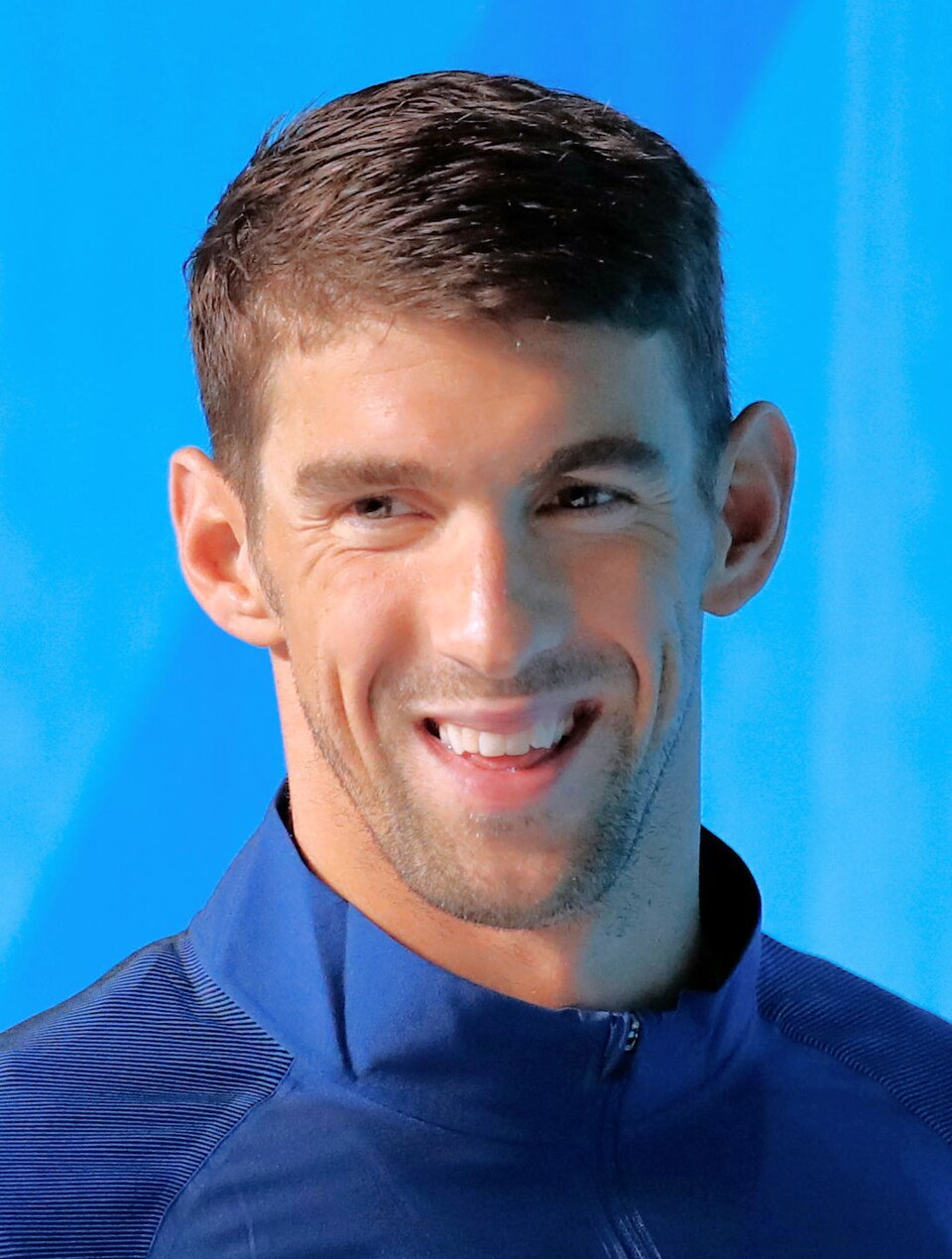
The most decorated Olympian in history across all sports. Phelps won 28 Olympic medals, 23 of them gold, over five Games from Sydney 2000 to Rio 2016, including a still-unmatched eight golds at Beijing 2008 that broke Mark Spitz's 1972 record of seven. He set 39 world records and claimed 26 world-championship titles. His range was staggering: Olympic gold in the 100m and 200m butterfly, the 200m and 400m individual medley, the 200m freestyle and a stack of relays. Coached by Bob Bowman, Phelps combined a huge wingspan, relentless training volume and famous racing nerve, touching out Milorad Cavic by 0.01 seconds in Beijing. No swimmer has matched his blend of longevity, versatility and championship hardware, and none is close on career gold medals.
Olympic golds
23
Olympic medals
28
World titles
26
World records
39
2
Katie Ledecky

Katie Ledecky

United States · 2012-2025

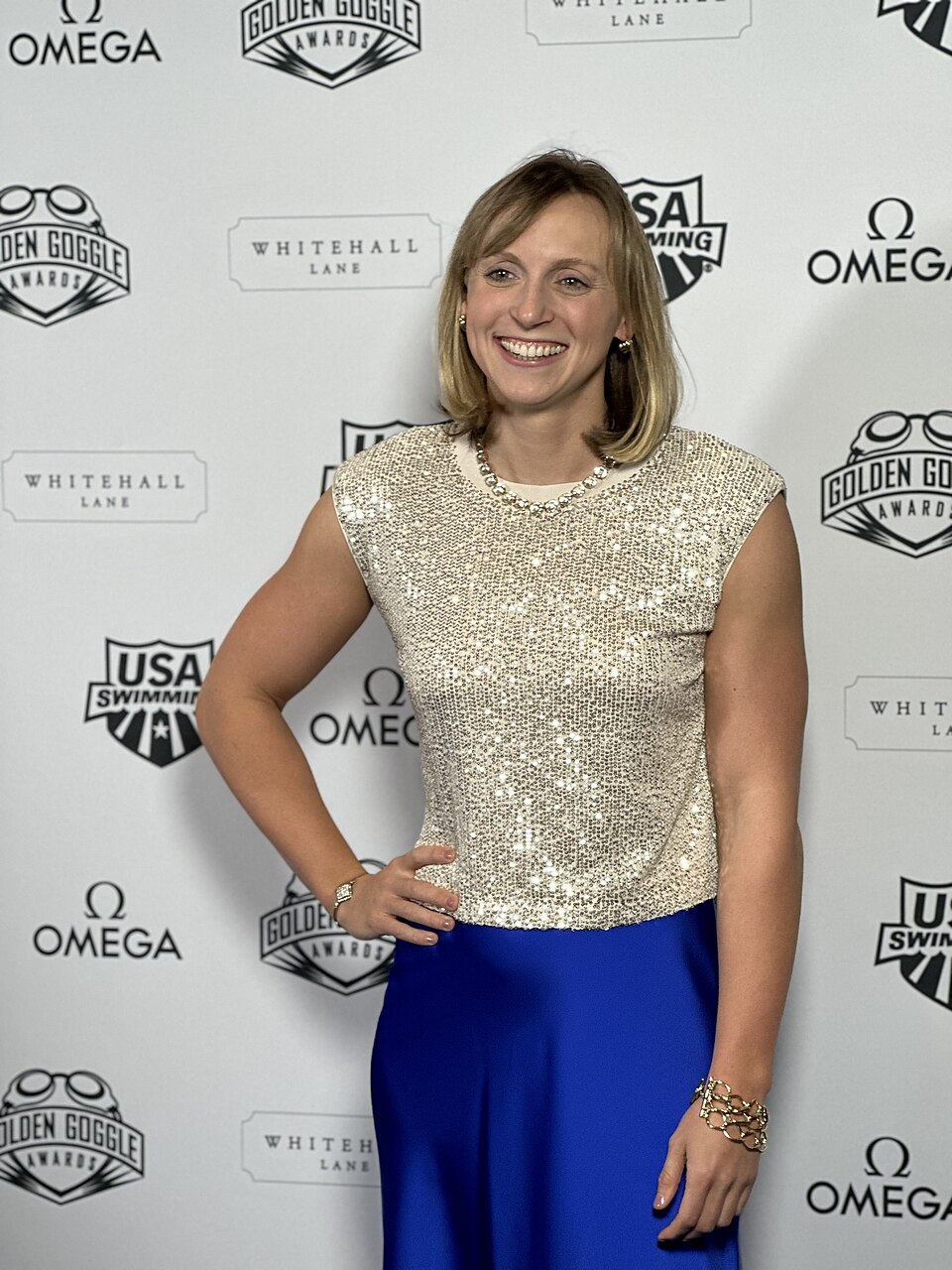
The most dominant distance swimmer, man or woman, in history, and the most decorated female swimmer at the World Championships with 21-plus titles. Ledecky won the 800m freestyle at four consecutive Olympics (London 2012 at age 15, Rio 2016, Tokyo 2020 and Paris 2024), a feat unmatched in the event, and owns the world records in the 800m (8:04.79) and 1,500m (15:20.48) freestyle. Through Paris 2024 she held nine Olympic gold medals and 14 Olympic medals overall. Her dominance is defined by margin: she has beaten fields by bodylengths and gone years unbeaten in the 800m and 1,500m. Where Phelps ruled range, Ledecky rules depth, holding a tempo across a mile that no rival can sustain, arguably the greatest single-discipline swimmer ever.

Olympic golds
9
Olympic medals
14
World titles
21+
World records
16
3
Mark Spitz

Mark Spitz

United States · 1966-1972

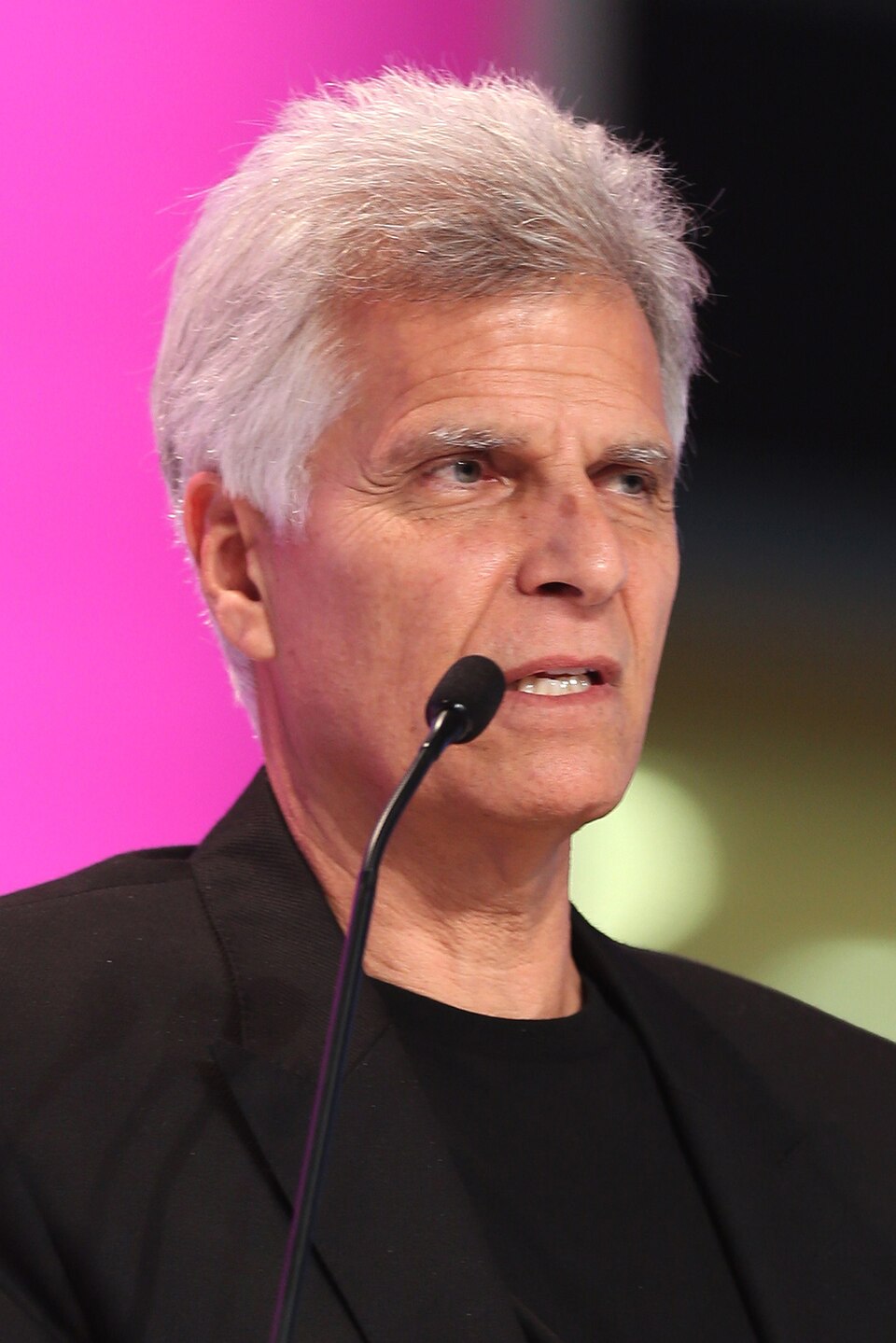
For 36 years the standard by which all Olympic swimmers were judged. At the Munich 1972 Games, Spitz won seven gold medals in seven events, every single one in world-record time, a perfect performance not surpassed until Phelps in 2008. Across two Olympics he collected nine golds and 11 medals in total, and over his career he set 33 world records in freestyle and butterfly. He retired at just 22, at his peak, before the World Championships even existed (the first were held in 1973), which is why his title tally sits outside that column. His combination of sprint speed and butterfly power, and the sheer perfection of Munich, keeps him among the immortals despite his short career.

Olympic golds
9
Olympic medals
11
World titles
0
World records
33
4
Ian Thorpe

Ian Thorpe

Australia · 1997-2006

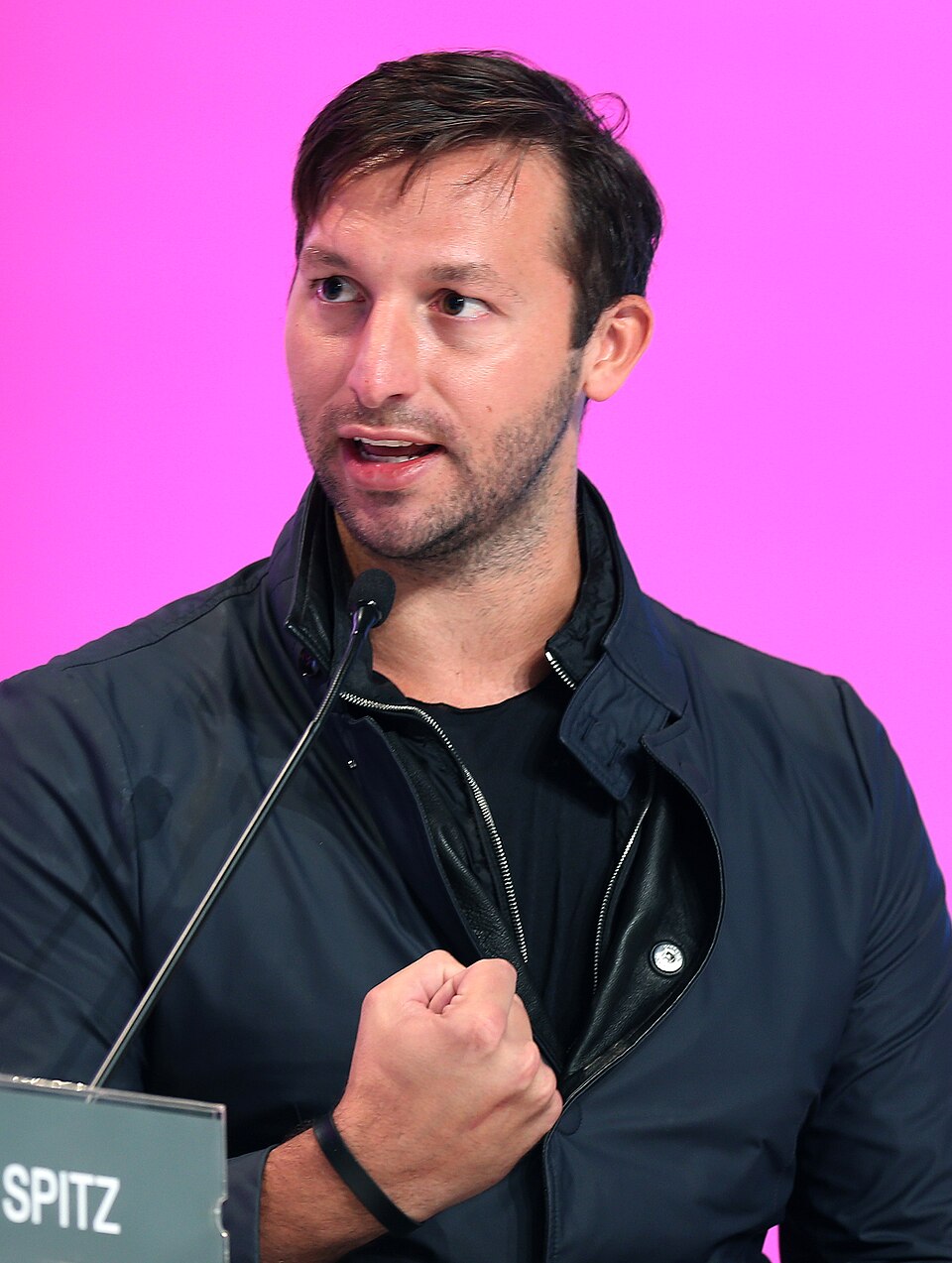
The 'Thorpedo', the finest middle-distance freestyler of his generation and a national hero in Australia. Thorpe won five Olympic gold medals and 11 world-championship titles, dominating the 200m and 400m freestyle and repeatedly lowering the 400m world record toward the 3:40 barrier. At his home Sydney 2000 Games, aged 17, he won the 400m freestyle in world-record time and anchored a stunning relay victory over the United States. At the 2001 Fukuoka World Championships he won six gold medals. Renowned for his size-17 feet, immense reach and metronomic stroke, Thorpe combined precocious success with genuine longevity across two Olympic cycles, and remains, statistically and stylistically, one of the most complete freestylers the sport has produced.

Olympic golds
5
Olympic medals
9
World titles
11
World records
13
5
Dawn Fraser

Dawn Fraser

Australia · 1956-1964

The pioneering queen of sprint freestyle and one of the toughest competitors in the sport's history. Fraser became the first swimmer, male or female, to win the same event at three consecutive Olympics, taking the 100m freestyle at Melbourne 1956, Rome 1960 and Tokyo 1964. In 1962 she became the first woman to break 60 seconds for the 100m freestyle, and she set 27 individual world records across her career. She won eight Olympic medals (four gold, four silver) in an amateur era before the World Championships existed. Fierce and unruly, she was controversially banned for ten years after a flag-stealing prank in Tokyo, cutting short a career that might otherwise have yielded even more. Her three-in-a-row remains a landmark of durability.

Olympic golds
4
Olympic medals
8
World titles
0
World records
27
6
Caeleb Dressel

Caeleb Dressel

United States · 2016-2024

The sprint-butterfly heir to Phelps and one of the most explosive swimmers ever. Dressel won eight Olympic gold medals through Paris 2024, including a five-gold haul at Tokyo 2020 across the 50m and 100m freestyle, 100m butterfly and both American relays. He holds the 100m butterfly world record (49.45) and has been part of numerous world-record relays. At the 2017 Budapest World Championships he matched a single-meet record with seven gold medals, and across his career he has accumulated around 15 world-championship titles. Renowned for enormous power, a ferocious start and underwater speed, Dressel is the defining sprinter of the textile-suit era, though a mental-health break and a tougher Paris meet showed the toll of racing at the extreme.

Olympic golds
8
Olympic medals
8
World titles
15
World records
6
7

Alexander Popov

Russia · 1991-2004

The 'Russian Rocket', the greatest pure sprint freestyler of the 1990s and a technician of legendary smoothness. Popov won the 50m and 100m freestyle at back-to-back Olympics, Barcelona 1992 and Atlanta 1996, four individual golds and nine Olympic medals in total, along with around six world-championship titles across a long career. Remarkably, he was stabbed in a Moscow street incident in 1996 yet returned to competition and set a 50m freestyle world record of 21.64 in 2000. Coached by Gennadi Touretski, Popov swam with a famously long, relaxed stroke that let him dominate the sprints for a decade, and he remained competitive into his early thirties, an unusual feat for a sprinter, winning world titles in 2003.

Olympic golds
4
Olympic medals
9
World titles
6
World records
5
8
Kosuke Kitajima

Kosuke Kitajima

Japan · 2001-2012

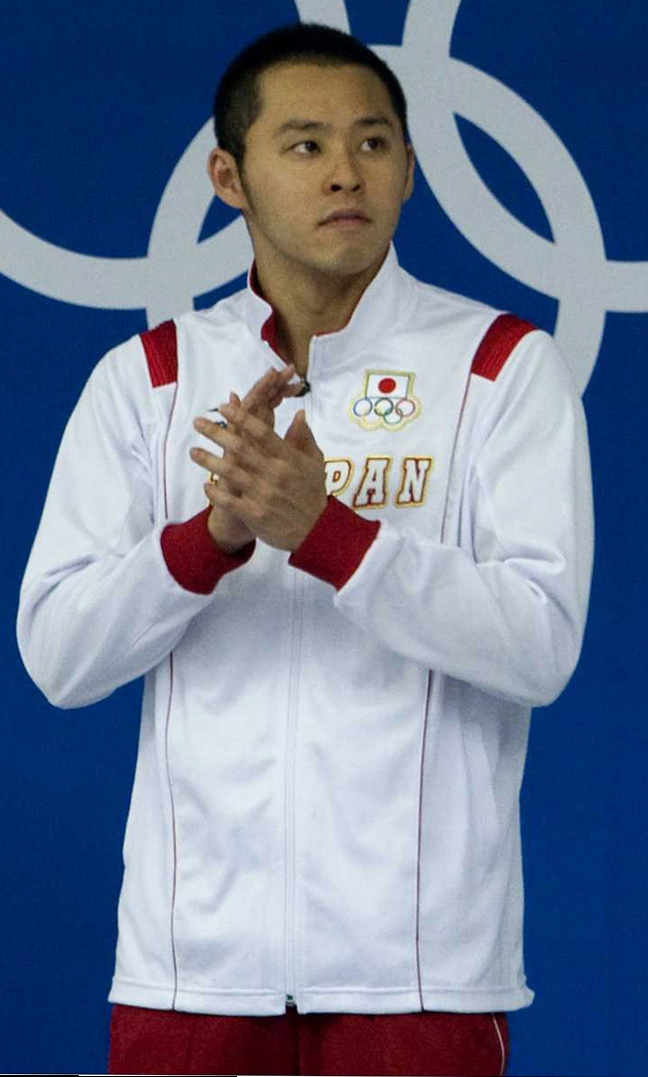
The greatest breaststroker of his era and a Japanese national icon. Kitajima achieved a feat no other man has managed, winning both the 100m and 200m breaststroke at two consecutive Olympics, Athens 2004 and Beijing 2008, a breaststroke double-double, for four individual golds and seven Olympic medals overall. He set multiple world records in the 100m and 200m breaststroke and won world-championship titles across the 2000s. Famous for his aggressive, powerful pull-out and racing intensity, Kitajima's Athens victory came amid a controversy over an illegal underwater dolphin kick that helped prompt the 2005 rule change legalising a single kick in the pull-down. He defined breaststroke for a decade before Adam Peaty raised the event to another level.

Olympic golds
4
Olympic medals
7
World titles
3
World records
4
9
Adam Peaty

Adam Peaty

Great Britain · 2014-2024

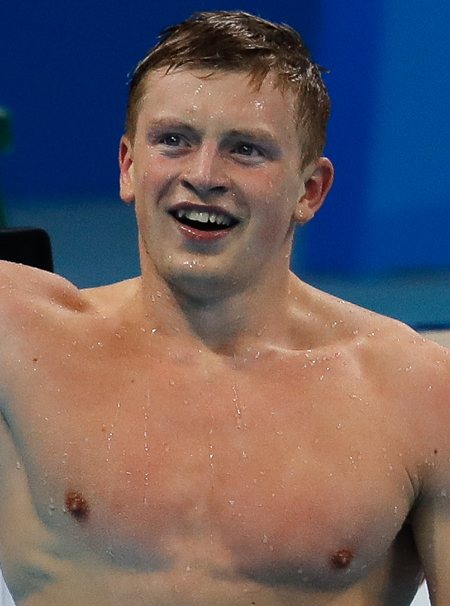
The most dominant single-event swimmer of the modern era. Peaty transformed the 100m breaststroke, becoming the only man ever to break 57 seconds and setting the world record at 56.88 in 2019, a mark far ahead of the rest of history. He won Olympic gold in the 100m breaststroke at Rio 2016 and Tokyo 2020, plus a mixed-relay gold, for three Olympic golds, and collected around eight world-championship titles. His 'Project 56' target became a byword for pushing a barrier thought unreachable. Between 2014 and 2021 he was undefeated in the 100m breaststroke at every major final, a streak of dominance rare in any sport. His combination of stroke rate and power rewrote what the event could be.

Olympic golds
3
Olympic medals
5
World titles
8
World records
5
10
Katinka Hosszu

Katinka Hosszu

Hungary · 2009-2021

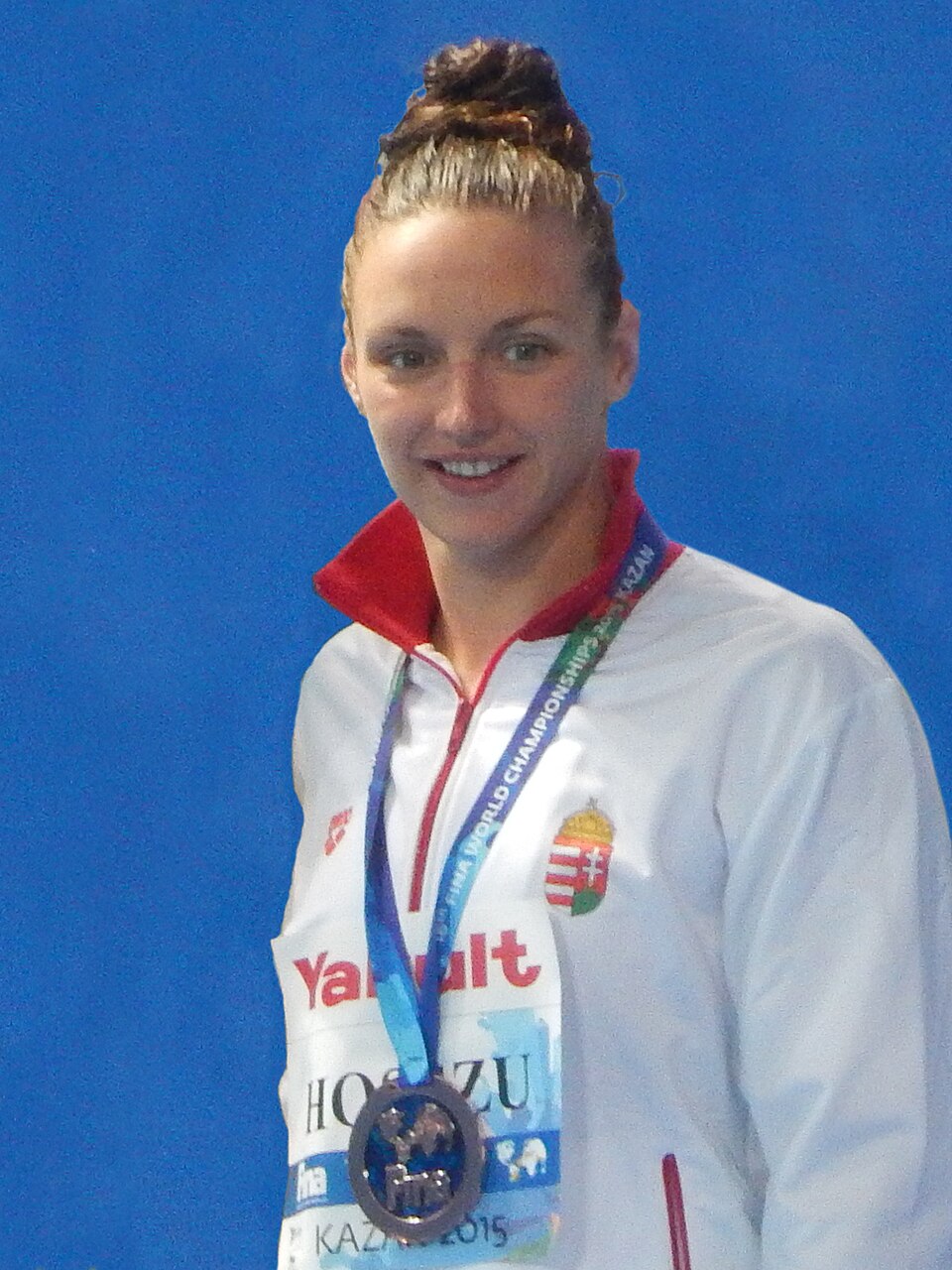
The 'Iron Lady', the most prolific racer of her generation and the queen of the individual medley. Hosszu won three gold medals at the Rio 2016 Olympics, in the 200m IM, 400m IM and 100m backstroke, and set world records in the 200m IM (2:06.12) and 400m IM (4:26.36) that showcased her all-round mastery. She amassed around nine world-championship titles and built an unprecedented career on the World Cup circuit, racing dozens of events per season for prize money and points, hence her nickname. Where most stars pick a lane, Hosszu contested every stroke and distance, and her medley dominance across the 2010s, combining butterfly, backstroke, breaststroke and freestyle at the highest level, made her one of the most versatile swimmers ever.

Olympic golds
3
Olympic medals
4
World titles
9
World records
4
11

Sarah Sjostrom

Sweden · 2008-2024

The finest sprint and butterfly swimmer Europe has produced and a model of longevity. Sjostrom won the 100m butterfly at Rio 2016 in a world-record 55.48 that still stands, then reinvented herself as a freestyle sprinter, winning both the 50m and 100m freestyle at the Paris 2024 Olympics after an elbow injury that nearly ended her career. She has claimed three Olympic golds and around seven medals overall, together with roughly eight world-championship titles and world records in the 50m butterfly and 50m freestyle. First reaching a major final as a teenager in 2008 and still winning golds sixteen years later, Sjostrom's blend of explosive speed and career durability across two distinct specialties is almost unique in the sport.

Olympic golds
3
Olympic medals
7
World titles
8
World records
8
12

Ryan Lochte

United States · 2004-2016

Phelps's great rival and, on his day, the only man who could beat him. Lochte won six Olympic gold medals and 12 Olympic medals overall across four Games, specialising in the individual medley and backstroke, and set world records in the 200m IM (1:54.00) and 200m backstroke. He was one of the most decorated swimmers in World Championship history, with 27 medals across long-course and short-course events, a testament to his range and durability. Fearsomely versatile, he pushed Phelps in the 200m and 400m IM and the 200m backstroke throughout their careers, often forcing world-record swims. A dominant medley racer whose reputation off the pool was later dented, Lochte's competitive record places him firmly among the greats.

Olympic golds
6
Olympic medals
12
World titles
14
World records
3

Bars are scaled to the leader in this list.

The debate

The debate beyond Phelps is genuinely open. Katie Ledecky has a claim as the greatest ever in a single discipline: her distance-freestyle dominance, four straight 800m Olympic titles and untouchable world records arguably exceed anything Phelps did in one event. Mark Spitz's seven-for-seven at Munich, all in world-record time, remains the most perfect single Games until Beijing 2008. Purists point to Alexander Popov or Ian Thorpe as the most beautiful technicians, and to Adam Peaty's 100m breaststroke as the most dominant hold on one event in the sport's history.

Cross-era comparison also raises the doping and technology questions that shadow any swimming ranking: East German marks, the 2009 super-suit records and modern controversies all complicate the numbers. What is not in dispute is Phelps's separation from the field, 23 Olympic golds and 28 medals across five Games is a margin so large that no rational list places anyone else first. Below him, the order is a matter of taste between distance and sprint, single-event mastery and all-round range.

Embed this ranking

Paste this code into your blog or site — the ranking stays up to date.

Keep exploring

More in this category