
Skip to content Skip to a section

🏒GOAT Rankings

Hockey · The fastest team sport on Earth: six skaters, one frozen puck, and no time to breathe.

At a glance
All-time shape

#1 Wayne Gretzky

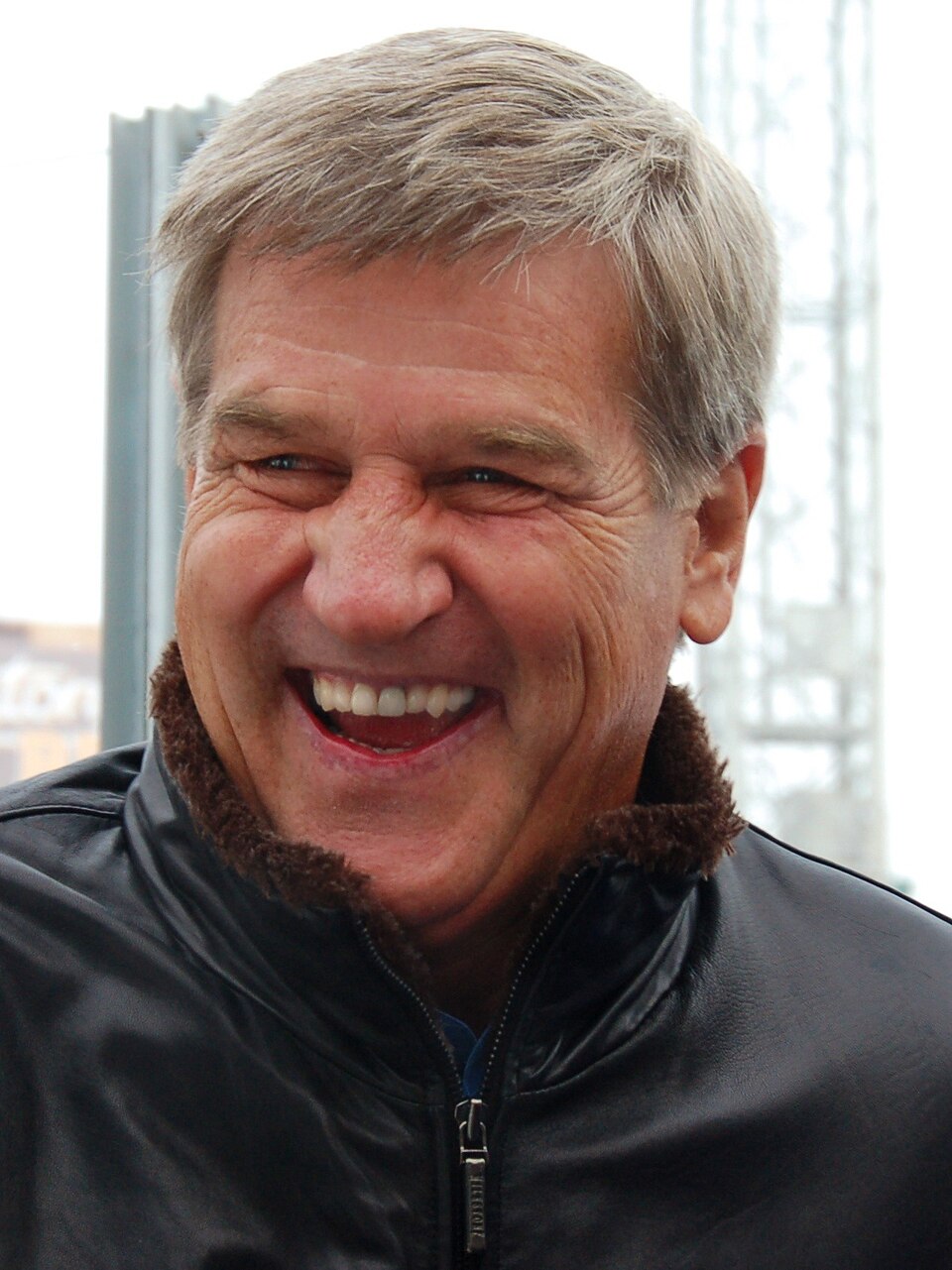
#2 Bobby Orr

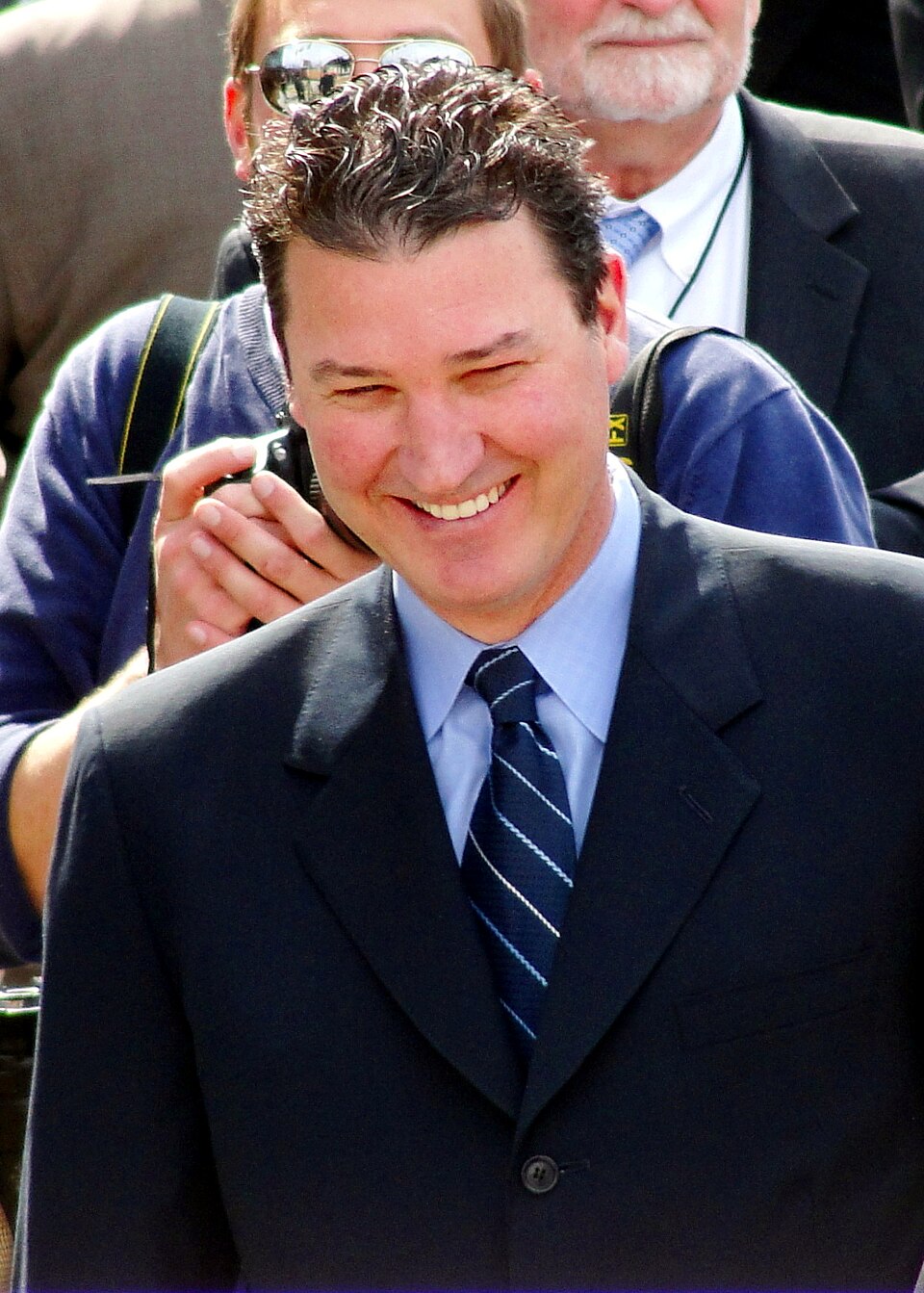
#3 Mario Lemieux

Last reviewed Sources & creditsMedia creditsMethodology

Quick answers

Who is considered the greatest ice hockey player ever?

Wayne Gretzky is almost universally regarded as the greatest ice hockey player of all time. Nicknamed The Great One, he holds over 60 NHL records, including career points (2,857), goals (894, until Alexander Ovechkin passed him in 2025), and assists (1,963), a margin so vast it is considered unbreakable. He won four Stanley Cups and nine MVP awards. The main challengers for the top spot are Bobby Orr, who revolutionized defence, and Mario Lemieux, whose pure talent rivalled anyone's. Because eras differ so much, debate below Gretzky is endless, but his statistical dominance places him beyond serious dispute as number one.

What is the difference between icing and offside?

Both are stoppages, but they penalize different things. Offside occurs on the attack: a player may not cross the opponent's blue line into the offensive zone before the puck does. If he does, play stops and a face-off is held outside the zone. Icing occurs when a team shoots the puck from behind the centre red line all the way past the opponent's goal line without anyone touching it; play stops and the face-off returns to the offending team's end, and that team cannot change its tired players. Put simply, offside governs entering the attacking zone, while icing prevents teams from harmlessly firing the puck the length of the ice to relieve pressure.

Why is fighting allowed in the NHL?

Fighting is uniquely tolerated in North American professional hockey, though it is penalized. Two players who fight each receive a five-minute major, and because both sit out, neither team gains a man advantage. Historically, fighting served to police dangerous play, deterring cheap shots through the threat of retaliation, and to shift momentum or protect star players. It is not permitted in Olympic, international or most college hockey, where it brings ejection. In the modern NHL, fighting has declined dramatically as the game prioritizes speed and skill and as concerns about head injuries have grown. The designated enforcer role has nearly disappeared, though spontaneous fights still occur and remain part of the sport's contested culture.

How long does an ice hockey game last?

An ice hockey game consists of three periods of 20 minutes of playing time each, for 60 minutes of regulation. Because the clock stops on every whistle, a game takes roughly two and a half hours of real time, including two intermissions during which the ice is resurfaced. If the score is tied after regulation, the game goes to overtime. NHL regular-season overtime is a five-minute, sudden-death period played three skaters per side, followed by a shootout if still tied. In the playoffs, teams instead play full 20-minute sudden-death overtime periods until someone scores, occasionally producing marathon games that stretch well past midnight into a fifth or sixth period.

What is a hat trick in hockey?

A hat trick is when a single player scores three goals in one game. The term, borrowed from cricket, is celebrated in hockey by fans throwing their hats onto the ice, a tradition dating back decades, and play pauses while the crew clears them. Related feats have their own names: a natural hat trick is three consecutive goals by the same player with no one else scoring in between, and a Gordie Howe hat trick, named for the legend, is a goal, an assist and a fight all in one game. Scoring four goals is sometimes informally called a Texas hat trick. A hat trick remains one of hockey's signature individual achievements.

What is a power play and a penalty kill?

When a player commits a penalty, he serves time in the penalty box and his team plays short-handed, usually with four skaters instead of five. The opposing team then has a power play, a man advantage it tries to exploit by setting up in the offensive zone to create high-quality scoring chances. The short-handed team's job is the penalty kill: clearing the puck, blocking shots and running out the clock until the penalty expires. Most minor penalties last two minutes but end early if the power-play team scores. A good NHL power play converts around 20 to 25 percent of its chances, making special teams a decisive factor in tight games and especially in the playoffs.

Start with this section - GOAT Rankings

Ranking the greatest hockey players ever means weighing eras that barely resemble one another: six-team leagues and 32-team ones, bare heads and full cages, 50-game and 82-game seasons. Longevity, peak dominance, championships and the eye test all pull in different directions. What follows is a considered ranking of twelve, blending statistical supremacy with impact on the game and the weight of winning.

One name sits beyond argument at the top; below it, reasonable people disagree fiercely. We have included forwards, defencemen and goaltenders, because greatness in hockey wears different jerseys. The numbers cited are career NHL totals unless noted, anchored to the end of the 2024-25 season for active players. The debate, as ever, is half the fun.

All-time podium

🥈
Bobby Orr
Bobby Orr
Canada
2
🥇
Wayne Gretzky
Wayne Gretzky
Canada
1
🥉
Mario Lemieux
Mario Lemieux
Canada
3

Comparison Lab

Toggle athletes on and off — every bar rescales to the leader of your selection.

Peak keeps each athlete’s strongest metrics; Career averages the full published set. Both stay editorial teaching marks.

5 / 12

Drag only reorders the cosmetic shortlist — it does not change teaching scores.

Default shortlist below works without JavaScript. Toggle chips after load to rebuild bars.

Compare · in selection · Career

  1. 1Wayne Gretzky88
  2. 2Gordie Howe63
  3. 3Mario Lemieux58
  4. 4Bobby Orr51
  5. 5Sidney Crosby49

Points

Wayne Gretzky2,857
Gordie Howe1,850
Mario Lemieux1,723
Sidney Crosby1,650+
Bobby Orr915

Goals

Wayne Gretzky894
Gordie Howe801
Mario Lemieux690
Sidney Crosby625+

Assists

Wayne Gretzky1,963

Hart Trophies

Wayne Gretzky9
Gordie Howe6
Mario Lemieux3
Bobby Orr3
Sidney Crosby2

Stanley Cups

Wayne Gretzky4
Gordie Howe4
Sidney Crosby3
Mario Lemieux2
Bobby Orr2

Points/Game

Mario Lemieux1.88
Bobby Orr1.39
Sidney Crosby1.26
Gordie Howe1.05

Norris Trophies

Bobby Orr8

The top 10

1
Wayne Gretzky

Wayne Gretzky

Canada · 1979-1999

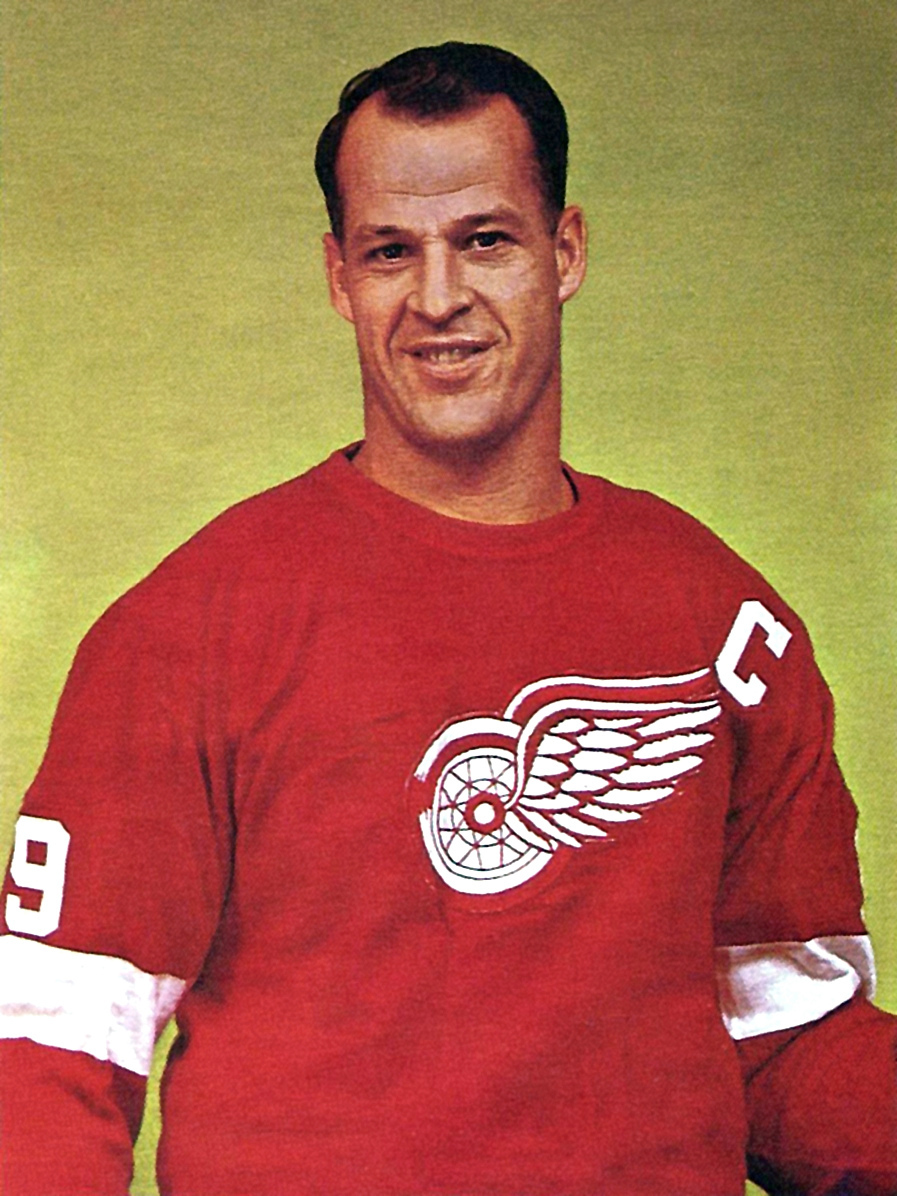
No athlete has dominated a major sport the way The Great One dominated hockey. Gretzky holds more than 60 NHL records, many likely permanent: 2,857 career points, 894 goals and an untouchable 1,963 assists, a total that alone would still lead the all-time scoring list without a single goal. He scored 92 goals in 1981-82 and a staggering 215 points in 1985-86, and posted a 51-game point streak that no one has approached. He won four Stanley Cups with the Edmonton Oilers, nine Hart Trophies as MVP (eight of them consecutive), and ten Art Ross Trophies as scoring champion. His 1988 trade to Los Angeles is often credited with transforming hockey into a genuinely national sport in the United States. Not the fastest skater or the hardest shooter, Gretzky saw the ice a beat ahead of everyone, operating from behind the net, his office, to orchestrate the most prolific offence the sport has known. He is the definitive GOAT, and the gap to second place is the widest in hockey.
Points
2,857
Goals
894
Assists
1,963
Hart Trophies
9
Stanley Cups
4
2
Bobby Orr

Bobby Orr

Canada · 1966-1978

Bobby Orr redefined what a defenceman could be, and many who saw both call him the most purely dominant player ever. Before Orr, blueliners defended; he attacked, rushing the puck end to end and quarterbacking the offence with unprecedented speed and vision. He remains the only defenceman to win the Art Ross as scoring champion, doing it twice, and his plus-124 in 1970-71 is a record that will never fall. Orr won eight consecutive Norris Trophies as the league's best defenceman, three straight Hart Trophies as MVP, and two Stanley Cups with the Boston Bruins, the first sealed by his airborne, flying goal in overtime of the 1970 Final, hockey's most famous photograph. Chronic knee injuries wrecked his body and forced retirement at 30 after just 12 seasons, leaving fans to wonder what fuller health might have yielded. Even truncated, his peak, a stretch of the early 1970s when he led the entire league in scoring from the back end, stands as arguably the highest any player has reached.

Norris Trophies
8
Points/Game
1.39
Points
915
Hart Trophies
3
Stanley Cups
2
3
Mario Lemieux

Mario Lemieux

Canada · 1984-2006

At six-foot-four with impossible hands, Mario Lemieux may be the most talented player who ever lived, a scorer who could deke through an entire team or overpower it. Le Magnifique won two Stanley Cups with the Pittsburgh Penguins and captured the Art Ross six times, all while battling adversity that would have ended most careers: chronic back injuries, and a 1993 diagnosis of Hodgkin's lymphoma. He returned from his final radiation treatment to play that same night, then won the scoring title. His 1.88 points per game is the highest of any player with a substantial career, trailing only Gretzky. In 1988-89 he scored 199 points; in one 1988 game he tallied goals five different ways, at even strength, on the power play, shorthanded, on a penalty shot and into an empty net. He retired in 1997, returned in 2000 as a player-owner having literally saved the franchise from bankruptcy, and played until 2006. Had health permitted a full career, the debate for number one might look very different.

Points/Game
1.88
Points
1,723
Goals
690
Hart Trophies
3
Stanley Cups
2
4
Gordie Howe

Gordie Howe

Canada · 1946-1980

Mr. Hockey combined scoring, toughness and almost supernatural longevity across an astonishing five decades of professional play. Gordie Howe won four Stanley Cups with the Detroit Red Wings, six Hart Trophies as MVP and six Art Ross scoring titles, finishing in the NHL's top five in scoring for 20 consecutive seasons, a record of sustained excellence unmatched in the sport. He retired, then returned at 45 to play alongside his sons in the WHA, and skated one final NHL shift at age 52 in 1980. Howe scored 801 NHL goals and 1,850 points, figures that stood atop the all-time list until Gretzky surpassed them. He was as feared as he was skilled: the Gordie Howe hat trick, a goal, an assist and a fight in one game, immortalizes his willingness to punish anyone who challenged him. Ambidextrous, powerful and endlessly durable, he defined the complete power forward and served as the standard against which every scorer was measured for a generation.

Points
1,850
Goals
801
Hart Trophies
6
Stanley Cups
4
Points/Game
1.05
5
Sidney Crosby

Sidney Crosby

Canada · 2005-present

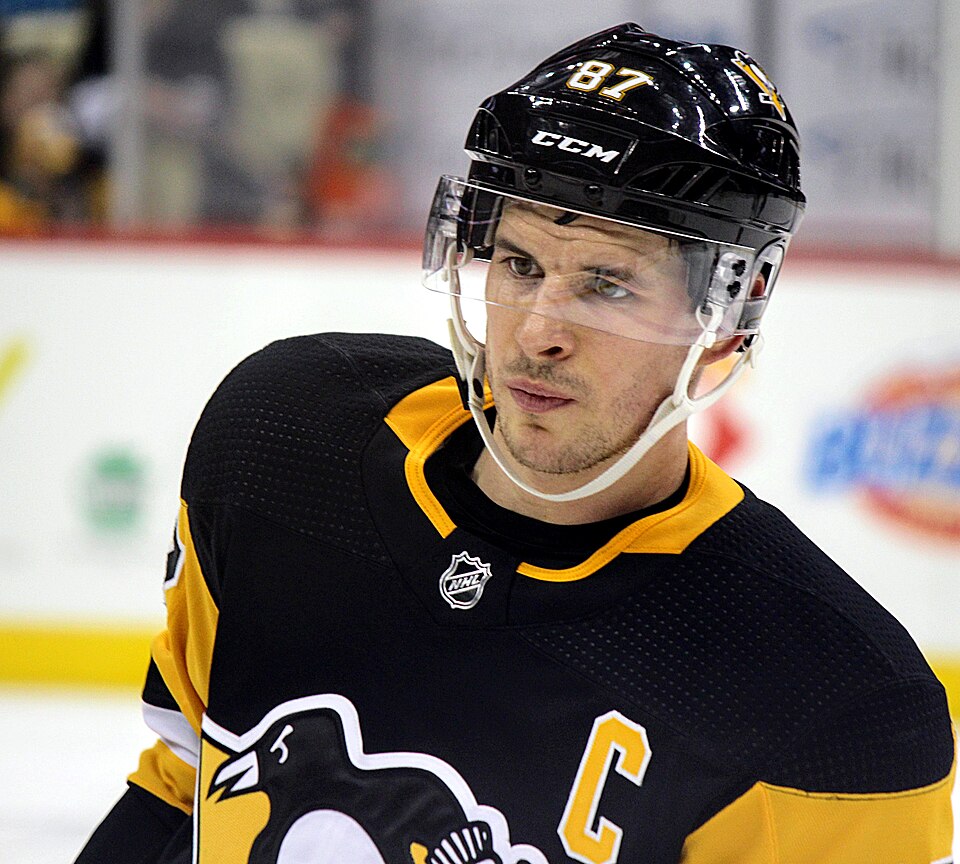
The most complete player of his generation, Sidney Crosby has carried the Pittsburgh Penguins and Canadian hockey for two decades. Drafted first overall in 2005 amid impossible hype as The Next One, he delivered: three Stanley Cups (2009, 2016, 2017), two Conn Smythe Trophies as playoff MVP, two Hart Trophies, and the 2010 Olympic gold medal, which he clinched with the Golden Goal in overtime against the United States, the most famous goal in Canadian hockey since 1972. Through the 2024-25 season he has amassed more than 1,650 points and over 600 goals, and remains a point-per-game player deep into his thirties. Crosby's genius is his two-way command and his puck protection down low, where his low centre of gravity and strength make him nearly impossible to dislodge. A relentless competitor and a model captain, he elevated the Penguins into a modern dynasty and stands as the defining North American star of the post-lockout era, bridging the game's past and present.

Points
1,650+
Goals
625+
Points/Game
1.26
Stanley Cups
3
Hart Trophies
2
6
Maurice Richard

Maurice Richard

Canada · 1942-1960

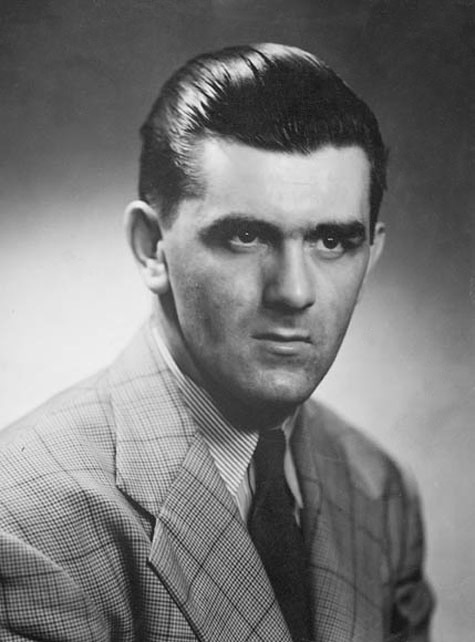
The Rocket was hockey's first great goal-scoring folk hero and the fiery soul of the Montreal Canadiens. In 1944-45 Maurice Richard became the first player to score 50 goals in 50 games, a benchmark that stood as the sport's ultimate scoring feat for decades, and in 1957 he became the first to reach 500 career goals. He won eight Stanley Cups, including a record five in a row from 1956 to 1960, and led the Canadiens with a competitive fury that made him a cultural icon in Quebec. His 1955 suspension by the league president sparked the Richard Riot in Montreal, an event now seen as a flashpoint of French-Canadian identity. Richard finished with 544 goals and 966 points in a low-scoring era, and, remarkably, never won a Hart Trophy despite his dominance. From the blue line in he was terrifying, his eyes reportedly blazing as he bore down on goaltenders. The NHL's trophy for its leading goal-scorer bears his name.

Goals
544
Points
966
Stanley Cups
8
Points/Game
0.98
7
Alexander Ovechkin

Alexander Ovechkin

Russia · 2005-present

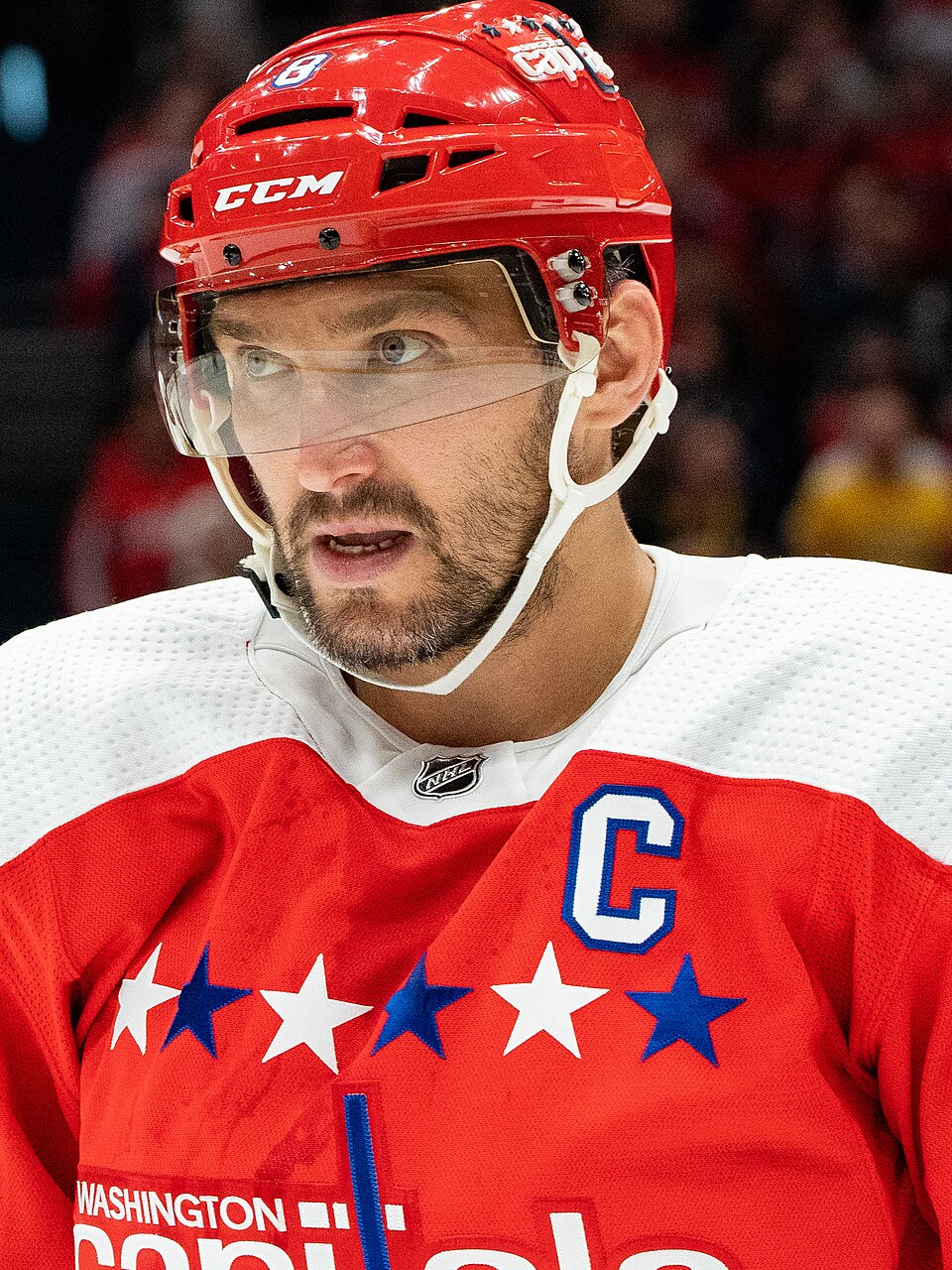
The greatest pure goal-scorer the game has ever seen, Alexander Ovechkin achieved the once-unthinkable on 6 April 2025, scoring his 895th career goal to pass Wayne Gretzky's supposedly untouchable record. Through the 2024-25 season the Washington Capitals captain sits at 897 goals and climbing. Drafted first overall in 2004, Ovi has won a record nine Rocket Richard Trophies as the league's top scorer, three Hart Trophies, and, silencing critics who doubted he could win, the 2018 Stanley Cup, where he was named playoff MVP after finally leading Washington to its first title. His signature is the one-timer from the left face-off circle, his office, unleashed on the power play with such force and accuracy that everyone knew it was coming and few could stop it. Combining a booming shot with a heavy, physical game rare in a superstar, Ovechkin has scored 50 or more goals in a season nine times. His longevity and single-minded pursuit of the record redefine what a scorer can accomplish.

Goals
897
Rocket Richards
9
Points
1,640+
Hart Trophies
3
Stanley Cups
1
8
Jean Beliveau

Jean Beliveau

Canada · 1950-1971

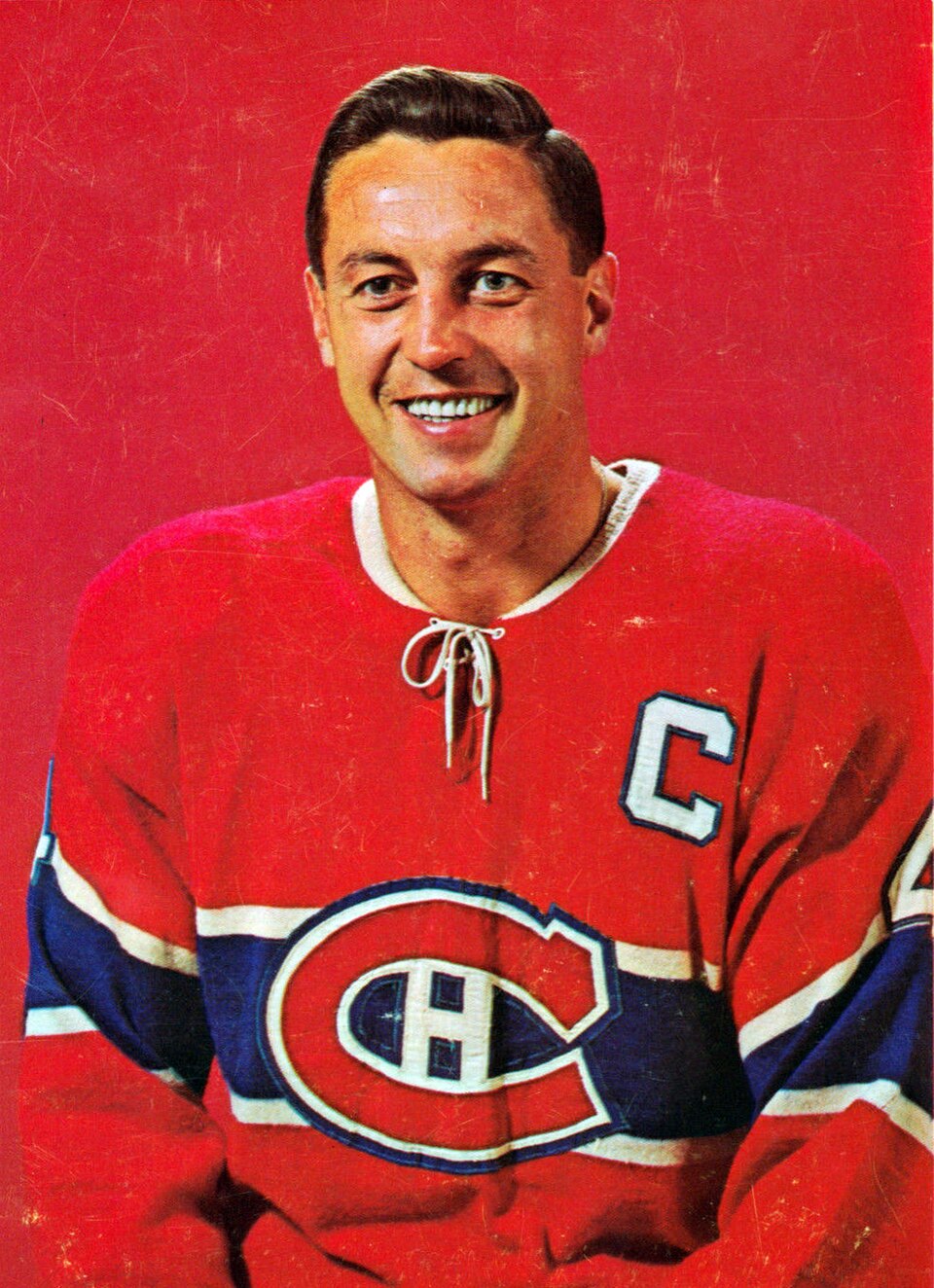
Regal, powerful and impossibly graceful, Jean Beliveau captained the Montreal Canadiens through the most successful era any franchise has known. He won ten Stanley Cups as a player, more than anyone in history except his teammate Henri Richard, and lifted seven more as a club executive, putting his name on the Cup a record 17 times. Le Gros Bill scored 507 goals and 1,219 points, won two Hart Trophies and the inaugural Conn Smythe Trophy as playoff MVP in 1965, and did it all with a dignity that made him one of hockey's most respected figures long after retirement. A big centre at a time when the position was being redefined, he combined a scorer's touch with a playmaker's vision and a leader's presence. Beliveau declined an offer to become Governor General of Canada, so revered was he. On the ice, his elegant stride and commanding two-way game set the template for the complete franchise centre that every organization has sought ever since.

Stanley Cups
10
Points
1,219
Goals
507
Hart Trophies
2
Points/Game
1.08
9
Nicklas Lidstrom

Nicklas Lidstrom

Sweden · 1991-2012

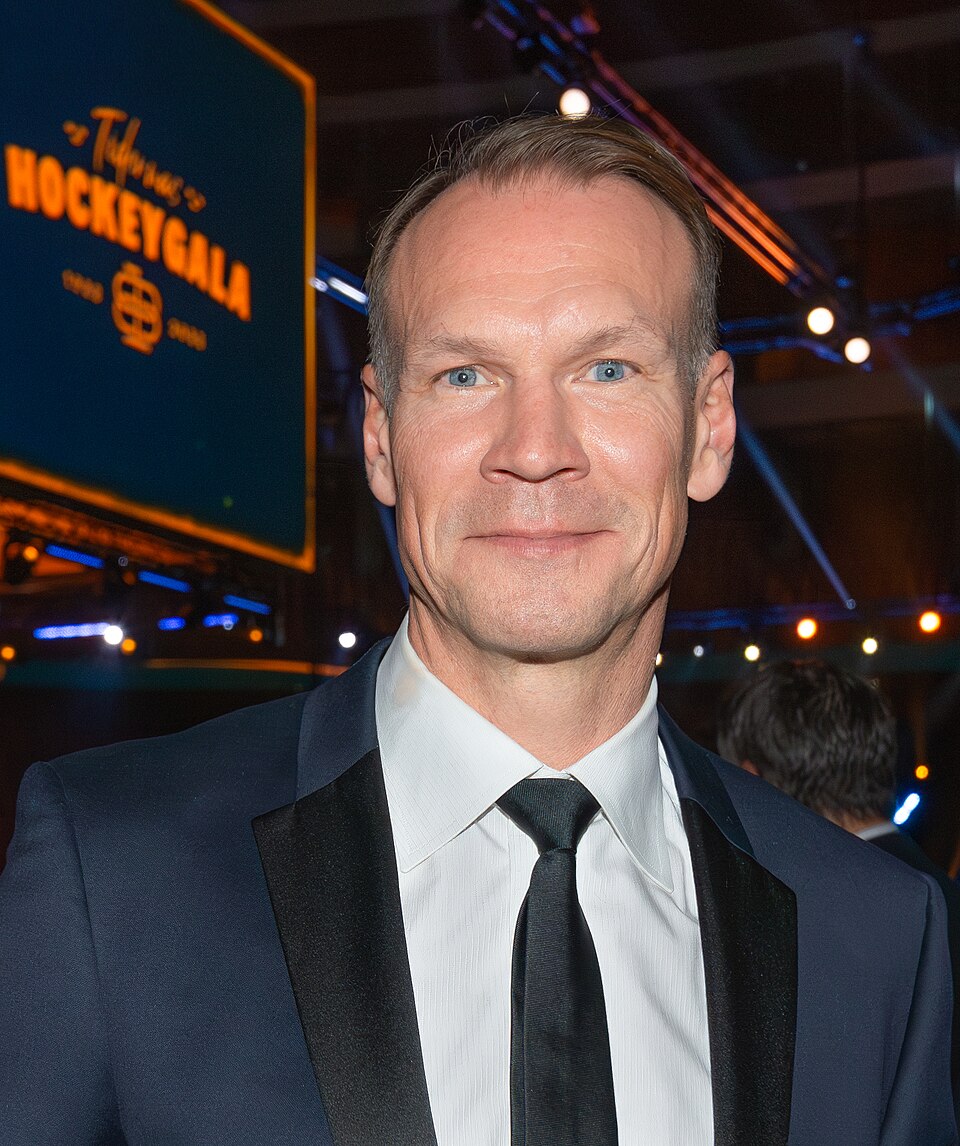
The finest European player of all time and perhaps the most flawless defenceman the game has seen, Nicklas Lidstrom anchored the Detroit Red Wings for two decades of sustained excellence. The Perfect Human won seven Norris Trophies as the NHL's best defenceman, a total behind only Bobby Orr, and four Stanley Cups, and in 2008 became the first European-trained captain to hoist the Cup. He was awarded the Conn Smythe as playoff MVP in 2002. Lidstrom played 1,564 games across 20 seasons and never missed the playoffs, retiring at 42 still performing at an elite level. His genius was positional and cerebral rather than physical: he seemed never out of position, defended with an impeccably timed stick rather than crushing hits, and moved the puck with quiet precision. He scored 1,142 points, remarkable for a defender who prioritized responsibility, and his metronomic consistency made him the model two-way blueliner. Where Orr overwhelmed, Lidstrom perfected, redefining defensive greatness through economy and intelligence.

Norris Trophies
7
Stanley Cups
4
Points
1,142
Assists
878
Goals
264
10
Dominik Hasek

Dominik Hasek

Czech Republic · 1990-2008

No goaltender ever stopped the puck quite like The Dominator. Unorthodox to the point of chaos, flopping, sprawling, smothering pucks with his back, his mask, anything, Dominik Hasek was mesmerizingly effective, and his .922 career save percentage remains elite decades on. He won a record six Vezina Trophies as the league's best goaltender and, astonishingly for a netminder, two Hart Trophies as overall MVP in 1997 and 1998, the only goalie to win it twice in the modern era. In 1998 he backstopped the Czech Republic to a stunning Olympic gold in Nagano, shutting out Canada in a shootout and blanking Russia in the final, a performance that made him a national hero. He won two Stanley Cups with Detroit late in his career, in 2002 and 2008. Hasek's flexibility and competitiveness let him steal games single-handedly, and at his mid-1990s peak with the Buffalo Sabres he was arguably the most valuable player in the sport regardless of position. He reinvented what elite goaltending could look like.

Vezina Trophies
6
Save %
.922
Hart Trophies
2
Wins
389
Stanley Cups
2
11

Patrick Roy

Canada · 1984-2003

Patrick Roy transformed goaltending both technically and psychologically. As a rookie he won the 1986 Stanley Cup and Conn Smythe with Montreal, and he would win it all four times, two with the Canadiens and two with the Colorado Avalanche, collecting a record three Conn Smythe Trophies as playoff MVP, the only player so honoured. Saint Patrick popularized the butterfly style out of the Quebec goalie tradition, dropping to seal the low net, and his intense, superstitious, supremely confident presence set the template for the modern money goaltender. He retired in 2003 as the winningest goalie in NHL history with 551 victories, since surpassed only by Martin Brodeur, and added 151 playoff wins, a mark that still stands. His 1993 run to the Cup, when he reportedly winked at an opponent during an unbeaten streak in overtime, is Montreal legend. Fiercely competitive to a fault, Roy elevated the position from last line of defence to franchise cornerstone, and generations of goalies have built their games on his blueprint.

Wins
551
Conn Smythe
3
Stanley Cups
4
Vezina Trophies
3
Save %
.910
12

Mark Messier

Canada · 1979-2004

The Messiah is remembered as hockey's ultimate leader, the only man to captain two different franchises to the Stanley Cup. Mark Messier won five Cups alongside Gretzky with the powerhouse Edmonton Oilers of the 1980s, then delivered the signature moment of his career in 1994, guaranteeing a win and scoring a hat trick in Game 6 of the Eastern Conference Final to drag the New York Rangers toward their first championship in 54 years. He retired with 1,887 points, second only to Gretzky on the all-time list at the time, and 694 goals, won two Hart Trophies, and played 25 punishing seasons. Messier combined a power forward's ferocity with a scorer's hands and an intimidating will that teammates and opponents alike describe in almost mythic terms. Where Gretzky was serene artistry, Messier was force and fire, the emotional engine of every team he played for. His blend of production, longevity and championship leadership secures his place among the immortals.

Points
1,887
Goals
694
Stanley Cups
6
Hart Trophies
2
Points/Game
1.07

Bars are scaled to the leader in this list.

The debate

The number one is settled: Gretzky's records are so far beyond the field that no serious debate exists. But almost everything below it is contested. The most compelling argument is Orr versus the field: those who watched him insist that a healthy Bobby Orr, playing the game's most demanding position while leading the entire league in scoring, reached a peak higher than anyone, Gretzky included. Injuries deny us the counterfactual. Lemieux's supporters make a similar case on pure talent, noting he did it while gravely ill and on a broken franchise.

The modern names stir the fiercest arguments. Ovechkin's assault on the goals record forces a reckoning: is the most prolific scorer ever a top-five player, even with a thinner trophy case than his rivals? Crosby's advocates counter with three Cups and a more complete two-way game. And a new contender looms, Connor McDavid, whose skating and scoring may eventually demand a place on this list, though his championship resume remains unwritten. Any ranking is a snapshot; the beauty of the debate is that the evidence keeps changing.

Embed this ranking

Paste this code into your blog or site — the ranking stays up to date.

Keep exploring

More in this category