Skip to content

⛸️GOAT Rankings

Figure Skating · Four minutes to launch quadruple jumps off a four-millimetre blade and make it look like music.

Ranking figure skaters across eras is harder than in most sports, because the sport itself has been rebuilt twice. Ulrich Salchow won ten world titles largely by tracing figures; Sonja Henie never attempted a jump harder than a single; Dick Button's first triple loop would today be worth 4.90 points. Comparing them to a skater who lands four quadruple jumps in a free skate is not a like-for-like exercise, so this list weighs four things: dominance over contemporaries, peak difficulty relative to the era's ceiling, what was actually won, and whether the skater changed the sport that followed.

Twelve names, across all four disciplines and eleven countries. The hardware favours the pre-war and Soviet greats, who competed in smaller, less globalised fields but won on a scale nobody now approaches; the difficulty argument favours the moderns, who face a field deeper than anything before it. Reasonable people rank those factors differently, and the debate section at the end sets out the strongest cases for the skaters this list leaves out.

All-time podium

🥈
Sonja Henie
Sonja Henie
Norway
2
🥇
Yuzuru Hanyu
Yuzuru Hanyu
Japan
1
🥉
Irina Rodnina
Irina Rodnina
Soviet Union
3

Comparison Lab

Toggle athletes on and off — every bar rescales to the leader of your selection.

5 / 12

The top 10

1
Yuzuru Hanyu

Yuzuru Hanyu

Japan · 2004-2022

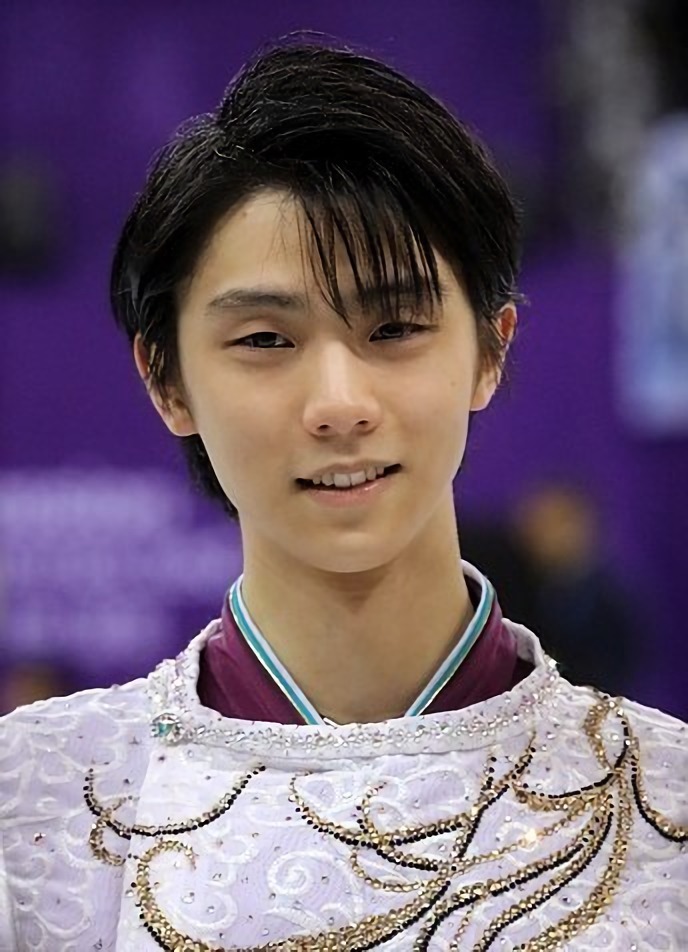
The most complete skater of the quadruple era, and the first man in 66 years to defend an Olympic title. Hanyu won gold at Sochi 2014 and Pyeongchang 2018, the first back-to-back men's champion since Dick Button in 1952, and did it in the deepest and most technically inflated field the sport has ever staged. He set 19 world records under the ISU Judging System, more than any skater in any discipline: the first short program over 100 points, 101.45 at Sochi; the first free skate over 200 and first total over 300, 322.40 at the 2015 NHK Trophy; then 330.43 at the 2015 Grand Prix Final. Four consecutive Grand Prix Final titles from 2013 to 2016, two world championships and six Japanese national titles sit alongside a 2020 Four Continents win that completed the Super Slam, every major junior and senior title, a first for a male single skater. He turned professional in 2022 and immediately sold out solo productions at the Tokyo Dome.
Olympic golds
2
Olympic medals
2
World titles
2
Continental titles
1 (Four Continents)
National titles
6
2
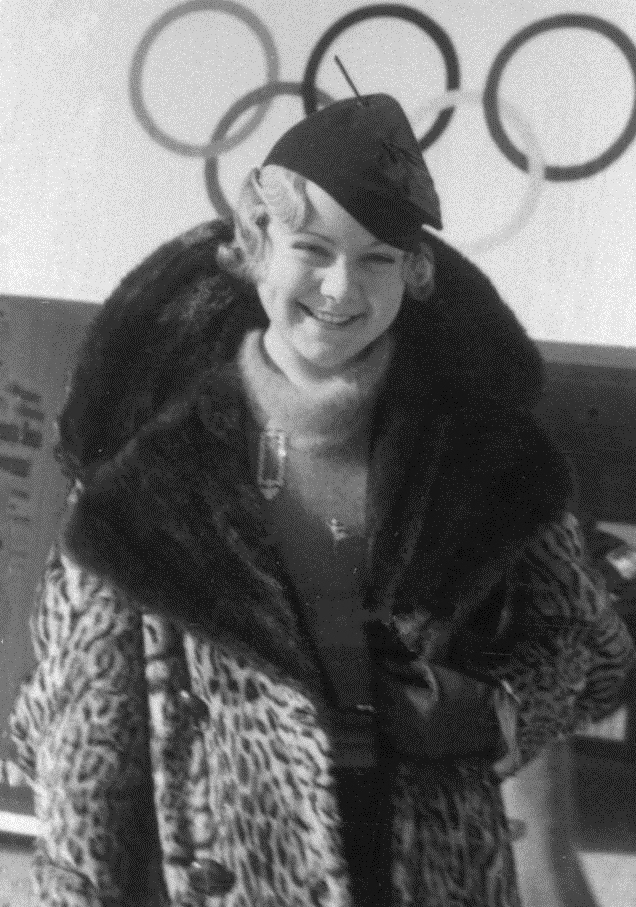
Sonja Henie

Sonja Henie

Norway · 1923-1936

The most dominant competitor the sport has produced and the woman who invented its commercial future. Henie won ten consecutive world titles from 1927 to 1936, six European championships, and Olympic gold at St. Moritz 1928, Lake Placid 1932 and Garmisch-Partenkirchen 1936, a total of three matched only by Gillis Grafström and Irina Rodnina. She had finished last at her first Olympics in 1924, aged eleven. Her influence ran well past results: she raised the skating skirt to mid-calf, wore white boots rather than black, and imported ballet training and full choreography into a discipline that had been an exercise in tracing figures on ice, changing what women's skating looked like within a decade. After Garmisch she turned professional, signed with 20th Century Fox and became one of the highest-paid film stars in Hollywood, while her touring ice revues created the template every ice show since has followed. Nobody has matched ten straight world titles in singles, and nobody has converted the sport into that scale of mainstream celebrity.

Olympic golds
3
Olympic medals
3
World titles
10 in a row
Continental titles
6 (European)
3
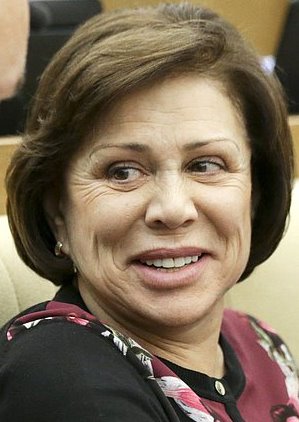
Irina Rodnina

Irina Rodnina

Soviet Union · 1969-1980

Undefeated for twelve years, and the only pair skater with three Olympic golds. Rodnina won at Sapporo 1972 with Alexei Ulanov, then, after Ulanov left for another partner, rebuilt from scratch with Alexander Zaitsev and won again at Innsbruck 1976 and Lake Placid 1980. In between she took ten consecutive world titles from 1969 to 1978 and eleven European championships, and she never lost a competition she entered across the whole of that career. Coached first by the ferocious Stanislav Zhuk and then by Tatiana Tarasova, she skated a style built on speed, absolute unison and an attacking tempo that made Soviet pairs the reference standard for four decades. The most famous performance came at the 1973 World Championships in Bratislava, where the music cut out roughly ninety seconds into the free skate; Rodnina and Zaitsev completed the entire program in silence and won anyway. Dismantling a championship partnership and winning two more Olympic titles with a new one is an achievement nobody else on this list attempted.

Olympic golds
3
Olympic medals
3
World titles
10 in a row
Continental titles
11 (European)
4
Ulrich Salchow

Ulrich Salchow

Sweden · 1897-1913

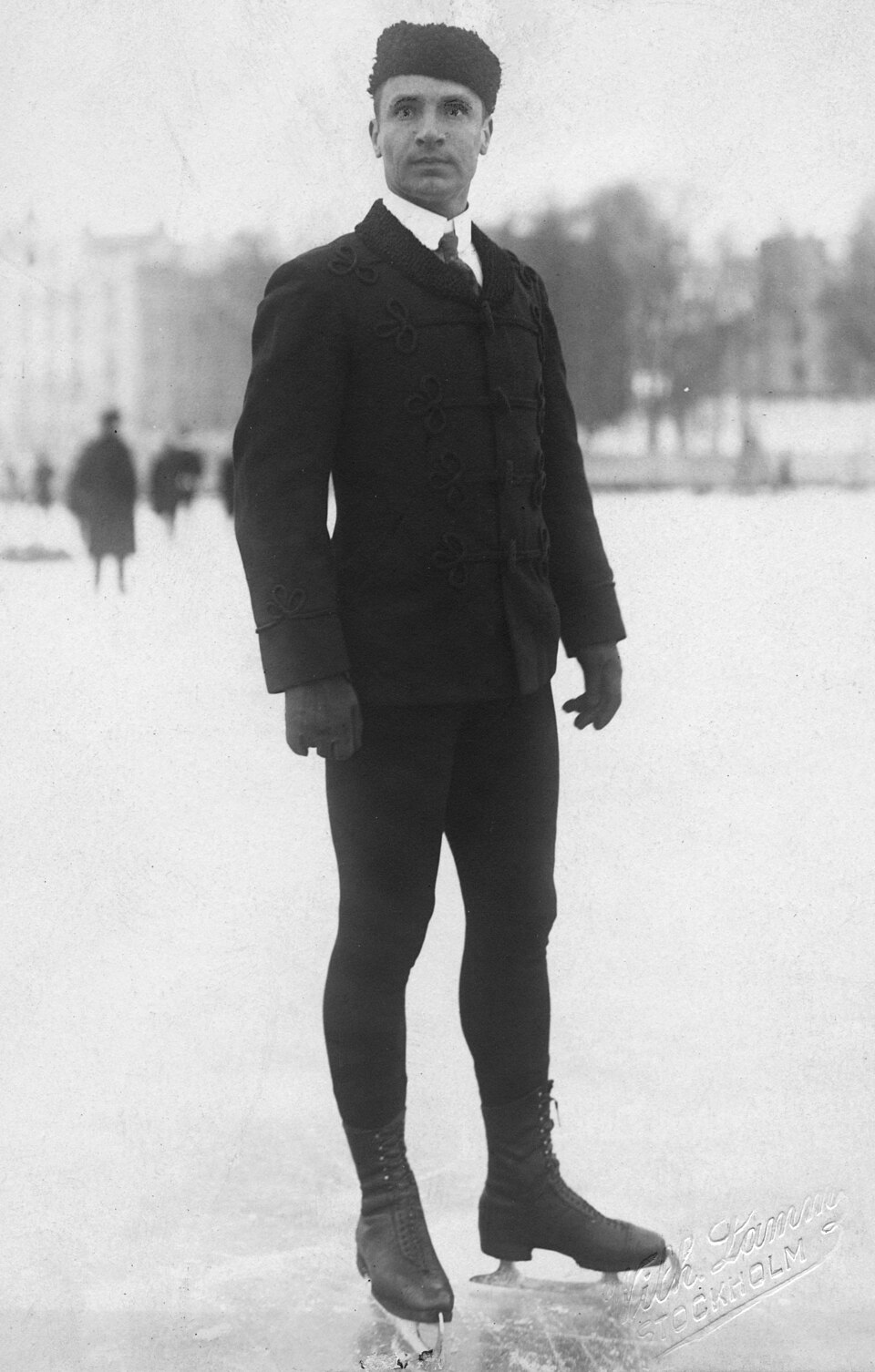
The first great champion of organised figure skating, and the only skater whose name is spoken thousands of times a day in every rink on earth. Salchow won ten world titles between 1901 and 1911, still the men's record more than a century later, and nine European championships between 1898 and 1913. He took the Olympic title at the 1908 London Games, where figure skating became the first winter sport ever contested at an Olympics. In 1909 he performed the edge jump that carries his name, a take-off from the back inside edge with no toe assistance, which remains one of the six jumps in the modern repertoire and is the entry point for most skaters' first triple and first quadruple. He was also an administrator of consequence, serving as ISU president from 1925 to 1937 and shaping the rules of the sport he had just finished dominating. Whatever era adjustment one applies, no man has won more world championships.

Olympic golds
1
Olympic medals
1
World titles
10
Continental titles
9 (European)
5
Dick Button

Dick Button

United States · 1946-1952

The man who turned figure skating from a drawing exercise into an athletic event. Button won two Olympic titles, at St. Moritz 1948 and Oslo 1952, five consecutive world championships from 1948 to 1952, seven straight United States titles, and the 1948 European Championship, the only non-European ever to win it before the ISU closed the event to outsiders. He landed the first double Axel in competition at the 1948 Olympics and the first triple jump of any kind, a triple loop, at Oslo in 1952, and invented the flying camel spin still known in some rinks as the Button camel. He retired at 22, took a Harvard law degree, and then spent nearly five decades as American television's voice of the sport, winning an Emmy and shaping how tens of millions of casual viewers understood what they were watching. No skater has combined technical invention, competitive dominance and long-term influence over the audience quite so completely.

Olympic golds
2
Olympic medals
2
World titles
5 in a row
Continental titles
1 (European)
National titles
7
6
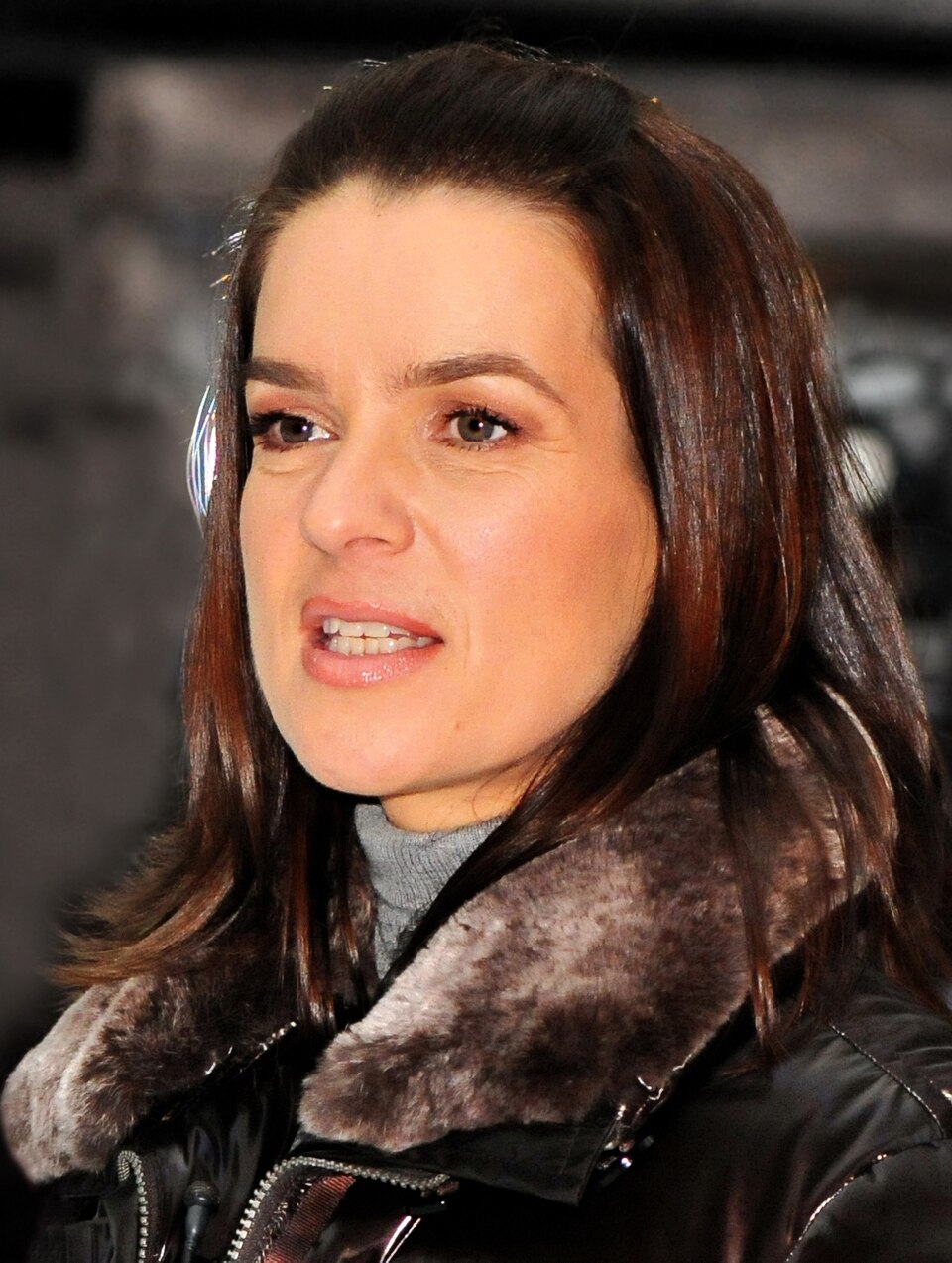
Katarina Witt

Katarina Witt

East Germany · 1980-1994

The most watched skater of the television era and the last woman before the quadruple age to defend an Olympic title. Witt won gold at Sarajevo 1984 and Calgary 1988, the first back-to-back women's champion since Sonja Henie, and added four world titles in 1984, 1985, 1987 and 1988 plus six consecutive European championships from 1983. Calgary produced the Battle of the Carmens, in which she and the American Debi Thomas skated to the same score; Witt won on presentation with the more conservative technical content, a result that crystallised the sport's permanent argument between difficulty and performance. She was trained in Karl-Marx-Stadt by Jutta Müller, in the most systematic skating program East Germany ever built, and competed under state surveillance that later filled a Stasi file thousands of pages long. After reunification she became a global commercial figure, and she returned as a reinstated professional to the 1994 Lillehammer Olympics, finishing seventh with a program dedicated to Sarajevo under siege.

Olympic golds
2
Olympic medals
2
World titles
4
Continental titles
6 (European)
National titles
8
7

Karl Schäfer

Austria · 1926-1936

The most decorated men's skater of the 1930s and the technical bridge between compulsory figures and free skating. The Viennese won seven consecutive world titles from 1930 to 1936, eight consecutive European championships from 1929, and Olympic gold at Lake Placid 1932 and Garmisch-Partenkirchen 1936, a men's Olympic double matched since only by Dick Button and Yuzuru Hanyu. He was exceptional at both halves of a sport that then split its marks between geometry and performance: a meticulous tracer of figures who also pushed free skating forward, credited with the one-foot Axel and with refining spin positions that became standard vocabulary. He was a national-class swimmer as well, and after retiring he coached and choreographed across Europe and the United States. Schäfer competed in the last era when compulsory figures could decide a championship outright, and his ability to win both phases is why his record survived the sport's eventual decision to abolish figures altogether.

Olympic golds
2
Olympic medals
2
World titles
7 in a row
Continental titles
8 (European)
8

Jayne Torvill & Christopher Dean

Great Britain · 1975-1994

The most famous four minutes in the history of the sport. At Sarajevo in 1984 the Nottingham pair skated Ravel's Boléro and received nine perfect 6.0s for artistic impression, the only unanimous set of maximum marks ever awarded in an Olympic figure skating event, part of twelve 6.0s across the whole competition. The program was itself a rules exercise: the free dance limit was 4 minutes 10 seconds and the clock started when a blade moved, so they opened kneeling on the ice for the first 18 seconds to fit their 4:28 arrangement inside the rule. They won four consecutive world titles from 1981 to 1984 and four European championships, turned professional, then returned under reinstatement rules to take bronze at Lillehammer in 1994. Their influence on ice dance was structural rather than decorative: they replaced ballroom pastiche with narrative choreography and theatrical staging, and every free dance judged on composition since works in the vocabulary they built.

Olympic golds
1
Olympic medals
2
World titles
4 in a row
Continental titles
4 (European)
9
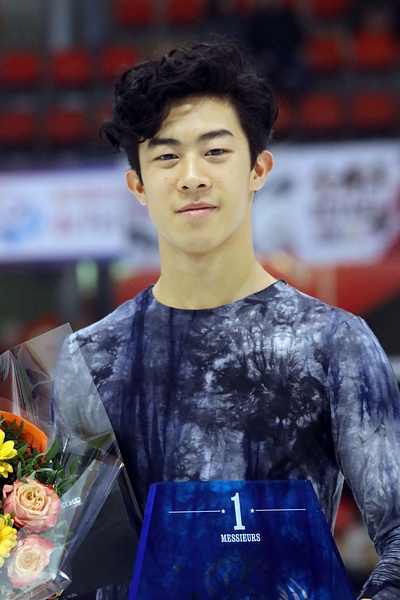
Nathan Chen

Nathan Chen

United States · 2010-2022

The skater who solved the quadruple era arithmetically. Chen won Olympic gold at Beijing 2022 with a world-record short program of 113.97, took three world titles in 2018, 2019 and 2021, six consecutive United States championships from 2017, and three straight Grand Prix Finals. He did not lose a completed competition between the 2018 World Championships and his Olympic title, a four-year run through the deepest men's field ever assembled. His signature was volume and repeatability rather than a single trick: after a disastrous short program at Pyeongchang 2018 he answered with a free skate carrying six quadruple attempts, the most technically loaded program skated to that point, and climbed from seventeenth to fifth. His 335.30 at the 2019 Grand Prix Final in Turin, built on 110.38 and a free skate of 224.92, set the world-record total under the ISU Judging System. He did much of it while enrolled at Yale, commuting between New Haven and California to train.

Olympic golds
1
Olympic medals
2
World titles
3
Continental titles
1 (Four Continents)
National titles
6
10

Tessa Virtue & Scott Moir

Canada · 1997-2018

The most decorated figure skaters in Olympic history, with five medals across three Games. The Canadians won ice dance gold at Vancouver 2010, the first North American couple ever to take the title and the youngest champions the discipline had produced, then silver in the dance and silver in the team event at Sochi 2014, then gold in both at Pyeongchang 2018. They added three world titles in 2010, 2012 and 2017, three Four Continents titles and eight Canadian championships, having skated together since the ages of seven and nine. Their Pyeongchang free dance to music from Moulin Rouge set a world record and closed a career defined by the deepest partnership the sport has seen, with edges, breathing and body angles matched so precisely that unison effectively became a category of its own. They also survived a mid-career reinvention, moving their training base to Montreal and returning from a two-year competitive break to win everything again.

Olympic golds
3
Olympic medals
5
World titles
3
Continental titles
3 (Four Continents)
National titles
8
11

Yuna Kim

South Korea · 2003-2014

The most complete competitor of the pre-quadruple women's era, and the skater who built a sport in a country that did not have one. Kim won Olympic gold at Vancouver 2010 with a world-record 228.56, finishing 23 points clear of Mao Asada in the largest winning margin the modern system has produced at a Games, and took silver at Sochi 2014 in a result still disputed by judges and federations alike. She won world titles in 2009 and 2013 and the 2009 Four Continents, and was the first woman to pass 200 points overall, scoring 207.71 at the 2009 World Championships in Los Angeles. She never finished off the podium at a senior ISU championship. South Korea had almost no figure skating infrastructure when she began; by Vancouver her free skate commanded a national audience share that emptied streets, and rink construction and youth registration followed within a few years. Textbook technique, and a competition record close to flawless.

Olympic golds
1
Olympic medals
2
World titles
2
Continental titles
1 (Four Continents)
12

Evgeni Plushenko

Russia · 1997-2014

The last great champion of the 6.0 system and the first to master the one that replaced it. Plushenko won four Olympic medals across four Games: silver at Salt Lake City 2002, gold at Turin 2006, silver at Vancouver 2010 and team gold at Sochi 2014. He added three world titles, seven European championships, four Grand Prix Finals and ten Russian national titles, a haul no male skater of the modern era approaches. He was the first to land a quadruple toe loop, triple toe loop, triple loop combination, in 1999, pushing the era's technical ceiling while retaining the flexibility for a Biellmann spin that almost no man had attempted. His long rivalry with Alexei Yagudin, settled when Yagudin swept Salt Lake City with a free skate that drew perfect 6.0s, produced the most-watched men's competition in Russian skating history. A career shadowed by more than a dozen operations on his back and knees ended at Sochi, where he withdrew from the individual event minutes before he was due to skate.

Olympic golds
2 (1 individual)
Olympic medals
4
World titles
3
Continental titles
7 (European)
National titles
10

Bars are scaled to the leader in this list.

The debate

The honest problem with this list is that it compares three different sports. Salchow and Schäfer won championships in which compulsory figures could account for the majority of the marks, judged on tracings a modern audience would not recognise as skating. Henie, Button and Rodnina competed in fields drawn from a handful of countries with ice, before global scouting, off-ice conditioning and video review existed. Hanyu, Chen and Kim faced deeper fields, harsher technical policing and a scoring system that publishes every point. Adjusting for era cuts both ways: the moderns do things nobody in 1936 could imagine, but nobody today has gone undefeated for twelve years the way Rodnina did, and the reason may be that the field is now too deep for anyone to try.

Several strong cases are missing. Michelle Kwan won five world titles and nine United States championships without ever taking Olympic gold, and remains the sport's most popular American figure. Gabriella Papadakis and Guillaume Cizeron won five world titles and Beijing 2022 with the most refined ice dance technique yet recorded. Aliona Savchenko took five world pair titles across two partnerships and won Olympic gold at her fifth Games in 2018 with a free skate that set a world record. Gillis Grafström is the only skater with Olympic gold at both a Summer and a Winter Games. And Ilia Malinin, who landed the first quadruple Axel in 2022 and six quads in a single free skate at the 2024 World Championships, is building a case that will eventually force a rewrite of this list. Where you rank them depends on whether greatness means winning most, jumping highest, or changing the sport that comes after you.

Embed this ranking

Paste this code into your blog or site — the ranking stays up to date.

Keep exploring

More sports