Skip to content Skip to a section

🍲Taste

Korean cuisine · Fermented heat and shared grills: kimchi, gochujang and banchan from the Korean Peninsula.

At a glance
Score intensity

Darker cells mean a higher score for this topic on that metric.

Last reviewed Sources & creditsMedia creditsMethodology

Quick answers

What is hansik?

Hansik (한식) is Korean cuisine organised around rice, soup or stew, and banchan. Kimchi is expected, not optional, even when the main is grilled meat.

Is all Korean food very spicy?

No. Many stews and soups are mild; heat concentrates in gochujang dishes, tteokbokki and some kimchi. Baek-kimchi and doenjang jjigae are common low-chili counters.

What is the difference between gochujang and gochugaru?

Gochugaru is dried chili flake. Gochujang is a fermented paste of chili, soybean and glutinous rice. They are not interchangeable spoon-for-spoon.

Why so many side dishes?

Banchan are the meal's vegetable and ferment layer. Restaurants refill them; at home they are yesterday's pickles, namul and a new kimchi.

Is Korean barbecue the everyday dinner?

It is a social and restaurant form. Weeknight tables more often hold rice, kimchi and a jjigae or leftover grilled fish.

What does kimjang mean?

Kimjang is the seasonal making and sharing of winter kimchi, typically in late autumn, now recognised by UNESCO as intangible heritage.

Start with this section - Taste

The dishes that carry Korean cuisine are ferments, stews, noodles and a grill — not a single national plate.

Eight signatures below are the ones that explain the table to a first-time diner and to a grocer stocking an H Mart aisle.

At a glance

Bibimbap
Bibimbap
Korea
2
Kimchi
Kimchi
Korea
1
Korean barbecue
Korean barbecue
Korea
3

Signature dishes

1
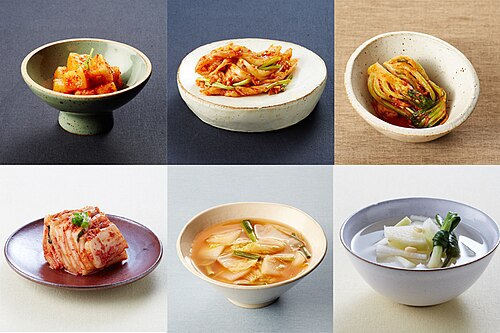
Napa cabbage kimchi 국립국어원 · CC BY-SA 2.0 kr

Kimchi

Korea · staple

Napa cabbage, gochugaru, garlic, ginger and jeotgal fermented in onggi or a kimchi fridge. The daily acid and heat of the Korean table.

Story

Kimjang still gathers families to salt cabbages by the box; the first week tastes like seasoned salad, the third like a different food.

“Time is an ingredient. Under-fermented kimchi is a relish; aged kimchi becomes stew fuel.”

Reach
daily table
Umami
lactic
Heat
gochugaru
2
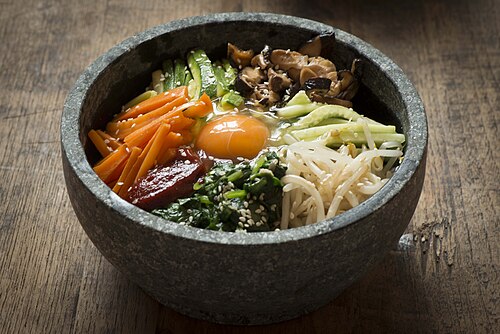
Bibimbap in a stone bowl Sous Chef · CC BY 2.0

Bibimbap

Korea · Joseon–present

Rice topped with namul, beef or an egg, mixed at the table with gochujang. Jeonju claims a particularly lavish version.

Story

Dolsot bibimbap arrives screaming hot; the toasted rice crust (nurungji) is the prize at the bottom.

“A composed bowl that still insists the diner finish the mixing.”

Reach
export icon
Balance
namul+rice
Heat
optional
3
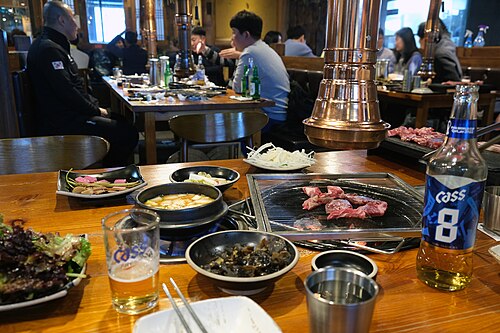
Grill of pork belly and beef kallerna · CC BY-SA 4.0

Korean barbecue

Korea · 20th c. restaurant form

Gogi-gui: diners cook galbi, samgyeopsal or beef over charcoal or gas, then wrap in ssam. The restaurant form that travelled farthest.

Story

Self-grill tables taught overseas diners to manage smoke and doneness; in Seoul the staff often still start the first round.

“Meat is a vehicle for lettuce, ssamjang and raw garlic, not the whole meal.”

Reach
global
Social
shared grill
Heat
sauces
4
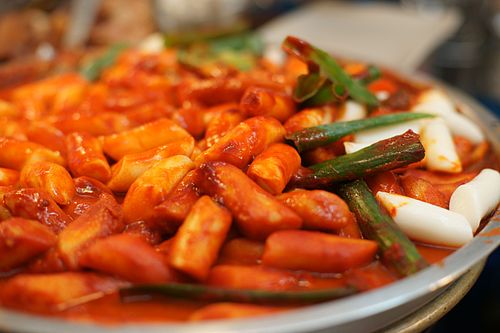
Rice cakes in red sauce Popo le Chien · CC0

Tteokbokki

Korea · street staple

Cylindrical rice cakes simmered in gochujang sauce, often with odeng and boiled egg. The default after-school street bowl.

Story

Sindang-dong in Seoul branded a spicy-sweet style that chains later standardised.

“Chew first, heat second. The cake should tug, not dissolve.”

Reach
street
Chew
tteok
Heat
gochujang
5
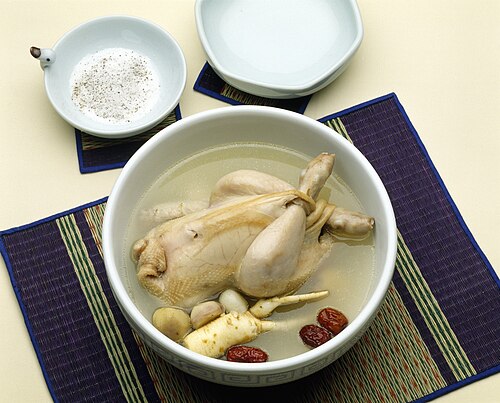
Ginseng chicken soup wizdata · CC0

Samgyetang

Korea · summer tonic

A whole young chicken stuffed with rice, ginseng, jujube and garlic, served boiling in a stone pot. Eaten in the summer heat for stamina.

Story

Sambok days in the lunar calendar still send offices toward samgyetang houses.

“A mild bowl in a cuisine famous for chili — proof that hansik is not only red.”

Reach
seasonal
Heat
mild
Ritual
sambok
6
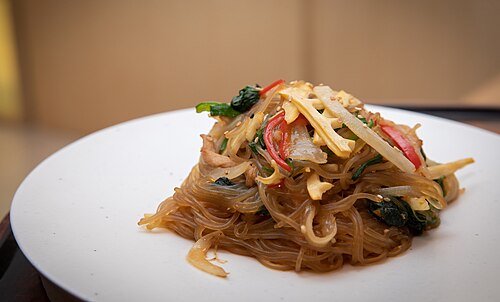
Glass noodles with vegetables korea.net · CC BY-SA 2.0

Japchae

Korea · banquet / home

Sweet-potato starch noodles tossed with sesame oil, soy, spinach, carrot and often beef. A celebration dish that also appears in lunchboxes.

Story

The noodles were once a court luxury; they are now supermarket-easy and still easy to over-soften.

“Sesame oil and soy, not chili, do the talking.”

Reach
party table
Chew
dangmyeon
Heat
none
7
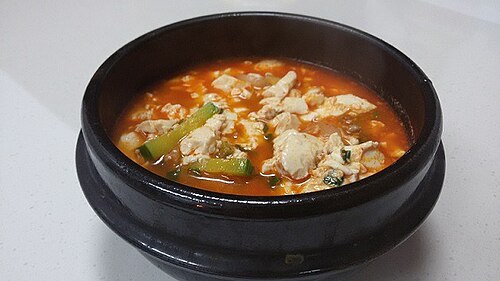
Soft tofu stew in a stone pot 행복한 초록개구리 · CC BY 4.0

Sundubu-jjigae

Korea · staple stew

Silken tofu stew with chili broth, egg and seafood or pork, served bubbling. A weeknight and hangover standard.

Story

Stone pots keep the boil going at the table; the egg is cracked in last.

“Soft tofu against a sharp broth is the texture thesis.”

Reach
weeknight
Heat
broth
Comfort
hot pot
8
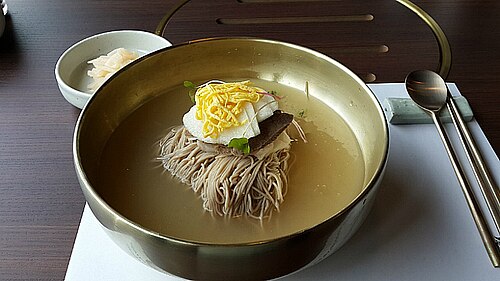
Cold buckwheat noodles in broth wjlee4284 · CC BY 2.5

Naengmyeon

Korea · northern staple

Cold buckwheat (or potato) noodles in icy broth or spicy gochujang sauce. Pyongyang and Hamhung styles split the genre.

Story

Scissors arrive with the bowl because the noodles are too long to slurp politely in one go.

“Cold, chewy and lightly sour — the summer opposite of samgyetang's steam.”

Reach
summer
Chill
iced broth
North
Pyongyang/Hamhung

Stats are relative 0–100 marks within this cuisine, for comparison only.

Comparison Lab

Toggle dishes on and off — every bar rescales to the leader of your selection.

5 / 8

Debate

Pyongyang vs Hamhung noodles

Clear icy broth versus spicy chewy strands — two northern memories that Seoul restaurants still fight over.

Is barbecue the real hansik?

Export menus say yes; home tables still look like rice, kimchi and a stew.

Keep exploring

More in East Asia