Parkinson’s disease
BG gating failure: bradykinesia, rigidity, tremor.
Motor Control · From intention to muscle — cortico-basal ganglia-cerebellar loops that select, time and correct movement.
Reviewed 2026-08·Sources & research·Methodology·Media credits
Darker cells mean a higher score for this topic on that metric.
LessMore
Last reviewed Sources & creditsMedia creditsMethodology
M1 maps body parts and drives corticospinal output for skilled force. One loop node, not a single motor centre for every skill.
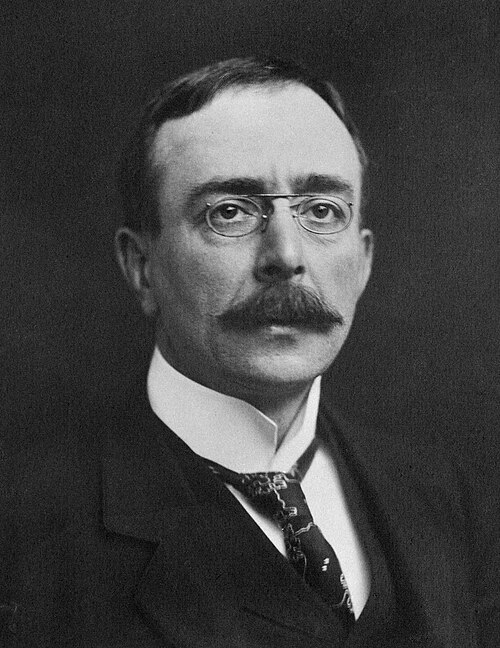
Wilder Penfield Montreal stimulation popularised the body map. Teaching silhouette — not a personal exam.
Basal ganglia including STN bias action selection; cerebellum times and predicts errors. Nested loops, not a one-way command line.
No. Educational atlas of published loops. No diagnosis, no exercise prescription, no medication dose.
Reach-to-grasp under sudden load or prism adaptation: the nervous system predicts sensory consequences and corrects in tens of milliseconds.
No. Editorial 0-100 inside this atlas. Compare Executive Function and Perception after Overview, Anatomy, Function.
Clinical relevance spans Parkinson’s, stroke, cerebellar ataxia, dystonia, apraxia and spinal injury — always within a broader assessment.
Educational neuroscience context only — not medical advice or diagnosis.
BG gating failure: bradykinesia, rigidity, tremor.
Weakness, spasticity and lost fractionation.
Dysmetria and timing errors from prediction loss.
Overflow and abnormal sensorimotor maps.
Skilled gesture failure despite intact strength.
Interrupted descending drive and reflex imbalance.
Slowed initiation and scaling of movement.
Overshoot and oscillation near targets.
Sudden failure to initiate or continue steps.
Velocity-dependent resistance after upper-motor injury.
Independent digit control collapses.
When indicated for Parkinsonian gating failure.
High-dose practice of meaningful actions.
Drive use-dependent cortical remapping post-stroke.
Recalibrate impedance and anticipatory posture.
Seek licensed clinicians for personal symptoms; device demos are not diagnoses.
How the brain encodes, stores and retrieves experience across systems.
Research 75 🎯Selecting what enters awareness — and what the brain must ignore.
Research 88 💬Speech, comprehension and the cortical networks that make meaning.
Research 74 💓Affective circuits linking body states, appraisal and social meaning.
Research 67 ⚖️Value, risk and control — how choices emerge from competing signals.
Research 66 😴Oscillations, stages and the nightly work of memory and repair.
Research 97 🔄How experience rewires synapses, maps and recovery trajectories.
Research 50 ✨Awareness, reportability and the hard problem still facing science.
Research 89 📚How practice, prediction and reward reshape circuits over time.
Research 90 👁️Building a usable world from noisy sensors and prior expectations.
Research 77 🔥A protective percept built from nociception, context and prediction.
Research 74 ⏳Lifelong change in structure, networks and cognitive reserve.
Research 57 ✨Where self-help, manifestation metaphors and religious hope meet expectancy, attention and prediction — and where they overclaim.
Research 78 🕯️Meditation, prayer and liturgy as trained attention and regulation — evidence, limits and cultural context.
Research 82 🧭Working memory, inhibition and cognitive flexibility — the control system that steers thought and action toward goals.
Research 88 🤝How brains read minds, faces and norms — theory of mind, empathy and the networks that make us social.
Research 85