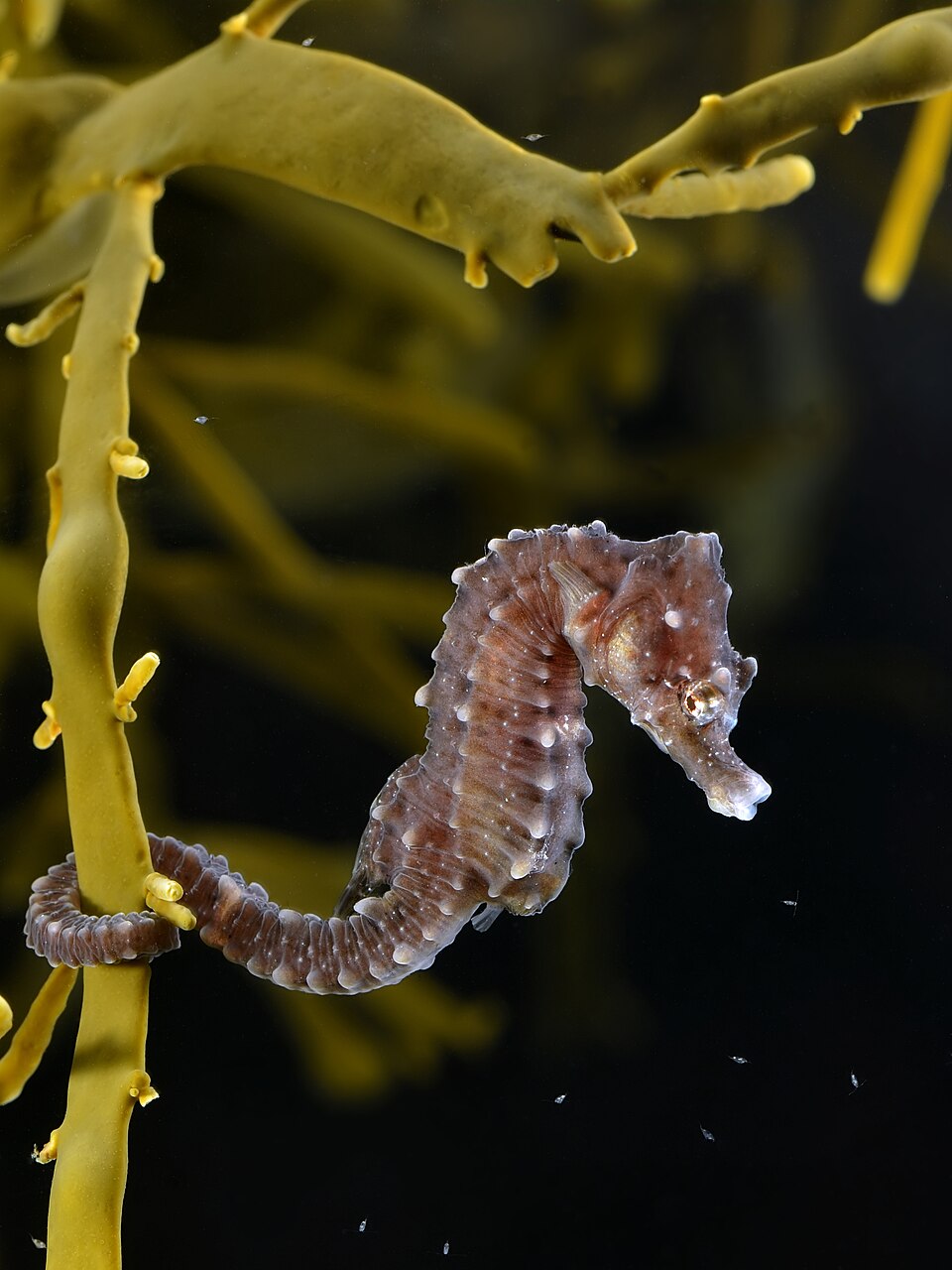
Cabinet years
Curiosity then tonic
Dried seahorses were curios in Europe and materia medica in East Asia.
Seahorse · Male-pregnancy fish — Hippocampus since Linnaeus (1758), dried trade, and CITES Appendix II (2002).
Milestones in order. This is history, not a weekly activity grid.
Darker cells mean a higher score for this topic on that metric.
LessMore
Last reviewed Sources & creditsMedia creditsMethodology
Yes. The female deposits eggs in the male brood pouch; he incubates them. Linnaeus named Hippocampus in 1758; CITES Appendix II (2002) frames modern pressure.
A conservation-research group led by Amanda Vincent that supplied much of the CITES and bycatch evidence from the 1990s onward.
Documented international trade in dried and live animals met a genus that is sparse, site-faithful and easy to over-collect.
By volume, dried medicine and curio shipments plus trawl bycatch outweigh hobby live fish in most analyses.
Some live-hobby demand is captive-bred. Dried-trade volume and trawl bycatch are not solved by a hatchery SKU.
A rigid bony plate body and a dorsal fin that buzzes rather than a caudal fluke. Camouflage replaces flight.
The seahorse did not enter English as a finished emblem. Hunts, films, listings and field stations rewrote the animal on a dated clock.
This chapter keeps ten timeline points, five eras and three milestones so a later translation can hold the same years.
The upright syngnathid entered binomials from cabinet specimens.
Early quantification of dried seahorses in Asian markets.
Research-plus-policy shop that became the genus public science address.
CoP12 listed all Hippocampus; implementation lagged in several ports.
A 10 cm trade guideline tried to let some animals breed once.
Gulf of Thailand and African trawls showed incidental take dwarfing targeted dive catch in places.
More hobby seahorses sold as tank-raised in US/EU, even as dried trade continued.
Philippine and Vietnam village projects tied catch data to no-take patches.
E-commerce listings forced CITES discussions into parcel-post space.
Meadow decline entered seahorse Red List justifications beside trade tonnes.
Dried seahorses were curios in Europe and materia medica in East Asia.
Vincent tonnage estimates preceded a genus-wide CITES listing.
A 10 cm rule and hobby aquaculture split live from dried politics.
Trawls, not only divers, explained the dried volume.
Habitat loss and e-commerce are the new enforcement map.
A named lab-and-policy group made a small fish diplomatically large.
The whole genus entered permit space together.
Trawl studies shifted blame from the postcard diver to industrial mesh.
Reading seahorse history beside the resilience score keeps a recovered stock from standing in for a threatened cousin.
Apex lamnid whose warm muscle, broad diet and 1975 cinema still outrun the tagging papers.
Overall 66 🐟Anadromous fishes that move ocean fat onto spawning gravels -- and into forests, treaties and hydropower fights.
Overall 63 🐟A warm-bodied tuna whose Tokyo auction prices and ICCAT quotas made a single fish into a geopolitical unit.
Overall 54 🐠Anemone-dwelling damselfish whose 2003 film fame became a capture-and-reef case study.
Overall 41 🎏Domesticated carp whose Niigata colour mutations became a global pond aesthetic -- not a wild goldfish substitute.
Overall 42 🐡Beak-toothed inflators whose tetrodotoxin made a Japanese cuisine and a genome project out of one family.
Overall 41 ⚡Amazon knifefishes whose stacked electrocytes taught Humboldt, Volta arguments and a 2019 species split.
Overall 36