Trap to jet
Almadraba then airfreight
Mediterranean traps are old; 1970s cargo jets made a giant fish a Tokyo commodity.
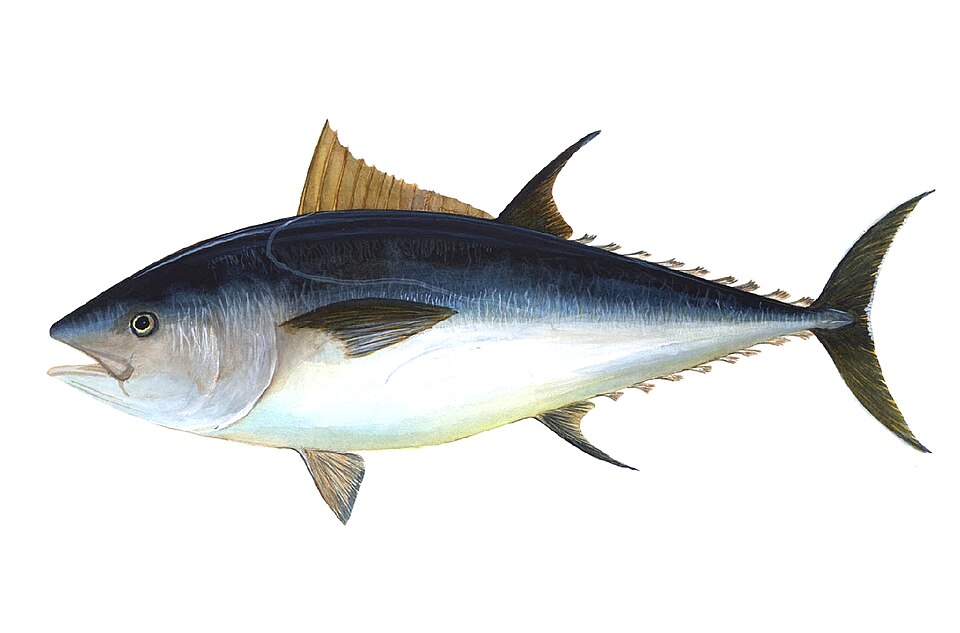
Atlantic bluefin tuna · A warm-bodied tuna whose Tokyo auction prices and ICCAT quotas made a single fish into a geopolitical unit.
Milestones in order. This is history, not a weekly activity grid.
Darker cells mean a higher score for this topic on that metric.
LessMore
Last reviewed Sources & creditsMedia creditsMethodology
No. First-sale theatrics at Tsukiji/Toyosu are marketing. ICCAT indices and spawning-stock biomass are the management numbers.
Eastern Atlantic/Mediterranean quotas and enforcement improved some indices after a crash. Recovered is a press word; scientists speak in probabilities and two stocks.
Purse seines catch live fish for fattening cages. It can hide juvenile take inside a farmed label.
Song for the Blue Ocean (1997) and later essays treated giant tuna as a governance failure, not a recipe.
Thunnus orientalis is a different species under WCPFC/IATTC math. The sushi case looks identical; the commissions do not.
Burst speeds exceed 60 km/h. Regional endothermy lets the fish hunt in colder water than most tunas.
The atlantic bluefin tuna did not enter English as a finished emblem. Hunts, films, listings and field stations rewrote the animal on a dated clock.
This chapter keeps ten timeline points, five eras and three milestones so a later translation can hold the same years.
Madrid-based commission began allocating a fish that was already industrial.
Jet cargo linked Atlantic giants to Tokyo prices and raised the kill value.
Safina book put bluefin governance on the trade-press desk.
Bluefin-off-the-menu drives in Europe and the US.
Monaco Appendix I bid lost; ICCAT kept the file inside the RFMO.
Gulf spawning habitat met a well blowout -- a year-class research scramble.
Eastern stock measures and better catch documents began to show in indices.
Tsukiji inner market moved; first-tuna theatre continued on a new floor.
ICCAT raised some quotas as models allowed -- industry and NGO fights resumed.
Separate commissions kept recreational and commercial fights alive in California and Japan.
Mediterranean traps are old; 1970s cargo jets made a giant fish a Tokyo commodity.
Quotas lagged reality; illegal trade filled the gap.
Books and a failed Appendix I bid kept the fish in newspapers.
Better documents and cuts lifted some eastern indices.
Toyosu headlines still outshine stock tables on New Year morning.
A commission became the only legal room that mattered for Atlantic quotas.
The fish stayed inside RFMO politics, not the endangered-species trade ban.
eBCD systems made a sold loin slightly harder to launder.
Reading atlantic bluefin tuna history beside the resilience score keeps a recovered stock from standing in for a threatened cousin.
Apex lamnid whose warm muscle, broad diet and 1975 cinema still outrun the tagging papers.
Overall 66 🐟Anadromous fishes that move ocean fat onto spawning gravels -- and into forests, treaties and hydropower fights.
Overall 63 🐠Anemone-dwelling damselfish whose 2003 film fame became a capture-and-reef case study.
Overall 41 🐴Male-pregnancy fish — Hippocampus since Linnaeus (1758), dried trade, and CITES Appendix II (2002).
Overall 28 🎏Domesticated carp whose Niigata colour mutations became a global pond aesthetic -- not a wild goldfish substitute.
Overall 42 🐡Beak-toothed inflators whose tetrodotoxin made a Japanese cuisine and a genome project out of one family.
Overall 41 ⚡Amazon knifefishes whose stacked electrocytes taught Humboldt, Volta arguments and a 2019 species split.
Overall 36