🏓GOAT Rankings

Table Tennis · The fastest ball sport on Earth, decided in the width of a fingernail and the spin no eye can fully read.

Ranking the greatest table tennis players means weighing eras that used utterly different equipment and rules, and reconciling a sport where the deepest talent pool, China's, has often made the domestic trials harder than the world stage. The measures that travel across time are the sport's three crown jewels, the World Championships, the World Cup and the Olympic Games, and the rare feat of winning all three: the career Grand Slam.

This list balances peak dominance, longevity and the historic significance of breaking, or defining, an era. It spans the hardbat Hungarian age, the Swedish golden generation, the great Chinese women who ruled the 1990s and 2000s, and the modern giants who mastered every equipment revolution. The stat bars are scaled within this group, so they compare these legends against one another, not against the wider field.

All-time podium

🥈
Jan-Ove Waldner
Sweden
2
🥇
Ma Long
China
1
🥉
Deng Yaping
China
3

Comparison Lab

Toggle athletes on and off — every bar rescales to the leader of your selection.

5 / 12

The top 10

1

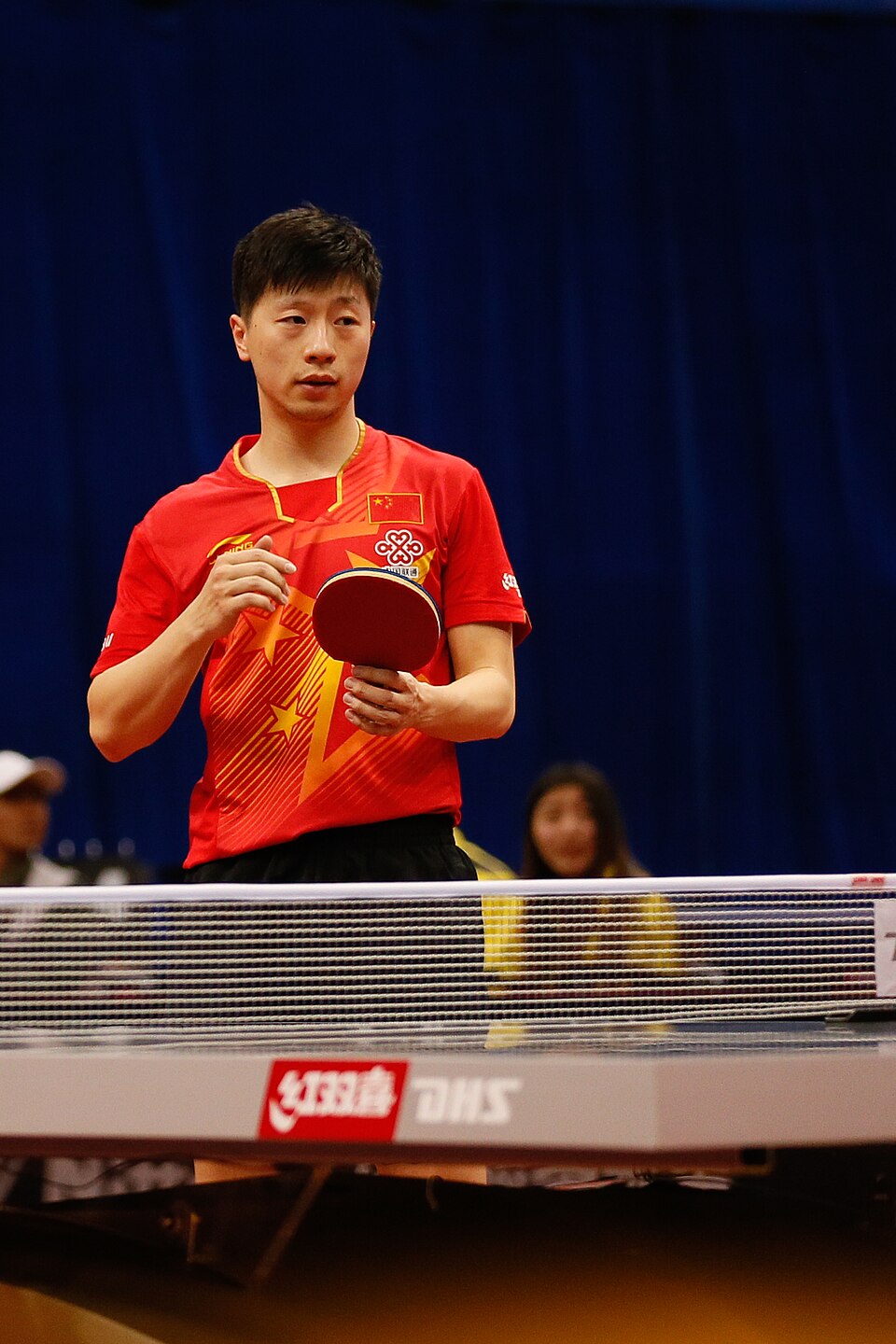
Ma Long

China · 2003-2024

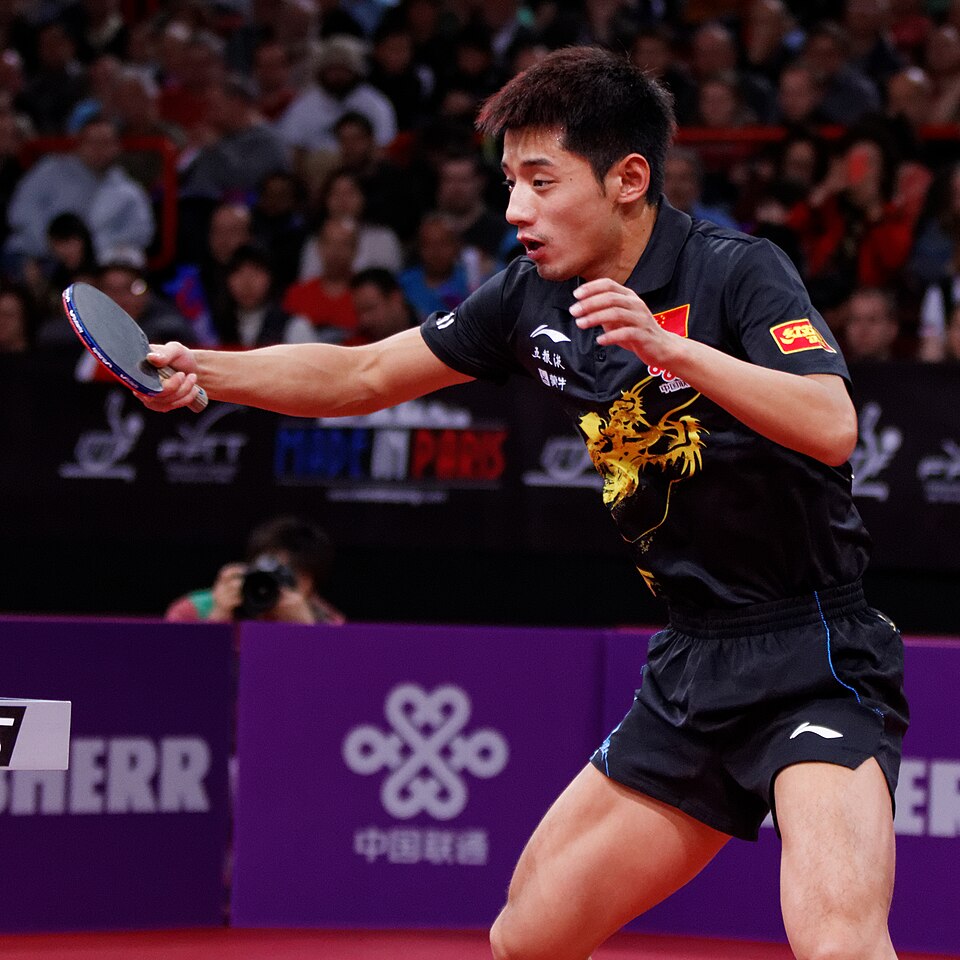
Widely regarded as the greatest player in history, Ma Long is the only man to complete the career Grand Slam twice, winning each of the World Championship, World Cup and Olympic singles titles at least twice. He took Olympic singles gold in Rio 2016 and Tokyo 2020 and claimed World Championship titles in 2015, 2017 and 2019. His six Olympic gold medals, across singles and team events, make him the most decorated Olympic table tennis player ever and one of China's most successful Olympians. Nicknamed the Dragon, he combined complete two-wing technique, relentless footwork and a run atop the world rankings measured in years, dominating through the plastic-ball transition that unsettled rivals.

Olympic golds
6
World singles titles
3
World Cup singles
2
Career Grand Slam
Twice
2

Jan-Ove Waldner

Sweden · 1980-2016

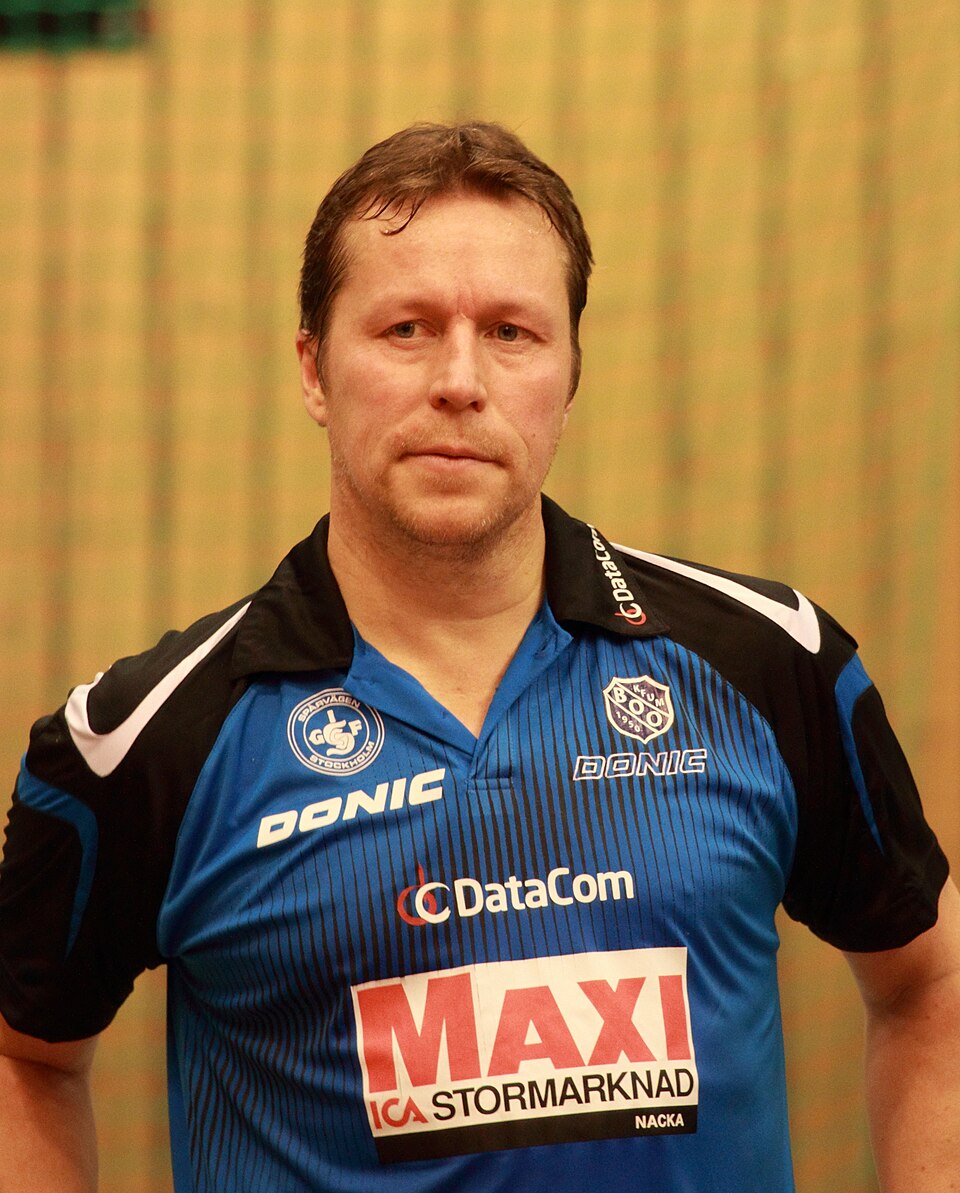
The Mozart of table tennis and the greatest non-Chinese player ever, Waldner is revered even in China for his creativity, serve variation and preternatural touch. He won World Championship singles titles in 1989 and 1997, the 1990 World Cup and Olympic gold in Barcelona 1992, completing a career Grand Slam. He led Sweden to famous team victories over China in 1989 and 1991, briefly halting the dynasty, and remained competitive across five Olympics, reaching another final in 2000 at age 34. Playing through the sponge, speed-glue and 40mm-ball eras, he embodied artistry over athleticism, improvising angles and spins that opponents could not read, and remains the benchmark against whom every European hopeful is still measured.

Olympic golds
1
World singles titles
2
World Cup singles
1
Career Grand Slam
Yes
3

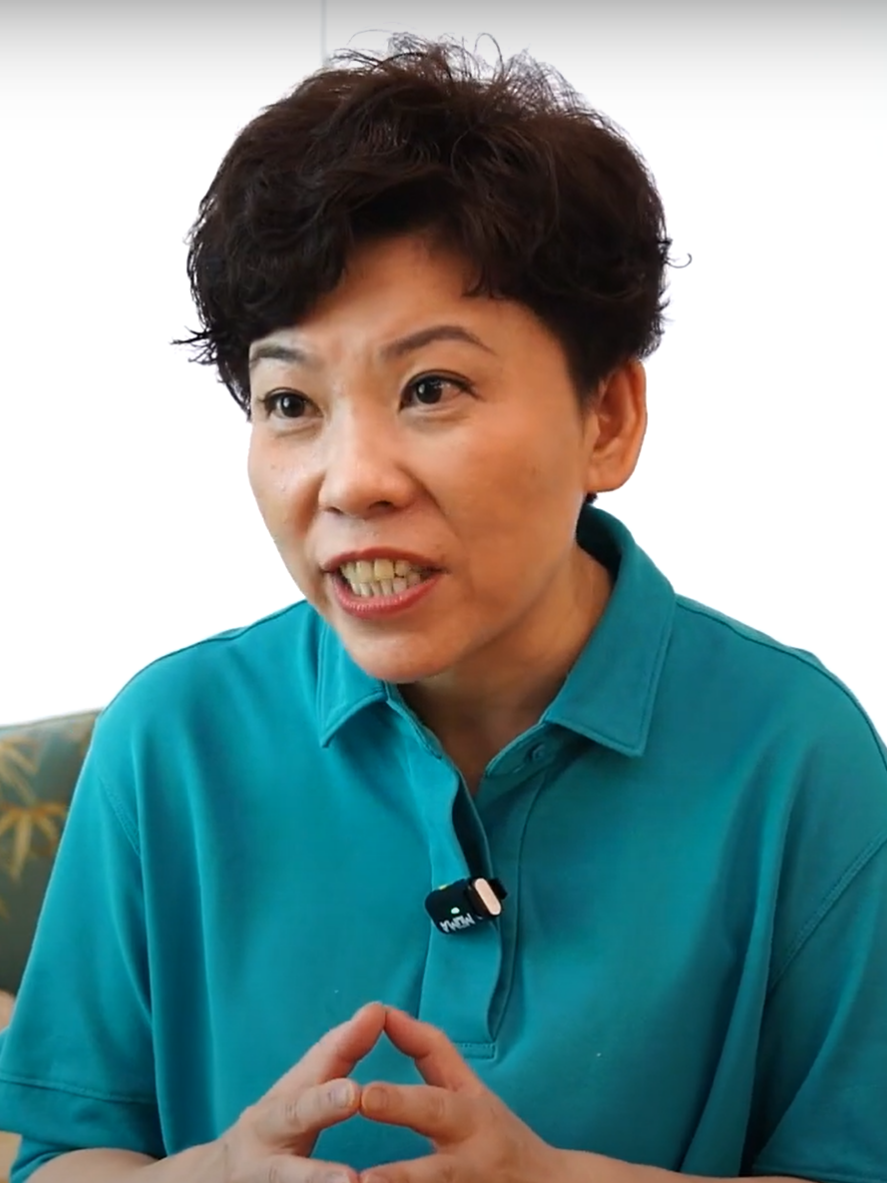
Deng Yaping

China · 1988-1997

Standing barely 1.50m tall and rejected early for her height, Deng Yaping became the most dominant woman the sport had seen, topping the world rankings for eight consecutive years. She won four Olympic gold medals, singles and doubles at both Barcelona 1992 and Atlanta 1996, along with multiple World Championship singles titles and the honours to complete a career Grand Slam. Her ferocious close-to-table attack, aggressive penhold-influenced game and sheer competitive intensity redefined the women's game and made her a national icon in China. Retiring at just 24, she left as arguably the greatest female player ever, later earning degrees at Cambridge and serving in Olympic administration, a rare champion whose legacy reached far beyond the table.

Olympic golds
4
World singles titles
3
World Cup singles
1
Career Grand Slam
Yes
4

Zhang Yining

China · 2001-2009

Zhang Yining was the defining women's player of the 2000s, a complete attacker who dominated with power and consistency. She won four Olympic gold medals, singles and doubles at Athens 2004 and singles and team at Beijing 2008, plus World Championship singles titles in 2005 and 2009 and a remarkable run of Women's World Cup victories, completing the career Grand Slam. For much of the decade she was virtually unbeatable in major finals, blending relentless topspin with tactical composure. Retiring in 2009 as one of the most successful players in history, she bridged the Deng Yaping and Ding Ning eras and set the standard of all-round excellence that the Chinese women's programme has demanded ever since.

Olympic golds
4
World singles titles
2
World Cup singles
4
Career Grand Slam
Yes
5

Wang Nan

China · 1997-2008

Wang Nan collected one of the largest trophy hauls in the sport's history, amassing more than twenty world championship titles across singles, doubles and team events. She won four Olympic gold medals between 2000 and 2008, took World Championship singles titles in 1999, 2001 and 2003, and won multiple World Cups to complete a career Grand Slam. A left-handed attacker with superb consistency and doubles instincts, she anchored China's women's team through a golden decade and formed legendary doubles partnerships. Her longevity was exceptional: she reached the Beijing 2008 singles final on home soil near the end of her career. Few players, male or female, have accumulated silverware on her scale, and her collective record remains staggering.

Olympic golds
4
World singles titles
3
World Cup singles
3
Career Grand Slam
Yes
6

Zhang Jike

China · 2007-2019

Zhang Jike burst to the top with unmatched speed, completing the career Grand Slam in just 445 days, the fastest in history, by winning the 2011 World Championship, the 2011 World Cup and the London 2012 Olympic singles title in rapid succession. He defended his world title in 2013 and added another Olympic gold in the Rio 2016 team event, reaching the singles final there. Explosive backhand power, a ferocious serve and a theatrical, high-intensity presence made him one of the sport's most watched stars. Injuries and inconsistency curtailed his later years, but at his peak his raw firepower and clutch performance in the biggest finals placed him among the most devastating attackers the game has produced.

Olympic golds
3
World singles titles
2
World Cup singles
2
Career Grand Slam
Yes
7

Wang Liqin

China · 1997-2013

A towering right-hander with one of the most powerful forehand loops the game has seen, Wang Liqin won three World Championship singles titles, in 2001, 2005 and 2007, a haul matched by very few. He spent extended periods as world number one and anchored China's team through the 2000s, adding Olympic team and doubles golds. The great gap in his record is an Olympic singles title, which repeatedly eluded him, denying him the career Grand Slam despite his stature. Blending classical two-wing technique with imposing physicality, he was the dominant force between the Kong Linghui and Ma Lin generations and the Ma Long era, a three-time world champion whose peak would headline almost any other nation.

Olympic golds
2
World singles titles
3
World Cup singles
0
Career Grand Slam
No
8

Fan Zhendong

China · 2013-2024

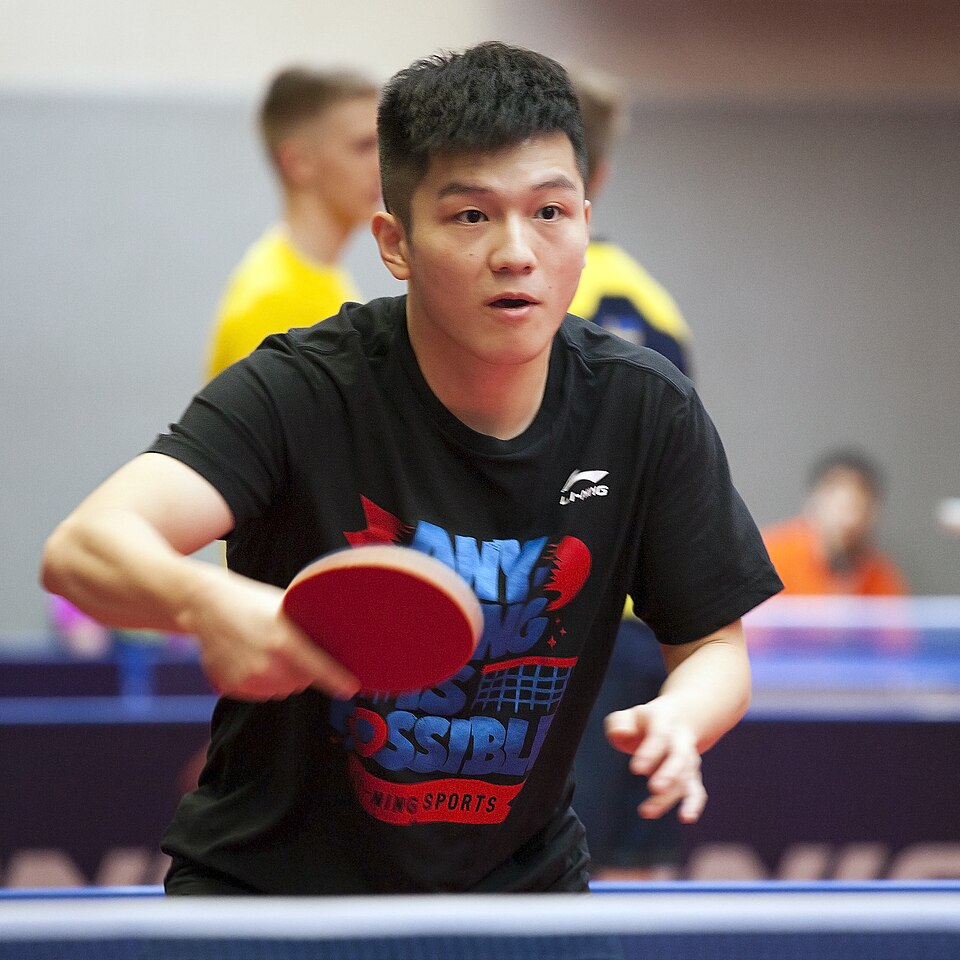
The leading player of the late 2010s and early 2020s, Fan Zhendong completed the career Grand Slam by winning Olympic singles gold in Paris 2024, adding to World Championship titles in 2021 and 2023 and three World Cup victories. A compact, explosive left-of-centre power player, he combined a thunderous backhand with heavy forehand topspin and spent long stretches as world number one. He inherited the mantle from Ma Long and led China through the WTT professional era, defeating a rising international field to secure the sport's biggest prizes. Still in his prime, his record already ranks among the elite, and his blend of physicality and modern close-to-table aggression exemplifies where the men's game has moved.

Olympic golds
3
World singles titles
2
World Cup singles
3
Career Grand Slam
Yes
9

Viktor Barna

Hungary · 1929-1954

The dominant figure of the hardbat era, Viktor Barna won five World Championship singles titles between 1930 and 1935 and amassed more than twenty world championship titles across all events, a total that stood as a benchmark of dominance for decades. Playing before the Olympics and World Cup existed, he could not chase a modern Grand Slam, but within his own age he was untouchable, leading a Hungarian dynasty that ruled interwar table tennis. His attacking flair on thin pimpled rubber influenced generations and helped popularise the sport across Europe. Later based in England, he remained an ambassador for the game. Judged against his contemporaries, no early player was more prolific, and his singles record is among the greatest ever.

Olympic golds
n/a
World singles titles
5
World Cup singles
n/a
Career Grand Slam
Pre-era
10

Ma Lin

China · 1998-2012

The finest penhold player of the modern era, Ma Lin was a master of serve, short game and the reverse-penhold backhand who won four Women's, and men's, World Cup singles titles, a men's record, in 2000, 2003, 2004 and 2006. His crowning achievement was Olympic singles gold at Beijing 2008, won in front of a home crowd, along with team and doubles golds. The conspicuous gap in his record is a World Championship singles title, which repeatedly slipped away and denied him the career Grand Slam. Renowned for the finest serve and touch of his generation, he kept the classical penhold style competitive at the very top even as shakehand play came to dominate the sport.

Olympic golds
3
World singles titles
0
World Cup singles
4
Career Grand Slam
No
11

Liu Guoliang

China · 1991-2002

Liu Guoliang was the first man to complete the career Grand Slam, winning the 1996 Olympic singles title, the 1996 World Cup and the 1999 World Championship. A penhold player famous for a deceptive serve and a tricky combination of pimpled and inverted play, he thrived in the 21-point era and led China's fightback against the Swedish golden generation. His playing career was relatively short, but his impact deepened afterward: as head coach he masterminded an era of Chinese dominance, guiding the likes of Zhang Jike and Ma Long, before becoming a powerful administrator. Few figures have shaped the sport so completely from both sides of the table, first as a Grand Slam champion, then as its most influential coach.

Olympic golds
2
World singles titles
1
World Cup singles
1
Career Grand Slam
Yes
12

Timo Boll

Germany · 1997-2024

The greatest European player since Waldner, Timo Boll carried the continent's hopes for over two decades with elegant, spin-rich all-court play. He reached world number one on multiple occasions, the first European to do so in years, and won a record number of European Championship singles titles along with two World Cup crowns in 2002 and 2005. Against the Chinese wall he could never quite claim a World Championship or Olympic singles title, the defining absence in his record, but he pushed the very best to the limit and won Olympic team medals for Germany across four Games. Admired for his sportsmanship and longevity, competing at the top past age 40, he was the standard-bearer for non-Chinese table tennis in the modern era.

Olympic golds
0
World singles titles
0
World Cup singles
2
Career Grand Slam
No

Bars are scaled to the leader in this list.

The debate

The core debate pits Ma Long's unprecedented completeness, two career Grand Slams and six Olympic golds, against the romantic case for Jan-Ove Waldner, who achieved a Grand Slam while facing the full might of the Chinese system without its resources behind him. Ma Long wins on trophies and longevity; Waldner's defenders argue that dominating from outside China, and being adored inside it, reflects a greater individual feat. Cross-era comparison muddies everything: Viktor Barna ruled before the Olympics existed, and Deng Yaping's peak came under 21-point rules and celluloid balls.

Then there is the question of how to value the deepest field in sport. A Chinese player's world titles were arguably harder to reach than the finals themselves, given trials stacked with contenders. That reality inflates the Chinese contingent on any honest list, yet it is also the whole point, dynastic depth is an achievement, not an accident. Reasonable observers will reorder the middle of this list, but Ma Long at the summit, with Waldner as the eternal challenger, is the consensus that most closely tracks the evidence.

Keep exploring

More sports

Soccer

The simplest game on Earth, played by hundreds of millions and argued over by half the planet.

🏀

Basketball

Five players, 24 seconds, and geometry at full sprint — the city game that conquered the world.

Baseball

The clockless chess match where a round bat meets a round ball and the best hitters on earth still fail seven times out of ten.

🎾

Tennis

The loneliest duel in sport: no clock, no teammates, no place to hide until the last point is won.

🏎️

F1

Twenty drivers, a thousand horsepower, and the most expensive engineering arms race in sport.

Golf

A six-century test of nerve where the only opponent is the ground, the wind, and yourself.

🏈

Football

Four downs, ten yards, one end zone: the ultimate game of territory, collision, and coaching.

🏏

Cricket

The bat-and-ball contest where a single match can last five days and still turn on one ball.

🏉

Rugby Union

Fifteen players, eighty minutes of collision and continuity, and a code that prizes the contest for the ball above all else.

🏒

Hockey

The fastest team sport on Earth: six skaters, one frozen puck, and no time to breathe.

🥊

Boxing

The sweet science: two fighters, twelve three-minute rounds, and nowhere to hide behind a team.

🥋

MMA

Combat's most complete test — striking, wrestling and submission grappling settled inside a single cage.

🏐

Volleyball

Three touches, no second chances: the fast, vertical duel fought across a net no one may cross.

🏸

Badminton

The world's fastest racquet sport, where 400 km/h smashes and feather-soft net shots collide inside a single rally.

🏃

Track & Field

Faster, higher, stronger — the oldest contest in sport, settled in seconds and centimetres.

🏊

Swimming

Four strokes, one clock, and the oldest question in the water: who reached the wall first.

🚴

Road Cycling

An individual sport won by teams, where drafting, mountains and split-second timing decide everything.

🏍️

MotoGP

The premier class of motorcycle Grand Prix racing: 1,000cc prototypes, 360 km/h straights and 64-degree lean angles, decided by tenths of a second.

🎮

Esports

Competitive video gaming turned global spectator sport, where reactions measured in milliseconds decide million-dollar prizes in front of millions of viewers.