The most dominant athlete any professional sport has produced. Taylor won 16 world championships — two BDO in 1990 and 1992, then fourteen PDC including eight consecutively from 1995 to 2002 — from 21 world finals, and added 16 World Matchplay titles and six Premier Leagues among more than 80 televised majors and over 200 professional titles in total. He hit 11 televised nine-dart finishes, including two in the same match in the 2010 Premier League final against James Wade, a feat nobody else has come close to repeating. Backed as a young apprentice by Eric Bristow, he beat his mentor 6-1 in the 1990 world final and then rebuilt the standard of the sport around himself, dragging televised averages from the 90s into the 100s. He was still reaching world finals at 57, losing to Rob Cross in 2018 in his final match before retirement. Every metric the sport records, he holds or once held.
#1 Phil Taylor
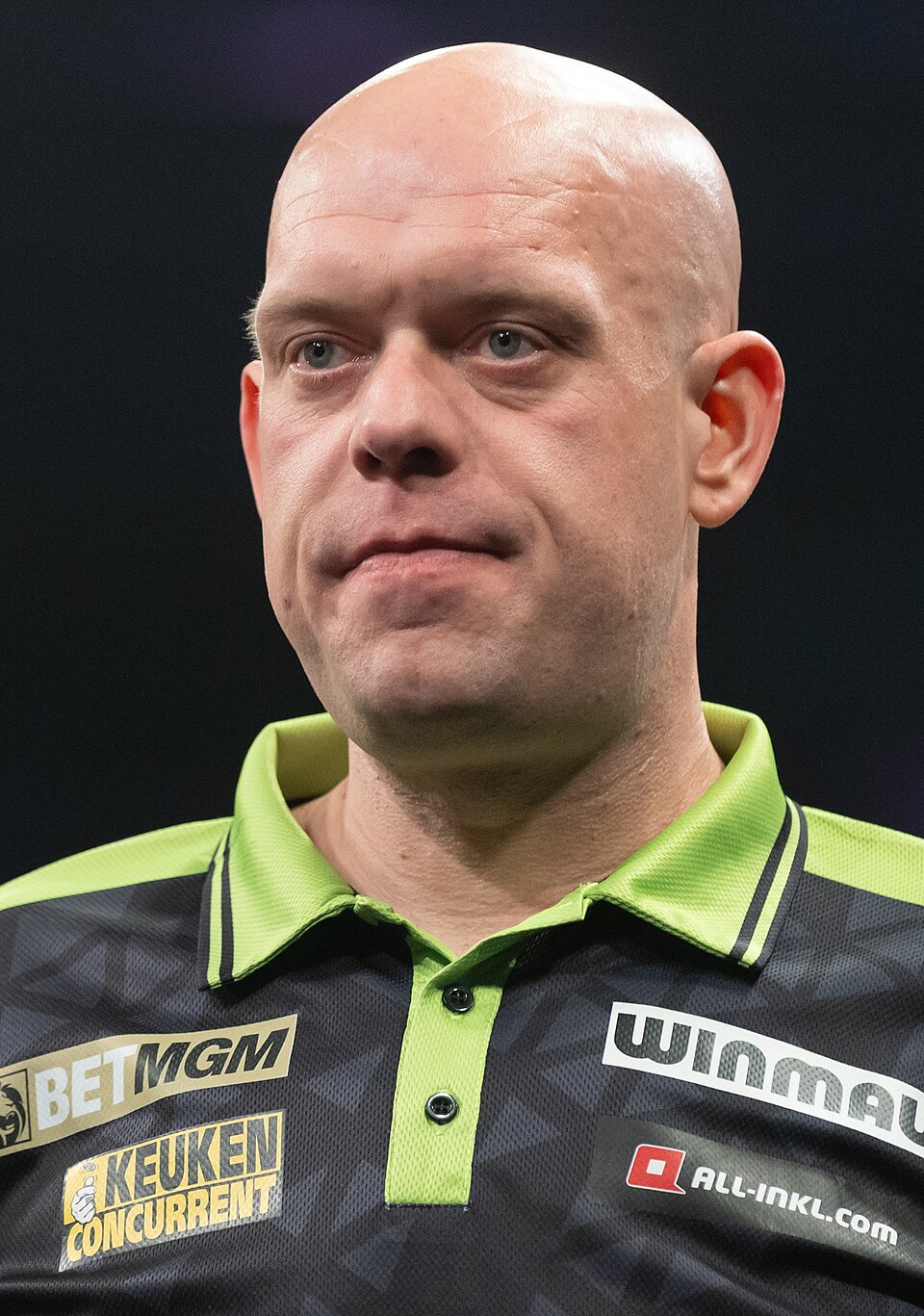
#2 Michael van Gerwen
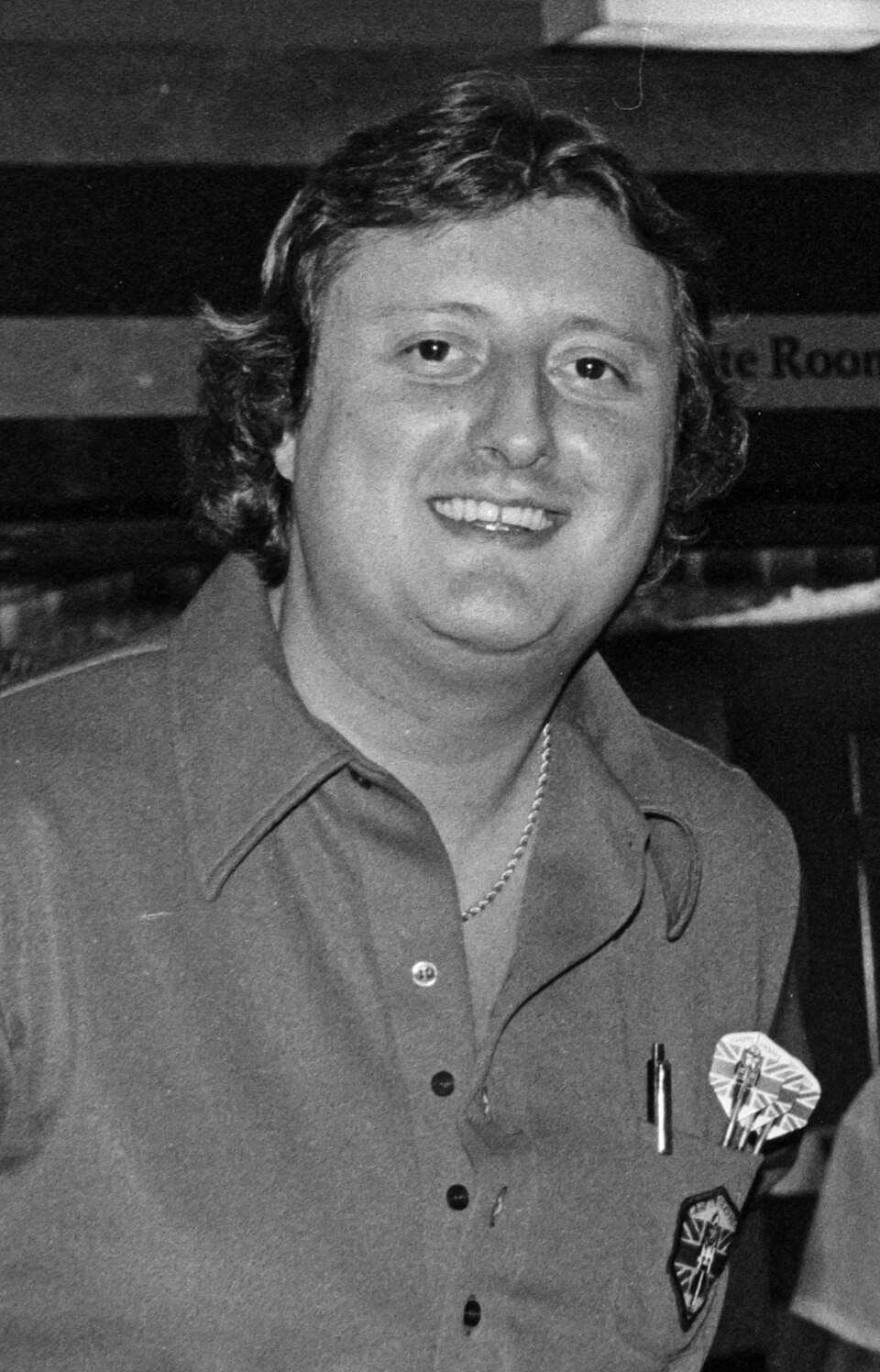
#3 Eric Bristow
Last reviewed Sources & creditsMedia creditsMethodology
Quick answers
Why are the numbers on a dartboard in that order?
The sequence — 20, 1, 18, 4, 13, 6, 10, 15, 2, 17, 3, 19, 7, 16, 8, 11, 14, 9, 12, 5 clockwise from the top — is designed to punish inaccuracy. Every high number is flanked by two of the lowest, so a dart that drifts a few millimetres off the 20 lands in the 5 or the 1, and a wayward visit can score under 10. That arrangement is what makes darts a skill sport rather than a lottery: precision is rewarded disproportionately and near misses are penalised harder than a deliberately safe shot at a middling number. The design is traditionally credited to Brian Gamlin, a carpenter from Bury, in 1896, though no documentary evidence has ever confirmed it.
What is a nine-dart finish?
A nine-darter is a perfect leg: 501 checked out in the minimum possible nine darts. The classic route is 180, 180, then treble 20, treble 19, double 12 to finish 141. Alternatives include 167, 167, 167, each of treble 20, treble 19 and bullseye. John Lowe threw the first on television on 13 October 1984 and collected £102,000. It remains the sport's signature achievement, though it has become far less rare: professionals now throw several a season across the circuit, and Phil Taylor holds the record of eleven on television, including two in a single match in the 2010 Premier League final against James Wade.
Why do you have to finish on a double?
The double-out rule exists to stop legs ending by accident and to place the hardest shot at the most pressurised moment. Without it a player could simply scrape to zero with any dart, and the finish would carry no risk. Requiring an exact landing in a bed roughly eight millimetres wide means that scoring your way to a finish is only half the job — the best scorers in the world convert only about 35 to 45 per cent of their double attempts in televised matches. It also creates the game's arithmetic: what you leave yourself matters as much as what you score, which is why professionals engineer finishes toward 32 and 40 rather than simply taking the biggest available number.
How far do you stand from a dartboard?
The throwing line, called the oche, is 2.37 metres (7 feet 9.25 inches) from the face of the board, measured horizontally along the floor. The centre of the bullseye sits 1.73 metres (5 feet 8 inches) above the floor, which puts it at roughly eye level for an average adult male — the height was standardised from pub practice rather than designed. Both measurements were fixed internationally by the World Darts Federation in the 1970s, ending decades of local variation in which distances were paced out rather than measured. A player may lean over the oche as far as balance allows but must not step on or beyond it, and the diagonal distance from the throwing point to the bull is 2.93 metres.
What is a three-dart average and what counts as good?
It is total points scored divided by darts thrown, multiplied by three — the sport's headline measure of scoring power. A casual pub player might average in the 40s or 50s, a good league player in the 70s, and a county-standard player in the 80s. A PDC Tour Card holder needs to average in the mid-90s to survive on the circuit. Above 100 in a televised match is a strong performance, above 105 is exceptional, and the all-time televised record is Michael van Gerwen's 123.40 against Michael Smith in 2016. Because the average includes the darts thrown at doubles, missed checkouts drag it down, which is why a player can average higher than an opponent and still lose comfortably.
Why do some players aim at treble 19 instead of treble 20?
Because the punishment for missing is smaller. The treble 20 pays 60 but sits between the 5 and the 1, so a slight drift costs almost everything. The treble 19 pays 57 — only three fewer — and sits between the 3 and the 7, so a miss costs roughly half as much. Over a long match, players who favour the 19s argue the reduced variance outweighs the lower ceiling. The counter-argument is that 180 only exists at the top of the board and a twelve-dart leg usually needs it. Most professionals score on the 20 by default and switch to the 19 when their darts are consistently dropping into the 5, which signals a mechanical fault rather than bad luck.
Ranking darts players is easier than in most sports, because the sport keeps clean numbers and one man's record dwarfs everyone else's. Phil Taylor's sixteen world titles, achieved across twenty-four years against three different generations of opponents, are not a matter of debate. Below him the argument is real, and it turns on a genuine problem: the sport split in two in 1992, so titles won before 1994 and titles won in the BDO afterwards were contested against different fields, in an era when averages were lower and the professional class was smaller.
This list weighs four things: peak level, longevity, achievement measured in world titles and televised majors, and influence on the sport itself. It counts BDO and WDF world championships alongside PDC ones while acknowledging that from roughly 1997 the PDC held the stronger field. It also includes the women's game, whose most decorated champion has a record no man on this list can match for sheer repetition. Where numbers are given they are career figures as of the 2024-25 season.
All-time podium
Comparison Lab
Toggle athletes on and off — every bar rescales to the leader of your selection.
Peak keeps each athlete’s strongest metrics; Career averages the full published set. Both stay editorial teaching marks.
Drag only reorders the cosmetic shortlist — it does not change teaching scores.
Default shortlist below works without JavaScript. Toggle chips after load to rebuild bars.
Compare · in selection · Career
- 1Phil Taylor100
- 2Eric Bristow51
- 3John Lowe27
- 4Raymond van Barneveld24
- 5Michael van Gerwen23
World titles
PDC world titles
World Championship finals
TV major titles
World Matchplay titles
BDO/WDF world titles
Winmau World Masters titles
The top 10
The best player of the post-Taylor era and the most naturally gifted thrower the sport has seen. Van Gerwen won the Winmau World Masters in 2006 at 17, becoming the youngest world champion of any description at the time, then took three PDC world titles in 2014, 2017 and 2019 from five finals, seven Premier League crowns and three World Matchplays among more than 25 televised majors. His statistical peak is unmatched: the highest televised three-dart average in history, 123.40 against Michael Smith in the 2016 Premier League, and the highest average in a World Championship final, 114.05 in the 2017 win over Gary Anderson. He held the world number one ranking continuously for roughly seven years from early 2014. Where Taylor's dominance was built on relentless accumulation, van Gerwen's was built on speed and a scoring ceiling nobody else could reach — he throws fast, rarely reconsiders, and at his best simply outscores opponents into irrelevance.
The player who made darts a television sport. The Crafty Cockney won five world championships in 1980, 1981, 1984, 1985 and 1986 from ten world finals, five Winmau World Masters and two News of the World titles, and dominated the boom years so completely that his defeats became more famous than his victories — Keith Deller's 138 checkout to beat him 6-5 in the 1983 final is still the sport's best-known moment. He was the first darts player recognisable to people who never watched darts: chalk-white shirt, little finger cocked, an arrogance he cultivated deliberately because it sold tickets. Dartitis struck at the peak of his powers in the mid-1980s and he never won another world title, though he reached the finals of 1989, 1990 and 1991 while fighting it. He then bankrolled a young Stoke potter named Phil Taylor, who beat him in the 1990 final. No player has been more consequential for the sport's commercial existence.
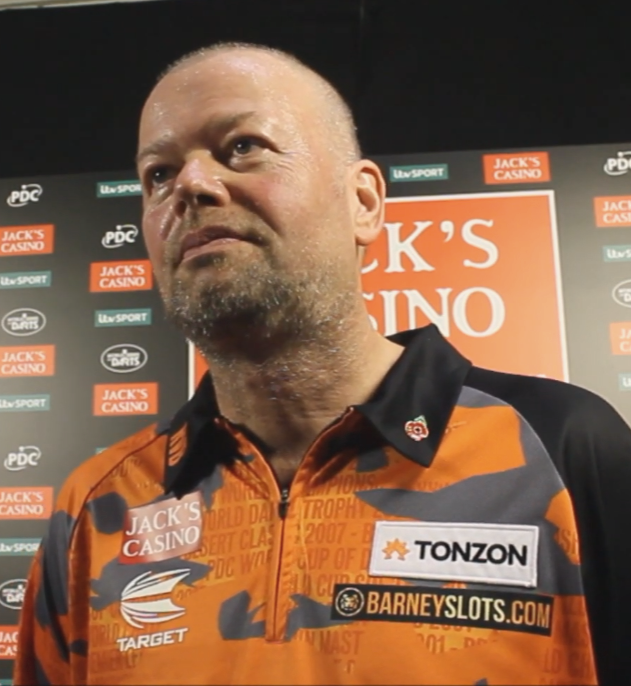
The man who turned darts into a mainstream sport in a country that had barely played it. A former postman from The Hague, Van Barneveld won four BDO world titles in 1998, 1999, 2003 and 2005, crossed to the PDC in 2006, and won the 2007 world final against Phil Taylor 7-6 in a sudden-death leg at the Circus Tavern — a match still routinely voted the greatest ever played, in which he came from 3-0 down in sets. Five world titles from six finals puts him level with Bristow and behind only Taylor among men. He added the 2012 Grand Slam of Darts and the 2014 Premier League among more than ten televised majors. His real legacy is national: Dutch television audiences for his matches ran into the millions, participation exploded, and the pipeline he opened produced Michael van Gerwen, Jelle Klaasen, Danny Noppert and a generation for whom being a professional darts player was a plausible ambition.
The only player to win world titles in three different decades — 1979, 1987 and 1993 — from seven world finals, across a career that bridged the pub era and the professional one. Old Stoneface was the technical antithesis of Bristow: unhurried, expressionless, orthodox in stance and grip, and admired by coaches as the model throw. He added two Winmau World Masters and a News of the World title among more than ten televised majors, and on 13 October 1984 he threw the first nine-dart finish ever seen on television, at the MFI World Matchplay against Keith Deller, closing 180, 180 and treble 17, treble 18, double 18 for a prize of £102,000 — an enormous sum for any British sportsman of the period. He was among the sixteen players who broke away in 1992 to found what became the PDC, and he remained competitive on television into his fifties.
The purest thrower of his generation and the man who ended Phil Taylor's last realistic title bid. Anderson won back-to-back PDC world championships in 2015, beating Taylor 7-6 in a final decided in the last leg, and 2016, beating Adrian Lewis 7-5. He reached six world finals in all, including two BDO finals in 2010 and 2011 before switching codes, and lost the 2017 and 2021 finals to Michael van Gerwen and Gerwyn Price respectively. He also won the 2011 Premier League among more than ten televised majors. His throw is famously effortless — a short, fast release that other professionals openly envy — and at his best he is capable of scoring bursts nobody can live with, including a run of 180s in the 2015 and 2016 championships that remade the tournament's records. Chronic back trouble and an unconcealed distaste for the travelling circuit have limited his output rather than his ability.
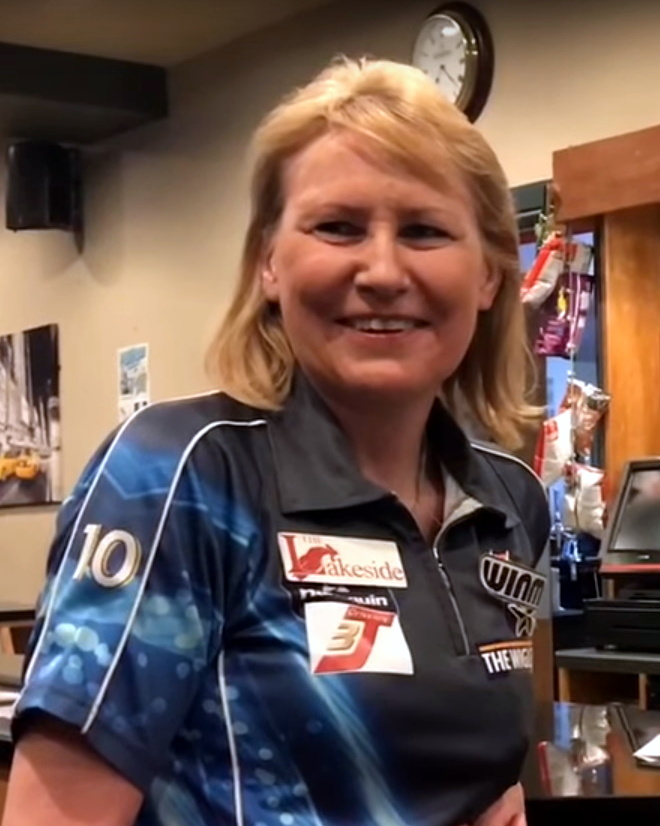
The most decorated champion in the women's game and the most repeatedly dominant player on this list after Taylor. Gulliver won ten world championships — the first seven consecutively from 2001 to 2007, then 2010, 2011 and 2013 — reaching at least twelve world finals in a career that ran alongside her work as a carpenter and joiner. She was the inaugural Women's World Champion when the BDO introduced the title in 2001 and defined the event for more than a decade, adding a long list of Winmau World Masters, World Trophy and international titles among more than twenty televised and major championships. Her significance is not only the trophies: for most of her career the women's game had almost no prize money, no television and no professional structure, and she sustained a world-class standard anyway. Every subsequent breakthrough — Fallon Sherrock at Alexandra Palace, the PDC Women's Series, Beau Greaves — is built on the visibility she created.
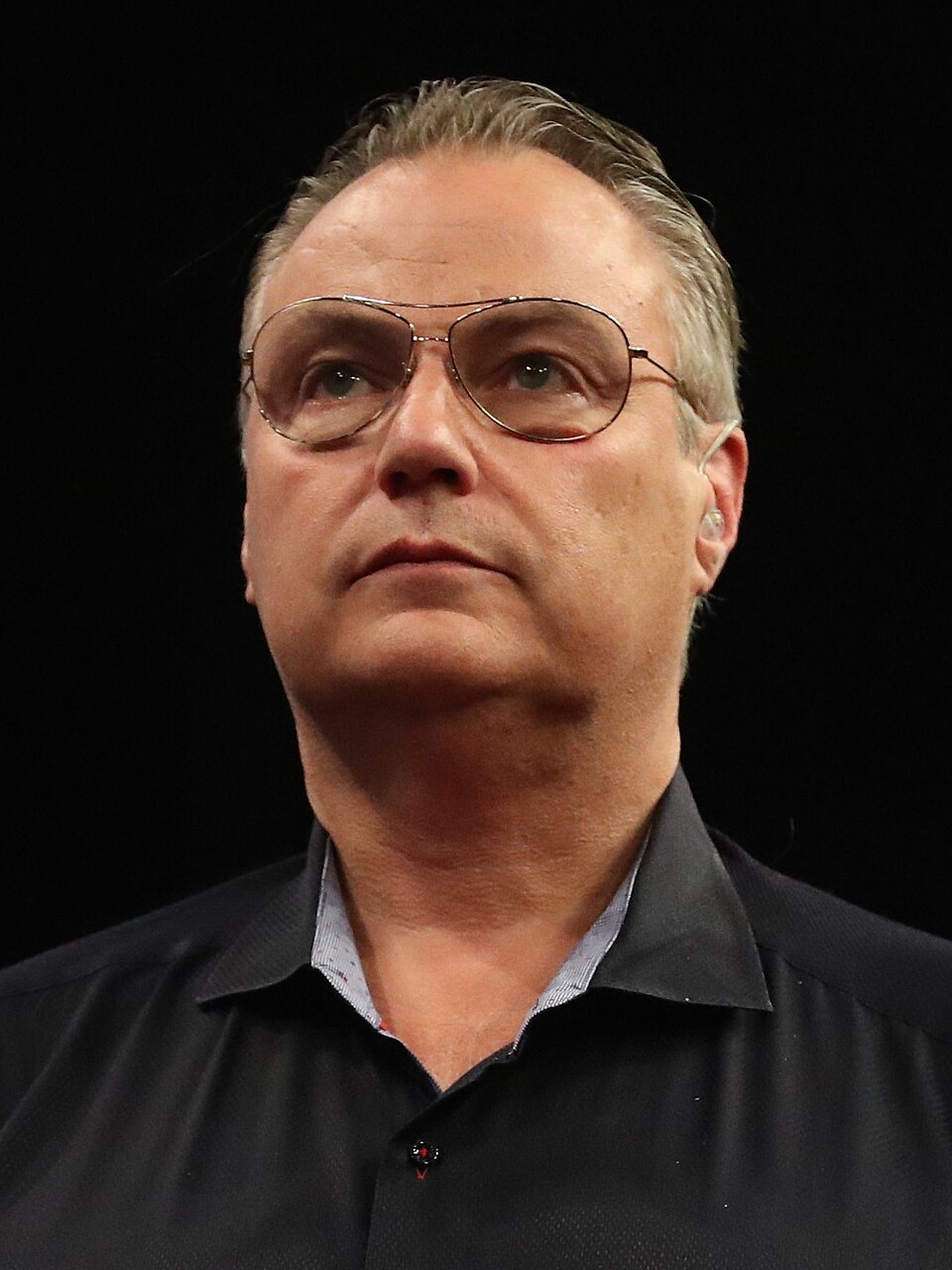
The first player from outside the United Kingdom to win a world championship, and the only man to win world titles in both organisations and beat Phil Taylor in a final to do it. Darth Maple won the BDO title in 1994 as an unheralded Canadian, then crossed to the PDC and won the 2003 world championship by beating Taylor 7-6 in a deciding set — ending an eight-year reign and producing one of the sport's genuine upsets — before adding a third title in 2008. Four world finals in all, from a country with no darts infrastructure to speak of and a transatlantic commute to every tournament. He remains the benchmark for non-European players and the proof that the sport's talent pool was never geographically fixed. His post-playing career as a commentator has made him the most respected analytical voice in the game, and his articulate deconstruction of checkout routes taught a generation of viewers how professionals actually think.
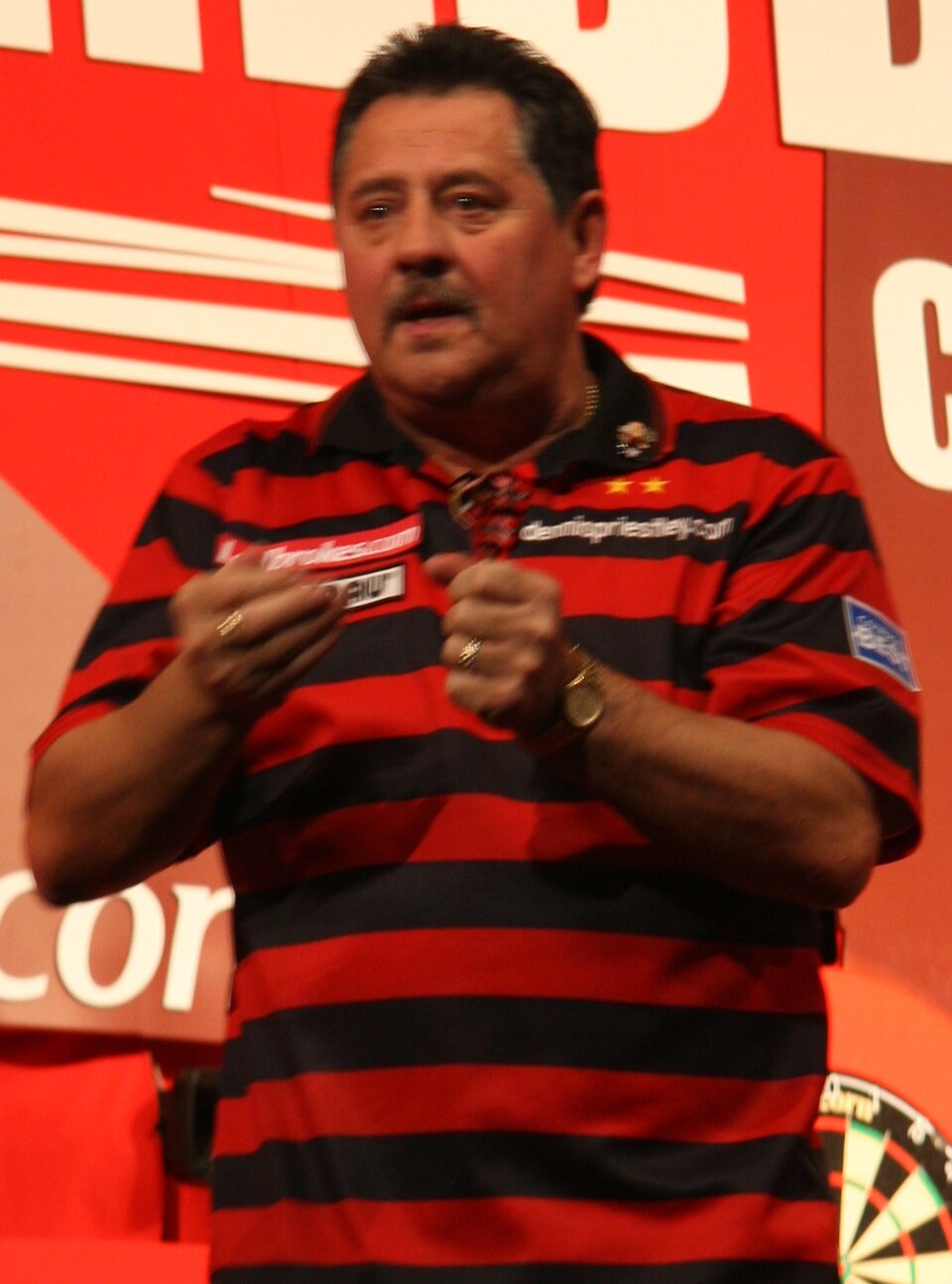
The only player to win a world championship at the first attempt in both organisations. The Menace took the BDO title in 1991, beating Eric Bristow 6-0 in the final on debut, then joined the 1992 breakaway and won the inaugural WDC World Championship in January 1994, beating Phil Taylor 6-1. He reached six world finals in all, losing four of them to Taylor across the late 1990s, and won a Winmau World Masters among more than eight televised majors. Being the second-best player of the Taylor era is a thankless historical position, but Priestley's peak was genuinely close: he was world number one, he won the sport's biggest title in two separate universes, and in an era without Taylor he would plausibly have collected five or six world championships. He continued competing into his sixties, having also fought and beaten prostate cancer during his career.
The sport's most visually extravagant champion and the outstanding example of late-career transformation. Snakebite spent two decades as a journeyman, dropped off the circuit entirely to work outside the game, and returned in his forties with dyed mohican, painted snake and a wardrobe designed by his wife. He lost the 2014 world final to Michael van Gerwen, then won the title in 2020 at 49 by beating van Gerwen 7-3, and again in 2022 against Michael Smith. Three world finals, two titles, plus the 2019 World Matchplay and the 2017 UK Open among more than eight televised majors, and a spell at world number one. He is also the sport's most restless technician, changing darts, stems and flights mid-match and carrying dozens of setups to every event — the opposite of the received wisdom that a professional should find one dart and never change it.
The first Welsh world champion and the most physically imposing presence the sport has known. A former professional rugby union and rugby league hooker who played for Cross Keys and Glasgow Warriors, Price took up darts full time in his late twenties and won the 2021 World Championship by beating Gary Anderson 7-3, becoming world number one in the process — the first Welshman to hold the ranking. He won three consecutive Grand Slam of Darts titles in 2018, 2019 and 2020, the 2020 World Grand Prix and the 2020 World Cup of Darts alongside Jonny Clayton, part of more than eight televised majors. His aggression and roaring celebrations made him the pantomime villain of the Alexandra Palace crowd, and he embraced it, at one point wearing ear defenders on stage. Beneath the theatre is a genuinely elite scorer whose transition from a contact-sport career remains unmatched in darts.
The youngest world champion in the sport's history and the biggest audience driver it has ever had. Littler reached the 2024 World Championship final at 16, losing 7-4 to Luke Humphries after arriving as a qualifier ranked outside the top 150, and won the title a year later on 3 January 2025, beating Michael van Gerwen 7-3 at 17 years and 347 days old. In between he won the 2024 Premier League at his first attempt, beating Humphries in the final, and the 2024 Grand Slam of Darts, among a major haul already larger than most professionals manage in a career. He throws quickly, appears immune to the occasion, and has averaged above 100 in televised finals since he was a schoolboy. His 2024 run drew the largest television audiences in the sport's history and a surge in board sales and junior participation across Britain, the Netherlands and Germany.
Bars are scaled to the leader in this list.
The debate
The first position on this list is the least contested ranking in any sport. Phil Taylor won sixteen world titles; the next best male total is five, shared by Bristow and van Barneveld. He held the world number one ranking for the best part of two decades, beat the best players of three separate generations, and hit more televised nine-darters than everyone else combined for most of his career. The only serious argument against him is that his eight-title run from 1995 to 2002 came against a PDC field that was still small and still forming, with the BDO holding a share of the talent. It is a fair point that shrinks on inspection: he beat van Barneveld, Part and Anderson after the fields merged, and he was still making world finals at 57.
Everything below the top spot is genuinely arguable. Van Gerwen's peak scoring is the highest ever recorded and his three world titles undersell a decade of dominance in every other event; a case exists for him at number one on quality rather than volume. Bristow's five titles came with a cultural impact no modern player can replicate, but in a field a fraction the size and depth of today's. Van Barneveld's five straddle both organisations, which is either a strength or a caveat depending on how you weight the BDO after 1997. The cross-era problem is severe in darts because the standard has risen so far: a 90 average won world titles in the 1980s and would now lose in the first round at Alexandra Palace. Players outside this twelve have strong claims too — Adrian Lewis with two world titles and a nine-darter in a world final, Luke Humphries with four consecutive majors in 2023-24, Jocky Wilson's two titles and enormous popularity, Martin Adams and Bob Anderson in the BDO, and Beau Greaves, whose record in the women's game is beginning to rival Gulliver's. The list rewards sustained achievement; ranked purely on peak level, van Gerwen at his 2016 best has an argument against anyone.
Keep exploring
More in this category
Golf
A six-century test of nerve where the only opponent is the ground, the wind, and yourself.
🥌Curling
Twenty kilograms of Scottish granite, a sheet of pebbled ice, and a game that is almost always decided by the final stone.
🎱Snooker
Twenty-two balls, six pockets barely wider than they are, and the most pitiless scoreboard in sport.