- 1 Start
- 2 Mid
- 3 End
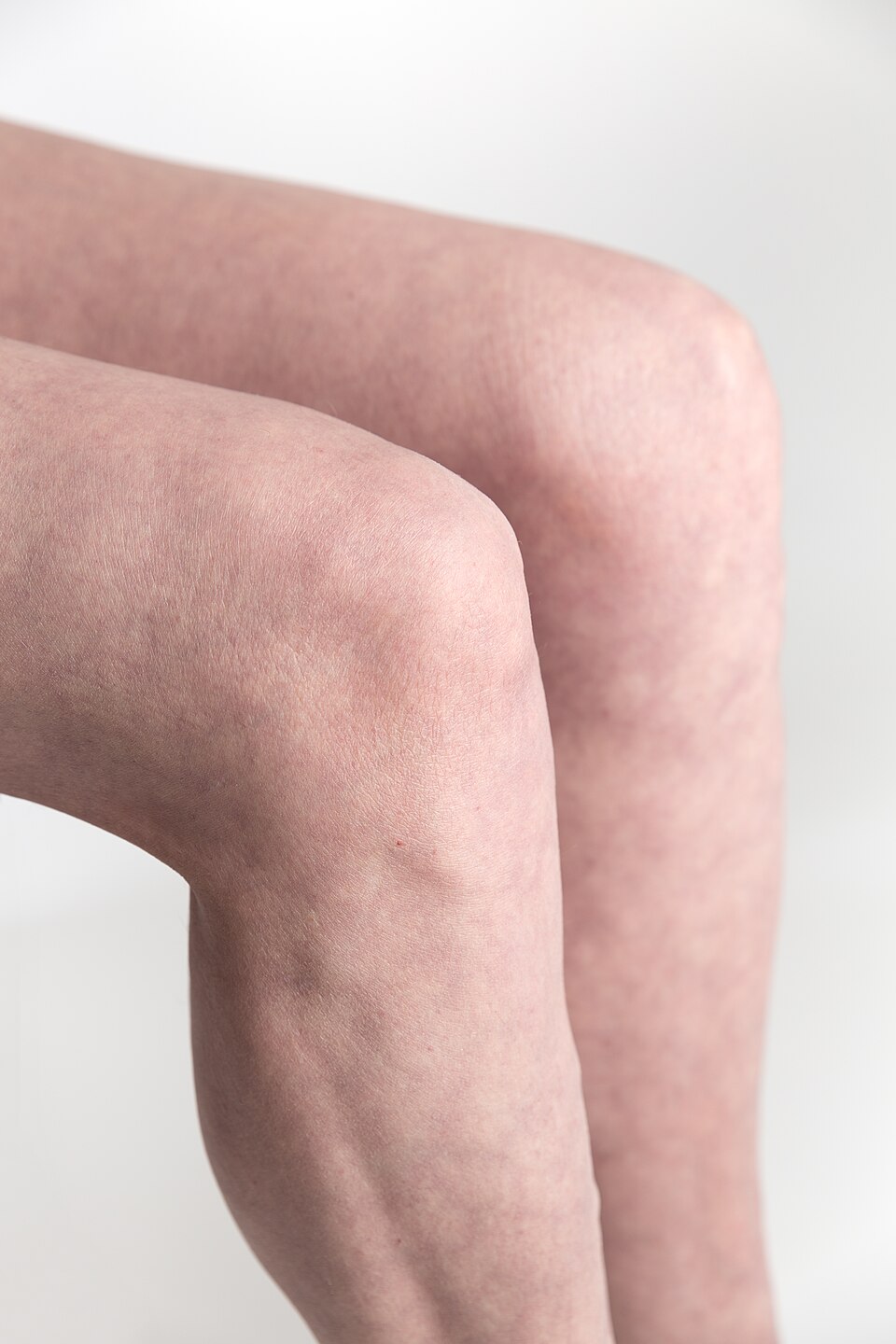
Quad set
●○○○○3 × 10, held 5s
Sitting with the leg straight, gently tighten the thigh muscle to press the back of the knee down, without moving the leg.
Knee · The knee is the body's largest joint and one of its most frequently injured, relying on ligaments and surrounding muscles rather than bony shape for stability.
Darker cells mean a higher score for this topic on that metric.
LessMore
Last reviewed Sources & creditsMedia creditsMethodology
Patellofemoral pain syndrome describes pain around or behind the kneecap, often related to how the kneecap tracks in its groove during bending movements, and is common among runners and young active individuals.
The menisci are C-shaped cartilage cushions that absorb shock between the thigh and shin bones, while the anterior cruciate ligament (ACL) is one of several ligaments that control the knee's stability during rotation and forward sliding of the shin bone.
Many meniscus tears, particularly smaller or degenerative tears in middle-aged and older adults, are managed successfully with exercise-based rehabilitation, while larger or mechanically unstable tears may be considered for surgical repair.
Current evidence generally does not support the idea that recreational running increases the risk of knee osteoarthritis, and moderate running is often considered compatible with long-term joint health for most people.
A locked knee refers to an inability to fully bend or straighten the joint, often due to a displaced piece of torn meniscus or loose cartilage fragment, and typically warrants prompt evaluation.
Knee osteoarthritis is among the most common joint conditions affecting older adults, with prevalence increasing steadily with age and additional risk associated with prior injury and higher body weight.
Knee exercise programs typically emphasize quadriceps and hip strengthening, since these muscle groups play a central role in absorbing load and controlling alignment during walking, running, and jumping.
For conditions such as patellofemoral pain and osteoarthritis, exercise-based approaches are consistently recommended as a first-line management strategy in clinical guidelines rather than rest alone.
Simple picture of a move already published on this page — not a prescription or medical advice.
3 × 10, held 5s
Sitting with the leg straight, gently tighten the thigh muscle to press the back of the knee down, without moving the leg.
3 × 12
Lying on the back with one knee bent, lift the straight leg to hip height with control, then lower slowly.
2 × 10
Lying on the back, slide the heel toward the buttock to bend the knee, then slide it back out.
3 × 12 each side
Lying on the side with knees bent, lift the top knee while keeping the feet together and the pelvis still.
3 × 12
Lower the hips a short distance while keeping the knees tracking over the feet, then return to standing.
3 × 10 each side
Standing on a low step, slowly lower the other foot toward the ground with control, keeping the knee aligned over the foot.
3 × 12
Lower the hips back and down while keeping the knees tracking over the feet, then return to standing.
3 × 8 each side
Balancing on one leg, reach the opposite hand toward the floor with control while maintaining knee alignment.
Exercise progression generally moves from isolated quadriceps and hip activation toward functional, weight-bearing movements that mirror the demands of daily activity and sport.
Neighbouring topics share region literacy — not a severity ranking.
The hip is a deep, stable ball-and-socket joint that bears several times body weight during walking and running, making it a common site of both overuse pain and degenerative change.
Pain frequency 55 Same body regionThe anterior cruciate ligament stabilizes the knee against pivoting and forward-sliding forces, and its rupture is one of the most studied and rehabilitation-intensive sports injuries.
Pain frequency 50 Same body regionThe ankle and foot absorb and redirect the full force of body weight with every step, making sprains and overuse injuries among the most common in sport and daily life.
Pain frequency 70 Same body region