Tibiofemoral joint
This joint between the thigh and shin bones allows the knee's main bending and straightening motion, along with a small amount of rotation when the knee is bent.
Knee · The knee is the body's largest joint and one of its most frequently injured, relying on ligaments and surrounding muscles rather than bony shape for stability.
Darker cells mean a higher score for this topic on that metric.
LessMore
Last reviewed Sources & creditsMedia creditsMethodology
Patellofemoral pain syndrome describes pain around or behind the kneecap, often related to how the kneecap tracks in its groove during bending movements, and is common among runners and young active individuals.
The menisci are C-shaped cartilage cushions that absorb shock between the thigh and shin bones, while the anterior cruciate ligament (ACL) is one of several ligaments that control the knee's stability during rotation and forward sliding of the shin bone.
Many meniscus tears, particularly smaller or degenerative tears in middle-aged and older adults, are managed successfully with exercise-based rehabilitation, while larger or mechanically unstable tears may be considered for surgical repair.
Current evidence generally does not support the idea that recreational running increases the risk of knee osteoarthritis, and moderate running is often considered compatible with long-term joint health for most people.
A locked knee refers to an inability to fully bend or straighten the joint, often due to a displaced piece of torn meniscus or loose cartilage fragment, and typically warrants prompt evaluation.
Knee osteoarthritis is among the most common joint conditions affecting older adults, with prevalence increasing steadily with age and additional risk associated with prior injury and higher body weight.
The knee joint combines two articulations: the tibiofemoral joint between the thigh and shin bones, which primarily allows bending and straightening, and the patellofemoral joint between the kneecap and thigh bone, which assists the quadriceps in extending the leg.
Because the bony surfaces of the knee are relatively flat compared with a deep socket joint like the hip, stability depends heavily on four major ligaments and two C-shaped menisci that cushion and help guide movement between the bones.
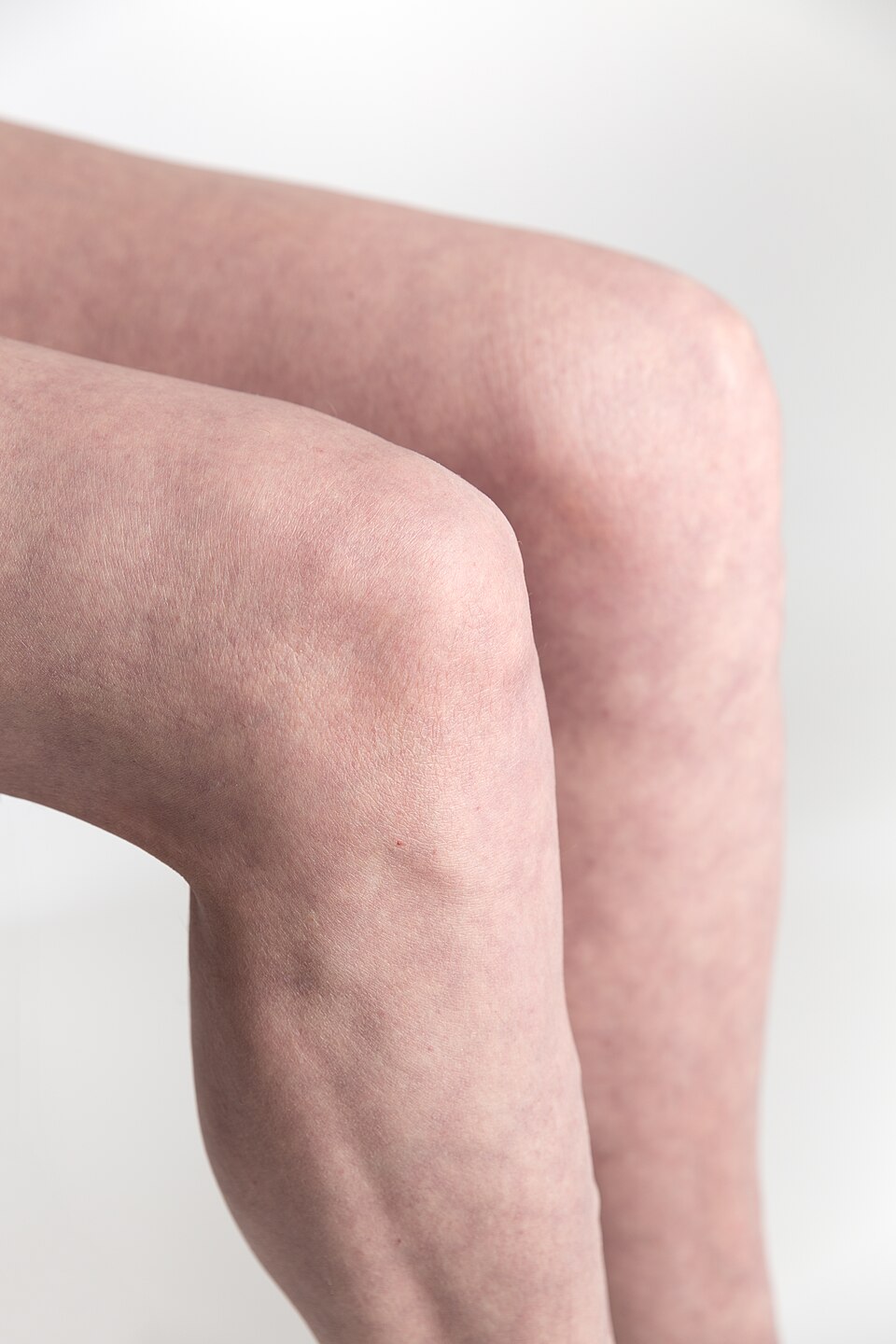
This joint between the thigh and shin bones allows the knee's main bending and straightening motion, along with a small amount of rotation when the knee is bent.
This central ligament resists forward sliding of the shin bone and excessive rotation, and is one of the most frequently injured structures in pivoting sports.
Two C-shaped cartilage pads between the thigh and shin bones cushion load and improve the fit between the joint surfaces, and can tear from twisting injuries or gradual degeneration.
The quadriceps muscle group extends the knee through the patellar tendon, and this extensor mechanism is central to activities such as squatting, jumping, and climbing stairs.
These ligaments on the inner and outer sides of the knee resist excessive sideways bending forces, commonly stressed during contact sports.
The kneecap glides within a groove on the thigh bone during bending and straightening, and its tracking pattern is a common focus in patellofemoral pain syndrome.
Knee flexion from full extension to a deeply bent position represents the joint's largest range of motion, essential for activities such as squatting, kneeling, and climbing stairs.
This reliance on ligaments and cartilage rather than bony shape for stability explains why the knee is prone to both acute traumatic injuries during sport and gradual, cumulative wear over decades of use.
Neighbouring topics share region literacy — not a severity ranking.
The hip is a deep, stable ball-and-socket joint that bears several times body weight during walking and running, making it a common site of both overuse pain and degenerative change.
Pain frequency 55 Same body regionThe anterior cruciate ligament stabilizes the knee against pivoting and forward-sliding forces, and its rupture is one of the most studied and rehabilitation-intensive sports injuries.
Pain frequency 50 Same body regionThe ankle and foot absorb and redirect the full force of body weight with every step, making sprains and overuse injuries among the most common in sport and daily life.
Pain frequency 70 Same body region