Attachment
Cells stick to teeth, plastic or tissue with adhesins and then recruit neighbors.
Biofilms — Surface cities of microbes — plaque and catheters explain persistence, without a grow-your-own kit.
Darker cells mean a higher score for this topic on that metric.
LessMore
Last reviewed Sources & creditsMedia creditsMethodology
Read Identity → How they live → Body & health, then use compare rails.
Public-health education — not a care plan, prescription, or outbreak briefing.
It names everyday desks for Change & defence before English norms look universal.
No — editorial 0–100 browsing aids inside this atlas only.
Use related cards and best-of / quiz rails after the first three chapters.
How they live and Body & health carry mechanisms; skim Identity first.
Identity is architectural: attachment, matrix, oxygen and food gradients, and cells not all in the same hurry.
Tests on floating cells underestimate what a film can shrug off. That gap is why some infections linger.
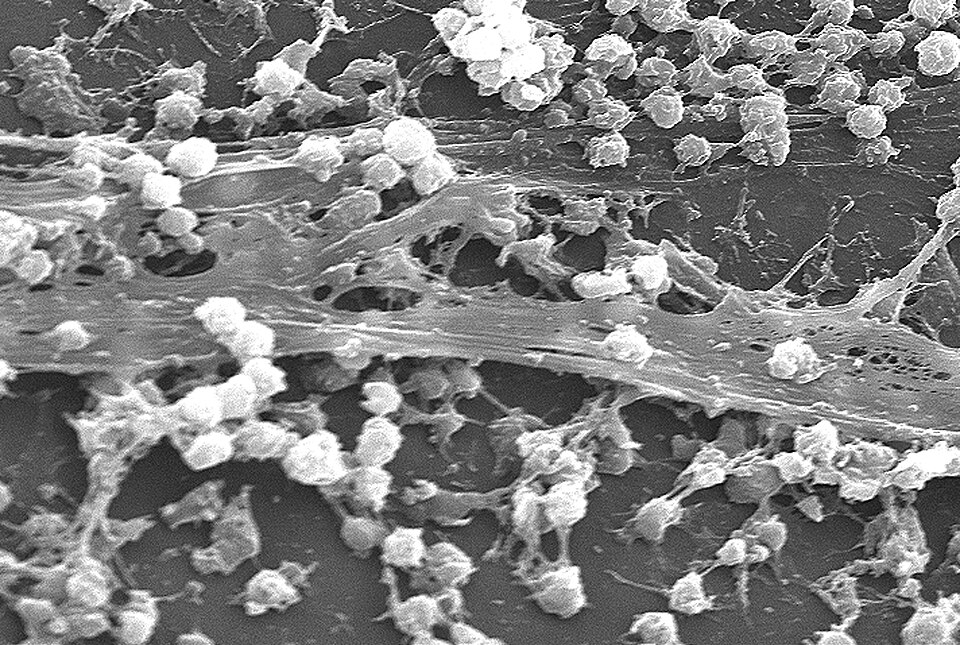
Cells stick to teeth, plastic or tissue with adhesins and then recruit neighbors.
EPS is the mortar. It holds water and can slow diffusion of some chemicals.
Oxygen and nutrients fall with depth, so inner cells may grow slowly.
Oral and environmental films are rarely a monoculture. Cross-feeding is common.
Chunks or single cells can leave to seed a new surface in plumbing or wards.
How to grow a film on purpose is omitted. The public story is why some infections persist.
A biofilm is a lifestyle, not a species name.
Populations of genomes, not cartoon villains — RNA viruses copy sloppily, and public-health names track clusters that spread.
Familiarity 92A shared drug budget under selection in hospitals, farms and wastewater — stewardship, not a lab manual.
Familiarity 85Antibodies, memory cells and community arithmetic — conceptual, not a prescription and not an anti-vaccine tract.
Familiarity 94Clean water saves lives; missing old microbial partners is a separate, still-debated immune story.
Familiarity 70Sideways DNA traffic — conjugation, transduction, transformation as names and history, not protocols.
Familiarity 45