Viral, not cellular
A capsid plus a genome. No ribosomes. Replication happens only inside a bacterial cell.
Bacteriophages — Viruses that infect bacteria — Earth's most abundant biological entities, and a concept-level idea in medicine.
Darker cells mean a higher score for this topic on that metric.
LessMore
Last reviewed Sources & creditsMedia creditsMethodology
Read Identity → How they live → Body & health, then use compare rails.
Public-health education — not a care plan, prescription, or outbreak briefing.
It names everyday desks for Tree of microbes before English norms look universal.
No — editorial 0–100 browsing aids inside this atlas only.
Use related cards and best-of / quiz rails after the first three chapters.
How they live and Body & health carry mechanisms; skim Identity first.
A bacteriophage, or phage, is a virus with a bacterial host. Many look like lunar landers: an icosahedral head of DNA, a tail, fibres that match one species or even one strain.
They are not bacteria, not immune cells, and not a household disinfectant brand. They are predators in the microbial food web — conceptually they 'eat' bacteria by hijacking them.
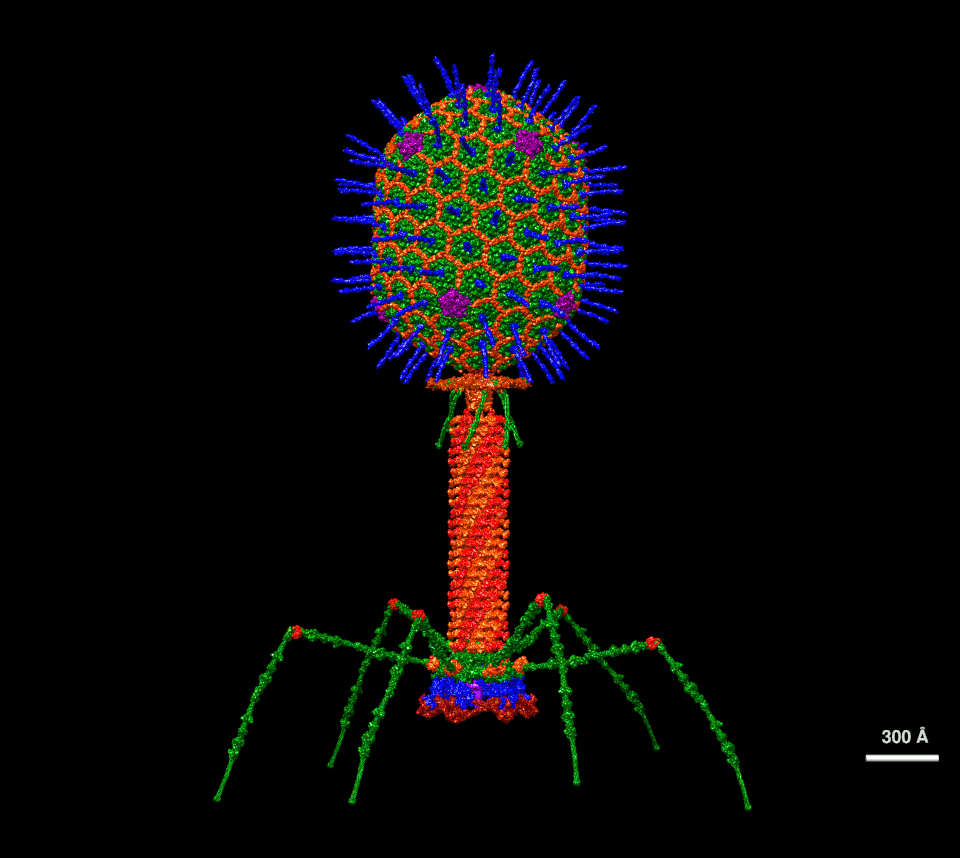
A capsid plus a genome. No ribosomes. Replication happens only inside a bacterial cell.
T4 infects certain E. coli; it does not run a human cold. Specificity is the whole point.
Lytic phages burst the cell. Temperate phages may sit as prophage DNA until a stress cue.
Estimates near 10^31 phage particles — outnumbering bacterial cells in many waters.
Bacteria keep snippets of past phage genomes. That discovery (2007 experimental punch) remade genetics — described here, not instructed.
Phages can accidentally move bacterial DNA between cells. That is how textbooks explain some resistance spread — not a protocol.
Phage therapy is a century-old idea now back in research headlines. This page stays at the concept level — no treatment recipes.
Single-celled prokaryotes with cell walls — the oldest widespread life form, and both partners and pathogens.
Familiarity 95Packets of DNA or RNA that are not cells — they replicate only inside living hosts.
Familiarity 96A eukaryotic kingdom of yeasts, moulds and mushrooms — chitin walls, external digestion, partners of plants.
Familiarity 80A prokaryotic domain that is not bacteria — methanogens, extremophiles and no known human pathogens.
Familiarity 35Motile unicellular eukaryotes — a teaching grade that includes pond ciliates and a minority of serious parasites.
Familiarity 58