Dorsolateral PFC
Goal maintenance, manipulation and rule representation.
Executive Function · Working memory, inhibition and cognitive flexibility — the control system that steers thought and action toward goals.
Reviewed 2026-08·Sources & research·Methodology·Media credits
Darker cells mean a higher score for this topic on that metric.
LessMore
Last reviewed Sources & creditsMedia creditsMethodology
Updating, inhibiting and shifting — three latent factors that still share variance. Lab factor model, not a clinic label.
Teaching map: control node over phonological and visuospatial slave systems. Useful in class; not a scan finding about you.
Dorsolateral prefrontal cortex (dlPFC) for goal maintenance, with anterior cingulate conflict signals. Use atlas finder — not a self-test.
No. Educational neuroscience only. No diagnosis, no dose, no treatment plan. Scores are editorial 0-100 browsing aids.
Stroop-style conflict: name the ink, not the word. Windows control under interference; does not certify a disorder.
Adele Diamond developmental synthesis ties play, stress and schooling to prefrontal control. Teaching notes, not a parenting prescription.
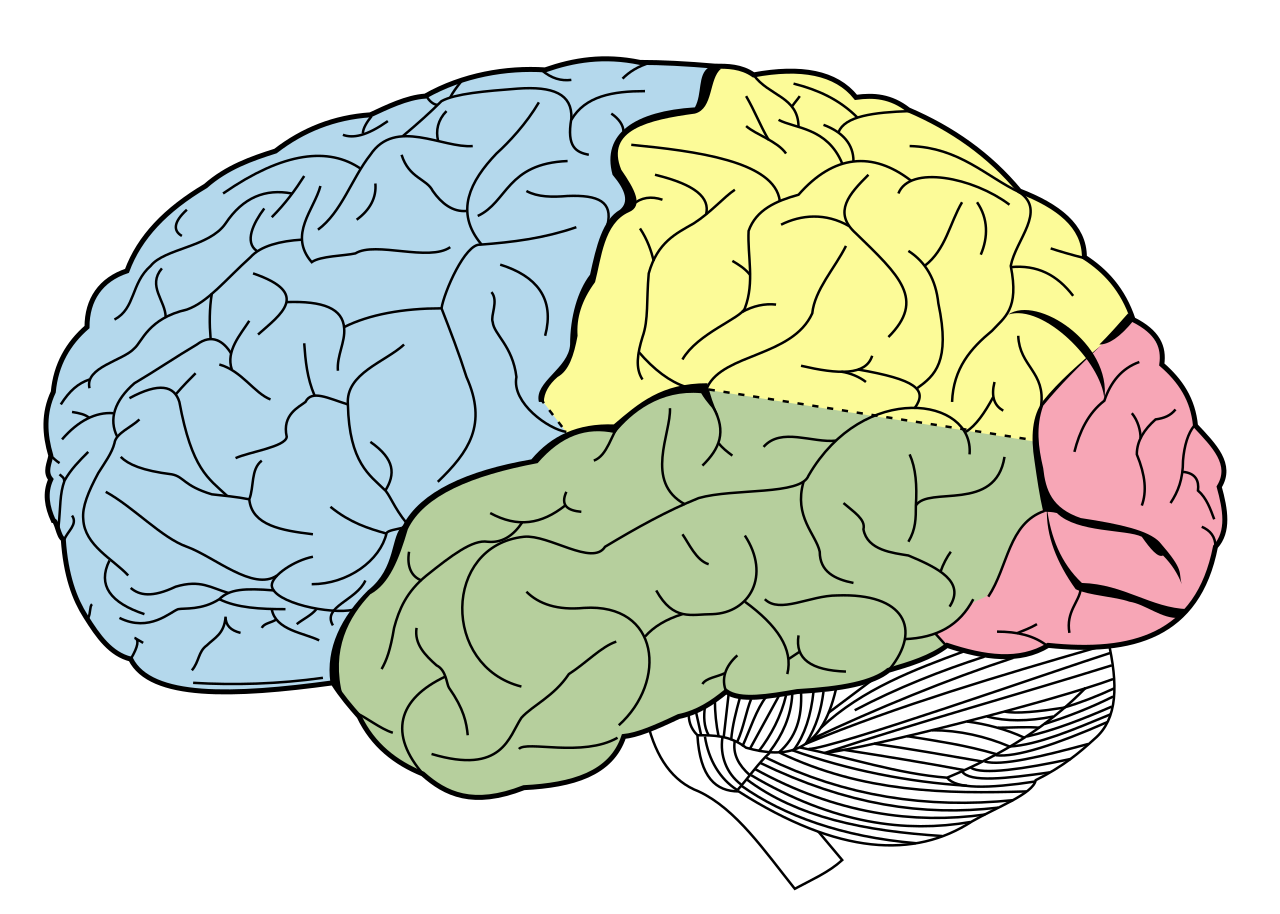
Anatomy is network anatomy: lateral prefrontal corridors talk to parietal maps, while medial walls monitor conflict and value.
Subcortical partners — caudate, putamen, thalamus, cerebellum — implement selection and timing, not just “support”.
Goal maintenance, manipulation and rule representation.
Retrieval control and interference resolution.
Conflict monitoring and need-for-control signals.
Rapid adaptive control on demanding tasks.
Goal-directed action selection in frontostriatal loops.
Timing, prediction and sequencing support for control.
Select and gate competing action plans.
Links prefrontal control with parietal attention maps.
Sustained task set and tonic alertness.
Route and amplify control signals to cortex.
Classic behavioural window onto inhibition and conflict.
Probe updating and capacity under load.
Measure switch costs and flexibility.
Historical frontal injury case — interpret with modern caution.
Open atlas neighbours: frontal, cingulate, caudate, cerebellum.
How the brain encodes, stores and retrieves experience across systems.
Research 75 🎯Selecting what enters awareness — and what the brain must ignore.
Research 88 💬Speech, comprehension and the cortical networks that make meaning.
Research 74 💓Affective circuits linking body states, appraisal and social meaning.
Research 67 ⚖️Value, risk and control — how choices emerge from competing signals.
Research 66 😴Oscillations, stages and the nightly work of memory and repair.
Research 97 🔄How experience rewires synapses, maps and recovery trajectories.
Research 50 ✨Awareness, reportability and the hard problem still facing science.
Research 89 📚How practice, prediction and reward reshape circuits over time.
Research 90 👁️Building a usable world from noisy sensors and prior expectations.
Research 77 🔥A protective percept built from nociception, context and prediction.
Research 74 ⏳Lifelong change in structure, networks and cognitive reserve.
Research 57 ✨Where self-help, manifestation metaphors and religious hope meet expectancy, attention and prediction — and where they overclaim.
Research 78 🕯️Meditation, prayer and liturgy as trained attention and regulation — evidence, limits and cultural context.
Research 82 🤝How brains read minds, faces and norms — theory of mind, empathy and the networks that make us social.
Research 85 🏃From intention to muscle — cortico-basal ganglia-cerebellar loops that select, time and correct movement.
Research 90