Oligocene–Miocene
Flower radiation
Andean orogeny and tubular flowers multiplied trochilid niches.
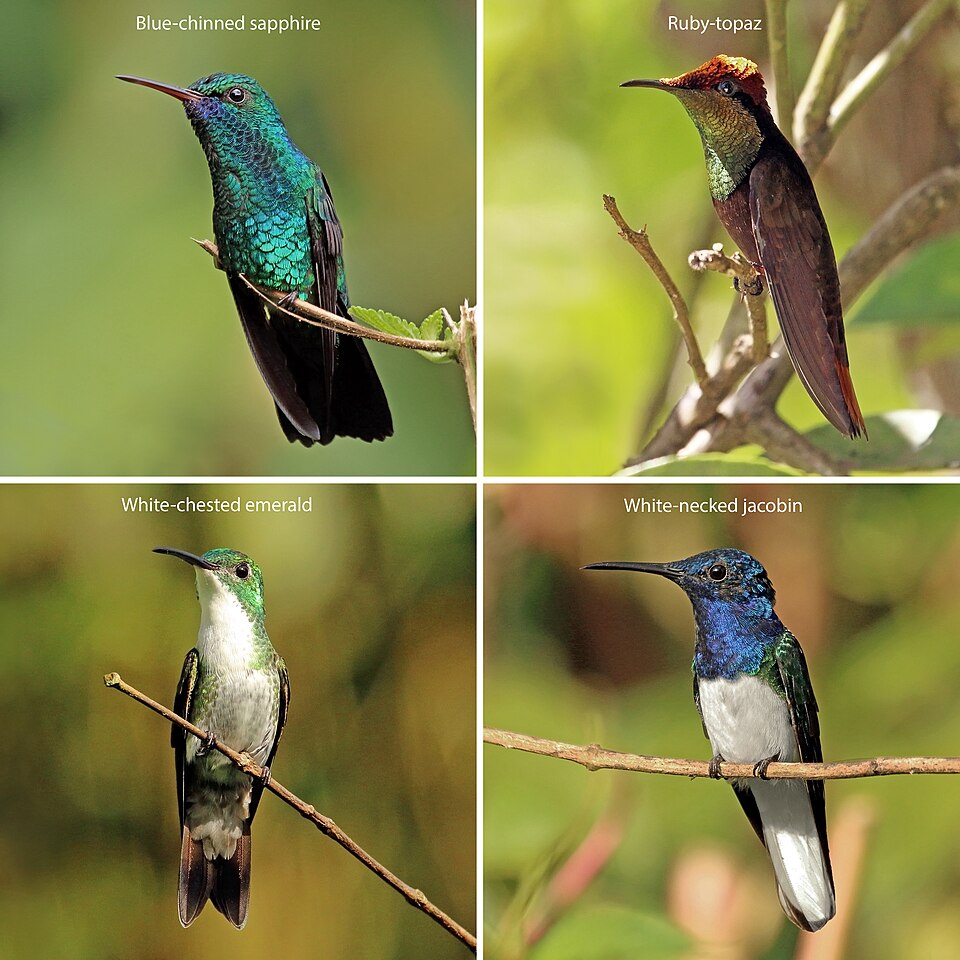
Hummingbird · New World nectar specialists that hover on figure-eight wings and migrate on a few grams of fat.
Milestones in order. This is history, not a weekly activity grid.
Darker cells mean a higher score for this topic on that metric.
LessMore
Last reviewed Sources & creditsMedia creditsMethodology
The shoulder allows a nearly horizontal figure-eight. Lift on the upstroke as well as the downstroke pays the hover bill that a typical avian stroke cannot.
No. Nectar is fuel. Arthropods supply protein, especially for chicks. Feeders that omit insects do not replace a territory.
Ruby-throated hummingbirds fatten, then fly 800+ km nonstop. Tailwinds and a high mass-specific power output make the crossing possible, not a rest on ships.
A controlled drop in body temperature and metabolic rate overnight. Without it, many species would exhaust nectar stores before sunrise.
Diversity peaks in the Andes. Anna’s hummingbirds now winter in Vancouver gardens; ruby-throated breed to southern Canada.
John Gould’s 19th-century monographs and skins made trochilids a Victorian craze — with a collecting cost that modern field work still cites.
The hummingbird did not enter English as a finished emblem. Hunts, films, listings and field stations rewrote the animal on a dated clock.
This chapter keeps ten timeline points, five eras and three milestones so a later translation can hold the same years.
Molecular clocks put the trochilid radiation in South America, later exploding with Andean uplift and flower diversity.
Florentine Codex pages describe huitzitzilin — Aztec hummingbird war and sun associations already old.
John Gould’s hummingbird volumes fed a European skin-and-iridescence market.
High-speed photography later (1960s) resolved the figure-eight that sketches had guessed.
Lab work quantified overnight metabolic drop — a number backyard feeder lore still understates.
Eucalyptus and urban feeders pulled Calypte anna into the Pacific Northwest year-round.
Andean camera traps and cine made Ensifera ensifera a textbook of bill-flower fit.
Cuban endemic counts treated coastal scrub loss as the binding threat for the smallest bird.
Wind-tunnel papers refined power curves that backyard myths still inflate.
Weather radar and nanotags tightened the ruby-throated crossing timetable.
Andean orogeny and tubular flowers multiplied trochilid niches.
Aztec war-sun imagery treated the hummingbird as a fallen warrior’s form.
Iridescent gorgets became cabinet objects; some populations still show the collecting scar.
Stroke kinematics and torpor numbers replaced anecdote.
Anna’s hummingbirds winter in cities that did not host them a century earlier.
High-speed film showed lift on both half-strokes — the hover mechanism in public science.
A Mediterranean-climate hummer became a Vancouver winter bird via gardens.
Gram-scale tags confirmed nonstop water crossings once inferred from recoveries.
Reading hummingbird history beside the resilience score keeps a recovered stock from standing in for a threatened cousin.
Apex diurnal raptors whose stoops, territories and national emblems stretch from taiga cliffs to tropical canopy.
Overall 75 🦉Nocturnal raptors whose facial discs, silent flight and asymmetric ears turn darkness into a hunting map.
Overall 72 🐧Flightless southern divers that turned wings into flippers and ice edges into commute routes.
Overall 56 🦩Long-legged filter feeders whose bent bills and carotenoid diets turn alkaline lakes into pink cities.
Overall 52 🦜Zygodactyl hookbills whose social brains, mimicry and nest-cavity needs collide with the cage trade.
Overall 58 🪽Dynamic-soaring ocean birds whose metres-long wings and baited longlines now share the same latitudes.
Overall 58 🦢Tall wetland dancers whose red-crowned East Asian population is the atlas type and a conservation bottleneck.
Overall 53