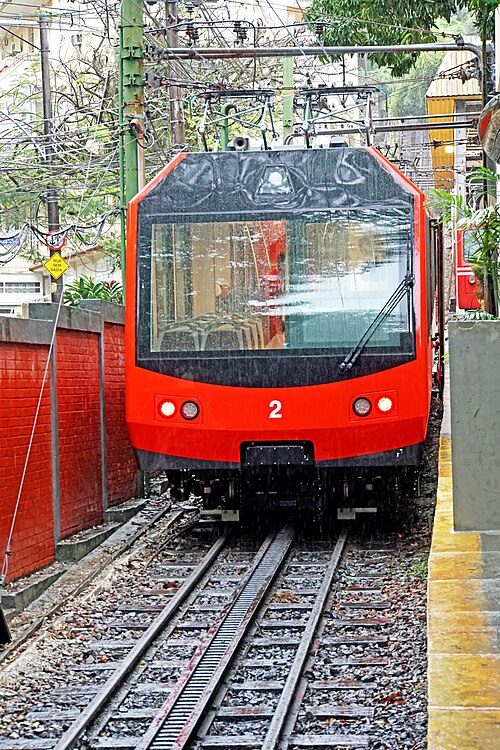
Rack railway is one of 48 vehicle types in this atlas. The pages treat it as a full system — history, anatomy, operating principles, culture, icons, future pressure and market shape — not a product brochure.
Scores compare rack railway with the other types on speed, efficiency, accessibility, safety, cultural impact and tech disruption. They are relative editorial judgements, not laboratory ratings.
Seven chapters dig in: origins, systems and cutaways, how it works, cultural life, legendary icons, what comes next, and how money and regions structure the fleet.
Deep introduction
Deep dive: Rack railway
Rack railway is not a single machine — it is a family of designs, duties and cultures inside the rail atlas. This deep intro maps how the type varies, what systems make it work, and why places adopt it differently.
Diversity, systems, culture and markets — plus a lens tuned to this language region.
Diversity inside the type
Rack railway is not uniform: duty, climate and regulation carve distinct sub-types inside the rail family.
Operators choose variants for duty cycle first — peak brochure numbers rarely decide the fleet mix.
Systems that decide the ride
Structure, propulsion, energy store, control loops and human interfaces jointly set what a Rack railway can promise on a timetable.
Safety envelopes — crash structures, redundancy, certification — are part of the product, not an optional sticker.
Culture, status and meaning
Status, film portrayals and workplace lore shape how people judge a Rack railway before they ever read a spec sheet.
Rituals of boarding, maintenance and naming rights turn hardware into belonging — or resentment — in different cities.
Markets, fleets and money
Capex, energy, crew and infrastructure fees decide whether a Rack railway programme expands or stalls.
Regional makers and import rules create parallel markets that look similar in photos and diverge in spare parts.
Technical deep dive
Technical deep dive: Rack railway
Rack railway engineering is a stack of structure, energy conversion, control loops and certified envelopes inside the rail atlas. This page maps how loads travel, how power becomes motion, and where the hard limits sit.
Structure, propulsion, control and limits — plus certification language for this region.
Structure & load paths
Locomotive frames carry pinion reaction into axles; car bodies hang on grades far steeper than mainline rail.
Rack rail bolts see pulsating loads each tooth engagement—loose fasteners widen pitch error.
Energy & propulsion
Dual-mode avoids rack wear on flats; adhesion motors alone cannot hold tourist peaks.
Steam rack locos balance boiler water level on sustained grades—a unique operating art.
Control, sensing, human interface
Drivers feel pinion engagement through cab vibration; tourists notice pitch but not rack clatter if maintained.
Unlike funiculars, rack trains are not counterbalanced—full loco tractive effort is required uphill.
Failure modes & hard limits
Pinion disengagement on grade is catastrophic—interlocks and redundant brakes are mandatory.
Rack switch mis-set causes derailment at walking speed.
Steep valley walls lock routes for decades — no cheap reroute.
Snow sheds and avalanche galleries — seasonal ops.
Labour, crews & operations
Single-track meets and tourist commentary — dual role crews.
Heritage steam rack lines — boiler skills plus rack maintenance.
Environment & energy
Overhead vs battery on steep grades — regen opportunities.
Peak holiday crush — standee culture on scenic lines.
32speedEditorial 0-100 browsing score
55efficiencyEditorial 0-100 browsing score
48accessibilityEditorial 0-100 browsing score
82safetyEditorial 0-100 browsing score
Rack railway: concrete atlas depth on Tool-Lifes.
Visual field notes
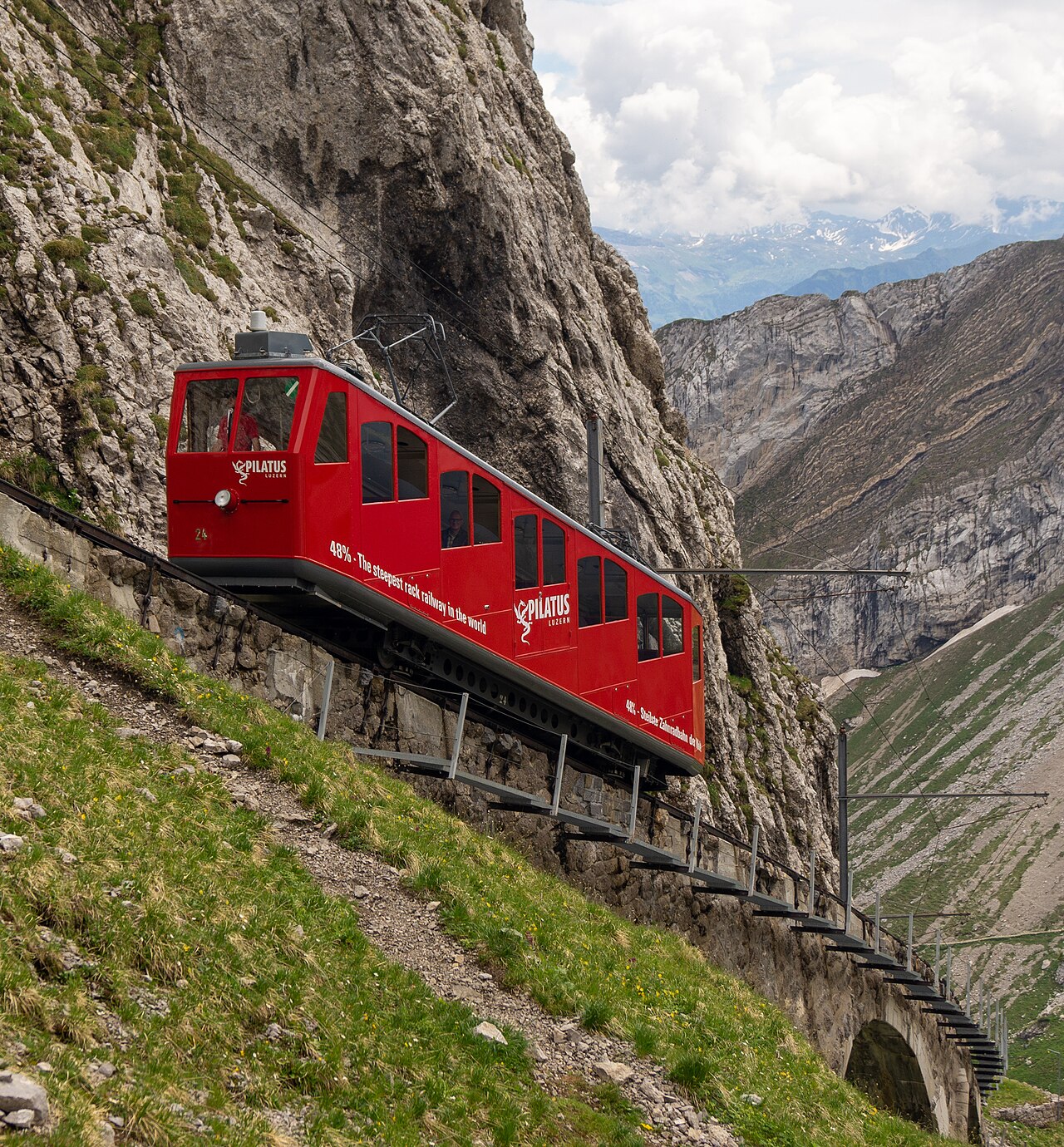
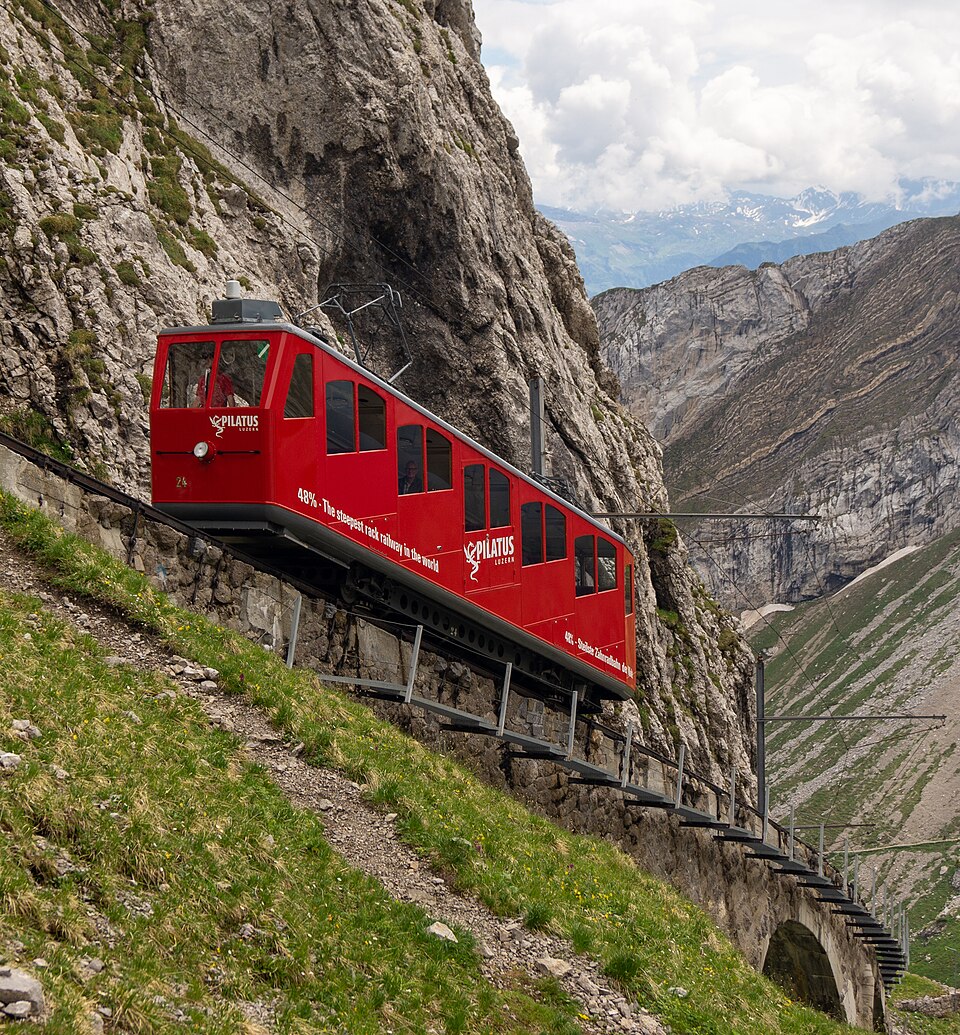
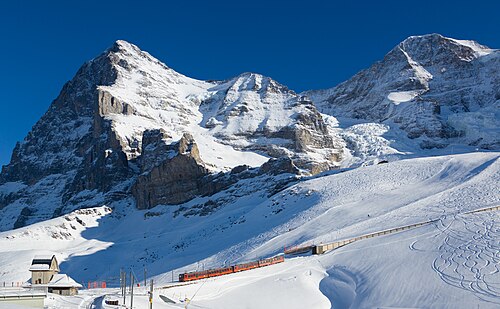
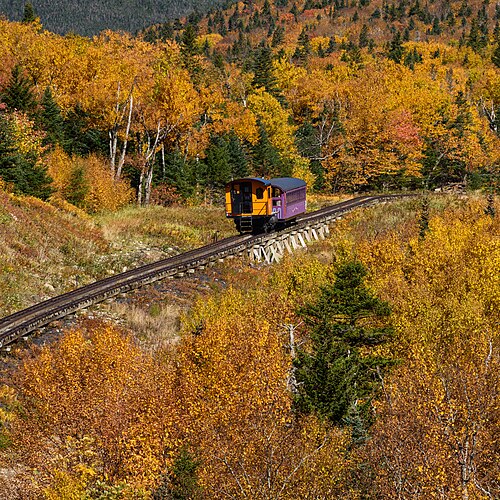
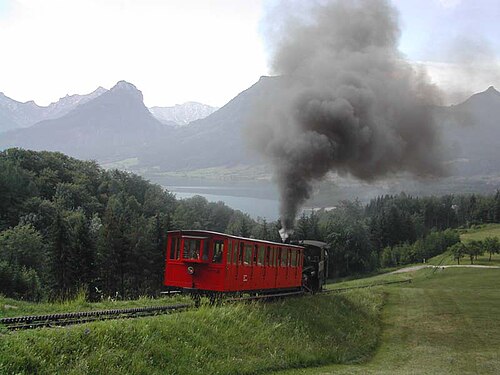
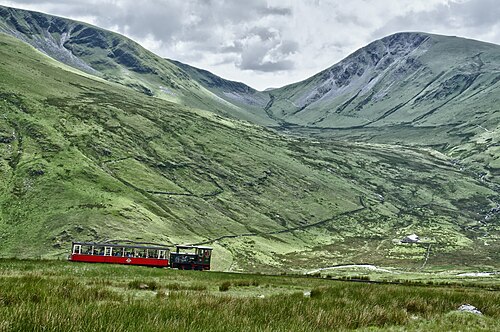
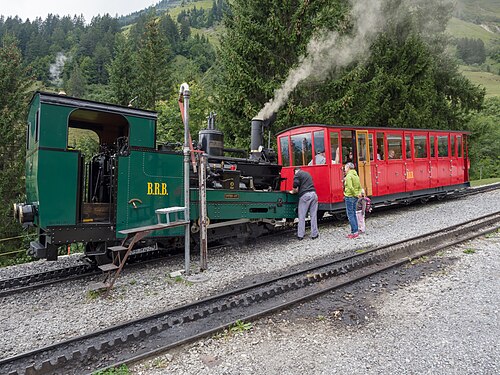
Licensed photographs of this type — heroes, eras and icons on one wall.
Maria FeofilovaMaria FeofilovaMaria FeofilovaKabelleger / David Gubler ( http://www.bahnbilder.ch )King of HeartsPeterGerstbach at German WikipediaBert Kaufmann from Roermond, NetherlandsJames PettsDennis G. Jarvis