Vestibular system
Located in the inner ear, this system uses fluid-filled canals and specialized organs to detect rotational and linear head movement, providing critical input for balance and gaze stability.
Balance · Balance depends on the brain continuously combining signals from the inner ear, eyes, and joints, and its decline is one of the strongest predictable predictors of falls in older adults.
Darker cells mean a higher score for this topic on that metric.
LessMore
Last reviewed Sources & creditsMedia creditsMethodology
Balance decline in older adults is typically multifactorial, involving age-related changes in the vestibular system, reduced muscle strength, slower reaction times, medication side effects, and sometimes vision changes.
Yes — structured balance training is one of the most consistently supported interventions for reducing fall risk, with meaningful improvements often measurable within a few months of regular practice.
Benign paroxysmal positional vertigo, or BPPV, is a common inner ear condition causing brief episodes of spinning sensation triggered by specific head movements, related to displaced calcium crystals within the inner ear's balance organs.
Balance depends on sensory integration and rapid postural adjustments, while strength refers to the force muscles can produce; both contribute to fall prevention but are trained somewhat differently.
Several medication classes, including some blood pressure medications, sedatives, and certain psychiatric medications, are associated with increased fall risk, partly through effects on balance and alertness.
Vestibular rehabilitation therapy is a specialized exercise-based approach targeting inner ear-related balance and dizziness problems, often including gaze stabilization and habituation exercises.
Balance relies on three primary sensory systems — the vestibular system in the inner ear, vision, and proprioception from the joints and muscles — feeding information to the brainstem and cerebellum, which coordinate the postural adjustments needed to stay upright.
Because these systems overlap in function, the brain can compensate to some degree when one system is impaired, though a deficit in more than one system, or in a system with no adequate backup, is more likely to produce noticeable balance problems.
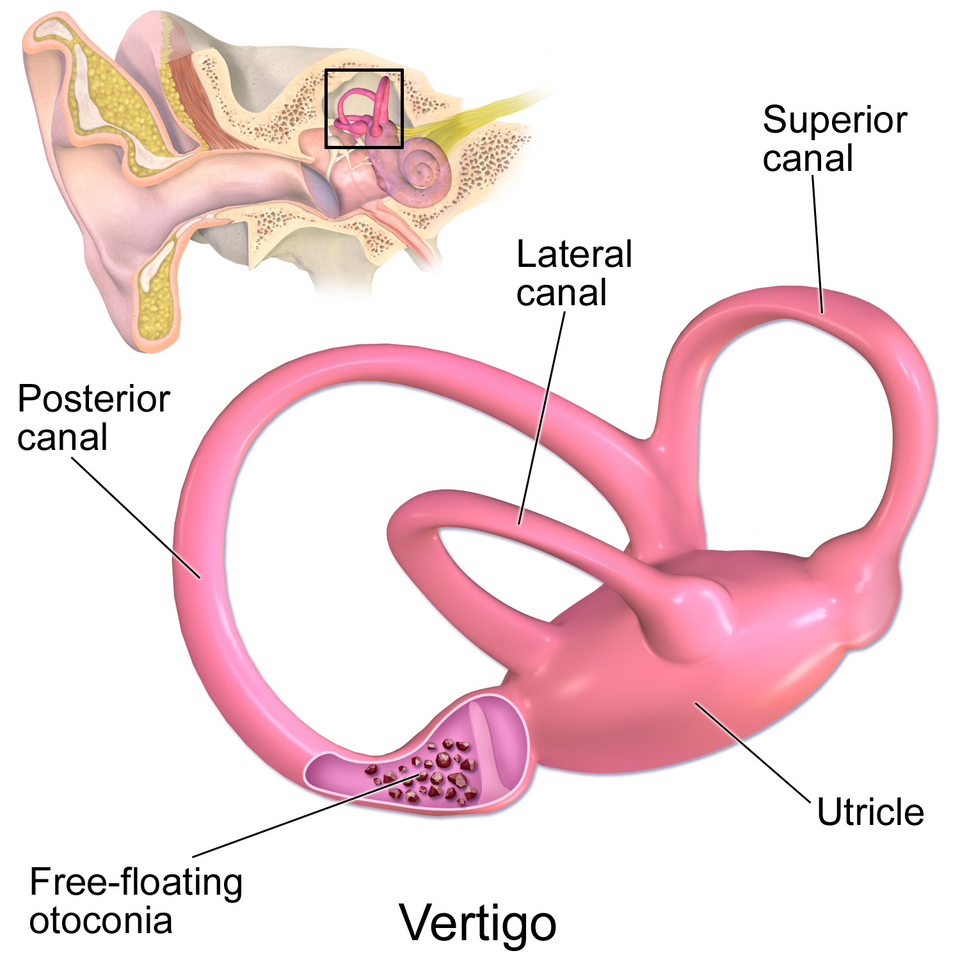
Located in the inner ear, this system uses fluid-filled canals and specialized organs to detect rotational and linear head movement, providing critical input for balance and gaze stability.
Vision supplies information about the surrounding environment and body position relative to it, and becomes especially important for balance in low-light or visually complex conditions.
Sensors in the muscles, tendons, and joints, particularly in the ankles and feet, provide continuous feedback about body position relative to the supporting surface.
This brain structure integrates sensory input from all three systems and fine-tunes motor output to maintain smooth, coordinated balance and movement.
This reflex pathway keeps vision stable during head movement by coordinating eye movements with vestibular input, and is frequently targeted in vestibular rehabilitation.
Muscles at the ankle, hip, and trunk execute the rapid corrective movements the nervous system generates in response to sensed instability.
Rather than a joint range of motion, balance is often assessed through the amount and pattern of postural sway during standing or walking tasks, which increases with age, fatigue, and various balance-related conditions.
Understanding which sensory system or systems are contributing to a balance deficit helps explain why rehabilitation approaches differ meaningfully between, for example, an inner ear disorder and a general age-related decline in strength and reaction time.
Neighbouring topics share region literacy — not a severity ranking.