Not a cell
No cytoplasm programme for making ATP or protein. The particle is a genome plus a delivery shell.
Viruses — Packets of DNA or RNA that are not cells — they replicate only inside living hosts.
Darker cells mean a higher score for this topic on that metric.
LessMore
Last reviewed Sources & creditsMedia creditsMethodology
Read Identity → How they live → Body & health, then use compare rails.
Public-health education — not a care plan, prescription, or outbreak briefing.
It names everyday desks for Tree of microbes before English norms look universal.
No — editorial 0–100 browsing aids inside this atlas only.
Use related cards and best-of / quiz rails after the first three chapters.
How they live and Body & health carry mechanisms; skim Identity first.
A virus particle is not a cell. It has no ribosomes, no independent metabolism and no binary fission. The genome is DNA or RNA, wrapped in a protein capsid, sometimes plus a stolen host membrane.
That poverty of parts is why viruses must enter a host. They are best pictured as instructions that borrow a living factory, not as tiny animals swimming in blood.
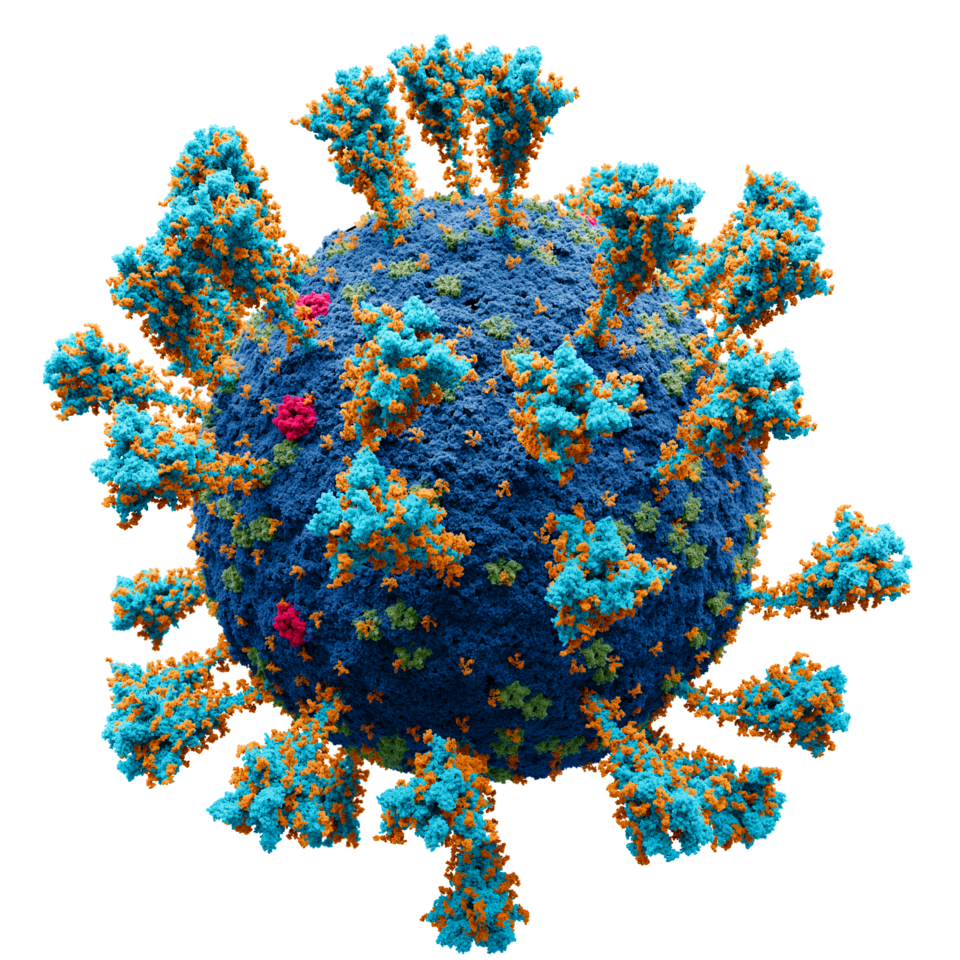
No cytoplasm programme for making ATP or protein. The particle is a genome plus a delivery shell.
Baltimore classes sort viruses by nucleic acid and how they reach mRNA. A given family uses one strategy, not both at once as the main genome.
Icosahedral or helical protein coats, assembled from repeated subunits — a geometry first mapped on tobacco mosaic virus and poliovirus.
Replication needs host enzymes and ribosomes. Outside a cell a virion is inert chemistry until it binds the right surface.
Surface proteins fit particular receptors. A bacteriophage does not infect a plant; a plant virus does not run a human cold.
RNA-dependent polymerases often lack proofreading, so populations are clouds of variants. That is a fact about mutation supply, not a recipe.
Once you drop the idea that a virus is a 'small bacterium', vaccines, antibiotics and 'killing germs' stop being interchangeable words.
Single-celled prokaryotes with cell walls — the oldest widespread life form, and both partners and pathogens.
Familiarity 95A eukaryotic kingdom of yeasts, moulds and mushrooms — chitin walls, external digestion, partners of plants.
Familiarity 80A prokaryotic domain that is not bacteria — methanogens, extremophiles and no known human pathogens.
Familiarity 35Viruses that infect bacteria — Earth's most abundant biological entities, and a concept-level idea in medicine.
Familiarity 42Motile unicellular eukaryotes — a teaching grade that includes pond ciliates and a minority of serious parasites.
Familiarity 58