Amygdala threat circuitry
Exaggerated responses to trauma reminders.
PTSD · Trauma memory, hyperarousal and avoidance — how threat learning overgeneralises and how evidence-based care supports recovery.
Reviewed 2026-08·Sources & research·Methodology·Media credits
Darker cells mean a higher score for this topic on that metric.
LessMore
Last reviewed Sources & creditsMedia creditsMethodology
Read Overview → Anatomy → Function, then use compare rails.
Educational atlas — not a diagnosis, treatment plan, or medical advice.
It names everyday desks for Disorders before English norms look universal.
No — editorial 0–100 browsing aids inside this atlas only.
Use related cards and best-of / quiz rails after the first three chapters.
Anatomy and Function carry mechanisms; skim Overview first.
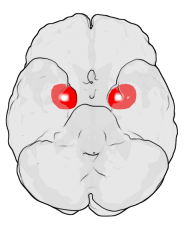
PTSD anatomy highlights amygdala threat circuitry, vmPFC regulation, hippocampal context and brainstem/insula arousal nodes.
Educational neuroscience context only — not medical advice, diagnosis or a substitute for emergency or clinical care. If you are in crisis, seek local emergency services or a licensed clinician.
Exaggerated responses to trauma reminders.
Safety signalling and extinction support often weakened.
Contextual tagging of “then versus now”.
Conflict and threat monitoring under hypervigilance.
Interoceptive awareness of bodily alarm.
Noradrenergic drive behind startle and insomnia.
Supports new safety learning when intact.
Binds threat to place and time.
Maintain hypervigilant scanning.
Stress hormone and autonomic cascades.
Clinical and research probes of intrusion biology.
Lab models of threat learning deficits.
Psychophysiology of hyperarousal.
Structured symptom measurement — not DIY.
Open atlas neighbours: amygdala, hippocampus, vmPFC, insula.
Progressive dementia driven by protein pathology and network failure.
Research 74 🤲Dopamine circuit loss, movement symptoms and non-motor features.
Research 54 ⚡Sudden vascular injury — time, territory and the race to recover.
Research 64 ⚡Hyperexcitable networks, seizures and modern treatment options.
Research 95 🌧️Mood circuits, stress biology and evidence-based interventions.
Research 66 🌀Perception, belief and cognition when predictive models go awry.
Research 93 💢Sensory gain, aura and the brain’s recurrent pain networks.
Research 74 📱Attention control, impulsivity and developmental self-regulation.
Research 51 🧩Neurodevelopmental diversity in social communication and sensory processing.
Research 89 🧬Immune attack on myelin — disconnection across white-matter highways.
Research 80 🩹Mechanical insult, diffuse injury and the long arc of recovery.
Research 87 🔁Compulsive seeking when reward prediction and control circuits tip.
Research 69 😰Threat circuitry, worry loops and avoidance — how brains over-predict danger and how care can recalibrate risk.
Research 86 ⚖️Mania, depression and the networks between — mood-state biology, sleep disruption and evidence-based stabilising care.
Research 84